The article examines Asiatic lion habitat, population trends, threats, Gir landscape, human–lion conflict, Project Lion, disease risks, genetic diversity, and conservation strategies.
Syllabus Areas:
GS III - Environment and Ecology
On World Lion Day 2026 (10 August), the Union Ministry of Environment, Forest and Climate Change highlighted India’s significant progress in conserving the Asiatic Lion.
According to the PIB release, the Asiatic Lion population increased from 523 in 2015 to 891 in 2025, reflecting the combined efforts of forest officials, frontline workers, conservationists and local communities.
The Prime Minister also highlighted the remarkable comeback of India’s Asiatic Lion, noting that both its population and habitat/range are expanding.
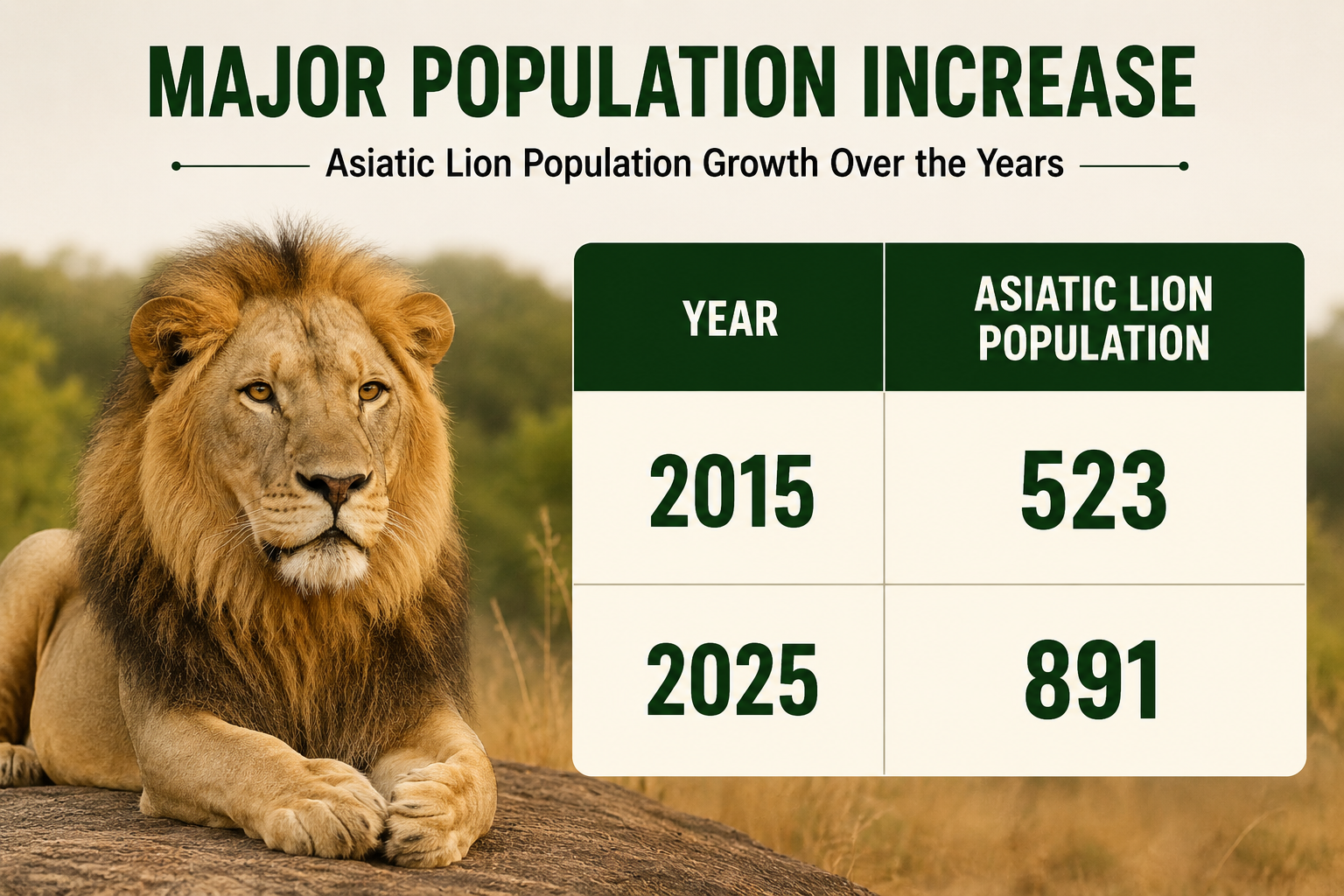
Asiatic Lion population increased by 368 lions (70.4%) from 523 in 2015 to 891 in 2025, reflecting sustained conservation efforts.
Asiatic Lion
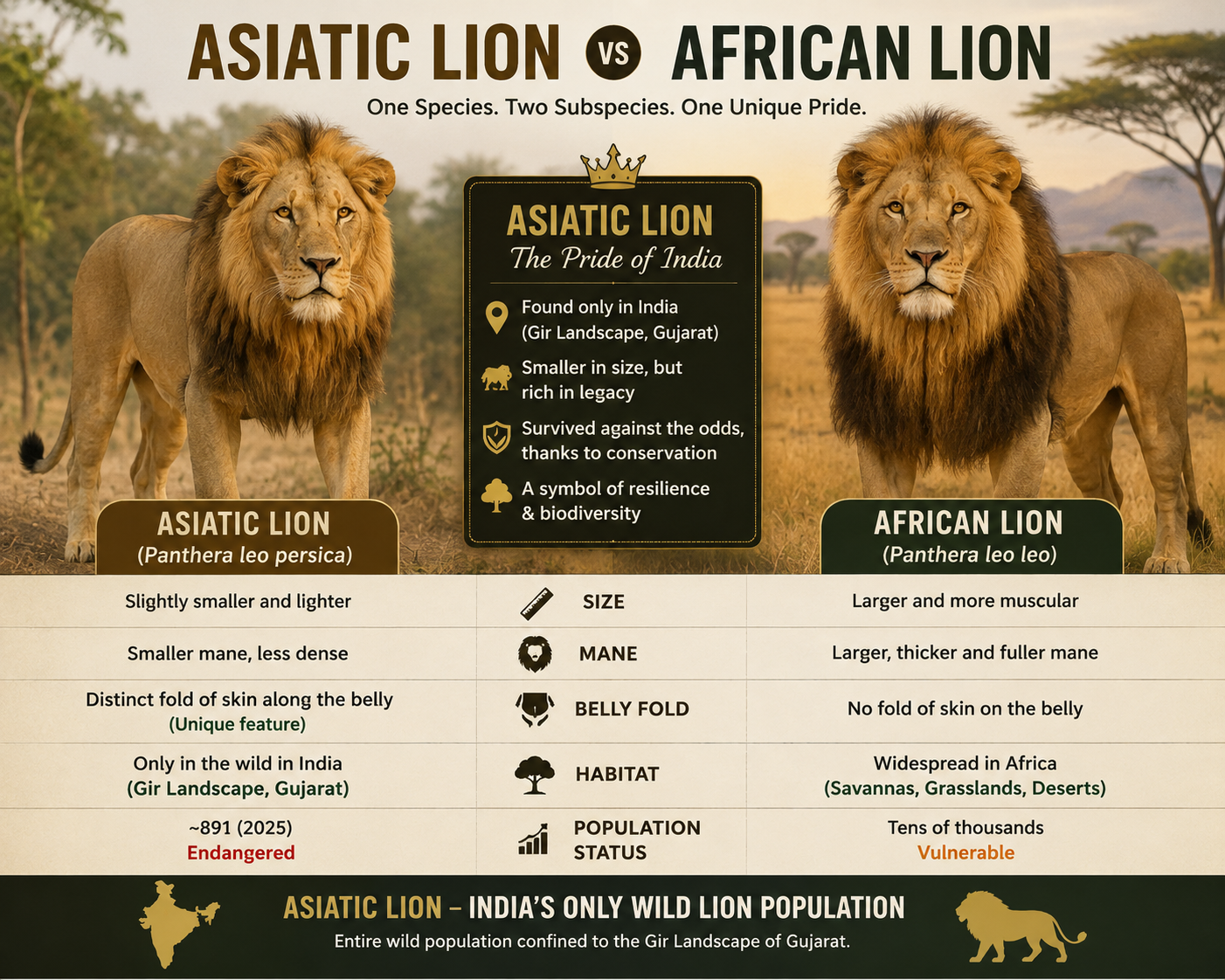
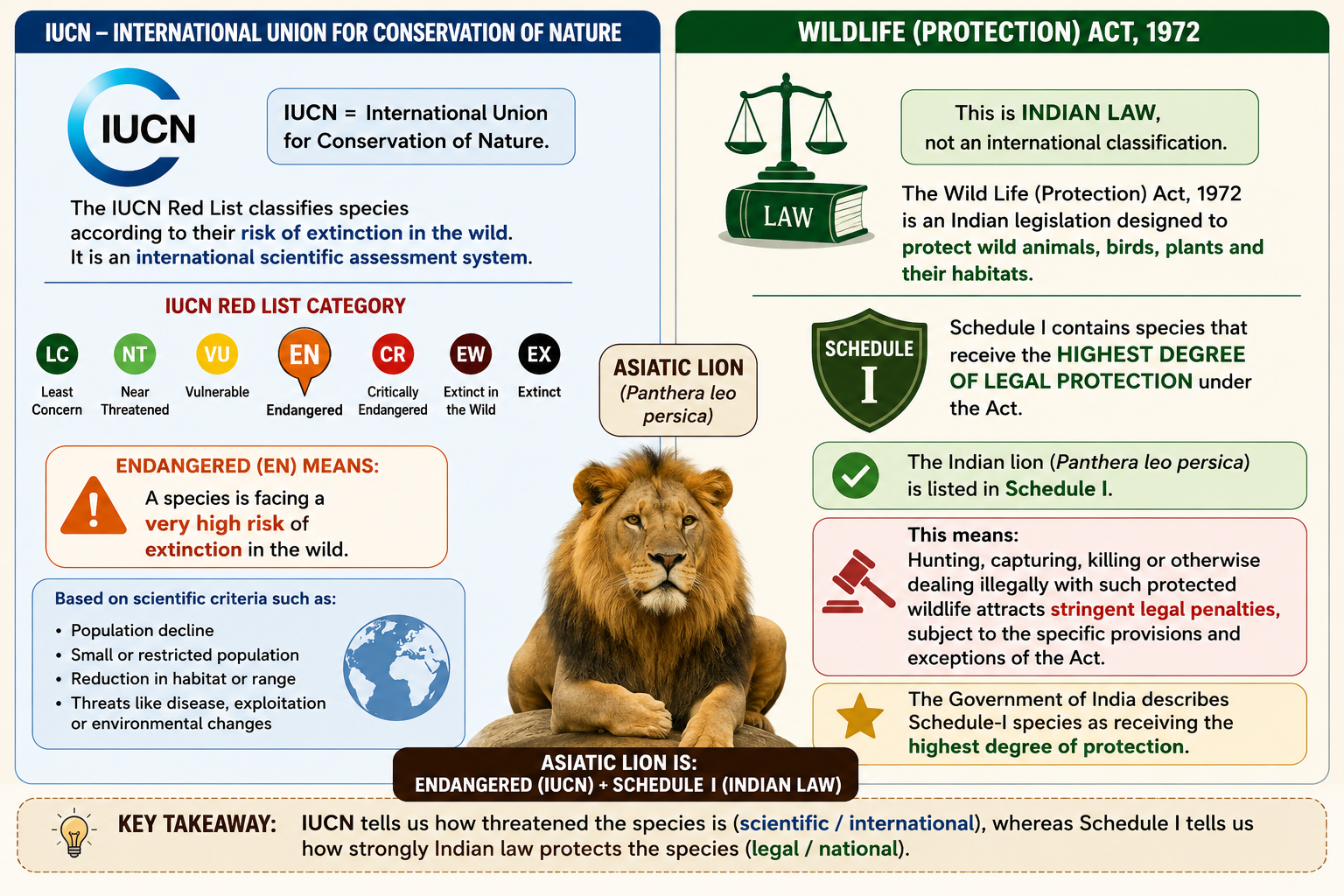
The Asiatic Lion (Panthera leo persica) is a subspecies of lion that is native to Asia and survives in the wild primarily in India.
-
Scientific name: Panthera leo persica
-
Major habitat in India: Gir landscape, Gujarat
-
Key feature: Generally has a fold of skin along its belly, which distinguishes it from many African lions.
-
Conservation significance: It is an important part of India’s wildlife and biodiversity heritage.
Expansion of Lion Habitat and Range
The Prime Minister's Office highlighted that India’s Asiatic Lion population is thriving, while its habitat and geographical range are expanding.
This is important because successful wildlife conservation is not limited to increasing animal numbers.
A sustainable conservation strategy also requires:
-
Protection of critical habitats
-
Expansion and improvement of suitable habitats
-
Reduction of threats to wildlife
-
Better coexistence between wildlife and local communities
The MoEFCC release specifically mentions protecting critical habitats and strengthening conservation programmes.
The Asiatic lion is associated with a mosaic of:
-
Dry deciduous forests
-
Thorn and scrub forests
-
Open grasslands
-
Riverine habitats
-
Coastal areas
-
Agricultural and pastoral landscapes
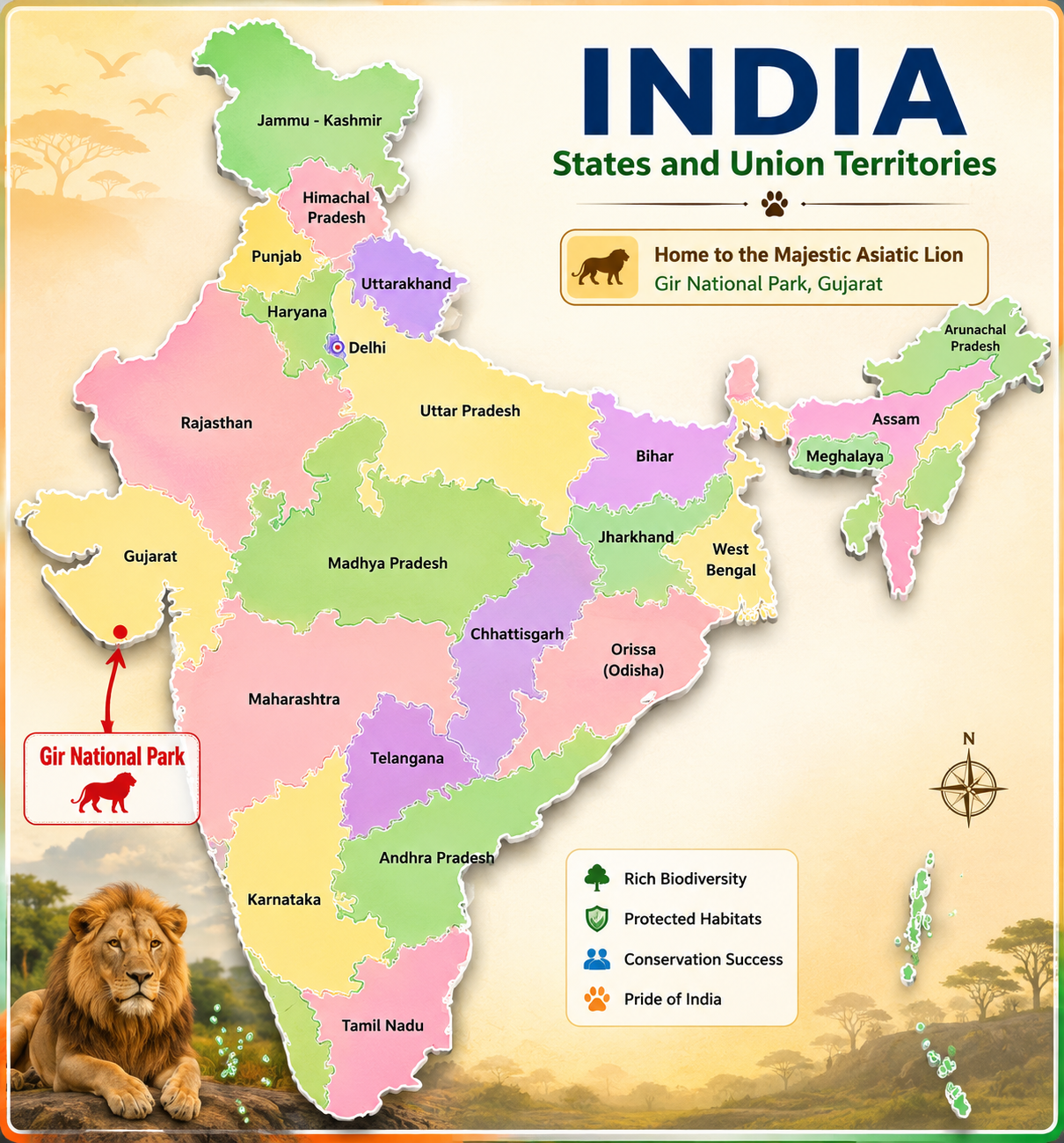
The Gir landscape of Gujarat provides a combination of prey, water, vegetation cover and relatively suitable climatic conditions that has supported the species’ recovery.
However, the term “Gir landscape” should not be confused with only Gir National Park. The broader Asiatic Lion Landscape includes Gir National Park, wildlife sanctuaries, reserved and protected forests, grasslands, coastal areas, agricultural lands and corridors through which lions move and establish satellite populations.
What is Project Lion?
Project Lion is a conservation initiative announced by Prime Minister Narendra Modi on 15 August 2020 for the long-term conservation of the Asiatic Lion.
It follows a landscape-level and holistic approach to biodiversity conservation.
Key Components of Project Lion
-
Habitat Enhancement: Improving and strengthening lion habitats is a major component of the conservation strategy.
-
Disease Monitoring: Monitoring diseases is important for maintaining the health of the lion population and preventing disease-related population losses.
-
Veterinary Support: Veterinary services provide healthcare and emergency support to lions.
-
Scientific Population Tracking: Scientific methods are used to monitor and track the lion population.
-
Technology-Aided Interventions: Technology is incorporated into conservation and wildlife-management efforts.
-
Biodiversity Protection: Project Lion takes a broader ecosystem approach rather than focusing exclusively on the individual species.
-
Benefit Sharing: The project recognises the importance of sharing conservation-related benefits with communities.
-
Community Involvement: Participation of local communities is an important element of the conservation strategy.
Major Threats to Asiatic Lions
-
Disease outbreaks: Diseases like Canine Distemper Virus (CDV) can threaten a large population concentrated in one landscape.
-
Genetic vulnerability: Historical population decline caused a genetic bottleneck, reducing genetic diversity and resilience.
-
Habitat fragmentation: Roads, railways, settlements and agriculture can disrupt lion movement and wildlife corridors.
-
Human–lion conflict: Increasing overlap with villages and farms can lead to livestock loss and risks to both humans and lions.
-
Accidental mortality: Open wells, roads and railway tracks can cause lion deaths.
-
Single-landscape dependence: Heavy concentration in the Gir landscape increases vulnerability to disease outbreaks, disasters or other major disturbances.
Way Forward for Asiatic Lion Conservation
-
Multiple populations: Develop and protect multiple viable populations, with Barda as an important second home.
-
Disease management: Strengthen health monitoring, disease surveillance, veterinary labs and rapid-response systems.
-
Genetic diversity: Monitor inbreeding, gene flow and genetic health to maintain a resilient population.
-
Protect corridors: Safeguard wildlife corridors between Gir and satellite populations and adopt wildlife-friendly infrastructure.
-
Community participation: Involve local communities through compensation, livelihoods, eco-tourism and awareness programmes.
-
Scientific monitoring: Use camera traps, GPS tracking, genetic sampling, GIS and AI-based monitoring for better conservation.
The Asiatic lion’s recovery is a major conservation success, but long-term survival requires multiple habitats, genetic diversity, disease preparedness, protected corridors, scientific monitoring, and community participation.