
The Supreme Court has given guidelines to promote a gender-sensitive and trauma-informed approach in sexual offence cases, emphasising dignity, privacy, empathy, fairness and protection from secondary victimisation.
Syllabus Areas:
GS I - Social Issues
GS II - Polity and Governance
The Supreme Court of India, in its judgment dated 14 July 2026 in Suo Motu Writ Petition (Criminal) No. 1 of 2025, emphasised the need for compassion, empathy and sensitivity in judicial proceedings involving victims of sexual offences and other vulnerable persons.
The Court accepted the report prepared by the Committee of Experts constituted through the National Judicial Academy, which provides guidelines for a gender-sensitive and trauma-informed approach in judicial proceedings.
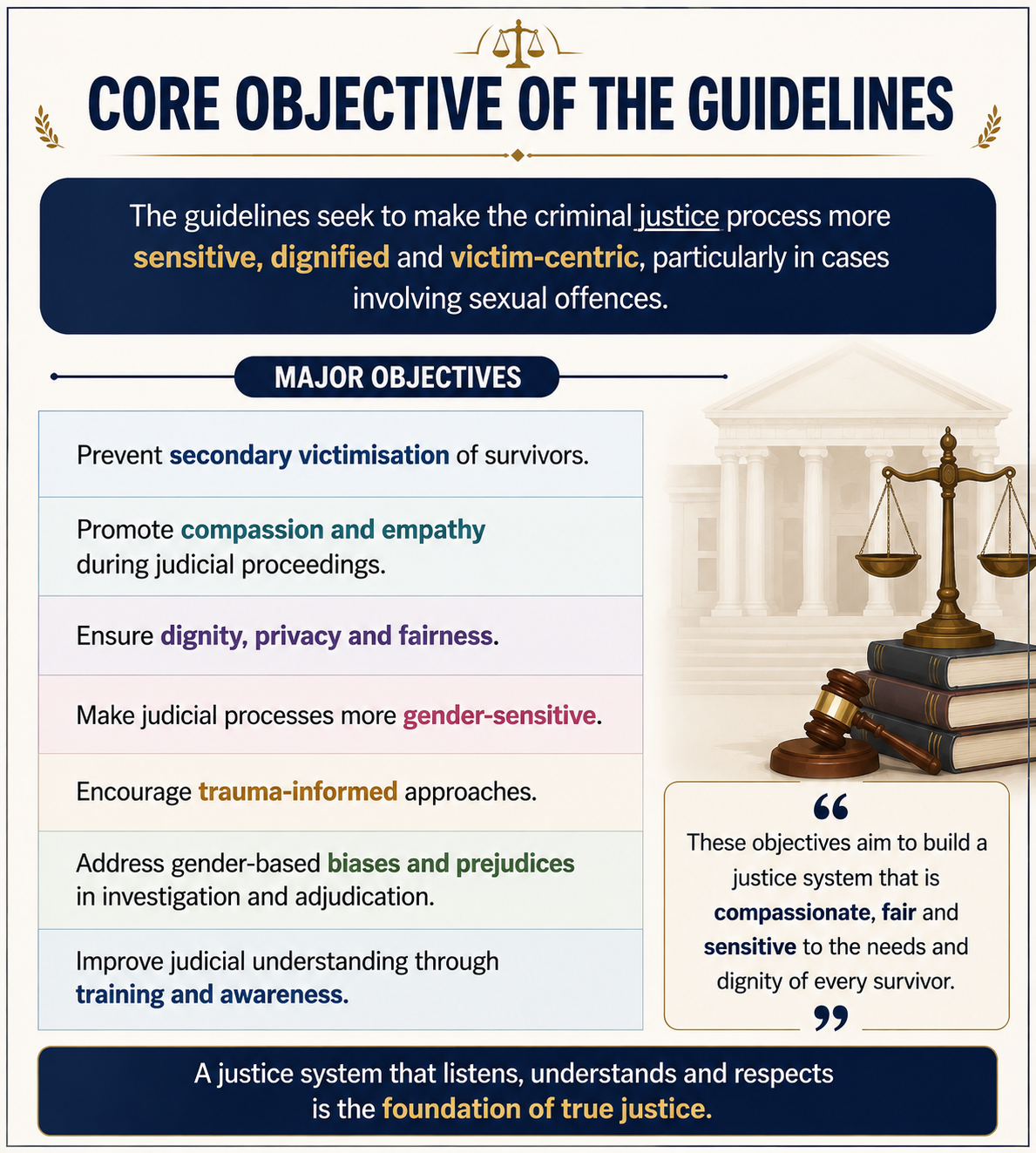
Constitutional and Judicial Principles of Gender Justice
The report outlines evolving constitutional and judicial principles of gender justice.
It places particular emphasis on:
-
Dignity: Every individual involved in the justice process must be treated with dignity, particularly victims and survivors of sexual offences.
-
Equality: Judicial processes must be free from discriminatory assumptions and gender-based prejudices.
-
Privacy: The privacy of victims and other vulnerable persons must be protected during judicial proceedings.
-
Bodily Integrity: The guidelines recognise the importance of respecting an individual's bodily integrity.
-
Autonomy: The principle of individual autonomy is an important component of a dignified and fair justice system.
These principles are intended to help criminal justice stakeholders deal with gender-related cases in a sensitive and dignified manner.
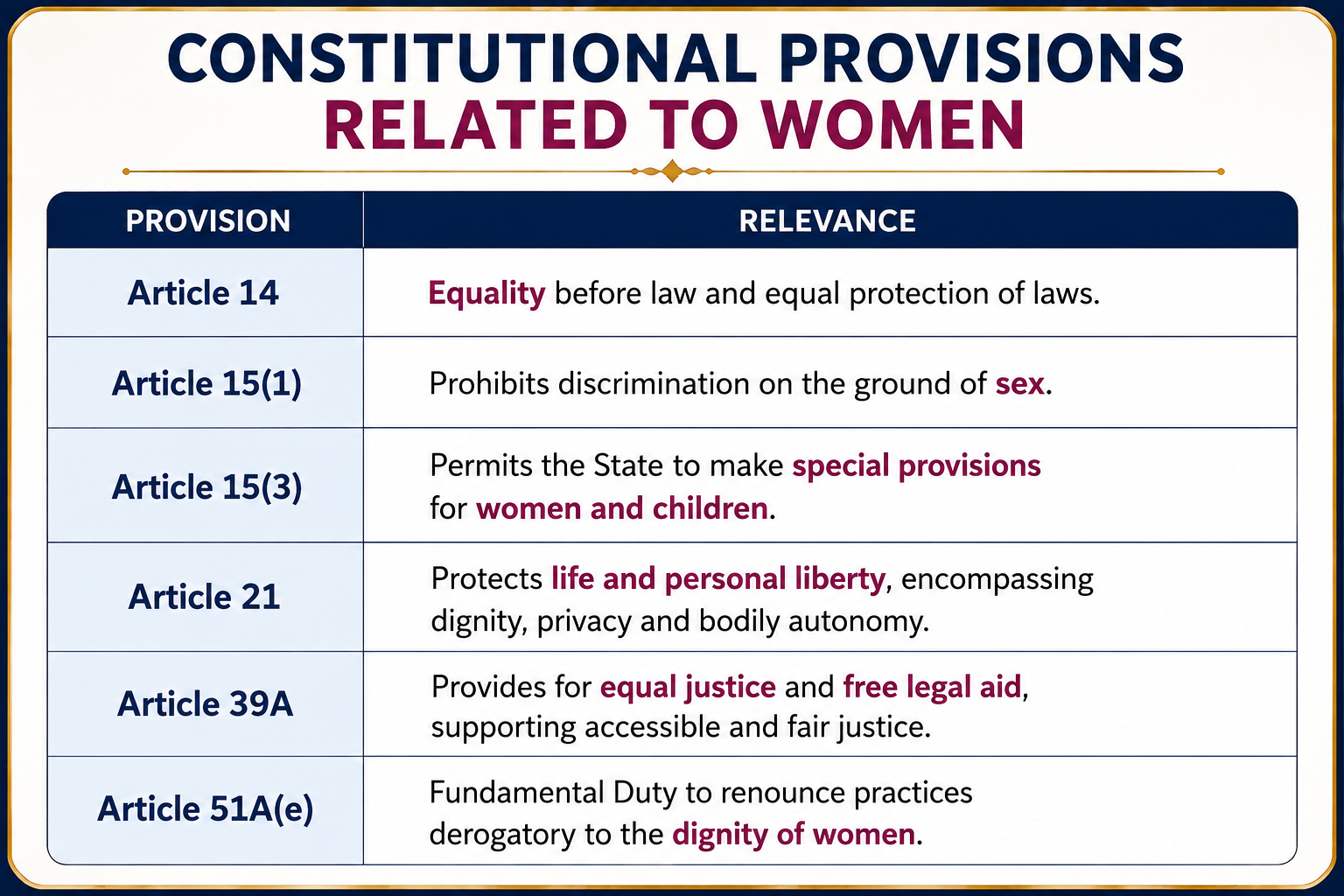
Preventing Secondary Victimisation
One of the most significant concerns addressed by the guidelines is secondary victimisation.
What does it mean?
Secondary victimisation refers to additional psychological or emotional harm that a victim may experience because of insensitive treatment during the investigation or judicial process.
The report particularly focuses on preventing such harm through sensitive cross-examination practices.
The objective is to ensure that the courtroom process does not unnecessarily subject survivors to further humiliation, trauma or loss of dignity.
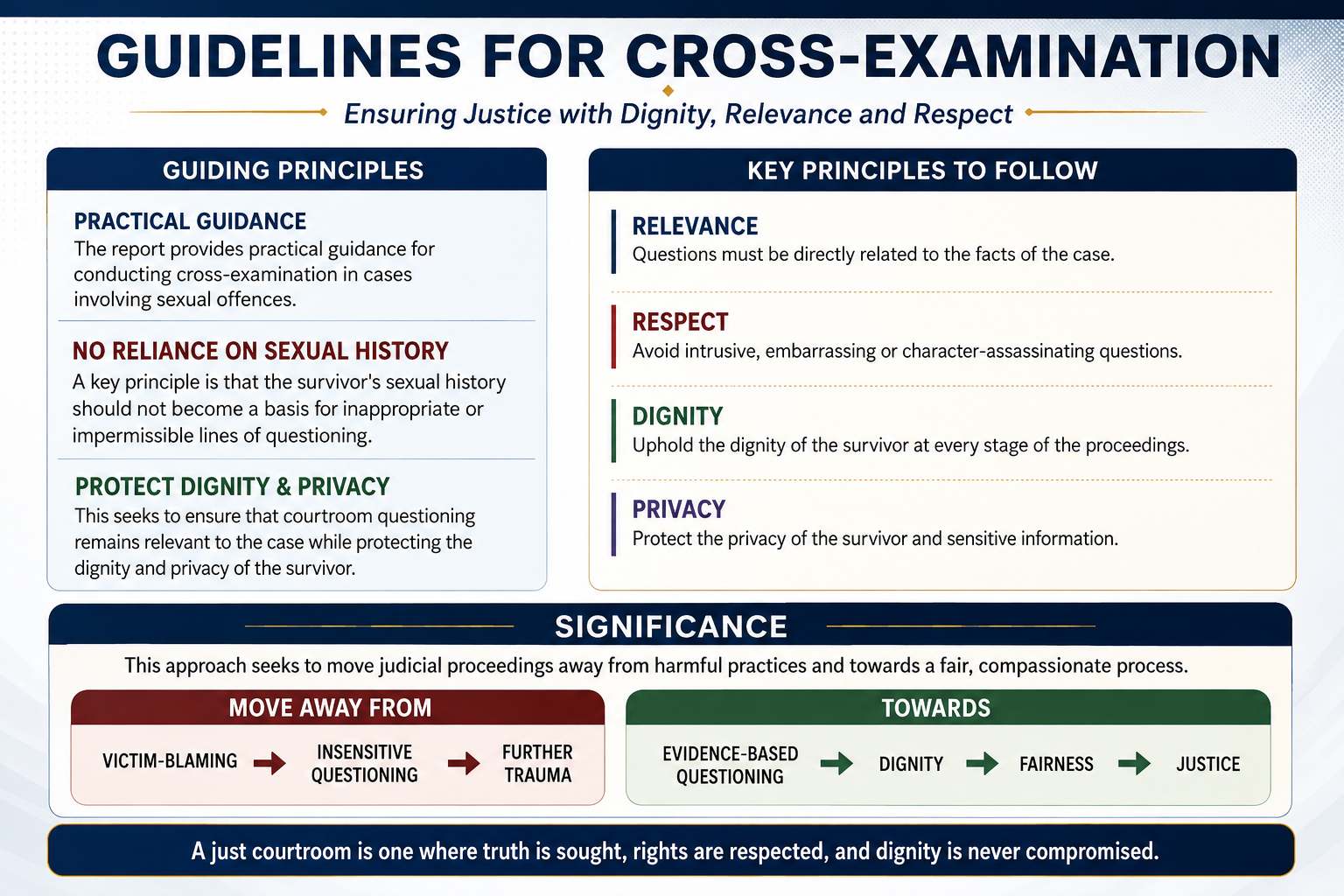
Addressing Gender Bias in the Justice System
-
Identify and address gender bias and prejudice in investigation, judicial proceedings and adjudication.
-
Promote a progressive, gender-sensitive judicial approach.
Gender-Sensitive Language in Judicial Orders
-
Use gender-sensitive and respectful language in judgments, judicial orders and courtroom proceedings.
-
Ensure language protects the dignity and privacy of all stakeholders.
Trauma-Informed Approach
-
Recognise the psychological and emotional trauma experienced by survivors.
-
Conduct proceedings with sensitivity to the effects of trauma.
-
Justice should not become another source of trauma.
Victim-Centric Courtroom Practices
-
Ensure dignity, privacy, compassion, fairness and sensitivity.
-
Balance the needs of vulnerable persons with procedural fairness.
Role of Judicial Training
The guidelines also underline the importance of judicial training and awareness.
Sensitivity cannot depend only on individual discretion. Institutional training can help judicial stakeholders understand:
-
Gender-related biases
-
Trauma experienced by survivors
-
Appropriate courtroom practices
-
Respectful judicial language
-
Constitutional values of dignity and equality
The report therefore links judicial capacity-building with better administration of justice.
Institutional Framework
-
The guidelines originate from a report prepared by the National Judicial Academy pursuant to the directions of the Supreme Court.
-
The Supreme Court accepted the report of the Committee of Experts constituted through the National Judicial Academy.
-
Thus, the development of these guidelines reflects cooperation between the Supreme Court and the judicial training/institutional framework to improve judicial responses to gender-related cases.
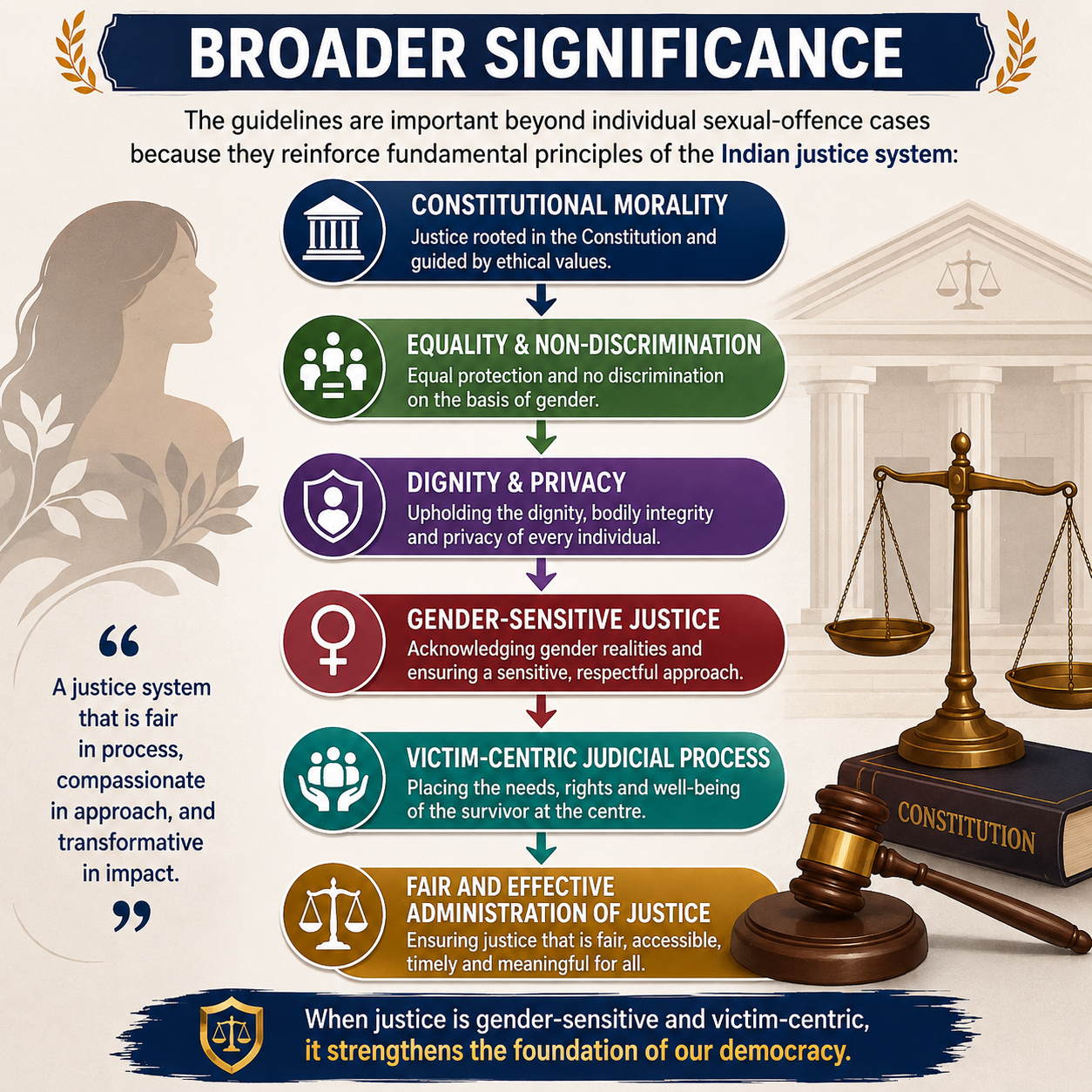
The Supreme Court's approach emphasises that fairness in justice is not limited to the final verdict; it also concerns how victims and other vulnerable persons are treated throughout the judicial process.