
Explore tiger conservation success in India, Project Tiger, NTCA, tiger population growth, wildlife corridors, technology-driven monitoring, and global leadership in biodiversity conservation and ecosystem protection.
Syllabus Areas:
GS III - Environment and Ecology
29 July is observed as International Tiger Day, highlighting global efforts to conserve wild tigers.
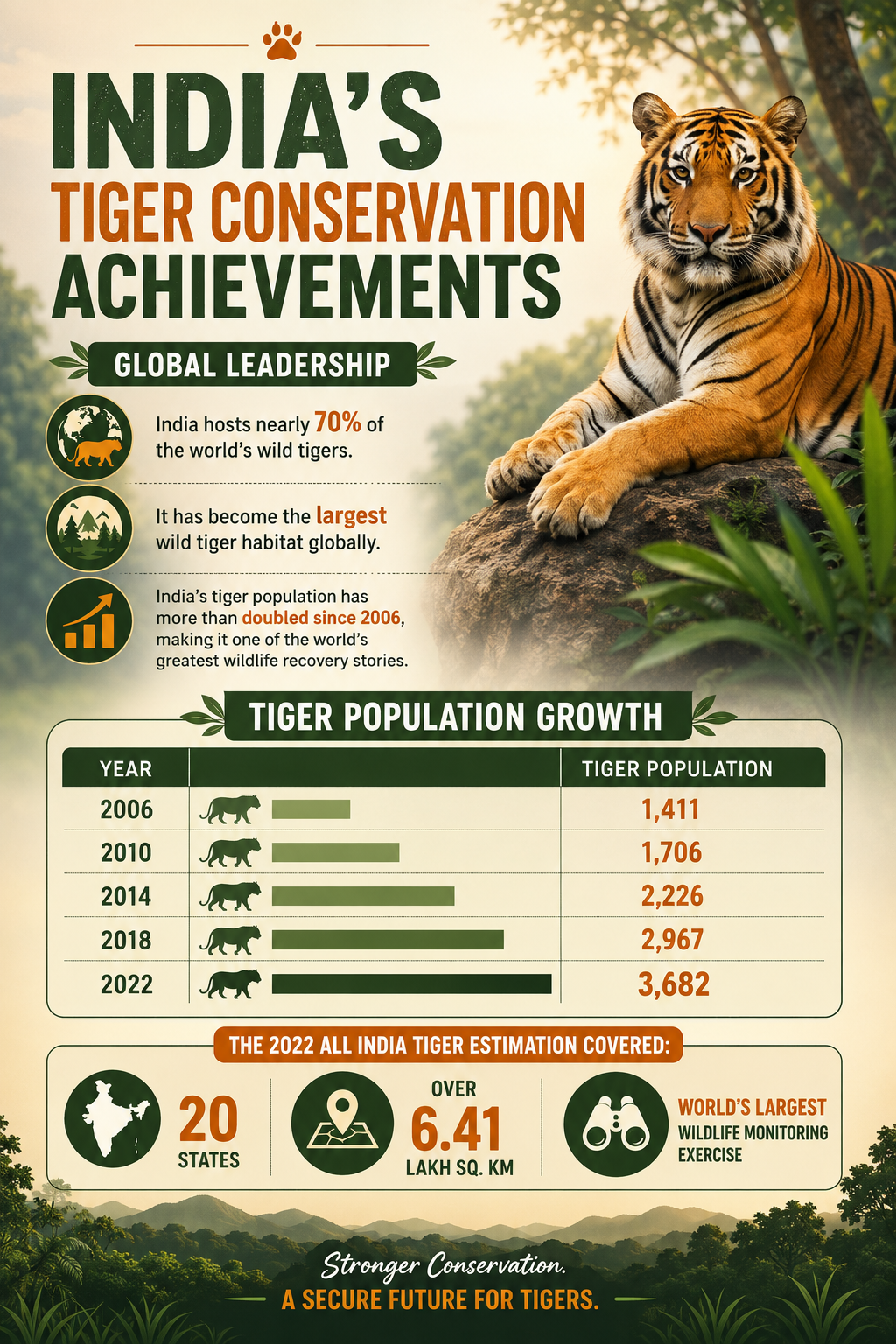
India has emerged as the global leader in tiger conservation, accounting for nearly 70% of the world's wild tiger population.
India's success is attributed to science-based conservation policies, institutional support, technology-driven monitoring, and community participation.
International Tiger Day
-
Observed every year on 29 July.
-
Originated from the Saint Petersburg Tiger Summit (2010).
-
Initially launched with the Tx2 Goal to double global tiger numbers.
-
Global tiger population increased from about 3,200 (2010) to around 5,700+ today due to coordinated conservation efforts.
Importance of Tigers
Tigers are more than charismatic wildlife species; they are:
-
Apex predators that maintain ecological balance.
-
Umbrella species, whose conservation protects entire ecosystems.
-
Indicators of healthy forests and biodiversity.
-
Symbols of India's cultural heritage and ecological wealth.
-
Protectors of ecosystem services such as:
-
Water security
-
Soil conservation
-
Pollination
-
Climate regulation
-
Disaster risk reduction
-
Livelihood support for forest communities.
Project Tiger
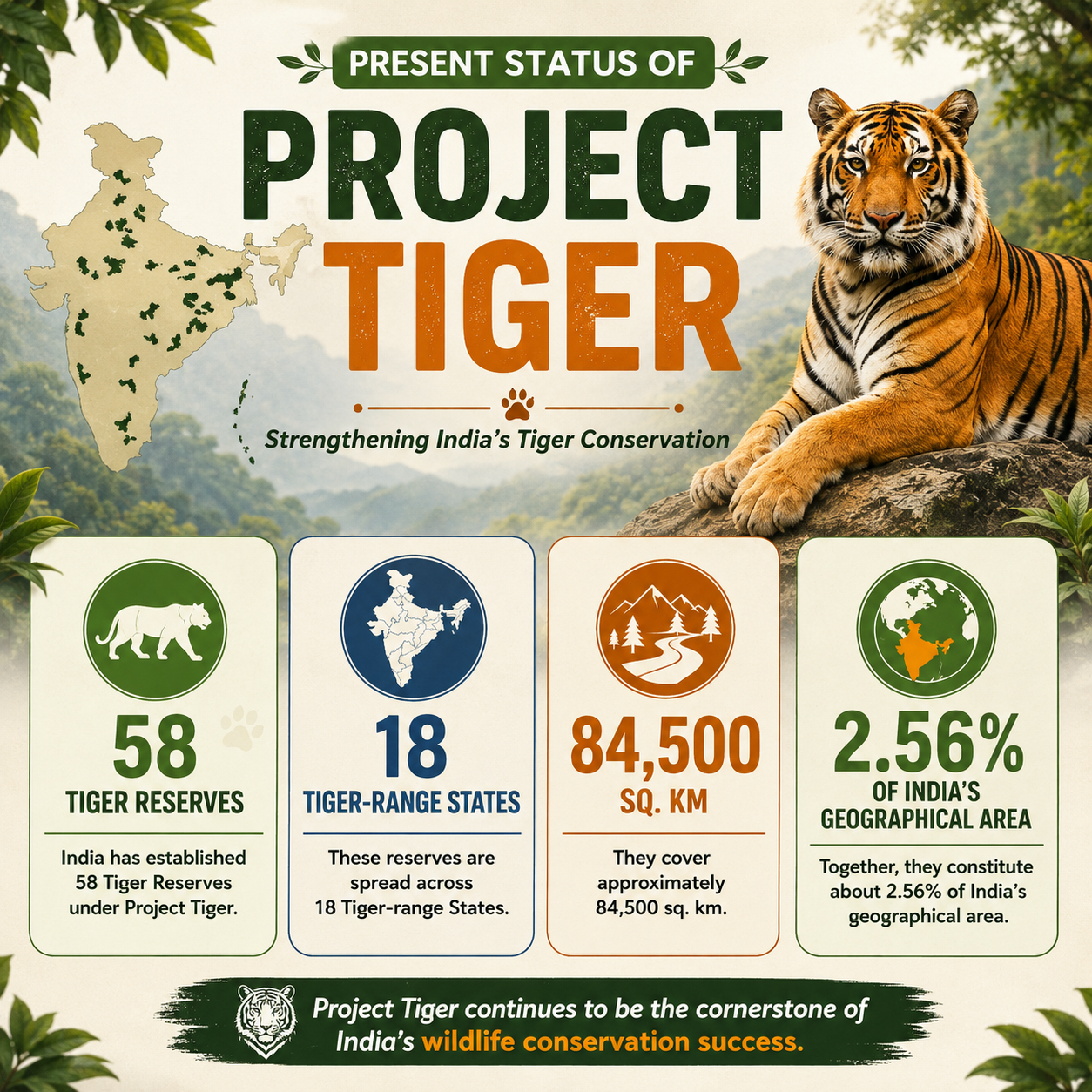
Launched by the Government of India, Project Tiger is the country's flagship tiger conservation programme.
Objectives
-
Protect viable tiger populations.
-
Conserve natural habitats.
-
Restore degraded ecosystems.
-
Strengthen scientific wildlife management.
-
Support States financially and technically.
Read More: Project Tiger
National Tiger Conservation Authority (NTCA)
The NTCA is the apex statutory authority responsible for tiger conservation.
Functions
-
Implements Project Tiger.
-
Approves Tiger Conservation Plans.
-
Issues management guidelines.
-
Provides scientific, technical and financial assistance.
-
Conducts reserve evaluations.
-
Monitors tiger reserves across India.
Composition
-
Chaired by the Union Minister for Environment, Forest and Climate Change.
-
Includes Members of Parliament, senior officials and wildlife experts.
Tiger Task Force
Established to review India's tiger conservation strategy.
Major Contributions
-
Recommended governance reforms.
-
Promoted transparency and community participation.
-
Led to 2006 amendments in the Wildlife (Protection) Act.
-
Facilitated creation of:
-
National Tiger Conservation Authority (NTCA)
-
Wildlife Crime Control Bureau (WCCB)
Also Read More About Tigers From the Following:
India’s Tiger Conservation Journey
Jim Corbett Tiger Reserve Issue
Way Forward
India aims to:
-
Develop climate-resilient tiger landscapes.
-
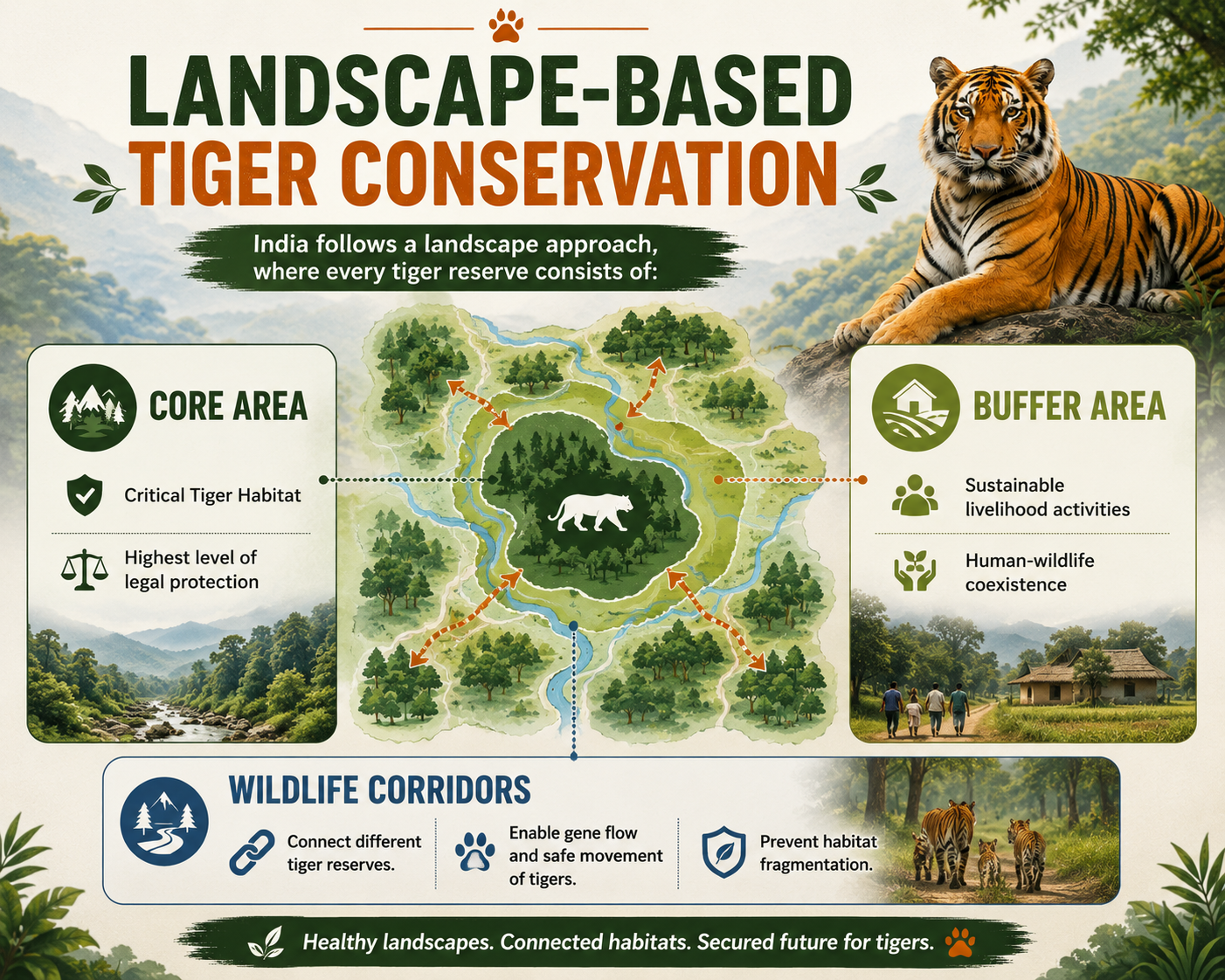
Strengthen wildlife corridors.
-
Expand technology-enabled monitoring.
-
Build frontline staff capacity.
-
Promote community participation.
-
Enhance international cooperation.
-
Sustain science-based conservation and adaptive management to secure the future of tigers.
India's remarkable tiger conservation journey demonstrates that science-based policies, strong governance, advanced technology, community participation, and international cooperation can successfully protect biodiversity while ensuring ecological security and sustainable development for future generations.