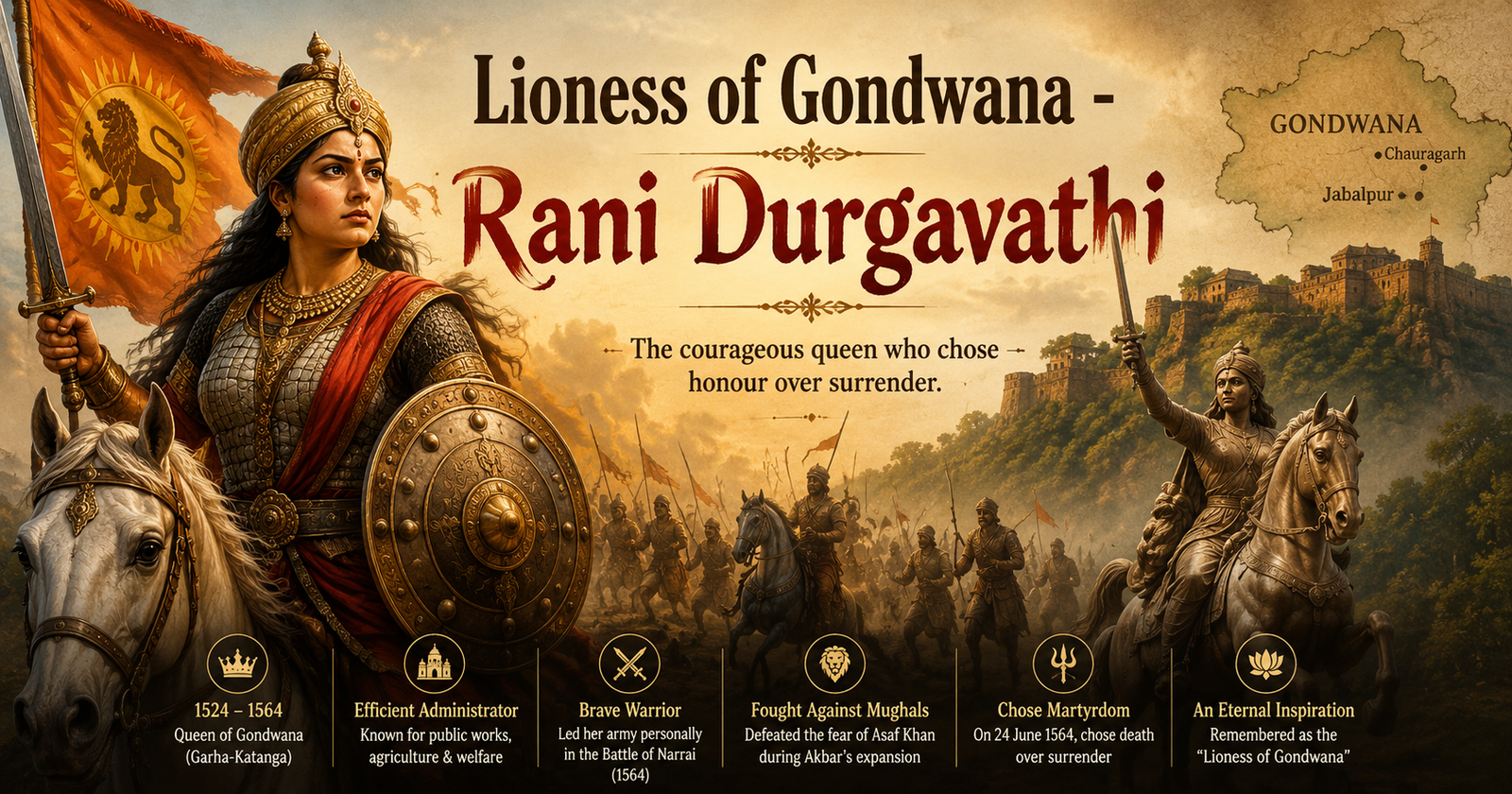
Rani Durgavati, the Lioness of Gondwana, symbolized courage, leadership, and sacrifice. A Chandela princess and Gond queen, she bravely resisted Mughal expansion and remains an enduring icon of valour.
Syllabus Areas:
GS I - Medieval Indian History
Why is it in the news?
The President of India, Smt Droupadi Murmu graced the 36th convocation ceremony of Rani Durgavati University at Jabalpur, Madhya Pradesh today (June 21, 2026).
Who was Rani Durgavati?
Rani Durgavati was one of the most celebrated warrior queens of medieval India. She ruled the Gondwana (Garha-Katanga) kingdom in present-day Madhya Pradesh and is remembered for her bravery, administrative ability, and resistance against the Mughal Empire.
Early Life
-
Born on 5 October 1524 in the Chandel Rajput family of Mahoba (present-day Uttar Pradesh).
-
Married Dalpat Shah, the son of Gond ruler Sangram Shah, thereby linking the Chandel and Gond dynasties.
-
After Dalpat Shah's death in 1550, she became regent for her minor son Vir Narayan and effectively governed the kingdom.
Administration
-
Shifted the capital from Singorgarh to Chauragarh for strategic reasons.
-
Encouraged trade, agriculture, public works, and welfare measures.
-
Several tanks and reservoirs around Jabalpur, such as Ranital, are associated with her reign.
Resistance Against the Mughals
-
After Akbar's expansion into Malwa, Gondwana came into conflict with the Mughals.
-
In 1564, Mughal general Asaf Khan invaded her kingdom.
-
Rani Durgavati personally led her army in the Battle of Narrai (Narrai Nala).
-
Though outnumbered and facing superior Mughal weaponry, she fought courageously. When defeat became inevitable, she chose death over surrender on 24 June 1564.
Legacy
-
Revered as the "Lioness of Gondwana" and a symbol of courage and sacrifice.
-
Rani Durgavati Vishwavidyalaya (University) at Jabalpur was named after her in 1983 to honour her memory.
-
Her martyrdom day, 24 June, is commemorated as Balidan Diwas in parts of central India.
Famous Kings of the Chandel (Chandela) Dynasty
The Chandelas were a Rajput dynasty that ruled the Bundelkhand region (present-day Madhya Pradesh and Uttar Pradesh) between the 9th and 13th centuries. They are best known for constructing the magnificent Khajuraho Group of Monuments, a UNESCO World Heritage Site.
1. Nannuka (c. 831–845 CE)
-
Founder of the Chandela dynasty.
-
Established Chandela authority in Bundelkhand.
-
Initially served as feudatories of the Gurjara-Pratiharas.
2. Yashovarman (c. 925–950 CE)
-
Expanded the kingdom significantly.
-
Captured the important fortress of Kalinjar.
-
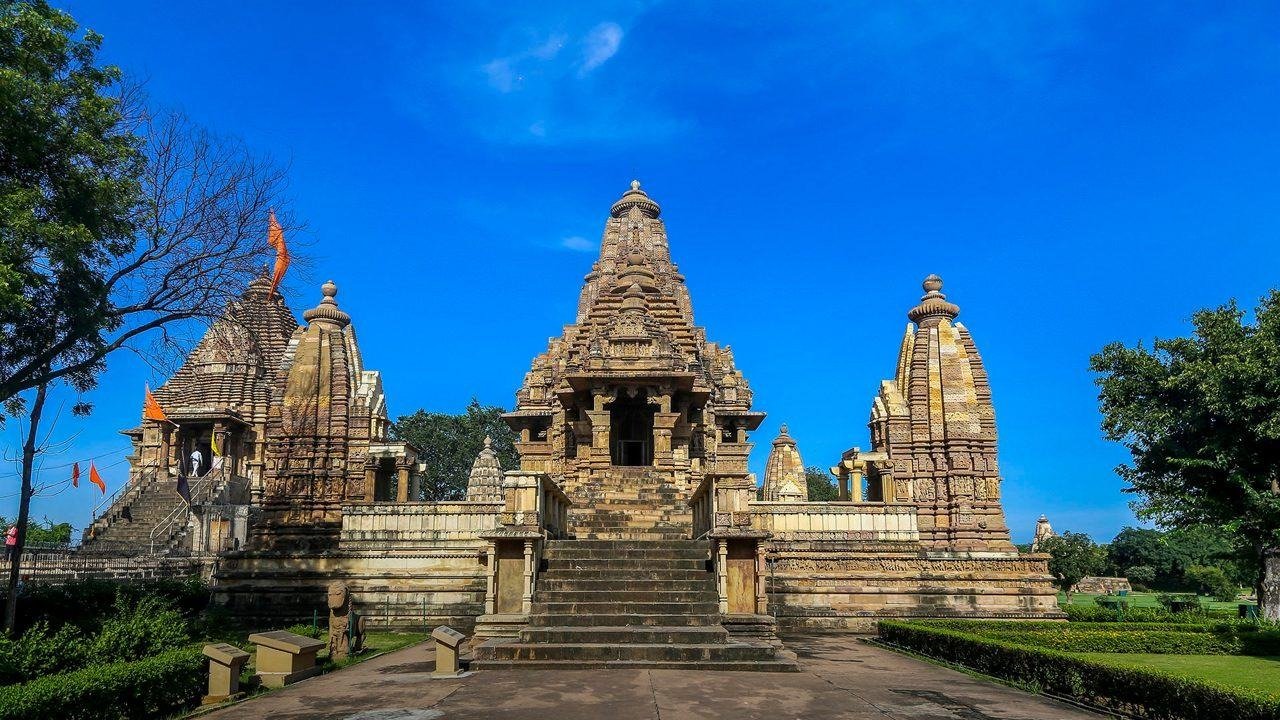
Built the famous Lakshmana Temple at Khajuraho.
3. Dhanga (c. 950–1002 CE)
-
One of the greatest Chandela rulers.
-
Declared independence from the Gurjara-Pratiharas.
-
Oversaw major temple construction at Khajuraho.
-
Extended Chandela influence across central India.
4. Vidyadhara (c. 1003–1035 CE)
-
Considered the most powerful Chandela king.
-
Successfully resisted invasions by Mahmud of Ghazni.
-
Strengthened the strategic fort of Kalinjar Fort.
-
Associated with the construction of the magnificent Kandariya Mahadeva Temple.
5. Paramardi (c. 1165–1203 CE)
-
The last prominent Chandela ruler.
-
Faced invasions from the Prithviraj Chauhan and later the Ghurids.
-
Associated with the famous Bundelkhand legends of Alha and Udal
Khajuraho Group of Monuments
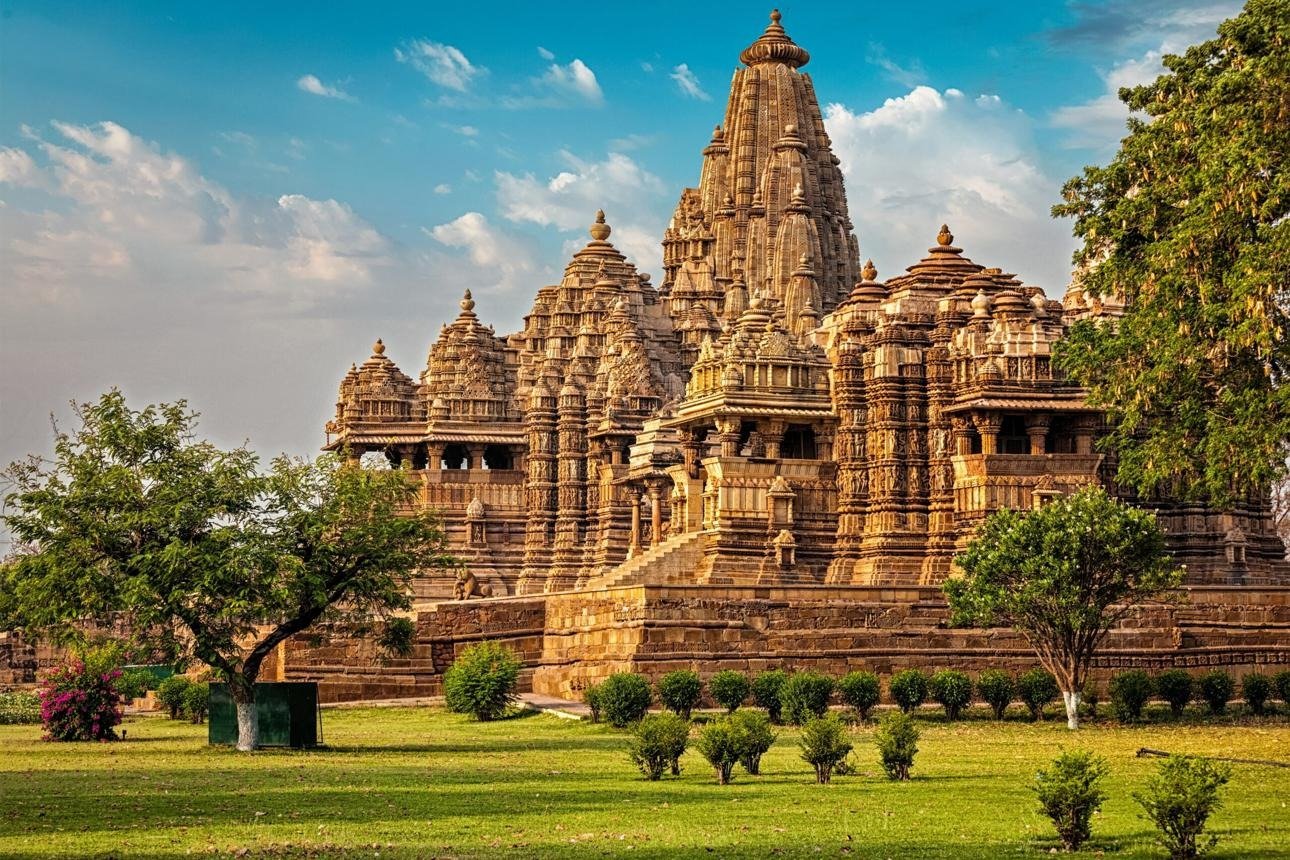
The Khajuraho Group of Monuments is a group of medieval Hindu and Jain temples built by the Chandela dynasty between c. 950–1050 CE in present-day Madhya Pradesh.
These temples are famous for:
-
Exceptional Nagara-style architecture.
-
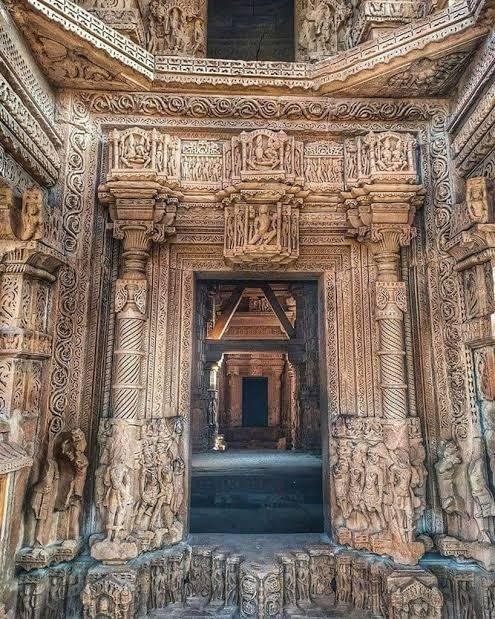
Intricate stone carvings and sculptures.
-
Depictions of gods, goddesses, daily life, music, dance, warfare, and some erotic sculptures.
-
Their cultural and artistic significance in medieval India.
The site was inscribed as a UNESCO World Heritage Centre World Heritage Site in 1986.
Architectural Features
Nagara Style
-
Curvilinear Shikhara (tower).
-
Raised platform (Jagati).
-
No enclosing walls around most temples.
Sculptures
The temples depict:
-
Hindu deities.
-
Celestial beings (Apsaras).
-
Musicians and dancers.
-
Warriors and hunting scenes.
-
Everyday life in medieval India.
-
A limited proportion of erotic sculptures (less than 10% of total carvings).
Prelims Questions:
1. Which of the following temples at Khajuraho is dedicated to Lord Vishnu?
A) Kandariya Mahadeva Temple
B) Vishvanatha Temple
C) Lakshmana Temple
D) Duladeo Temple
Answer: C) Lakshmana Temple
2. Consider the following statements about the Chandela Dynasty:
-
They initially emerged as feudatories of the Gurjara-Pratiharas.
-
Their political centre was in the Bundelkhand region.
-
Their most famous architectural contribution is represented by the Khajuraho temples.
Which of the statements given above are correct?
A) 1 and 2 only
B) 2 and 3 only
C) 1 and 3 only
D) 1, 2 and 3
Answer: D) 1, 2 and 3