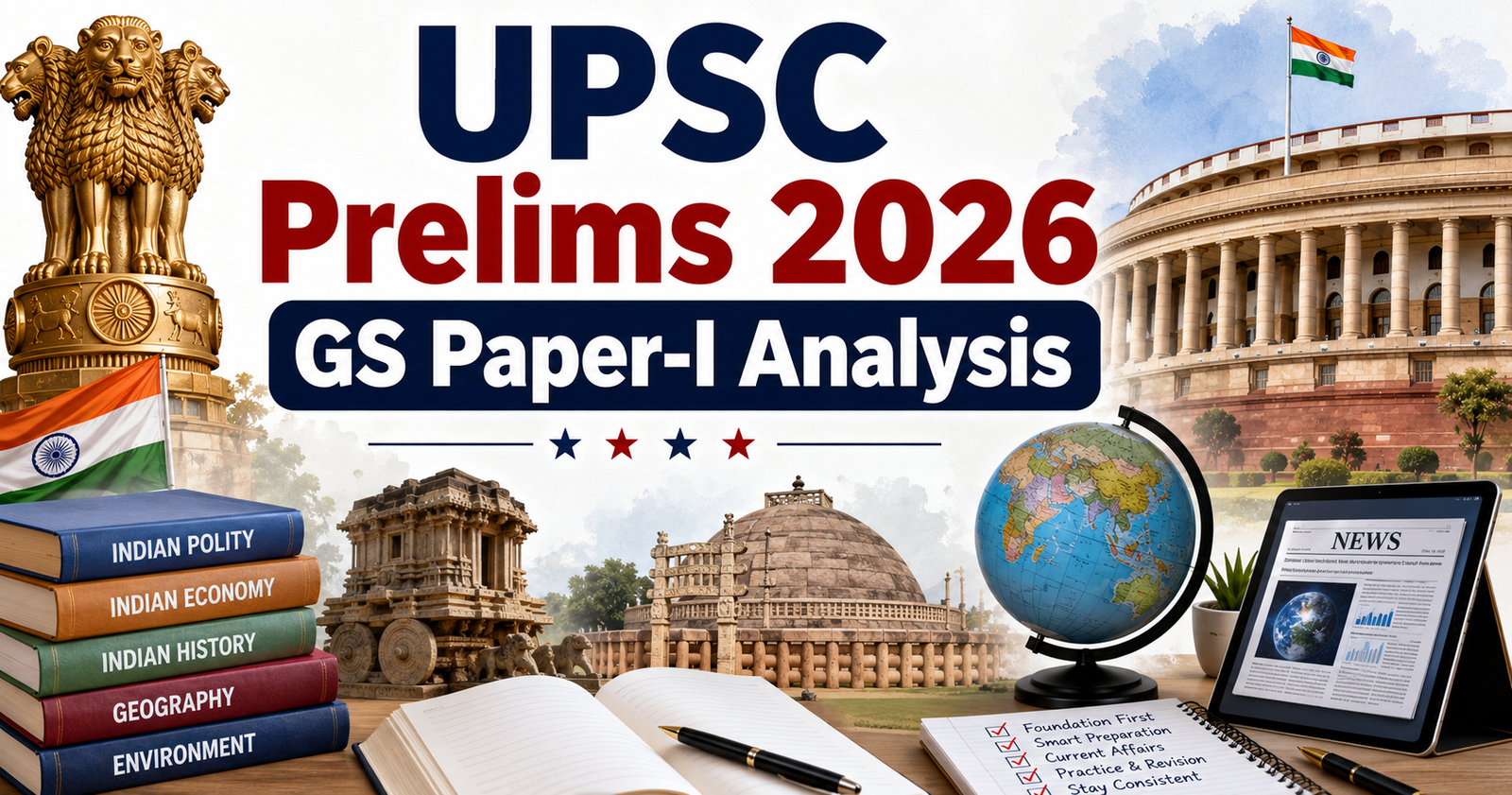
UPSC Prelims 2026 GS Paper-I Analysis covering Economy, Geography, Environment, Ancient India, Polity, Current Affairs integration, paper difficulty, UPSC trends, conceptual questions, elimination techniques, and preparation strategy for Civil Services as
The UPSC Civil Services Preliminary Examination 2026 once again proved why the examination cannot be cleared through rote memorisation alone. The paper was neither conventionally “easy” nor impossibly difficult. Instead, it was a carefully balanced paper that rewarded conceptual clarity, intelligent elimination, interlinking ability, and awareness of current affairs integrated with static subjects.
Aspirants who relied purely on factual mugging or monthly current affairs compilations would have found the paper uncomfortable. On the other hand, candidates with strong fundamentals, revision discipline, and analytical thinking had a clear advantage.
The biggest takeaway from the paper is this: UPSC is increasingly testing whether an aspirant can think like an administrator, not merely recall information.
Subject-wise Weightage Analysis
|
Subject |
Number of Questions |
|
Culture |
5 |
|
Ancient India |
10 |
|
Medieval India |
0 |
|
Modern India |
5 |
|
Geography |
13 |
|
Environment & Ecology + Current Affairs |
12 |
|
Science & Technology + Current Affairs |
10 |
|
Polity + Current Affairs |
10 |
|
Economy + Current Affairs |
14 |
|
Governance + Current Affairs |
5 |
|
International Relations + Current Affairs |
7 |
|
General Knowledge |
9 |
|
TOTAL |
100 |
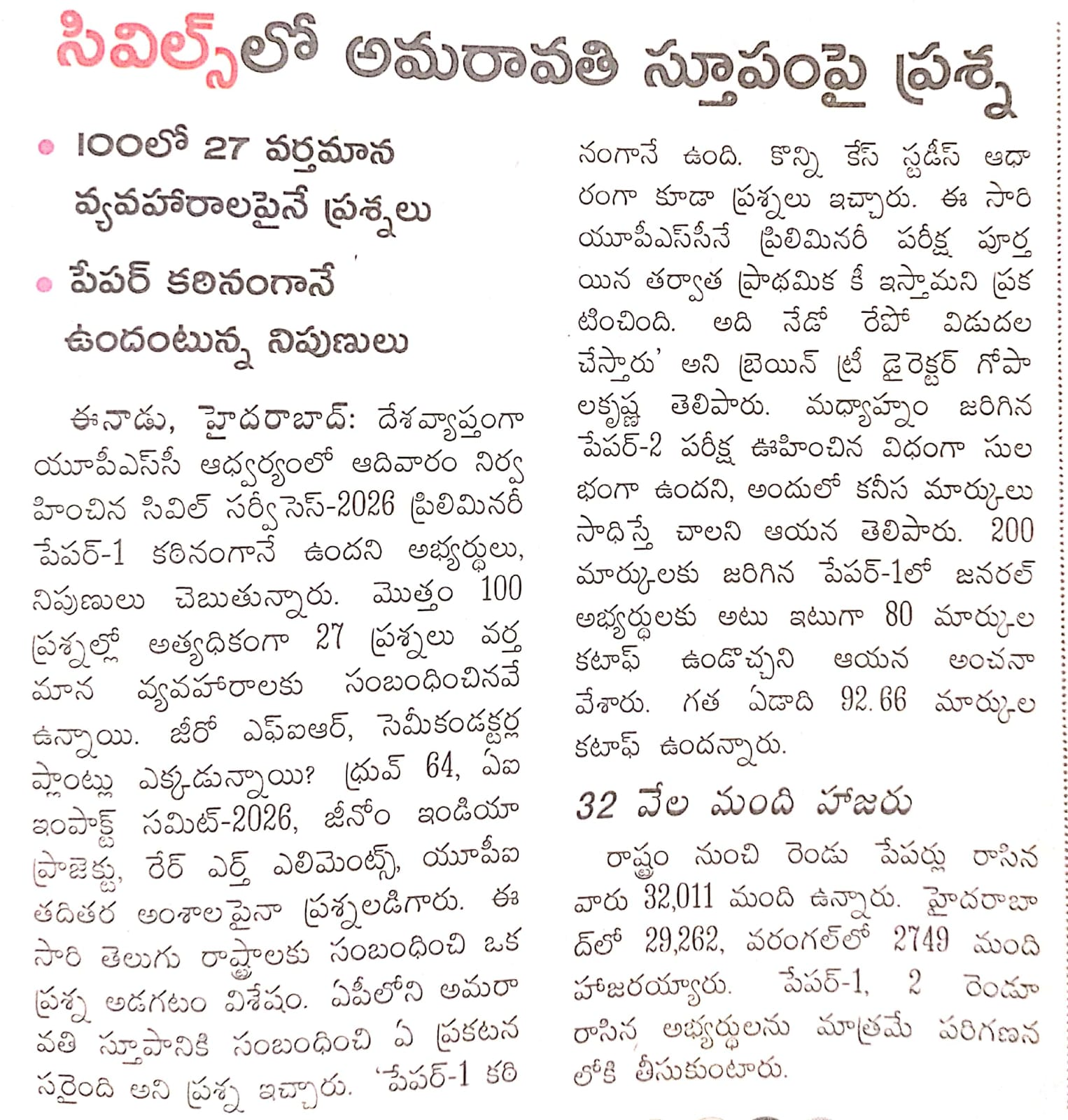 Courtesy with Enadu |
Overall Nature of the Paper
The paper can broadly be classified into four characteristics:
1. High Emphasis on Conceptual Application
Many questions were framed in a way that demanded understanding instead of direct recall. UPSC avoided straightforward textbook questions and instead asked multi-dimensional statements requiring elimination techniques.
Questions often combined:
-
static concepts,
-
current affairs,
-
institutional understanding,
-
and analytical reasoning.
This indicates that UPSC continues its recent trend of rewarding depth over superficial preparation.
2. Strong Integration of Current Affairs with Static Subjects
Current affairs were not isolated. Instead, they were deeply embedded into:
-
Polity,
-
Economy,
-
Science & Technology,
-
Environment,
-
and International Relations.
Candidates who prepared current affairs contextually performed better than those who studied isolated facts.
For example:
-
Economy questions linked policies with concepts,
-
Environment questions linked biodiversity with conventions,
-
Polity questions involved constitutional understanding with contemporary governance developments.
3. Ancient India Makes a Strong Comeback
One of the most striking aspects of the paper was the unusually high weightage given to Ancient India.
With 10 questions from Ancient History, UPSC clearly signalled that:
-
NCERTs remain indispensable,
-
cultural and archaeological understanding matters,
-
and neglected areas can suddenly become dominant.
Interestingly, Medieval India had zero questions, reflecting UPSC’s unpredictable nature. This reinforces a critical lesson for aspirants: no subject can be permanently ignored based on previous year trends.
4. Economy and Geography Continue to Dominate
Economy emerged as the single largest core segment with 14 questions, followed closely by Geography and Environment.
The Economy section tested:
-
conceptual clarity,
-
macroeconomic understanding,
-
fiscal and monetary concepts,
-
and application-oriented interpretation.
Similarly, Geography questions included:
-
physical geography,
-
mapping orientation,
-
environmental geography,
-
and resource-related understanding.
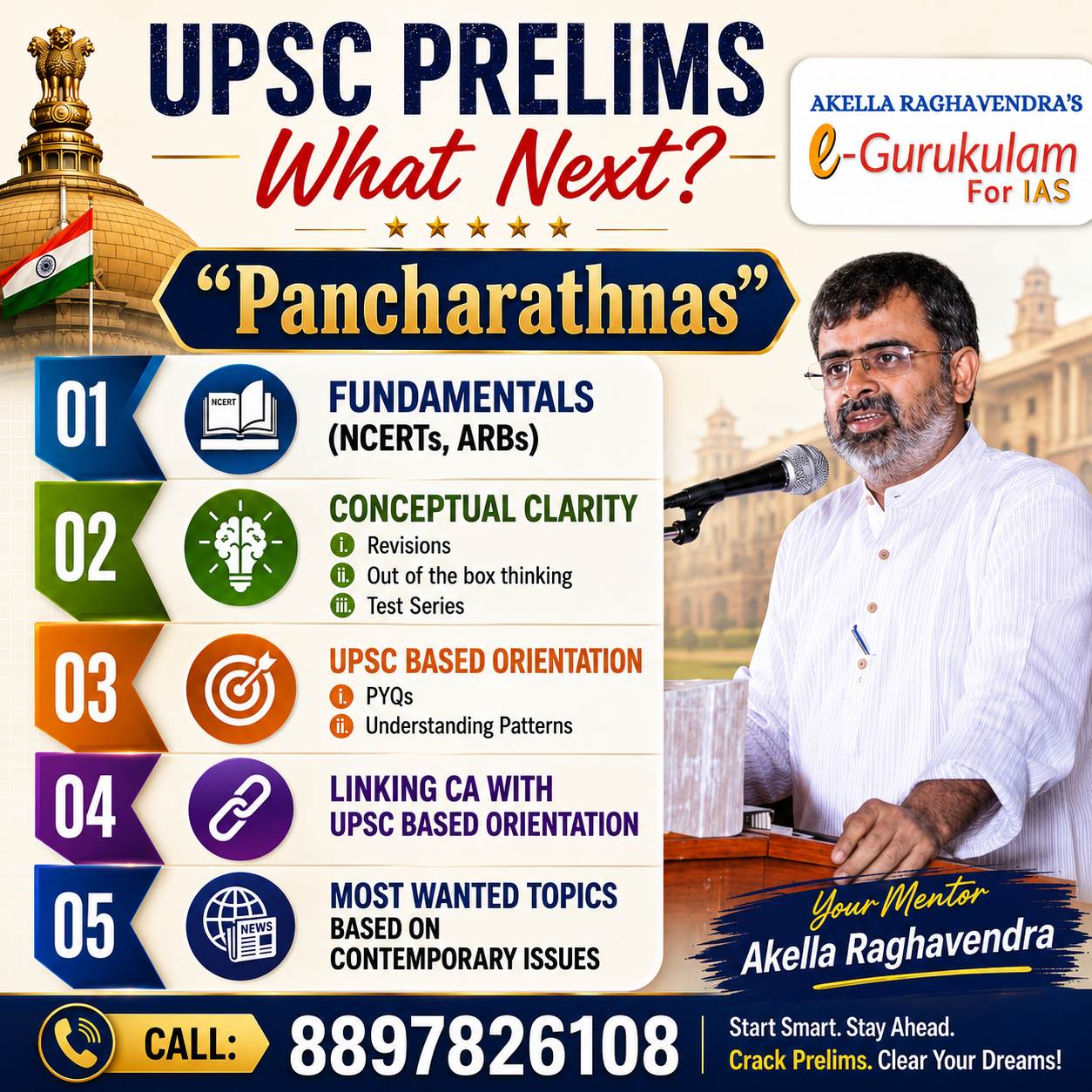
The “Pancharathnas” highlighted above perfectly reflect the preparation strategy required for future aspirants:
-
Strong Fundamentals through NCERTs and standard books
-
Continuous Conceptual Clarity through revisions and test practice
-
UPSC-Oriented Preparation using PYQs and pattern analysis
-
Intelligent Linking of Current Affairs with static subjects
-
Focus on Contemporary and High-Probability Topics
Ultimately, UPSC Prelims 2026 reinforces one important lesson: consistency, smart preparation, and depth of understanding matter far more than collecting endless resources. Aspirants who follow a disciplined and integrated strategy will stay ahead in this evolving examination pattern.