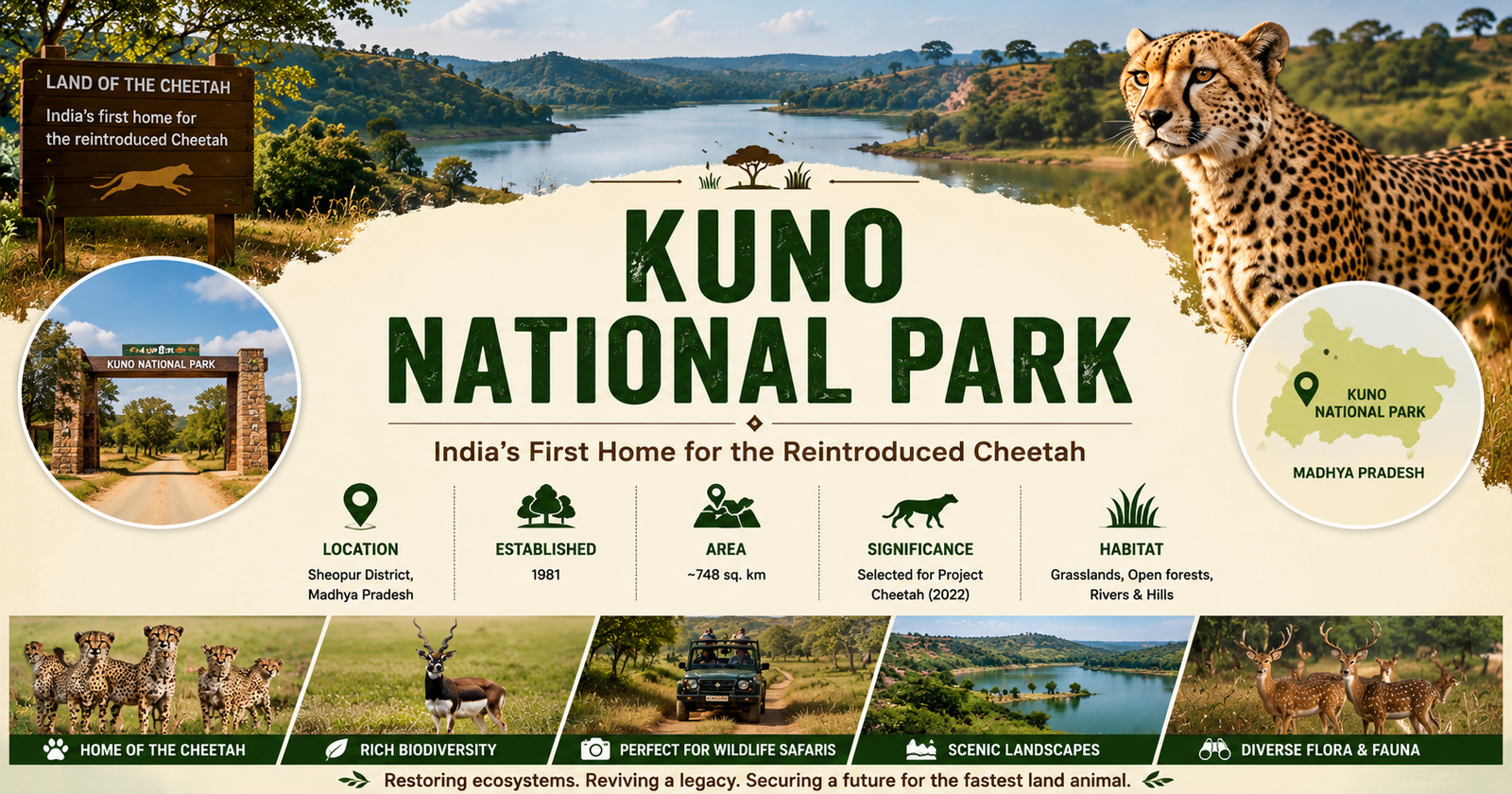
Kuno National Park, Madhya Pradesh, gained prominence through Project Cheetah, India's ambitious wildlife restoration initiative. The park symbolizes grassland conservation, biodiversity revival, ecological balance, and successful reintroduct
Syllabus Areas:
GS III - Environment & Ecology
The President of India, Smt Droupadi Murmu visited the Kuno National Park in Madhya Pradesh today (June 21, 2026). She took a tour of the Cheetah Management Area of the National Park and was briefed by the Divisional Forest Officer about the Project Cheetah.
What is Project Cheetah?
It is the world's first intercontinental translocation of a large carnivore species. The project is being implemented by the National Tiger Conservation Authority in collaboration with the Wildlife Institute of India.
Project Cheetah was launched on 17 September 2022 at Kuno National Park, Madhya Pradesh. The first batch of 8 cheetahs arrived from Namibia (September 2022), the second batch from South Africa (February 2023), and the third batch from Botswana (February 2026).
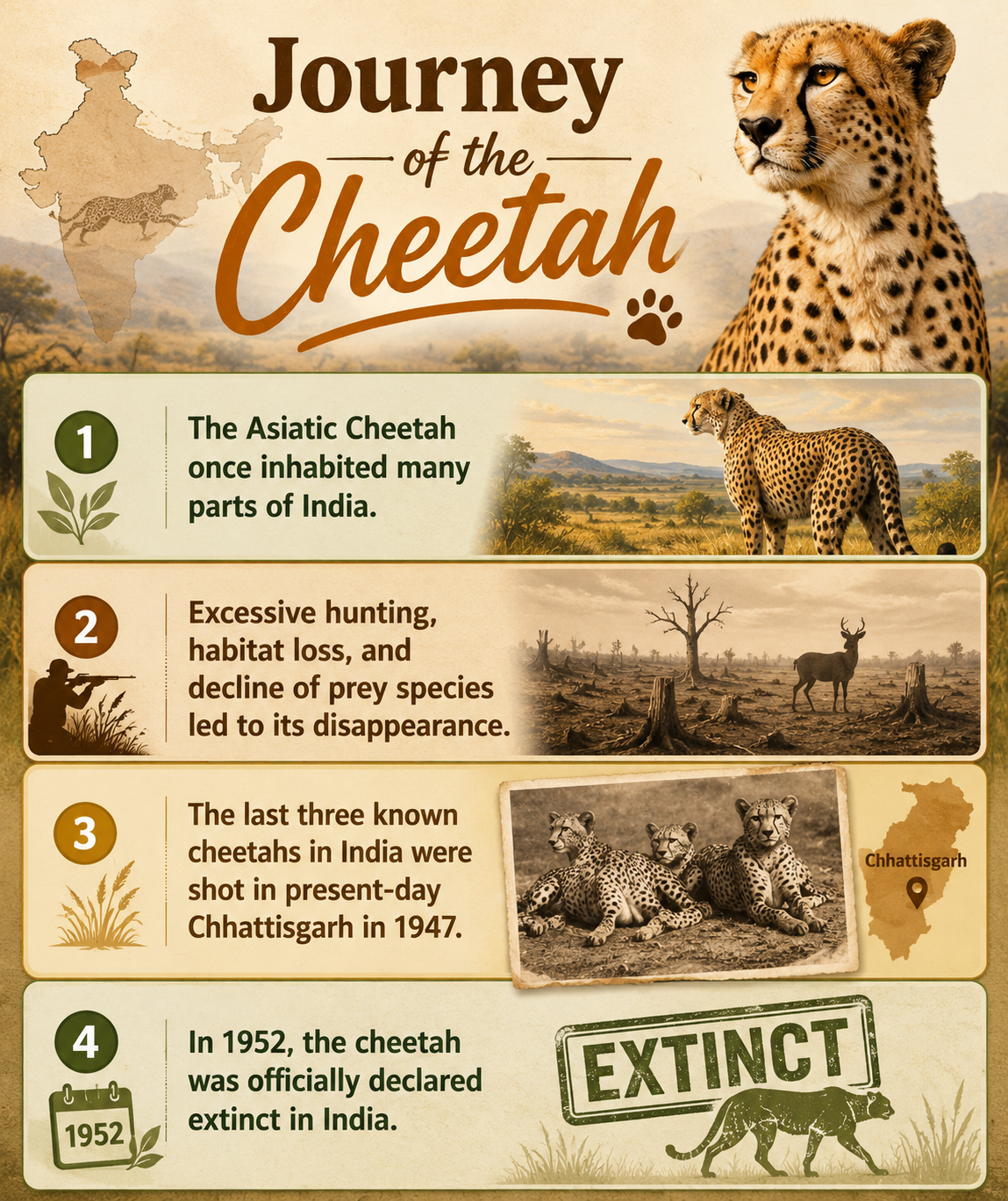
Significance
1. Restoration of Ecological Balance: Cheetahs regulate herbivore populations and help maintain healthy ecosystems.
2. Grassland Conservation: India's grasslands are among the most neglected ecosystems. Project Cheetah brings attention to their protection.
3. Global Conservation: The project contributes to worldwide cheetah conservation efforts by creating an additional free-ranging population
Why was Kuno National Park Selected?
Kuno National Park was chosen as the first site for Project Cheetah due to its ecological suitability and conservation preparedness.
-
Suitable Habitat: The park has extensive grasslands, open forests, and savanna-like landscapes that closely match the cheetah's preferred habitat.
-
Abundant Prey Base: It supports a healthy population of prey species such as chital, sambar, nilgai, wild pig, and chinkara, ensuring adequate food availability.
-
Low Human Disturbance: Several villages were relocated from the core area over the years, creating a large, relatively undisturbed habitat for wildlife.
-
Large Protected Area: The park and its surrounding landscape provide sufficient space for cheetahs to establish territories and disperse naturally.
-
Potential for Population Growth: The habitat can support breeding and the development of a self-sustaining cheetah population.
-
Conservation Infrastructure: Kuno already possessed trained staff, monitoring systems, and wildlife management facilities necessary for a large-scale species reintroduction programme.
Recently Recognised National Parks in India
1. Similipal National Park (2025)
-
Declared as India's 107th National Park in April 2025.
-
Located in Mayurbhanj district, Odisha.
-
Previously known as the Similipal Tiger Reserve and a UNESCO Biosphere Reserve.
-
Famous for:
-
Bengal Tigers
-
Asian Elephants
-
Melanistic (Black) Tigers
-
Rich biodiversity and tribal communities.
2. Sikhna Jwhwlao National Park (2025)
-
Notified in February 2025.
-
Located in the Bodoland Territorial Region (BTR), Assam.
-
Became Assam's 8th National Park.
-
Important for elephant corridors and biodiversity conservation.
3. Raimona National Park (2021)
-
Declared in 2021.
-
Assam's 6th National Park.
-
Part of the transboundary conservation landscape with Bhutan.
-
Habitat of the Golden Langur.
4. Dihing Patkai National Park (2021)
-
Declared in 2021.
-
Known as the "Amazon of the East".
-
Famous for evergreen rainforests, clouded leopards, and rich bird diversity.
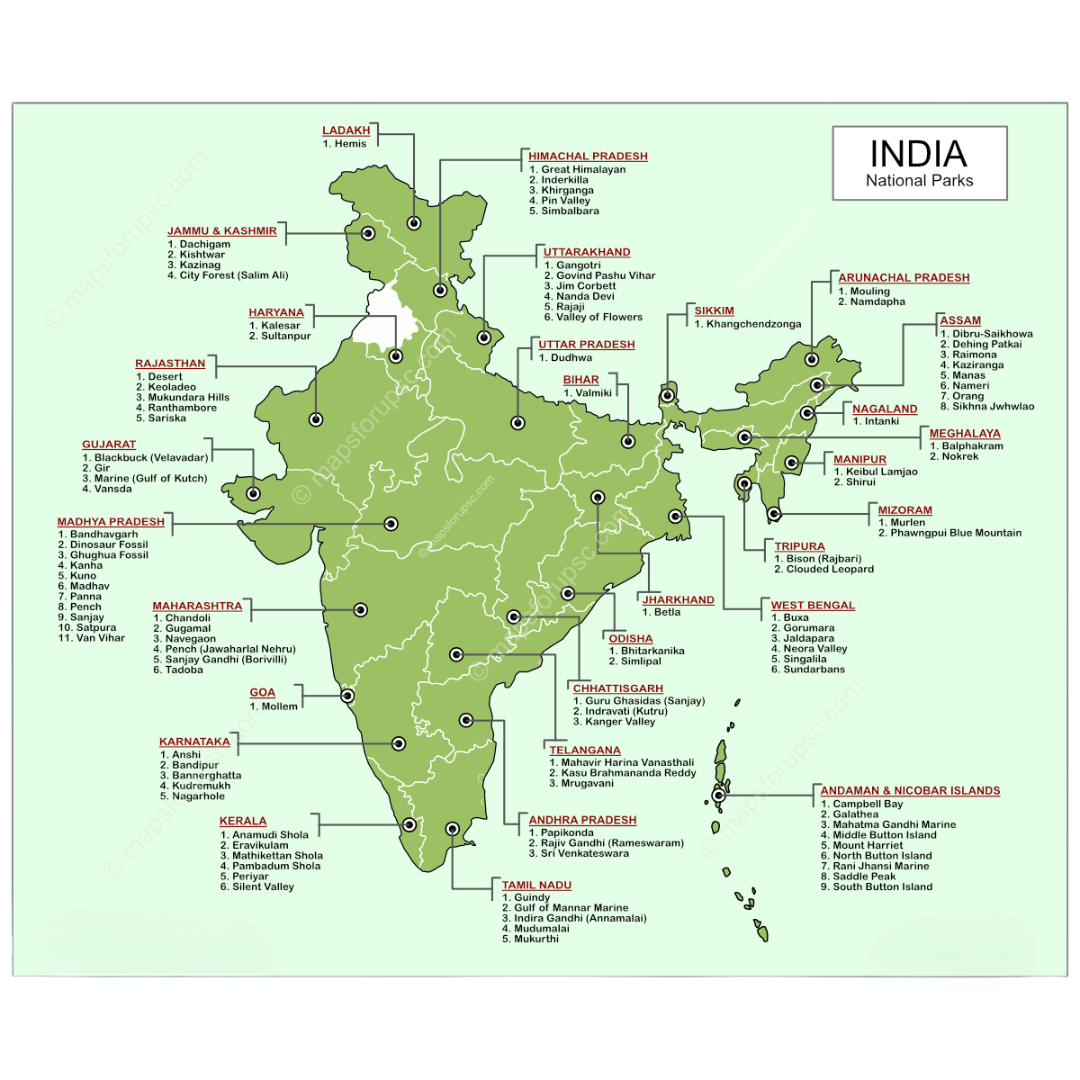
National Parks In India:
Prelims Questions:
1. Which of the following pairs is/are correctly matched?
National Park - State
1. Similipal National Park - Odisha
2. Sikhna Jwhwlao National Park - Assam
3. Madhav National Park - Rajasthan
A. 1 and 2 only
B. 2 and 3 only
C. 1 only
D. 1, 2 and 3
Answer: A
(Madhav National Park is in Madhya Pradesh.)
2. With reference to Madhav National Park, consider the following statements:
-
It is located in Shivpuri district of Madhya Pradesh.
-
Sakhya Sagar within the park is a Ramsar Site.
-
It became India's 58th Tiger Reserve in 2025.
Which of the statements given above are correct?
A. 1 and 2 only
B. 2 and 3 only
C. 1 and 3 only
D. 1, 2 and 3
Answer: D