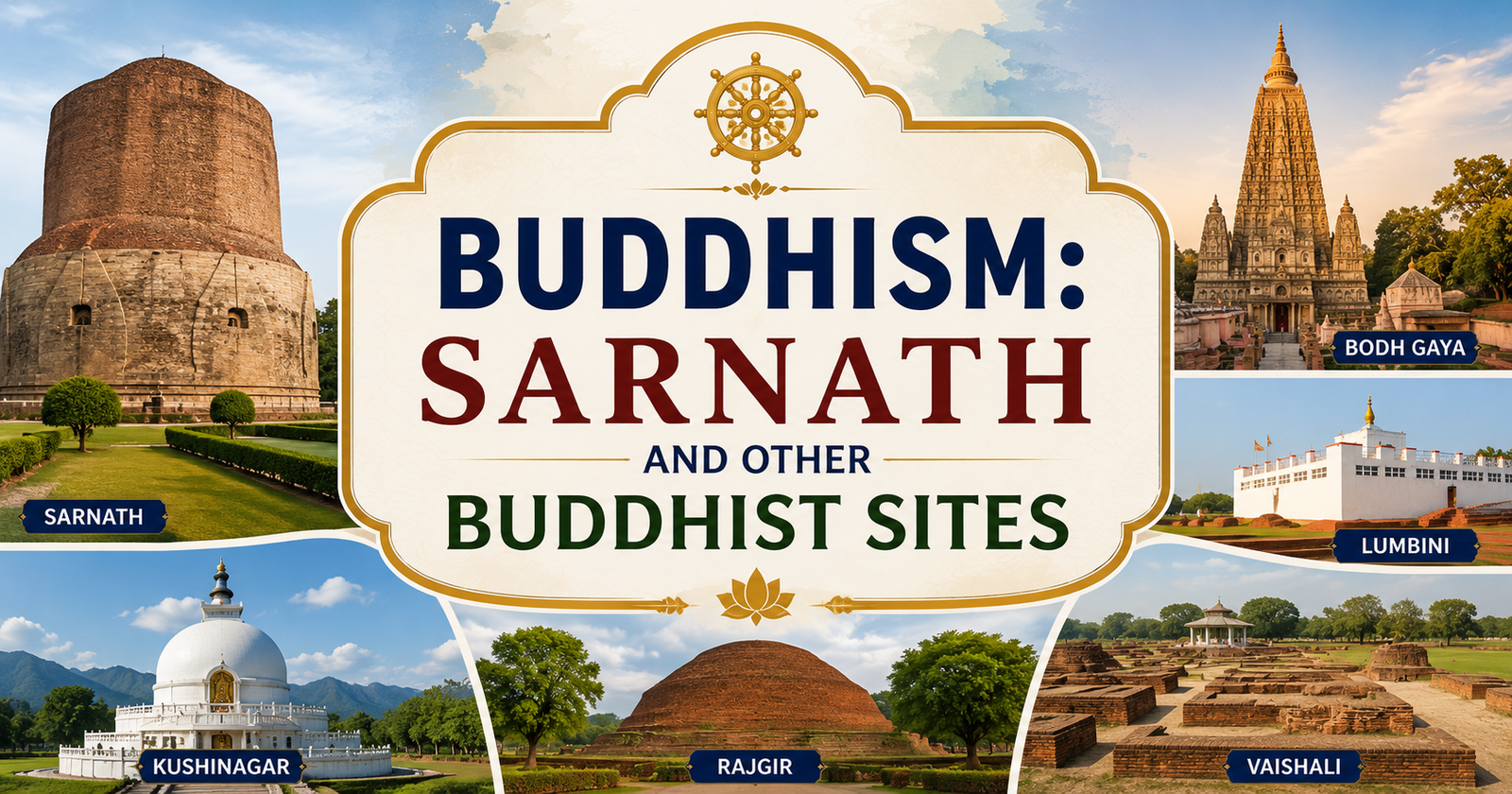
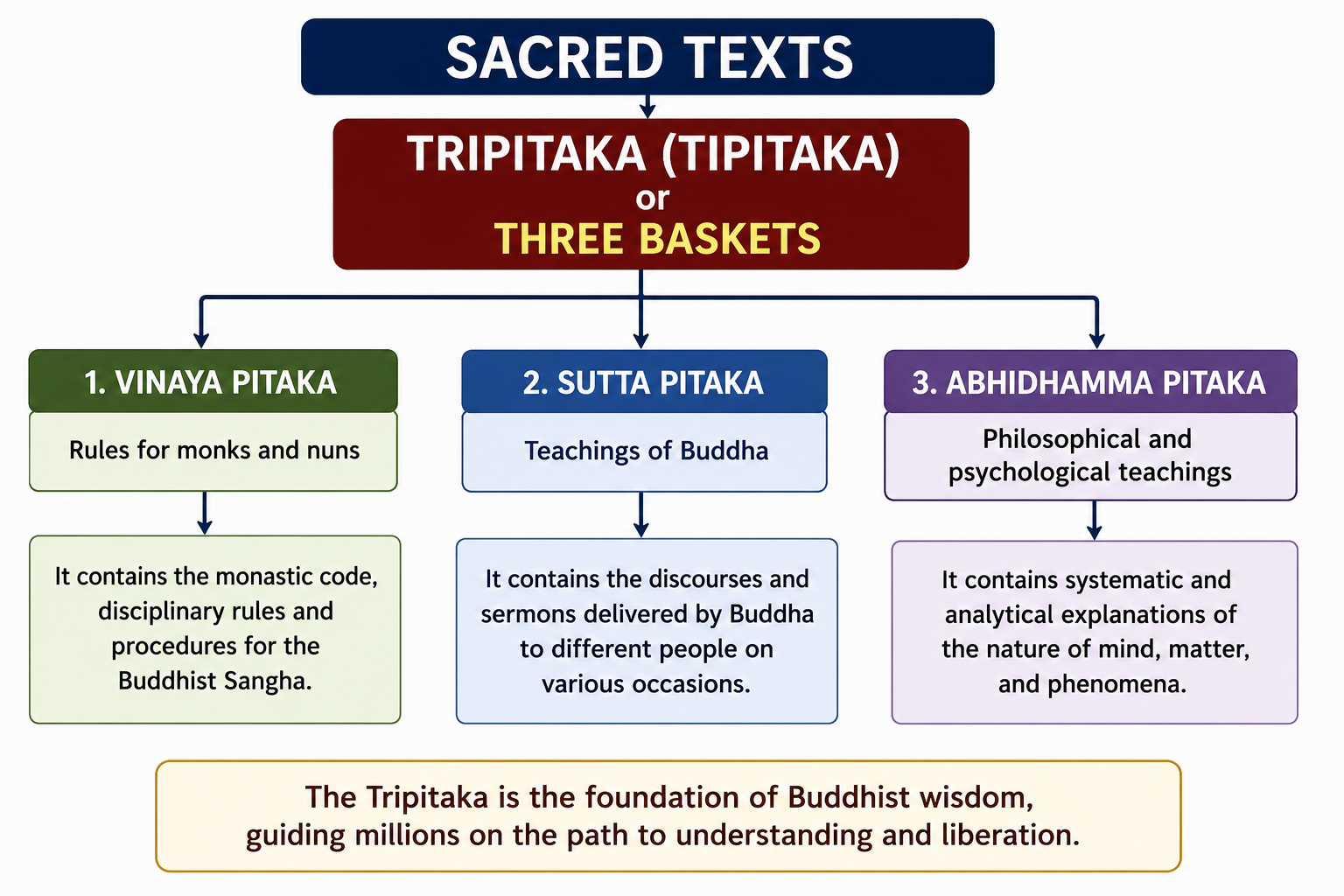
Explore Buddhism through Sarnath, UNESCO World Heritage, Buddha's life, Four Noble Truths, Noble Eightfold Path, Tripitaka, Triratna, and major Buddhist pilgrimage sites for UPSC preparation.
Syllabus Areas:
GS I - Culture
Buddhist Site Sarnath 45th UNESCO World Heritage Site
Buddhism:
Buddhism is one of the world's major religions and philosophical traditions, founded by Gautama Buddha (Siddhartha Gautama) in the 6th century BCE in ancient India. It emphasizes the path to wisdom, ethical living, and liberation from suffering (Nirvana) through self-discipline, meditation, and right understanding.
Founder
-
Gautama Buddha (Siddhartha Gautama)
-
Born around 563 BCE at Lumbini (present-day Nepal).
-
Attained Enlightenment at Bodh Gaya.
-
Delivered his First Sermon at Sarnath.
-
Attained Mahaparinirvana at Kushinagar.
About Sarnath:
-
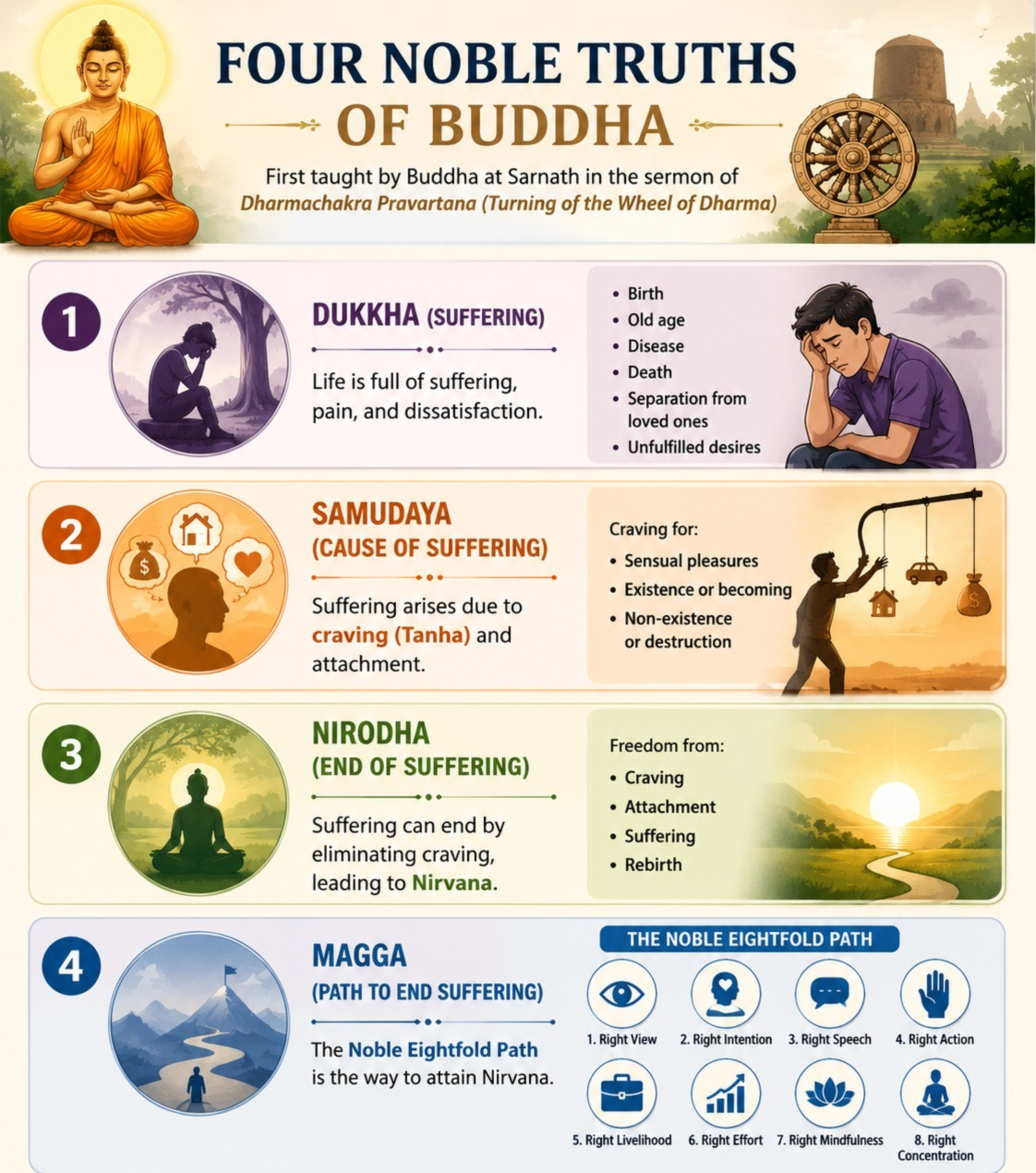
It is the place where Gautama Buddha delivered his first sermon after attaining enlightenment, known as Dharmachakra Pravartana (Turning of the Wheel of Dharma).
-
It marks:
-
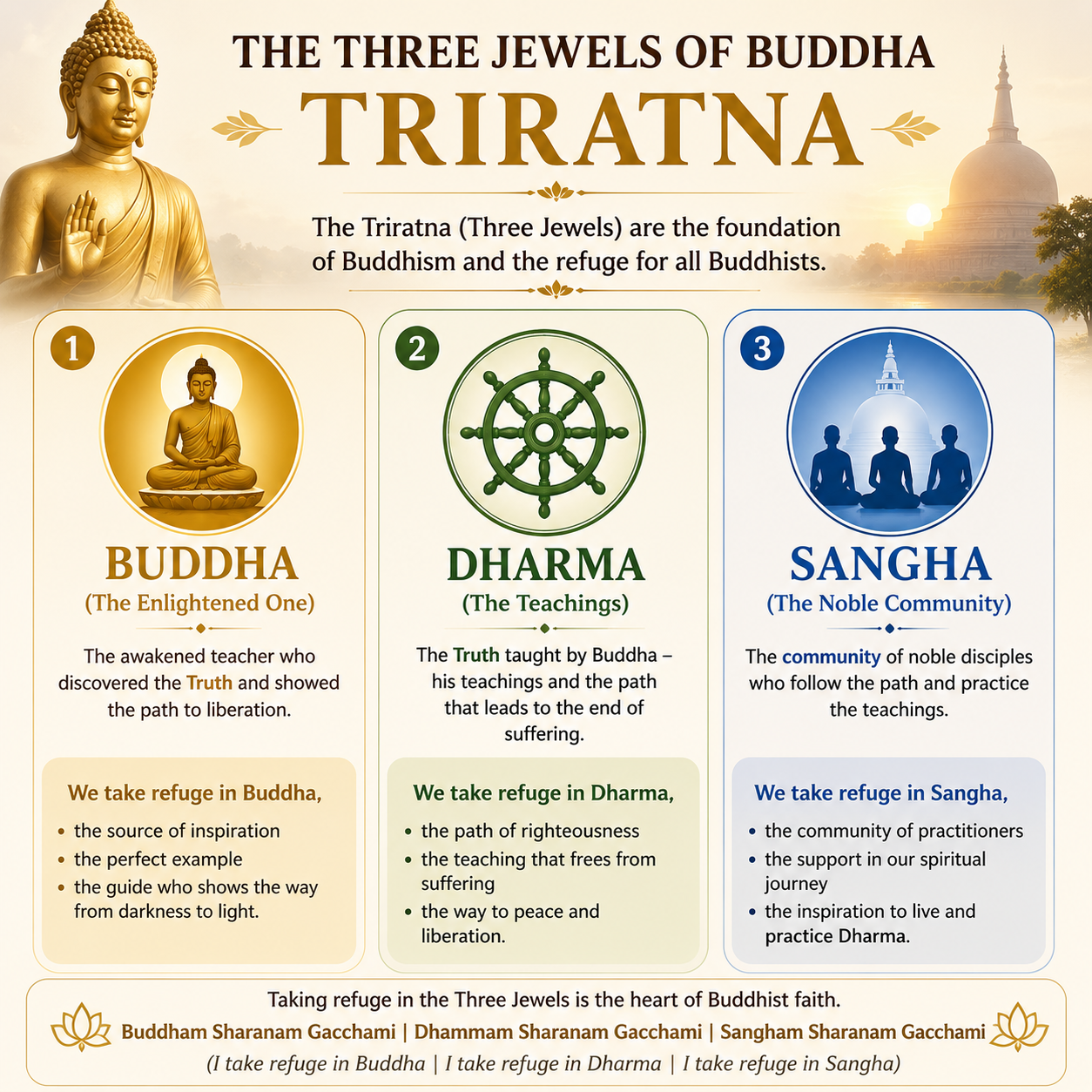
Beginning of the Buddhist Sangha.
-
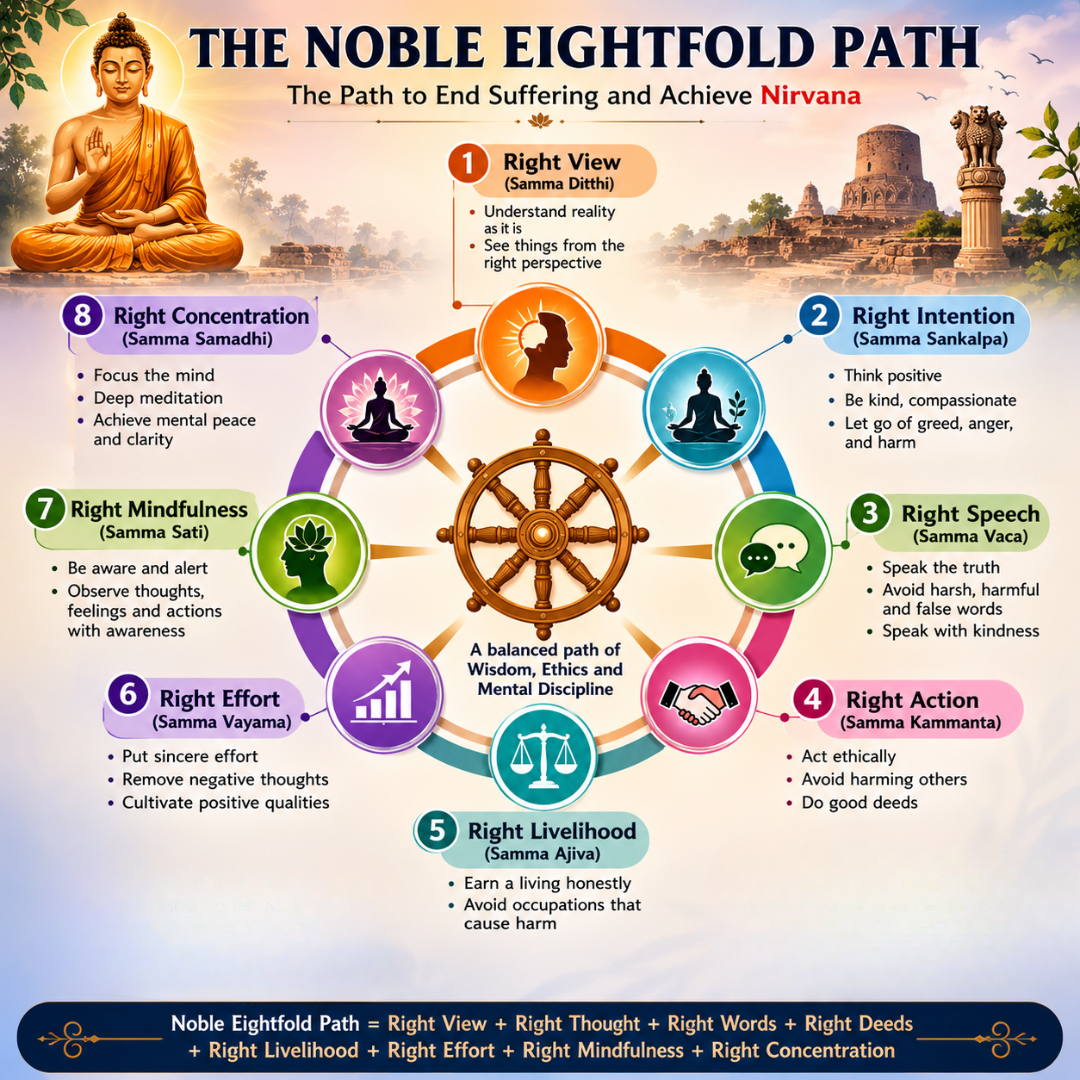
Teaching of the Four Noble Truths and the Noble Eightfold Path.
The Ancient Buddhist Site of Sarnath, a UNESCO World Heritage Site, consists of two major components:
1. Chaukhandi Stupa
-
Marks the place where Gautama Buddha met his first five disciples after attaining enlightenment.
-
Originally built during the Gupta period.
-
The octagonal tower was added later during the Mughal period.
2. Archaeological Remains of Sarnath
This component includes several important Buddhist monuments:
-
Dhamekh Stupa – Marks the place where Buddha delivered his First Sermon (Dharmachakra Pravartana).
-
Dharmarajika Stupa – One of the earliest stupas built by Emperor Ashoka.
-
Mulagandhakuti Vihara – Believed to mark the place where Buddha stayed during his first rainy season at Sarnath.
-
Ashokan Pillar – Erected by Emperor Ashoka; its Lion Capital became the National Emblem of India.
-
Ancient Monasteries (Viharas) – Residential complexes for Buddhist monks.
-
Temples and Shrines – Built and rebuilt over centuries by Buddhist patrons.
-
Archaeological Museum – Houses the Lion Capital of Ashoka, Buddha sculptures, inscriptions, and other excavated artifacts.