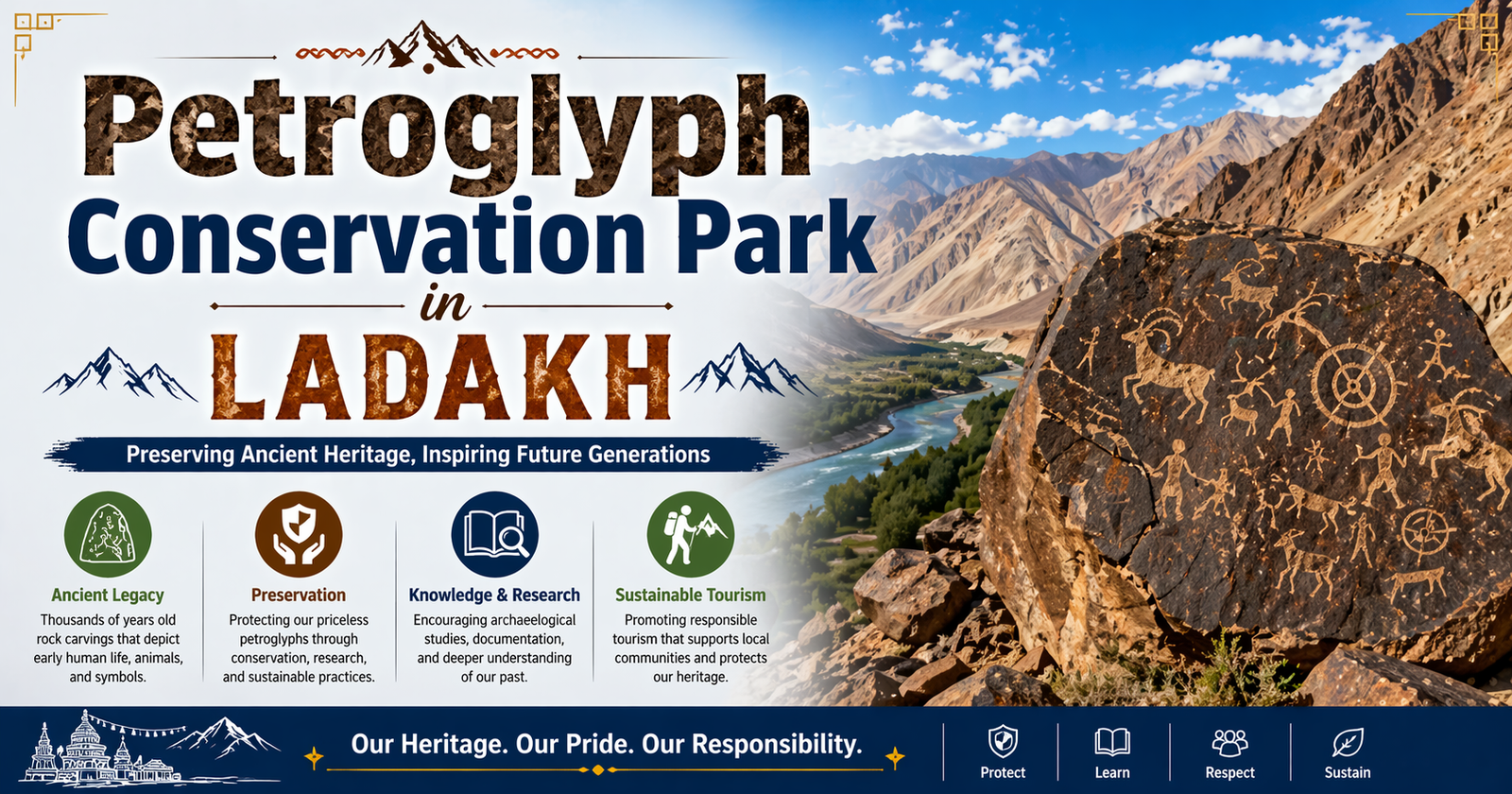
Discover the Petroglyph Conservation Park in Ladakh and how it protects ancient rock carvings while promoting heritage conservation and sustainable tourism in India.
Syllabus Areas:GS I - Art and Culture |
India’s cultural heritage is not limited to monuments and manuscripts—it extends deep into prehistoric expressions etched on rocks. In this context, the establishment of India’s first Petroglyph Conservation Park in Ladakh marks a significant step toward preserving ancient rock art. These petroglyphs, carved thousands of years ago, offer invaluable insights into early human life, beliefs, and environmental conditions.
At a time when heritage conservation is increasingly challenged by climate change and human interference, this initiative reflects a forward-looking approach to safeguarding India’s intangible and tangible past.
What are Petroglyphs?
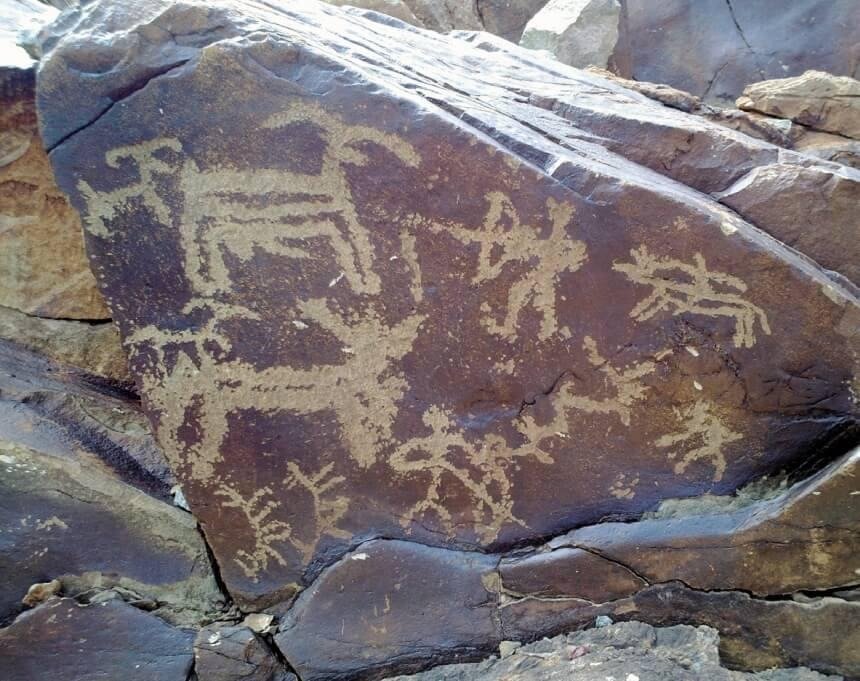
Petroglyphs are images, symbols, or inscriptions carved directly onto rock surfaces. Unlike paintings, they are created by engraving or pecking the rock, making them more durable over time.
Key Features:
-
Depict animals, hunting scenes, human figures, and symbolic patterns
-
Found in open landscapes, especially near river valleys
-
Serve as early forms of communication and storytelling
In Ladakh, these carvings are often found along the Indus River, indicating the presence of ancient trade routes and settlements.
Why Ladakh? Historical and Geographical Significance
Ladakh’s unique geography makes it a natural repository of ancient rock art.
Reasons for Rich Petroglyph Presence:
-
Located along ancient trans-Himalayan trade routes
-
Harsh climate leading to low erosion and better preservation
-
Sparse vegetation exposing rock surfaces
-
Cultural exchanges between Central Asia, Tibet, and India
These factors make Ladakh a living archive of prehistoric and early historic human activity.
The Petroglyph Conservation Park: Key Features
The newly established park aims to systematically protect and showcase these ancient carvings.
Core Objectives:
-
Preservation: Protect petroglyphs from weathering, vandalism, and unregulated tourism
-
Documentation: Digitally record carvings using modern technologies
-
Awareness: Educate locals and tourists about their historical importance
-
Research Facilitation: Encourage archaeological and anthropological studies
Institutional Support:
-
Managed in collaboration with archaeological bodies and local administration
-
Potential involvement of organizations like Archaeological Survey of India
Threats to Petroglyph Heritage
Despite their resilience, petroglyphs face multiple threats:
1. Natural Factors
-
Extreme temperature variations
-
Wind erosion and freeze-thaw cycles
-
Climate change accelerating degradation
2. Human-Induced Threats
-
Graffiti and vandalism
-
Infrastructure development
-
Unregulated tourism
-
Lack of awareness among locals
3. Administrative Challenges
-
Limited funding
-
Inadequate documentation
-
Weak enforcement of conservation laws
Significance of the Conservation Park
1. Cultural Preservation
The park safeguards prehistoric human expressions, bridging the gap between ancient and modern civilizations.
2. Academic Value
-
Helps in studying early human migration
-
Provides clues about climate and biodiversity in ancient times
3. Tourism Potential
-
Promotes sustainable and heritage tourism
-
Generates livelihood opportunities for local communities
4. Strategic Importance
-
Reinforces India’s cultural presence in a sensitive border region like Ladakh
Global Context: Learning from Best Practices
Countries like Australia and the USA have successfully conserved rock art sites through:
-
Digital archiving
-
Controlled visitor access
-
Community participation
India can adopt similar models to ensure long-term preservation.
Way Forward:
1. Digital Preservation
-
3D scanning and GIS mapping
-
Creation of virtual museums
2. Community Involvement
-
Train local communities as heritage custodians
-
Promote awareness through education
3. Policy Strengthening
-
Strict penalties for vandalism
-
Integration with heritage laws
4. Sustainable Tourism Model
-
Controlled access zones
-
Guided tours only
-
Eco-sensitive infrastructure
5. Academic Collaboration
-
Encourage interdisciplinary research
-
Link with global institutions
The Petroglyph Conservation Park in Ladakh is not just a conservation initiative—it is a civilizational commitment. It recognizes that heritage is not merely about the past, but also about shaping identity and continuity.
If preserved effectively, these ancient carvings will continue to narrate stories of human resilience, creativity, and adaptation for generations to come.