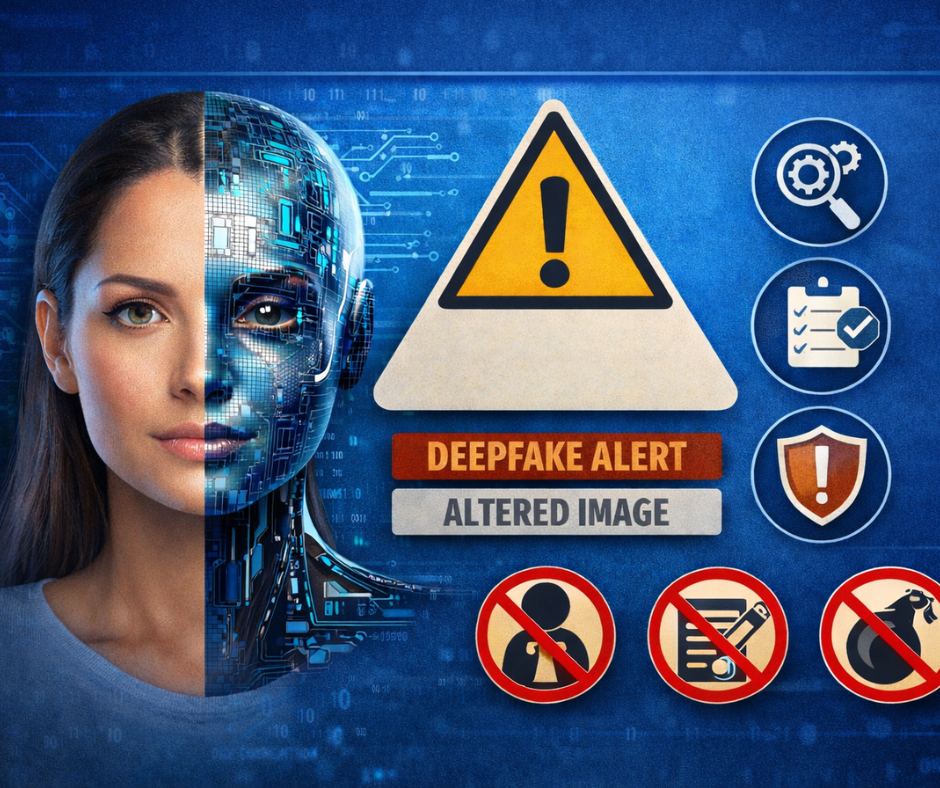
India’s IT Rules (Amendment), 2026 require labelling of AI-generated content and faster takedowns to combat deepfakes, misinformation, and online harm.
Syllabus Areas:GS II - Governance GS III - Internal Security, Science and Technology |
The Ministry of Electronics and Information Technology (MeitY) has notified the Information Technology (Intermediary Guidelines and Digital Media Ethics Code) Amendment Rules, 2026, which come into force on February 20, 2026. The amendments mandate labelling of AI-generated content and significantly reduce content takedown timelines, citing rising concerns over deepfakes, misinformation, and threats to national integrity.
Key Provisions of the Amendment Rules, 2026
1. Mandatory Labelling of AI-Generated Content
-
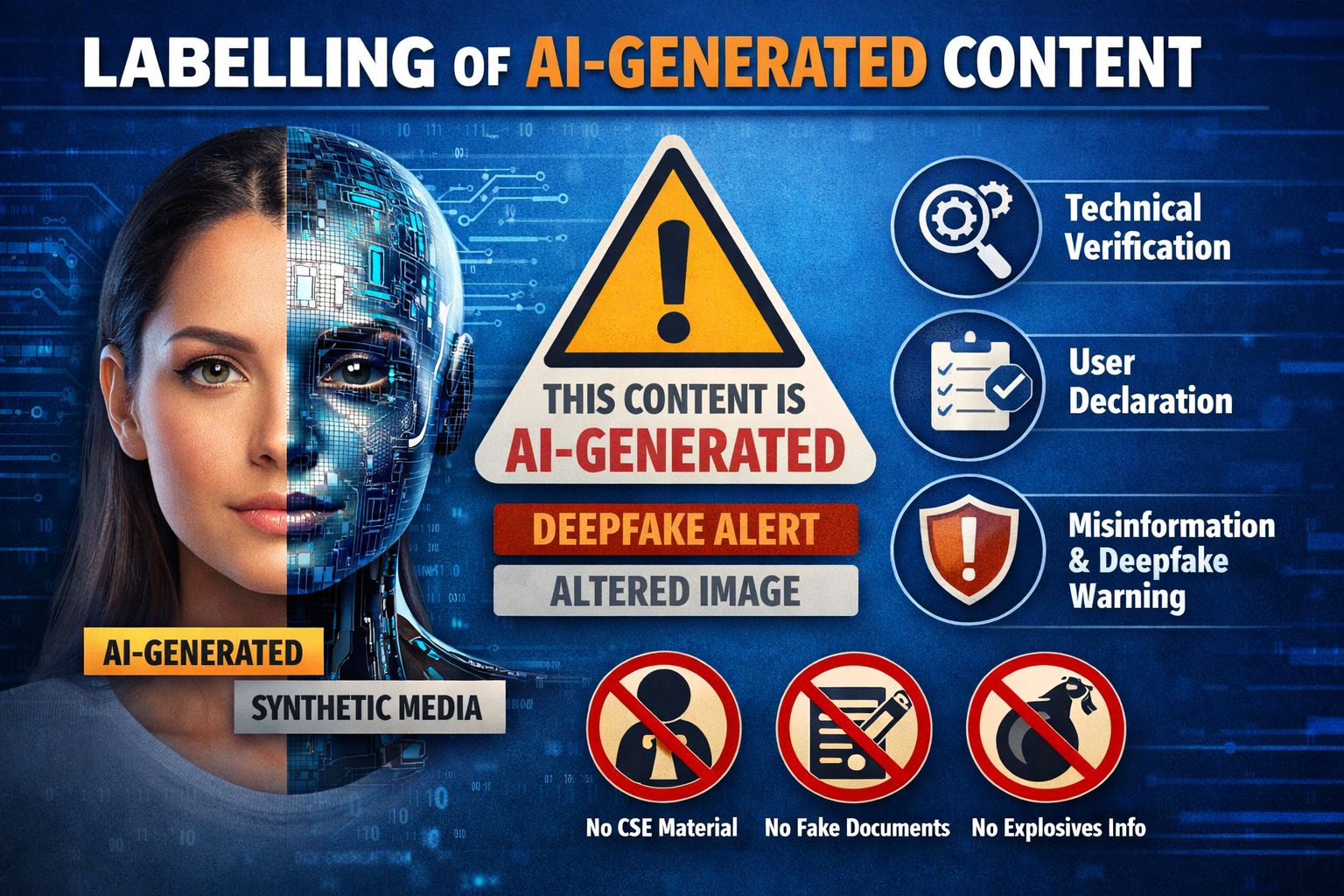
Social media platforms must prominently label “synthetically generated information (SGI)”, including AI-generated images and videos.
-
Platforms with more than 5 million users must:
-
Obtain a user declaration stating whether content is AI-generated.
-
Conduct technical verification before publishing such content.
-
Objective: Ensure users are clearly informed when content is inauthentic.
2. Rationale Behind the Labelling Requirement
MeitY stated that unchecked AI-generated content can:
-
Mislead users
-
Cause reputational and psychological harm
-
Violate privacy
-
Threaten sovereignty and national security
The amendment aims to curb deepfakes, misinformation, and unlawful AI use, rather than regulate legitimate creativity.
3. Definition of “Synthetically Generated Information” (SGI): What Is Included & Excluded
Synthetically Generated Information (SGI) refers to any information, image, video, audio, or audiovisual content that is wholly or substantially created, altered, or manipulated using Artificial Intelligence (AI) or automated computational techniques, such that it does not represent an authentic recording of real events, persons, or actions.
Included / Regulated
-
AI-generated or heavily AI-manipulated images, videos, and audiovisual content
-
Deepfakes falsely representing real persons
Explicitly Prohibited SGI
-
Child sexual exploitation and abuse material (CSEAM)
-
Forged documents
-
Content related to development of explosives
-
Malicious deepfakes impersonating real individuals
Exemptions (Important Change from Draft Rules)
-
Automatically enhanced photos clicked on smartphones
-
Special effects used in films and entertainment
This narrowing avoids over-regulation of routine digital activity.
4. Detection of AI-Generated Content
-
Large platforms are required to deploy “reasonable and appropriate technical measures” to:
-
Detect unlawful SGI
-
Ensure labelling, provenance, or identifiers for permissible SGI
-
MeitY clarified that:
-
Major platforms already possess advanced detection tools
-
The rule only formalises existing practices
-
The rules acknowledge industry efforts like content provenance standards (e.g., invisible identifiers), but do not endorse any single technology, preserving regulatory neutrality.
5. Sharply Reduced Takedown Timelines (Major Regulatory Shift)
|
Category |
Earlier Timeline |
New Timeline |
|
Government / Court takedown orders |
24–36 hours |
2–3 hours |
|
User complaints (defamation, misinformation etc.) |
14 days |
7 days |
|
User reports on “sensitive content” |
72 hours |
36 hours |
Government’s Reasoning:
Even a few hours of virality can cause irreversible social and security damage, especially in cases of deepfakes and misinformation.
6. Increased User Accountability & Platform Obligations
-
Platforms must now remind users of terms and conditions every 3 months (earlier: once a year).
-
Notifications must clearly mention:
-
Legal consequences of uploading illegal or harmful AI-generated content
-
Possibility of:
-
Content removal
-
Account suspension or termination
-
Disclosure of user identity to law enforcement agencies
This marks a shift from platform-centric compliance to shared responsibility with users.
Significance of the Amendments
Positives
-
Strengthens India’s response to deepfakes and AI-driven misinformation
-
Faster takedowns reduce real-time harm
-
Enhances user awareness and digital accountability
-
Avoids blanket bans by carving out reasonable exemptions
Concerns
-
Extremely short takedown windows may:
-
Increase over-compliance by platforms
-
Affect freedom of expression if safeguards are weak
-
Detection accuracy remains a technical challenge, especially at scale
The IT Rules (Amendment) 2026 represent India’s most assertive regulatory response yet to the challenges posed by AI-generated content. By combining mandatory labelling, faster takedowns, and clear user accountability, the government aims to strike a balance between innovation and public safety. However, effective implementation, transparency in enforcement, and judicial oversight will be crucial to prevent misuse and protect constitutional freedoms.
Prelims Questions:
Q1. With reference to Synthetically Generated Information (SGI) as defined under the IT Rules (Amendment), 2026, consider the following statements:
-
SGI includes audiovisual content that is wholly or substantially generated using Artificial Intelligence.
-
Automatically enhanced photographs taken by smartphone cameras are treated as SGI.
-
Special effects used in films are required to be labelled as SGI.
Which of the statements given above is/are correct?
(a) 1 only
(b) 1 and 2 only
(c) 1 and 3 only
(d) 1, 2 and 3
Answer: (a)
Explanation:
-
Statement 1 is correct.
-
Statements 2 and 3 are explicitly exempted in the final rules.
Q2. Under the IT Rules (Amendment), 2026, which of the following categories of content is prohibited irrespective of labelling requirements?
-
AI-generated deepfakes impersonating real individuals
-
AI-generated artistic images
-
Forged documents created using AI
-
AI-generated information related to explosive development
Select the correct answer using the code below:
(a) 1 and 2 only
(b) 1, 3 and 4 only
(c) 2 and 3 only
(d) 1, 2, 3 and 4
Answer: (b)
Explanation:
-
Artistic AI content is permitted with labelling.
-
Deepfakes impersonating real persons, forged documents, and explosive-related content are completely banned.