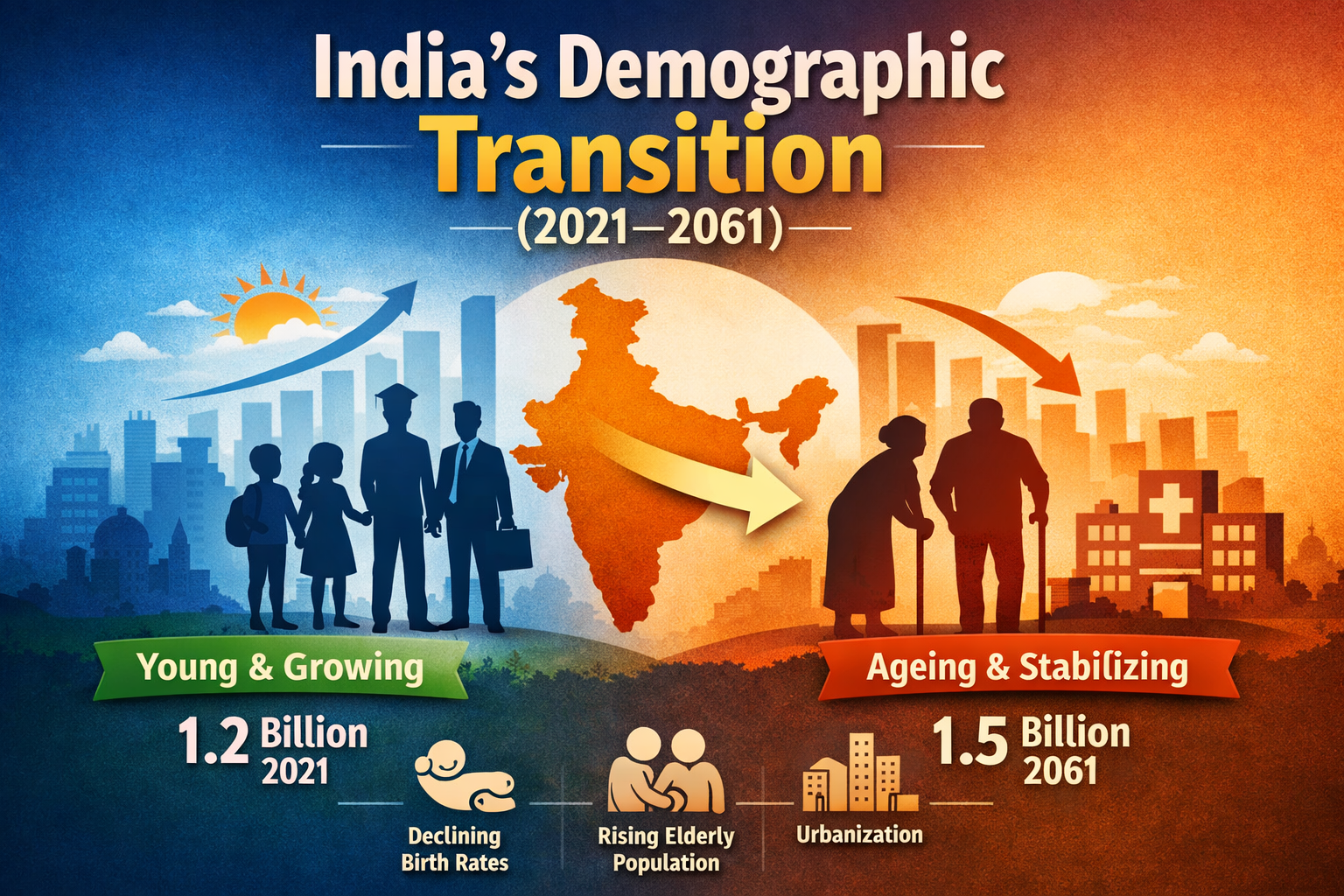
India’s demographic transition explained: ageing population, declining fertility, demographic dividend and policy challenges (2021–2061).
Syllabus Areas:GS I - Indian Society GS III - Indian Economy |
India is entering a decisive phase in its demographic journey. A recent report titled “Unravelling India's Demographic Future: Population Projections for States and Union Territories, 2021–2061” by the International Institute of Migration and Development and the Population Foundation of India highlights a profound shift in the country’s population structure.
For decades, India’s demographic narrative was dominated by concerns of population explosion. However, the latest projections suggest a different reality—a gradual slowdown in population growth, accompanied by rapid ageing and structural transformation. This shift marks a turning point, requiring policymakers to rethink long-term strategies in education, employment, healthcare, and social security.
Slowing Population Growth: End of the “Population Explosion” Debate
India’s population is projected to grow from 1.155 billion in 2021 to around 1.5 billion by 2051, with an average annual growth rate of just 0.5%. This is significantly lower than earlier estimates, reinforcing the conclusion that India is unlikely to face a population explosion in the coming decades.
This transition indicates that India is moving into a mature demographic phase, characterised by:
-
Lower fertility rates
-
Stabilising population growth
-
Increased urbanisation
While this is a positive development in terms of resource pressure, it also signals the beginning of new challenges—particularly those associated with ageing and workforce dynamics.
Declining Child Population and Its Impact on Education
One of the most striking findings of the report is the sharp decline in the child population. The number of children aged 0–4 years is expected to fall significantly by mid-century.
Implications for the Education Sector
-
Rise of “Uneconomic Schools”
With fewer children enrolling, many schools—especially in rural and government sectors—may become financially unviable. States like Kerala have already experienced this trend, where declining fertility has led to school closures and teacher redundancies. -
Reduction in Government Schools
Over the past decade, the number of government schools has declined substantially. This trend reflects both demographic changes and shifting parental preferences. -
Growth of Private Education
At the same time, private schools are expanding. This is driven by: -
Rising household incomes
-
Aspirations for better quality education
-
Perceived inefficiencies in government schools
-
Opportunity for Quality Improvement
A declining student population can improve teacher-pupil ratios and enable better utilisation of infrastructure. However, this opportunity must be strategically leveraged rather than passively observed.
The Ageing Challenge: India’s Emerging Reality
India is on the path to becoming an ageing society. The elderly population (60+) is projected to more than double—from around 100 million in 2021 to over 225 million by 2051.
Key Indicators of Ageing
-
Median age rising from 25 years (2021) to 40 years (2051)
-
Elderly share increasing to over 20% of total population
Consequences of Ageing
-
Healthcare Pressure
An ageing population will increase demand for: -
Chronic disease management
-
Long-term care
-
Geriatric healthcare services
-
Fiscal Burden
Government expenditure on: -
Pensions
-
Healthcare
-
Social security
is expected to rise significantly. -
Changing Dependency Ratios
With fewer working-age individuals supporting more elderly citizens, economic productivity may come under strain.
Demographic Dividend: A Narrowing Window
India’s demographic dividend—driven by a high proportion of working-age population—is expected to peak around 2041 and decline thereafter.
Although nearly 60% of the population will still be of working age by 2051, the momentum of growth from this demographic advantage will gradually weaken.
Why This Matters
Countries such as Japan, South Korea, and China successfully leveraged their demographic dividend to achieve rapid economic growth. India now faces a critical question:
Can it convert its remaining demographic advantage into sustainable economic progress?
The answer depends largely on how effectively India addresses employment generation, skill development, and labour force participation.
Structural Challenges in the Demographic Transition
1. Employment and Skill Mismatch
Despite a large workforce, India faces persistent challenges in:
-
Job creation
-
Skill alignment with industry needs
This creates a paradox of “educated unemployment”.
2. Low Female Labour Force Participation
India’s female workforce participation remains significantly low. Increasing women’s participation could:
-
Offset the decline in working-age population
-
Boost economic productivity
This is often referred to as the “gender dividend”.
3. Regional Disparities
-
Southern states: Rapid ageing and low fertility
-
Northern states: Younger populations and higher fertility
This imbalance creates uneven development pressures across the country.
Policy Imperatives: Preparing for the Future
1. Education System Reforms
-
Rationalise school infrastructure
-
Focus on quality and outcomes rather than expansion
-
Align education with employability and skills
2. Employment Generation
-
Promote labour-intensive sectors such as manufacturing
-
Encourage entrepreneurship
-
Expand opportunities in emerging sectors
3. Healthcare Transformation
-
Strengthen primary healthcare systems
-
Invest in geriatric care infrastructure
-
Emphasise preventive healthcare
4. Strengthening Social Security
-
Expand pension coverage
-
Develop elderly care systems
-
Ensure financial security for ageing populations
5. Sustained Family Planning Efforts
Even with declining fertility:
-
Continued investment is needed in reproductive health
-
Prevent unintended pregnancies
-
Protect reproductive rights
The Silver Economy: Turning a Challenge into Opportunity
An ageing population is not just a burden—it can also be an opportunity.
Potential Areas of Growth
-
Healthcare services
-
Assisted living facilities
-
Wellness and lifestyle industries
This emerging “silver economy” can generate employment and economic value, potentially leading to a second demographic dividend.
Critical Perspective
India’s demographic transition presents a mixed picture:
Positive Aspects
-
Reduced population pressure
-
Improved resource allocation
-
Better education and healthcare opportunities
Areas of Concern
-
Ageing before achieving high income levels
-
Weak social security systems
-
Inadequate job creation
India stands at a crucial demographic inflection point. The transition from a young, expanding population to an ageing and stabilising one is inevitable. What remains uncertain is how effectively the country will respond.
The next two decades are critical. India must:
-
Maximise its current demographic dividend
-
Prepare for an ageing future
-
Invest in human capital and institutional capacity
If managed wisely, this transition can become a foundation for long-term economic stability and inclusive growth. If neglected, it may result in structural challenges that could slow down India’s developmental trajectory.
Mains Question:
1. “Discuss the problems faced by the elderly in India and suggest measures to improve their quality of life.” 250 Words