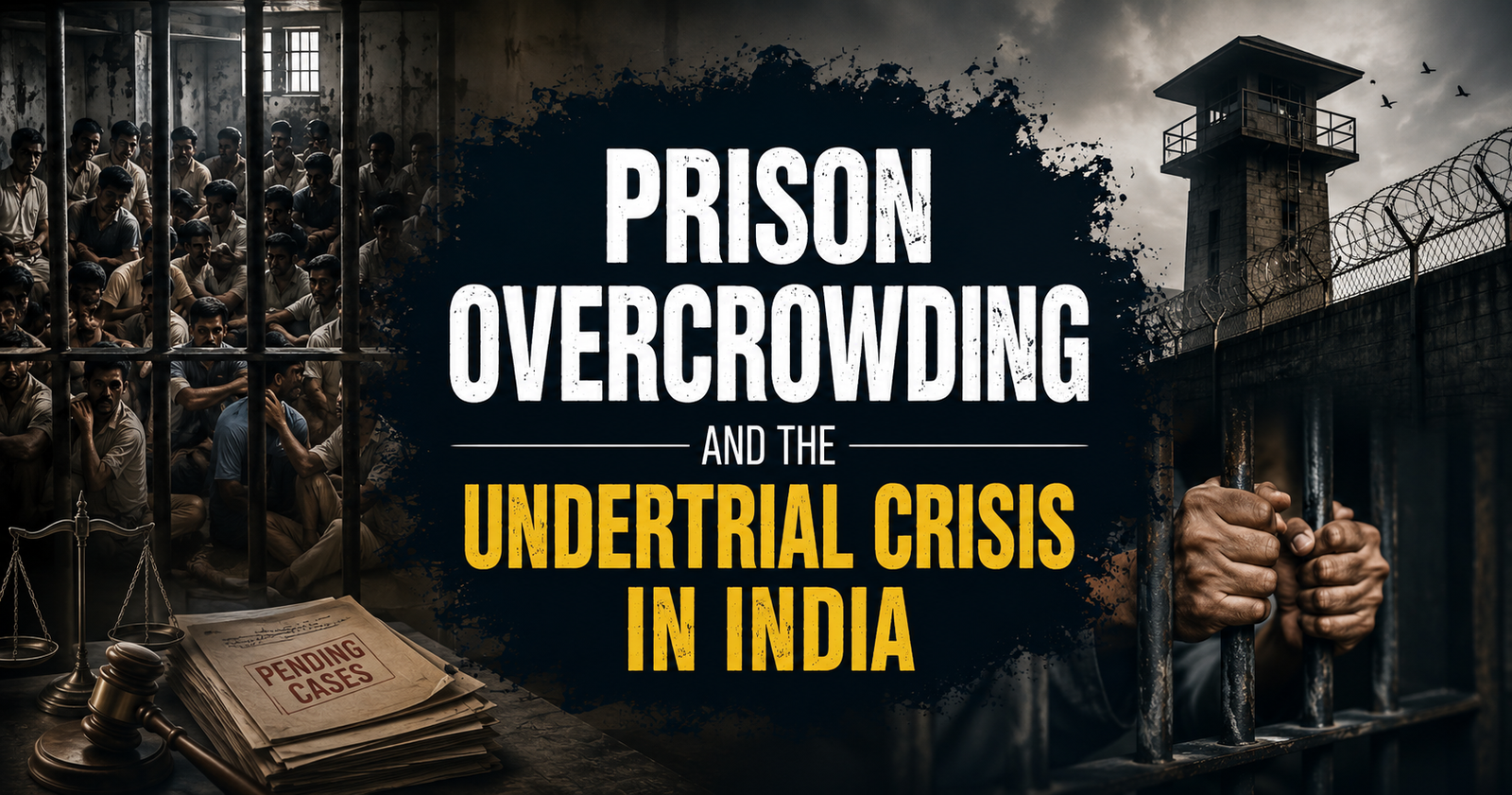
Explore the growing challenge of prison overcrowding and undertrial detention in India. Understand its causes, impacts on justice delivery, human rights concerns, reforms needed, and key UPSC-relevant insights.
Syllabus Areas:GS II - Governance |
India's prison system continues to face serious challenges due to overcrowding and the growing number of undertrial prisoners. Recent discussions on criminal justice reforms have once again highlighted the urgent need to improve prison conditions, ensure speedy justice, and protect the rights of prisoners.
What is Prison Overcrowding?
Prison overcrowding occurs when the number of inmates exceeds the official capacity of prisons. Many Indian prisons house significantly more prisoners than they were designed to accommodate. This leads to poor living conditions, inadequate healthcare facilities, sanitation issues, and increased pressure on prison administration.
Overcrowding affects not only prisoners but also prison staff, making it difficult to maintain security, discipline, and rehabilitation programs.
Understanding Undertrial Prisoners
Undertrial prisoners are individuals who have been arrested and are awaiting investigation, trial, or judgment by a court. They have not yet been convicted of any crime and are legally presumed innocent until proven guilty.
A major concern in India is that undertrial prisoners constitute a large majority of the prison population. Many remain in jail for years because of delays in investigations, slow judicial processes, lack of legal assistance, and inability to secure bail.
Causes of the Undertrial Crisis
-
Judicial Delays: A large number of pending cases in courts leads to prolonged detention of accused persons. Cases often take several years to reach their conclusion.
-
Lack of Access to Legal Aid: Many economically weaker prisoners are unable to afford legal representation. As a result, they remain in custody for extended periods without effective legal support.
-
Bail-Related Issues: Poor prisoners often fail to furnish bail bonds or meet procedural requirements even when courts grant bail. This keeps them in prison despite being eligible for release.
-
Inadequate Investigation and Prosecution: Delays in police investigations and slow prosecution processes contribute significantly to prolonged detention.
-
Shortage of Judicial Infrastructure: Insufficient numbers of judges, courts, and support staff increase the burden on the judicial system and slow down the delivery of justice.
Impact of Prison Overcrowding
-
Violation of Human Rights: Overcrowded prisons can lead to poor living conditions, affecting the dignity and fundamental rights of inmates.
-
Health and Sanitation Concerns: Congested prison facilities often result in inadequate healthcare, poor hygiene, and a higher risk of communicable diseases.
-
Mental Health Issues: Long periods of detention, uncertainty regarding trial outcomes, and overcrowded conditions can adversely affect the mental well-being of prisoners.
-
Hindrance to Rehabilitation: Prisons are expected to reform and rehabilitate offenders. However, overcrowding reduces the effectiveness of educational, vocational, and counselling programs.
-
Economic Burden on the State: Maintaining a large prison population places additional financial pressure on state governments and prison administrations.
Constitutional and Legal Perspective
Article 21 of the Constitution guarantees the right to life and personal liberty. The Supreme Court has repeatedly held that the right to speedy justice is an essential component of Article 21.
The Court has emphasized that prolonged detention without trial violates the principles of fairness, justice, and human dignity.
Measures Taken by the Government
-
Fast-Track Courts: Fast-track courts have been established to expedite the disposal of pending cases and reduce delays in the justice delivery system.
-
Legal Aid Services: The National Legal Services Authority (NALSA) provides free legal assistance to eligible prisoners and undertrials.
-
E-Prisons Project: The government has introduced digital prison management systems to improve record-keeping, monitoring, and coordination among prison authorities.
-
Undertrial Review Committees: These committees periodically review cases of undertrial prisoners who may be eligible for release.
-
Prison Modernisation Programmes: Various initiatives have been undertaken to improve prison infrastructure, security systems, and living conditions.
The Way Forward
India needs a comprehensive approach to address prison overcrowding and the undertrial crisis. Judicial reforms should focus on reducing case pendency and ensuring speedy trials. Greater use of technology, alternative dispute resolution mechanisms, and increased judicial capacity can help improve efficiency.
Bail procedures should be simplified for economically disadvantaged prisoners, and legal aid services should be strengthened. Regular review of undertrial cases, expansion of prison infrastructure, and greater emphasis on rehabilitation can help create a more humane and effective correctional system.
Addressing these challenges is essential for protecting constitutional rights, improving governance, and strengthening public trust in the criminal justice system.
The problem of prison overcrowding and the large number of undertrial prisoners reflects deeper structural issues within India's criminal justice system. Ensuring timely justice, safeguarding human rights, and improving prison administration are crucial steps towards building a fair, efficient, and accountable justice delivery mechanism.