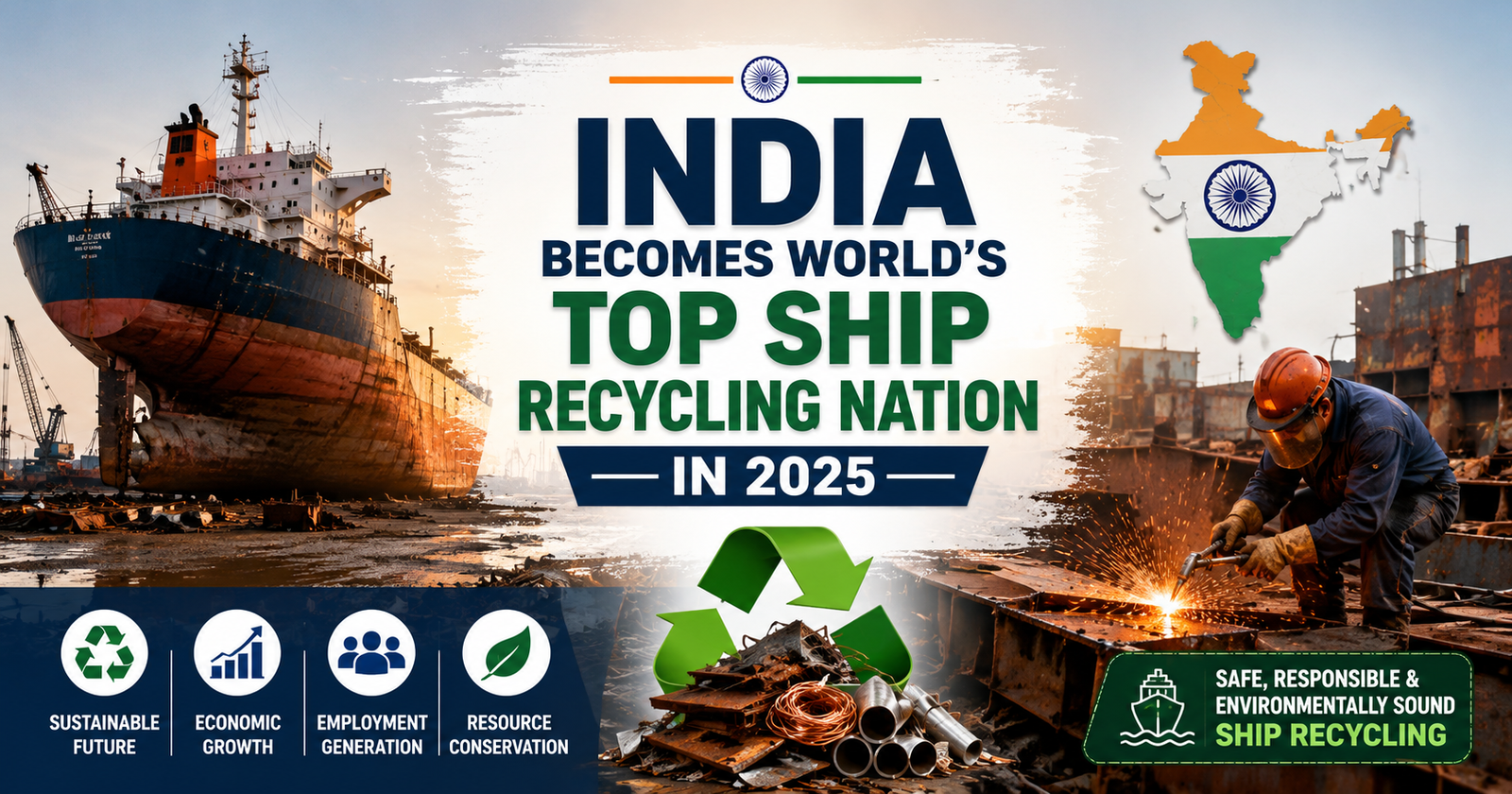
India has emerged as the leading ship recycling nation in 2025, achieving a 35.4% global share. The milestone highlights maritime reforms, sustainable recycling practices, economic growth, resource conservation, and circular economy goals.
Syllabus Areas:
GS III - Economy and Development, Science and Technology
India has emerged as the world's leading ship recycling nation in 2025, achieving a major milestone under the Maritime India Vision 2030 by becoming the global leader five years ahead of schedule.
-
India ranked 1st globally in ship recycling in 2025.
-
India's share of global ship recycling increased to 35.4% in 2025, up from 30.1% in 2024.
-
Ship recycling volume rose from 1.86 million Gross Tons (GT) in 2024 to 2.99 million GT in 2025, registering nearly 60% growth.
-
The achievement was highlighted by the Ministry of Ports, Shipping and Waterways (MoPSW).
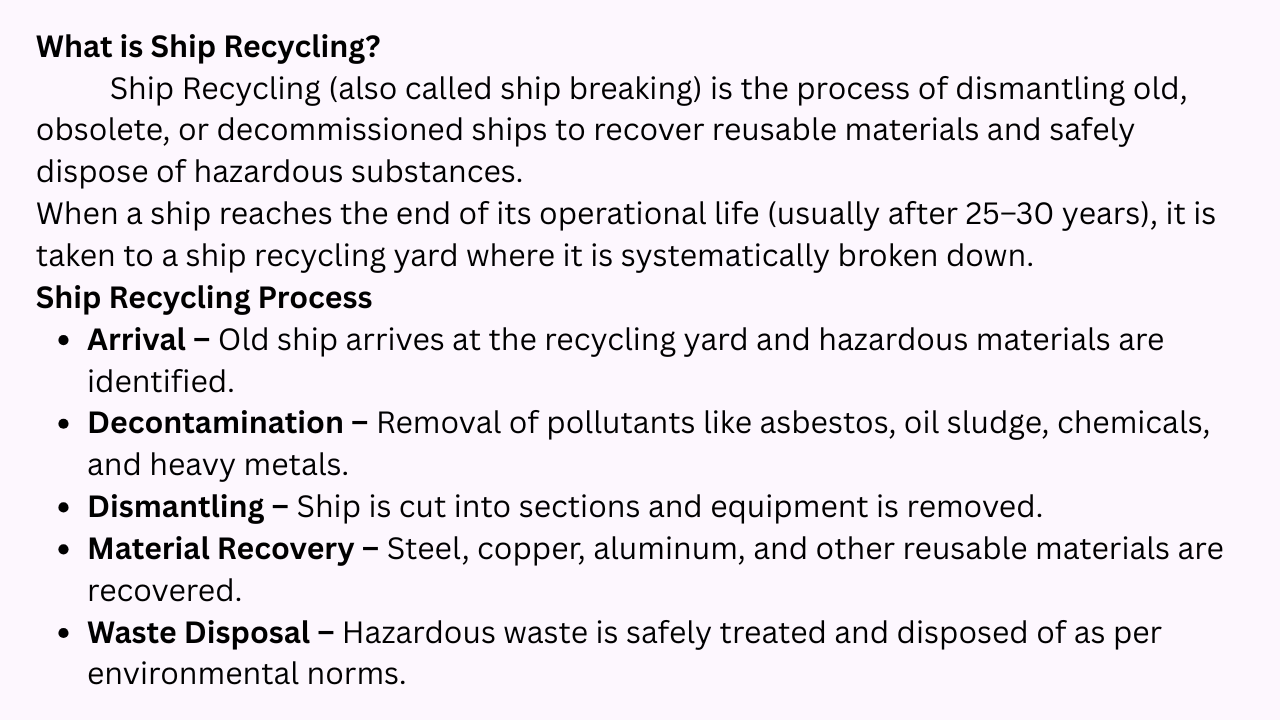
Key Highlights
-
India surpassed all other countries in global ship recycling activity.
-
Maritime India Vision (MIV) 2030 target of becoming the world's top ship recycling nation was achieved five years ahead of schedule.
-
Growth reflects the impact of maritime reforms, ease-of-doing-business initiatives, and adherence to international environmental and safety standards.
Why is Ship Recycling Important?
1. Economic Benefits
-
Supplies large amounts of scrap steel for industries.
-
Creates employment opportunities.
-
Supports the shipbuilding and manufacturing sectors.
2. Environmental Benefits
-
Encourages a circular economy through reuse of materials.
-
Reduces the need for mining new raw materials.
-
Saves energy and natural resources.
3. Resource Recovery
-
Old ships contain valuable materials such as:
-
Steel (85–95%)
-
Copper
-
Aluminum
-
Machinery and equipment
-
Most of these materials can be recycled and reused.
Ship recycling generates jobs, provides valuable raw materials, and promotes sustainable resource use.
Government Initiatives
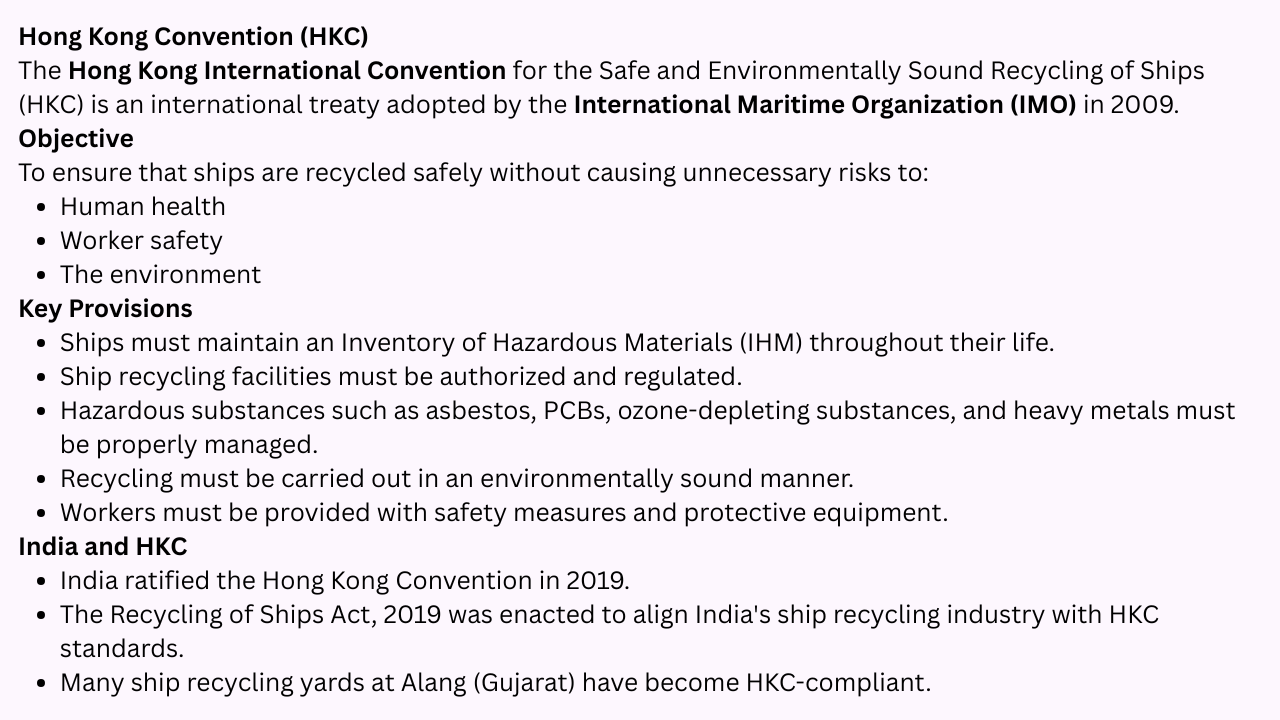
1. Recycling of Ships Act, 2019
-
Enacted to align India's ship recycling industry with the Hong Kong International Convention (HKC).
-
India ratified the HKC in 2019.
-
Promotes safe and environmentally sound ship recycling practices.
2. Financial Assistance for Yard Modernisation
-
The government provided ₹53.5 crore financial assistance.
-
Helped 115 ship recycling facilities become HKC-compliant.
3. Ship-breaking Credit Note Scheme
-
Ship owners receive a credit note equal to 40% of the scrap value of a recycled ship.
-
Credit can be used for up to 5% of the value of a new vessel built in an Indian shipyard.
-
Encourages both ship recycling and domestic shipbuilding.
4. Stakeholder Engagement
-
MoPSW collaborates with:
-
Gujarat Maritime Board
-
Ship Recycling Industries Association
-
Global shipping companies
-
Classification societies
-
International organizations
-
Objective: Address challenges and improve industry competitiveness.
5. EU Ship Recycling Regulation (EUSRR)
-
India is pursuing inclusion of Indian ship recycling yards in the European Union's approved list of recycling facilities.
-
Continuous engagement is underway with EU authorities for approvals.
Expansion of Alang Ship Recycling Yard
-
Located in Bhavnagar district, Gujarat.
-
One of the largest ship recycling yards in the world.
-
Accounts for a major share of India's ship recycling activity.
-
Operates under the Recycling of Ships Act, 2019 and follows the Hong Kong Convention standards.
-
India plans to nearly double ship recycling capacity to around 9 million Light Displacement Tons (LDT).
-
Gujarat Government has prepared a comprehensive master plan.
-
Focus areas:
-
Infrastructure development
-
Capacity enhancement
-
Global competitiveness improvement.
Future Prospects
-
According to BIMCO (Baltic and International Maritime Council):
-
More than 16,000 vessels are expected to be recycled globally over the next decade.
-
With a market share of 35.4%, India is expected to recycle approximately 500–600 ships annually.
-
The sector is expected to support:
-
Circular economy objectives
-
Sustainable maritime development
-
Green industrial growth
India's emergence as the world's top ship recycling nation reflects its growing strength in the maritime sector. Safe and environmentally sound ship recycling not only supports economic growth and employment but also promotes resource conservation and sustainable development.