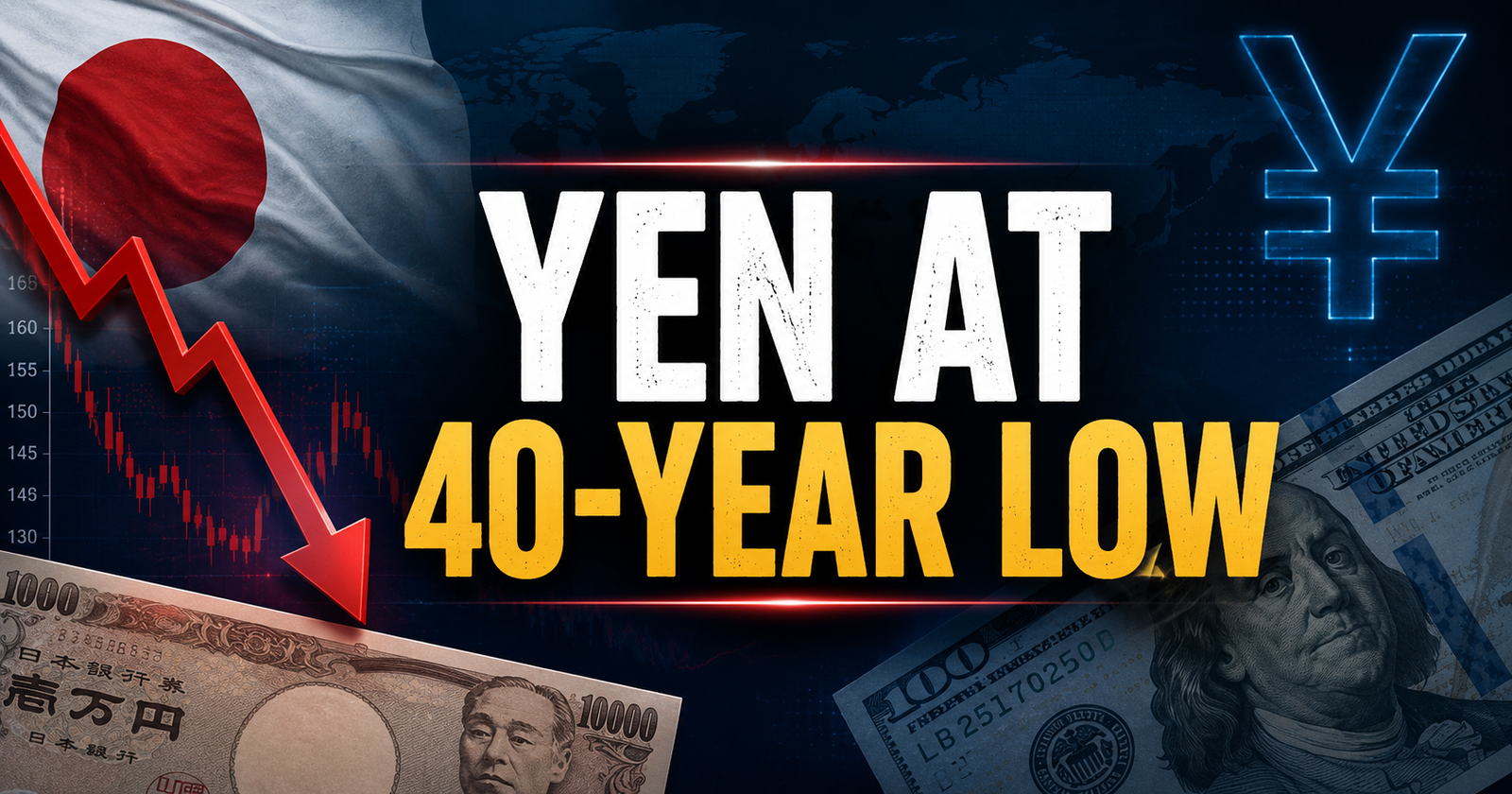
The Japanese yen has hit a 40-year low due to interest-rate gaps, energy imports, fiscal pressures, and structural weaknesses, raising concerns over Japan's economic outlook.
Syllabus Areas:
GS II - IR
GS III - Economy
The Japanese yen has weakened to its lowest level in nearly four decades, breaching the ¥160 per US dollar mark for the first time since 1986. As the world's second-most traded currency pair, sharp movements in the dollar-yen exchange rate have significant implications for global trade and financial markets.
The yen's recent depreciation has been driven by a higher energy import bill and the wide interest-rate differential between the United States and Japan. However, the currency is likely to remain under pressure unless Japan addresses deeper structural challenges, including persistent fiscal expansion and weak long-term economic growth.
Additionally, decades of unconventional monetary easing have limited Tokyo's ability to raise interest rates aggressively to support the yen, as doing so could unsettle domestic financial markets.
Steep Slide of the Japanese Yen
-
Sharp Depreciation Over Five Years
-
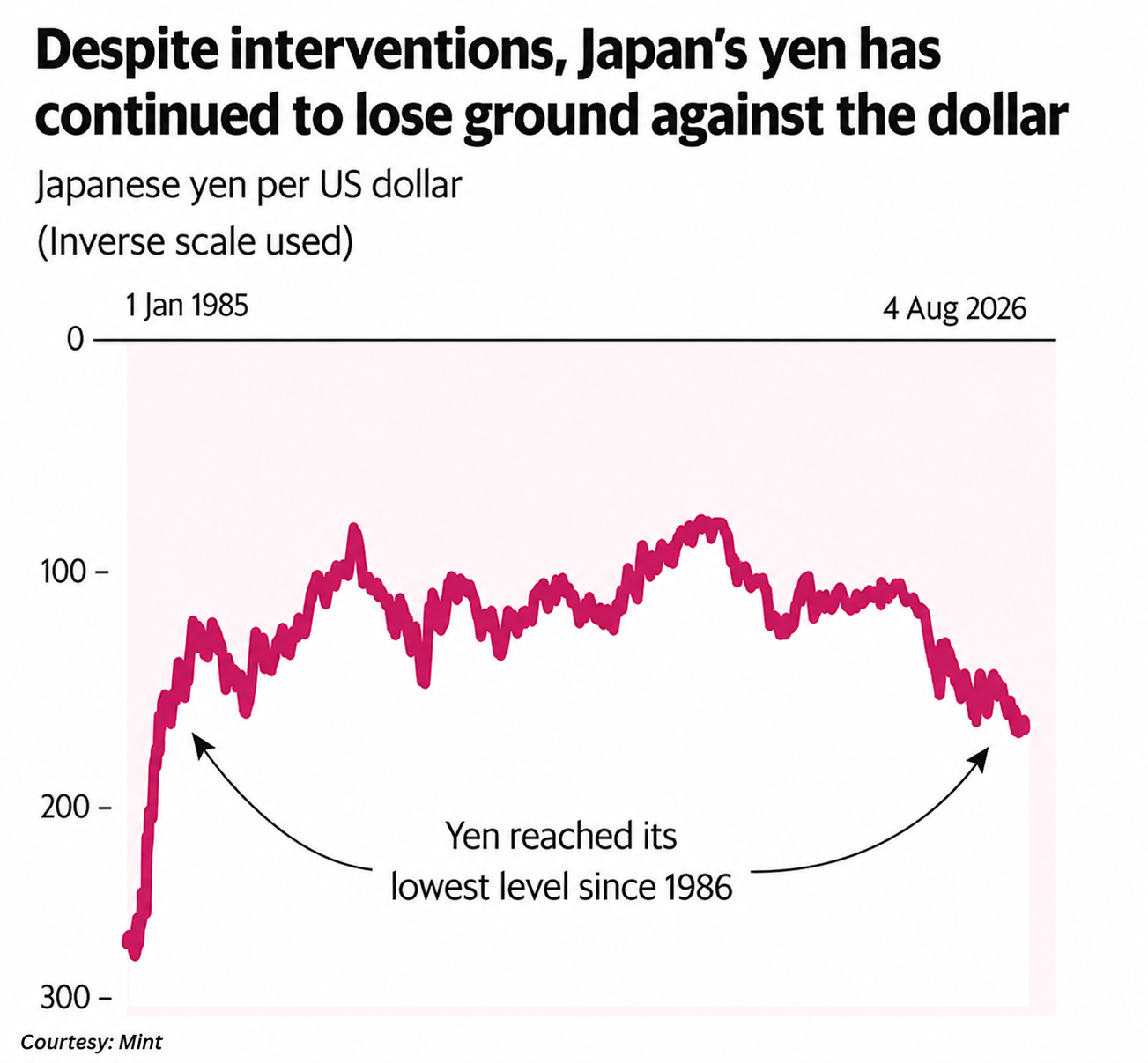
The average yen exchange rate weakened from ¥104 per US dollar (January 2021) to around ¥163 per US dollar (July 2026).
-
This represents a depreciation of more than 50%.
-
Lowest Level Since 1986
-
The yen last traded near the ¥160 per US dollar level in 1986.
-
That period coincided with Japan's asset-price boom, which was followed by the country's "lost decades" of weak economic growth and deflation.
-
Weakness Against Other Major Currencies
-
The yen's decline is not limited to the US dollar.
-
Against the British pound, it fell to a record low of around ¥219.6 per pound (July 2026).
-
It has also weakened against:
-
Euro
-
Swiss franc
-
Australian dollar
-
New Zealand dollar
-
Government Intervention
-
Japanese authorities have repeatedly intervened in the foreign exchange (forex) market to slow the yen's depreciation.
-
These interventions have provided only temporary relief, with the currency continuing to weaken.
-
Underlying Structural Problems
-
The persistent weakness of the yen indicates that the problem is driven by deep structural economic factors, rather than short-term market speculation.
-
Safe-Haven Status Under Pressure
-
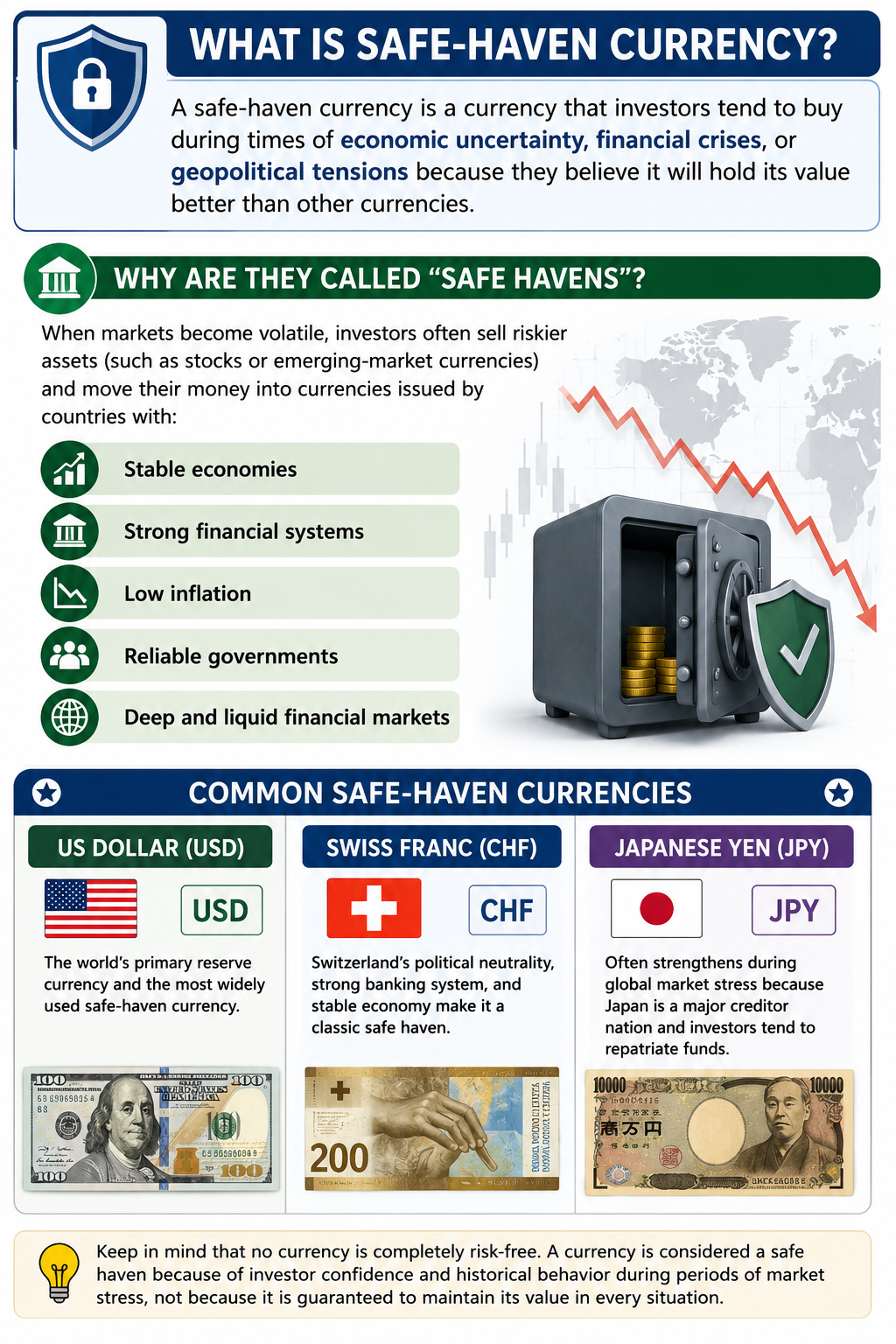
Traditionally, the Japanese yen has been considered a safe-haven currency, meaning investors usually buy it during periods of global uncertainty.
-
However, its continued depreciation has raised doubts about its ability to retain this safe-haven status.
Dollar Drift – Why the Yen Continues to Weaken
-
BoJ Rate Hike Not Enough
-
The Bank of Japan (BoJ) raised its benchmark interest rate to 1% (June 2026), the highest since the 1990s.
-
Despite this, the yen continued to weaken.
-
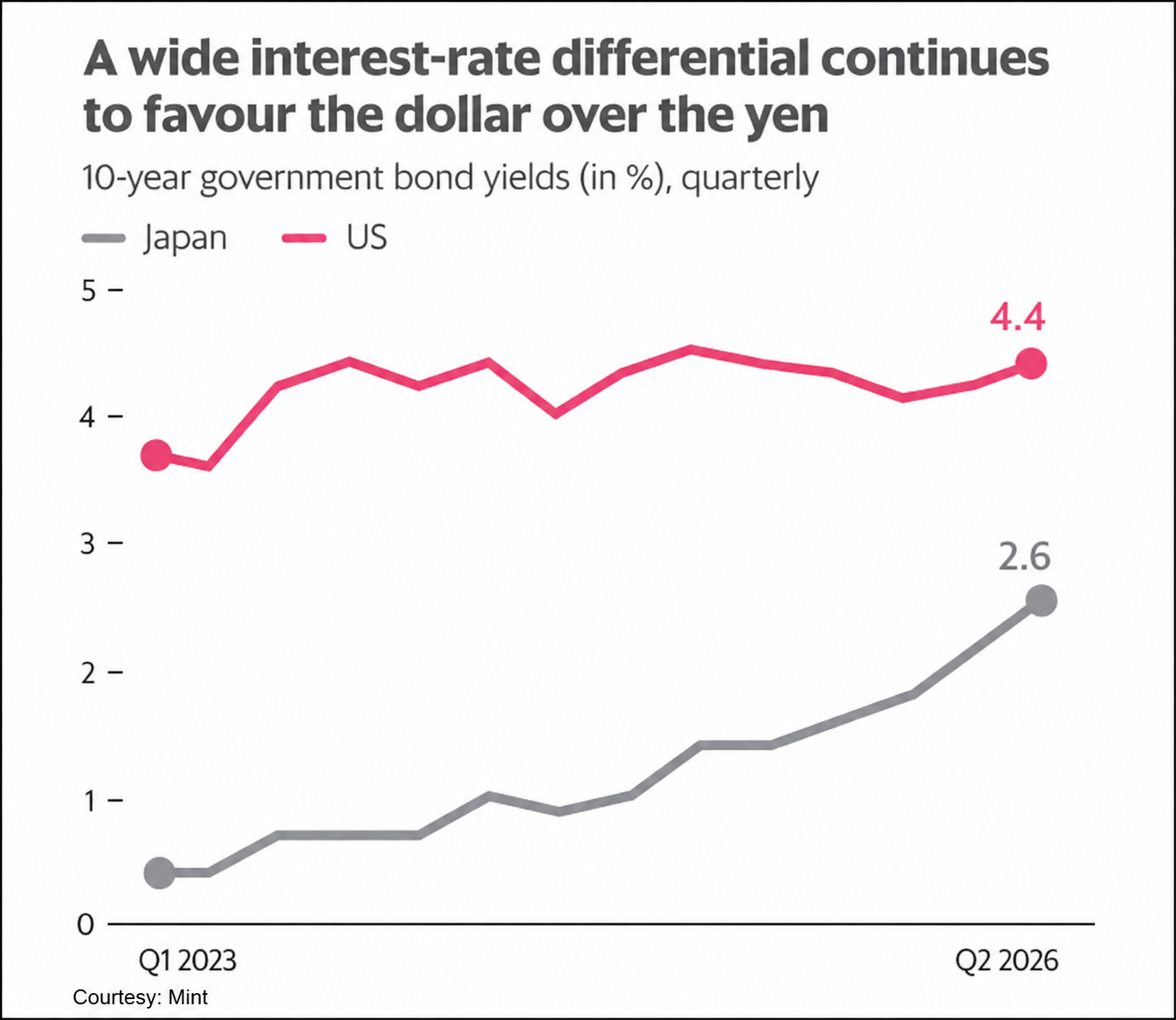
Wide US–Japan Interest Rate Gap
-
The US Federal Reserve's policy rate (3.5–3.75%) remains much higher than Japan's.
-
Investors prefer higher-yielding US dollar assets, increasing demand for the dollar.
-
Bond Yield Difference
-
Japan's 10-year bond yield: 2.6% (Q2 2026).
-
US 10-year bond yield: 4.4%.
-
Higher US bond returns continue to attract global investors.
-
Yen Carry Trade
-
Investors borrow cheaply in yen and invest in higher-return US assets.
-
This leads to selling of yen and buying of dollars, putting further downward pressure on the yen.
-
Overall Impact
-
Higher US interest rates and bond yields, along with the yen carry trade, have outweighed the BoJ's rate hikes, keeping the yen weak.
Trade Troubles – Pressure on the Yen
-
High Energy Import Dependence
-
Japan imports almost all of its crude oil and natural gas, making it vulnerable to global energy price increases.
-
West Asia Dependence
-
Around 90% of Japan's crude oil comes from West Asia, much of it through the Strait of Hormuz.
-
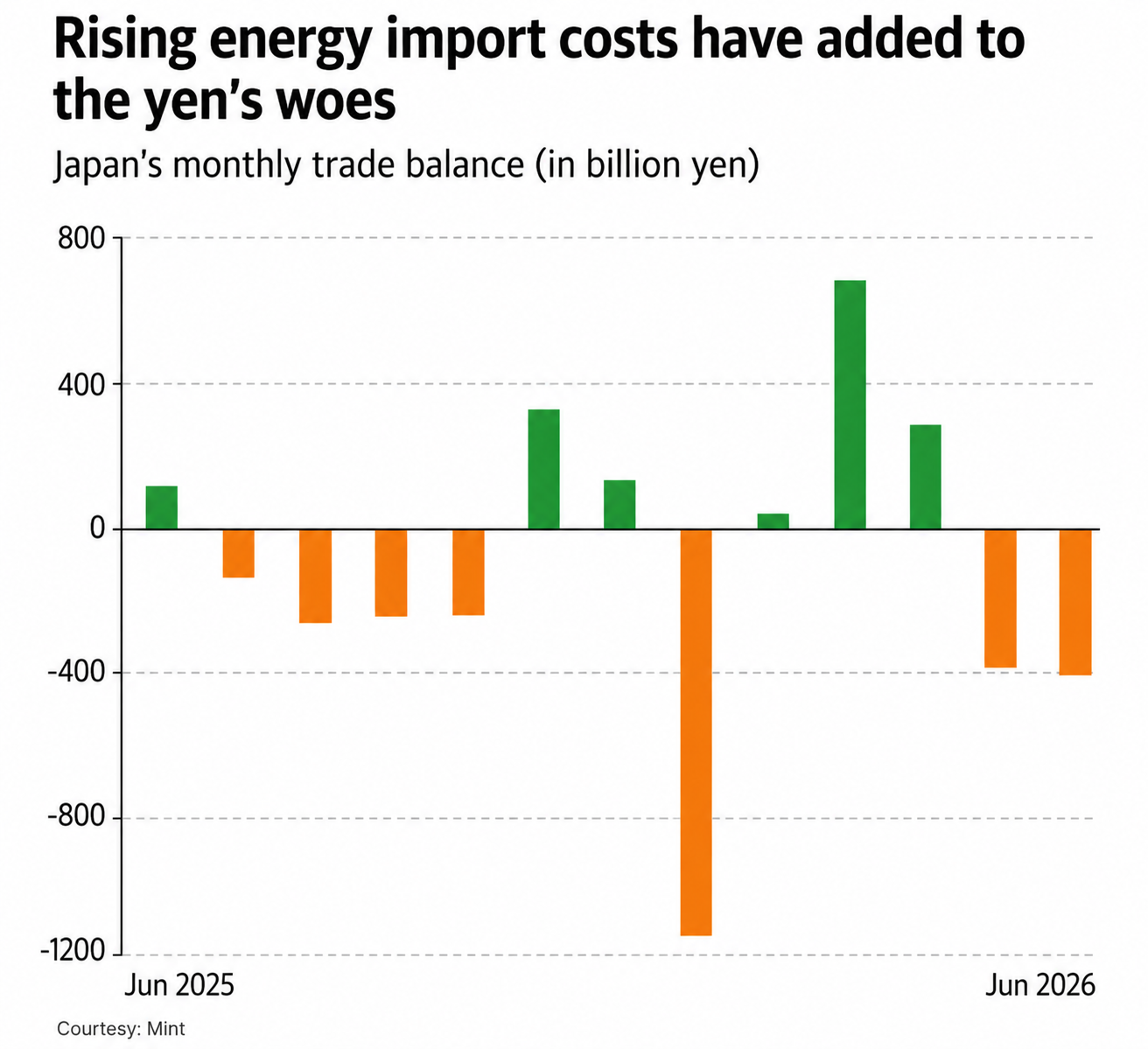
Rising Trade Deficit
-
The West Asia crisis increased Japan's energy import bill, leading to a larger trade deficit.
-
Higher Dollar Demand
-
Since energy imports are priced in US dollars, higher import costs increase demand for dollars, weakening the yen.
-
Vicious Cycle
-
A weaker yen makes energy imports more expensive, further widening the trade deficit and putting additional downward pressure on the yen.
Legacy Trap – Why Japan Cannot Raise Rates Aggressively
-
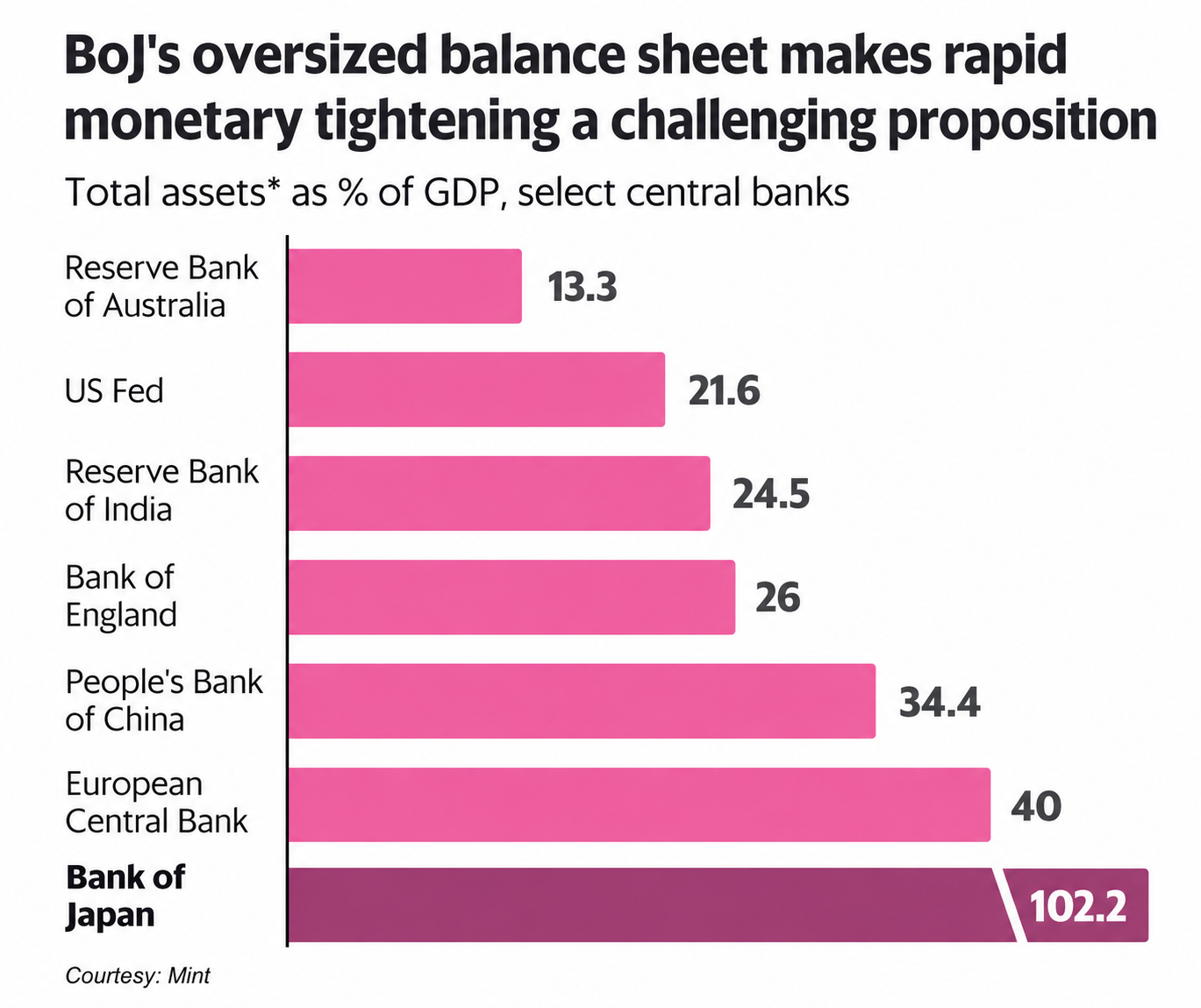
Huge BoJ Balance Sheet
-
Decades of unconventional monetary easing have made the Bank of Japan (BoJ) one of the world's largest central banks by assets.
-
Largest Holder of Government Bonds
-
The BoJ owns a large share of Japanese government bonds (JGBs) due to years of asset purchases.
-
Risk of Interest Rate Hikes
-
Sharp rate hikes would reduce the value of BoJ's low-yield bonds, causing financial losses.
-
Higher Financial Costs
-
Rising rates would also increase interest payments on commercial banks' reserves held at the BoJ.
-
Overall Impact
-
Aggressive rate hikes could trigger financial market instability and increase fiscal pressures, limiting Japan's ability to strengthen the yen.
Debt Dilemma – Fiscal Constraints on the Yen
-
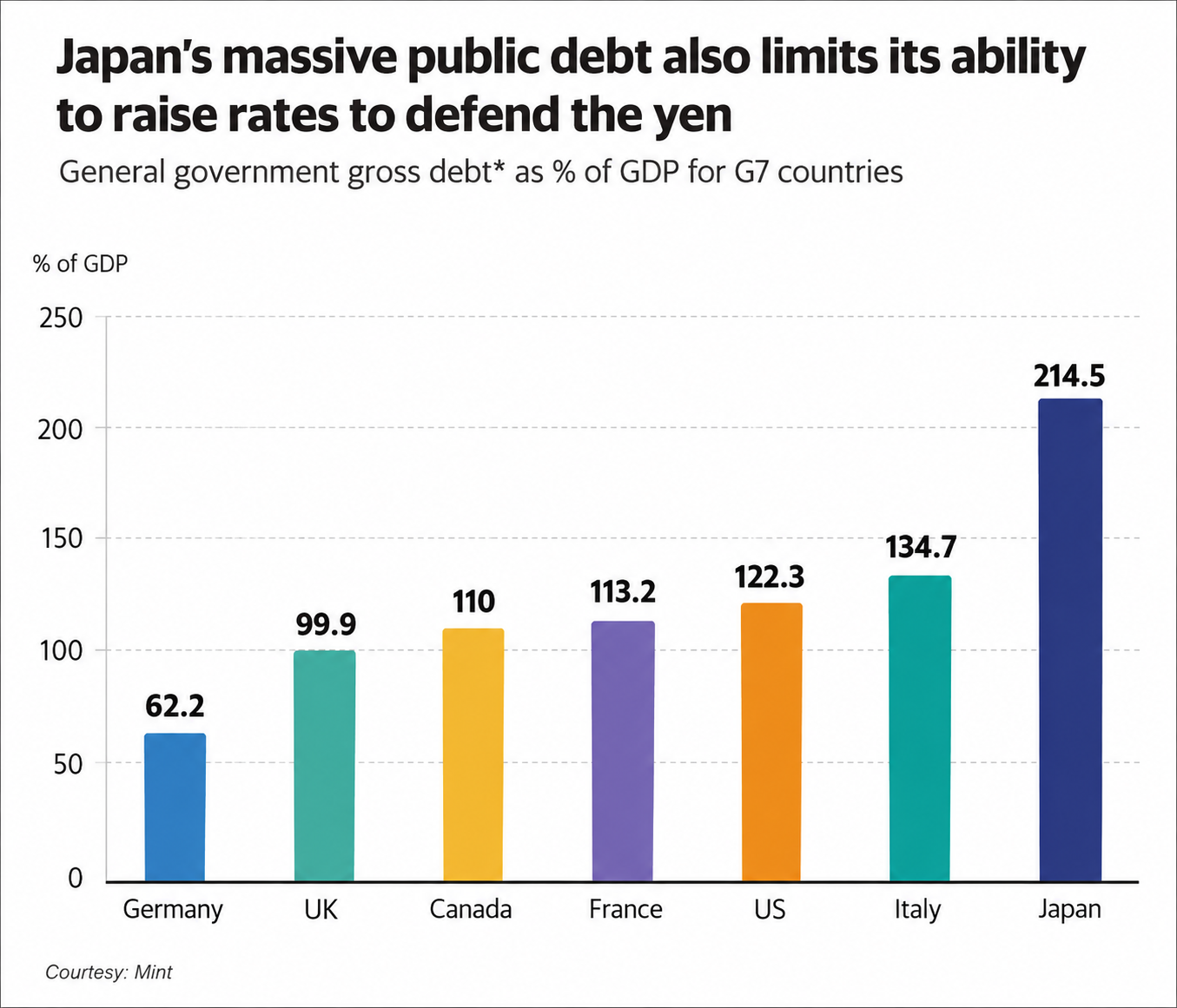
Very High Public Debt
-
Japan's government debt was 214.5% of GDP (2024), the highest among major advanced economies.
-
Continued Fiscal Spending
-
The government plans $2.3 trillion in public and private investment by 2040 to boost long-term growth.
-
Higher Borrowing Costs
-
Rising interest rates increase the cost of refinancing government debt, putting pressure on public finances.
-
Policy Trade-off
-
The BoJ must balance:
-
Supporting the yen,
-
Controlling imported inflation, and
-
Maintaining fiscal sustainability without destabilizing government finances
Japan's weak yen reflects deep structural economic challenges, not just short-term market movements. A wide US–Japan interest-rate gap, heavy dependence on energy imports, the legacy of prolonged monetary easing, and very high public debt continue to keep the currency under pressure. Unless Japan undertakes structural reforms, strengthens long-term growth, and improves fiscal sustainability, the yen is likely to remain weak despite policy interventions.