A concise overview of key disaster-related terminology associated with the Kailash Manasarovar region, covering glacial hazards, flash floods, GLOFs, landslides, extreme weather, and pilgrimage-related vulnerabilities.
Syllabus Areas:
GS I - Geography
GS III - Environment and Disaster Management
Points To Be Covered:
- Why is it in News?
- Key Terminology Related to Manasasarovar Yatra
- The Topography of the Kailash Mansarovar Yatra, Plate Tectonics & Geographical Activity In This Area and Major Disasters in the Kailash–Mansarovar Region
- Mythological History of Kailash–Mansarovar and Travel route to reach the Kailash–Manasarovar Routes and Mount Kailash Parikrama / Kora
- From Salt & Wool to EVs: The Changing Face of Rasuwagadhi
Watch Video On Manasasarovar Major Disaster:
Terminology Related to Manasasarovar Disaster
What are Flash Floods?
Flash floods are sudden, high-velocity floods caused by intense rainfall, rapid snow or glacier melt, landslides, or dam failure, leaving little warning and causing severe destruction in vulnerable areas.
What is Cloudburst?
A sudden, highly localized, intense rainfall event, typically exceeding 100 mm in a short period, causing flash floods, landslides, debris flows, and severe damage.
What is a Glacier?
A large, slow-moving mass of compacted snow and ice formed over years, flowing under gravity and shaping landscapes while storing freshwater and responding to climate change.
What is an Avalanche?
A rapid downward movement of snow, ice, rocks, and debris along a mountain slope, triggered by gravity, heavy snowfall, earthquakes, warming, or unstable terrain.
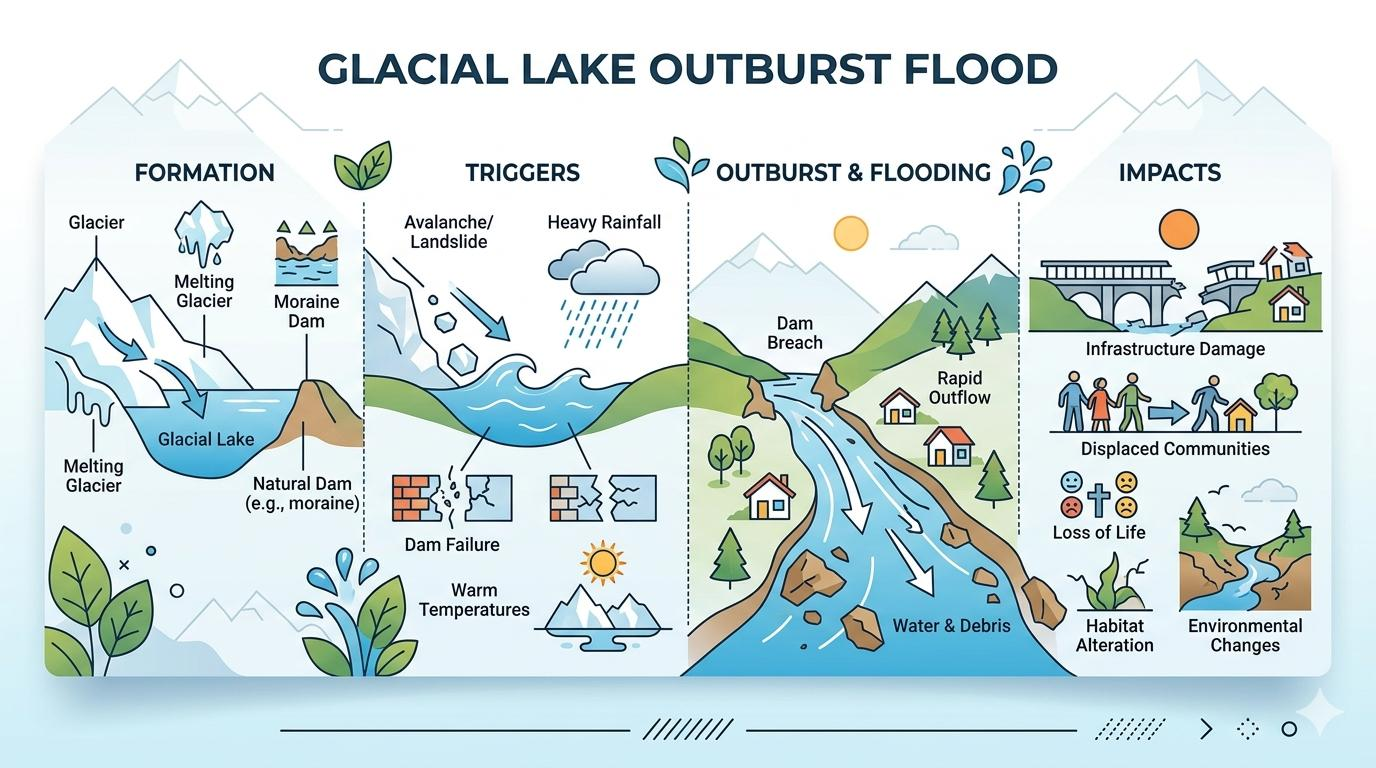
What is a Glacial Lake Outburst Flood (GLOF)?
A Glacial Lake Outburst Flood (GLOF) is a sudden and often catastrophic release of water from a lake formed by glacial meltwater, causing a powerful flood downstream.
What is Western Disturbance?
Extratropical weather systems originating near the Mediterranean region, bringing winter rainfall and snowfall to northwest India, Pakistan and the Himalayas, influencing agriculture and water availability.
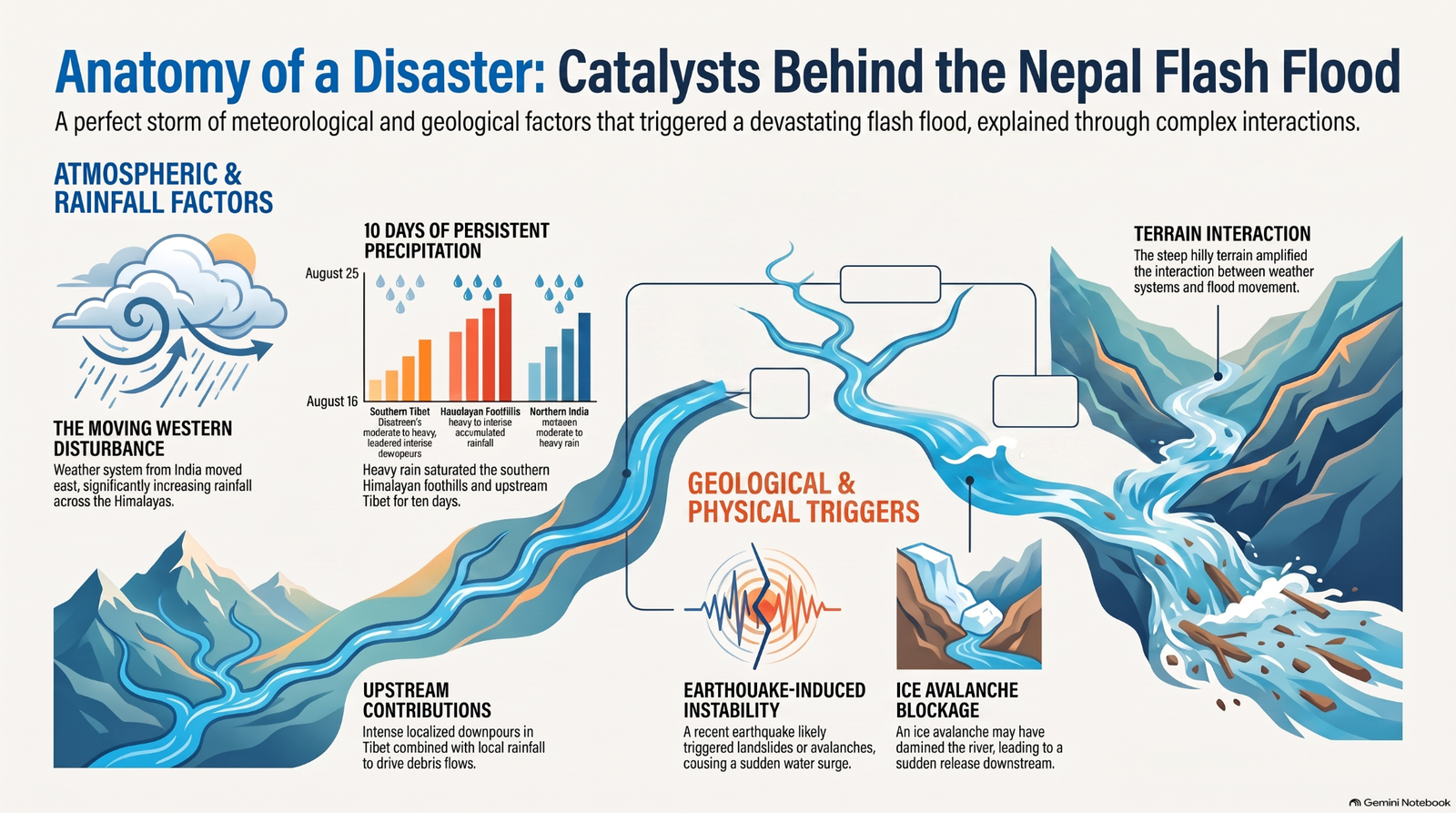
Western disturbance linked to Nepal flood
A western disturbance that brought rain to parts of northern India, and subsequently moved eastwards towards the Himalayas, may have contributed to the weather conditions preceding the devastating flash flood in Nepal on Wednesday, according to a senior India Meteorological Department official.
The same western disturbance system was moving eastwards, bringing increased rainfall activity towards the Himalayan region.
The western disturbance should be understood as a possible contributor to the broader rainfall environment rather than as an established direct cause of the flash flood. The immediate mechanism behind the sudden release of water remains under investigation.