Rasuwagadhi: historic Himalayan trade corridor, now vulnerable to devastating flash floods.
Syllabus Areas:
GS I - Geography
GS III - Environment and Disaster Management
Points To Be Covered:
- Why is it in News?
- Key Terminology Related to Manasasarovar Yatra
- The Topography of the Kailash Mansarovar Yatra, Plate Tectonics & Geographical Activity In This Area and Major Disasters in the Kailash–Mansarovar Region
- Mythological History of Kailash–Mansarovar and Travel route to reach the Kailash–Manasarovar Routes and Mount Kailash Parikrama / Kora
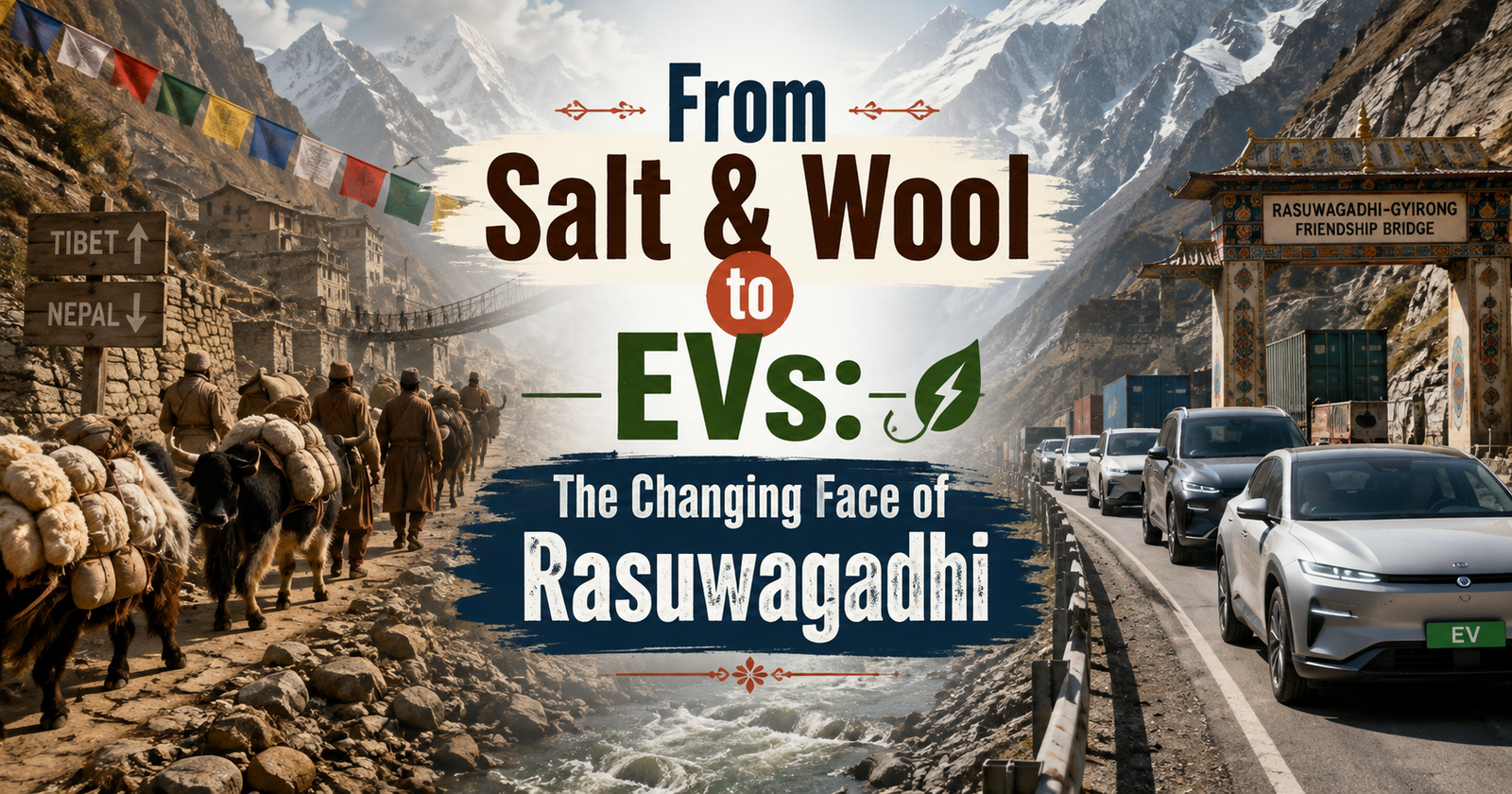
- From Salt & Wool to EVs: The Changing Face of Rasuwagadhi
Watch Video On Manasasarovar Major Disaster:
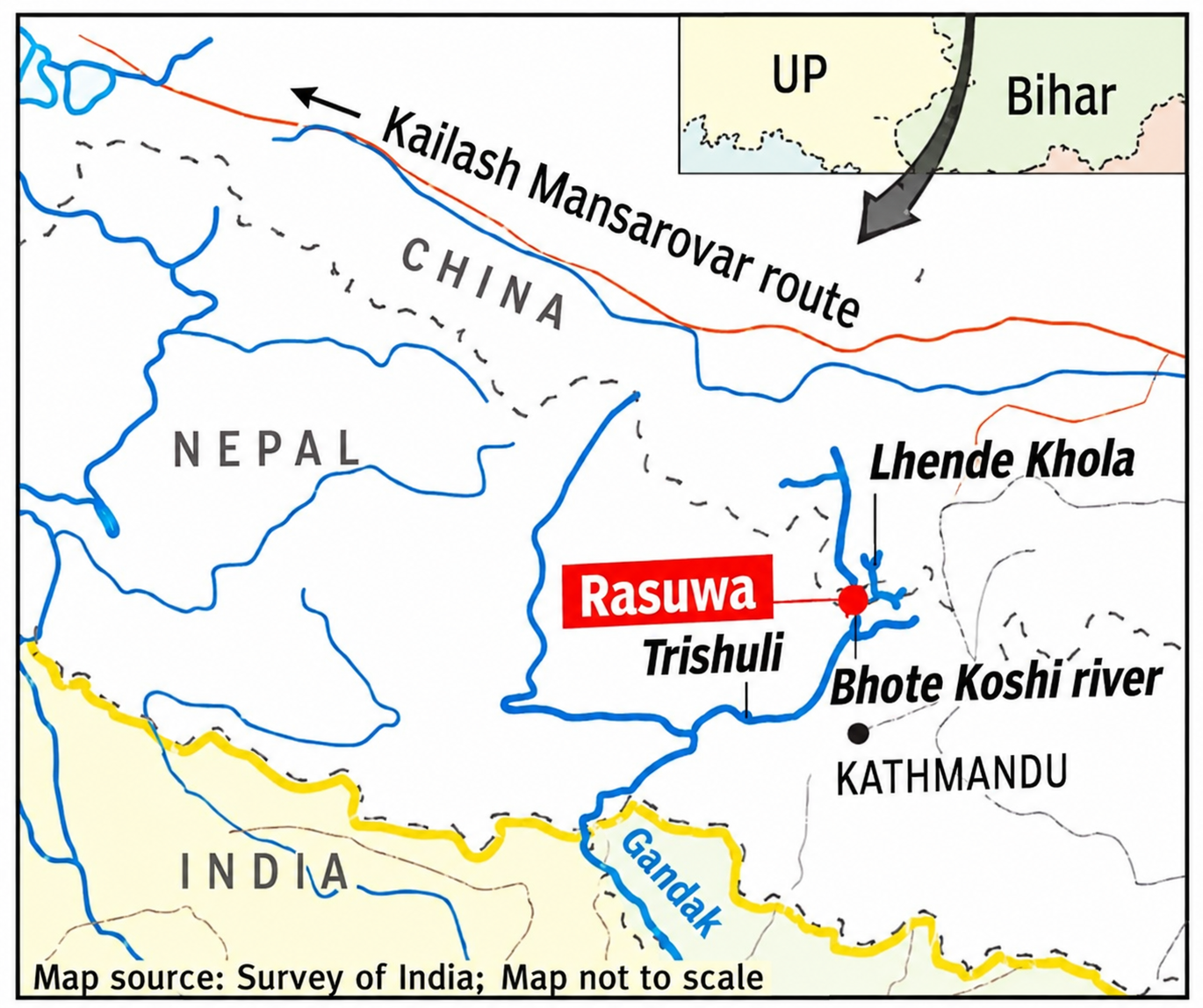
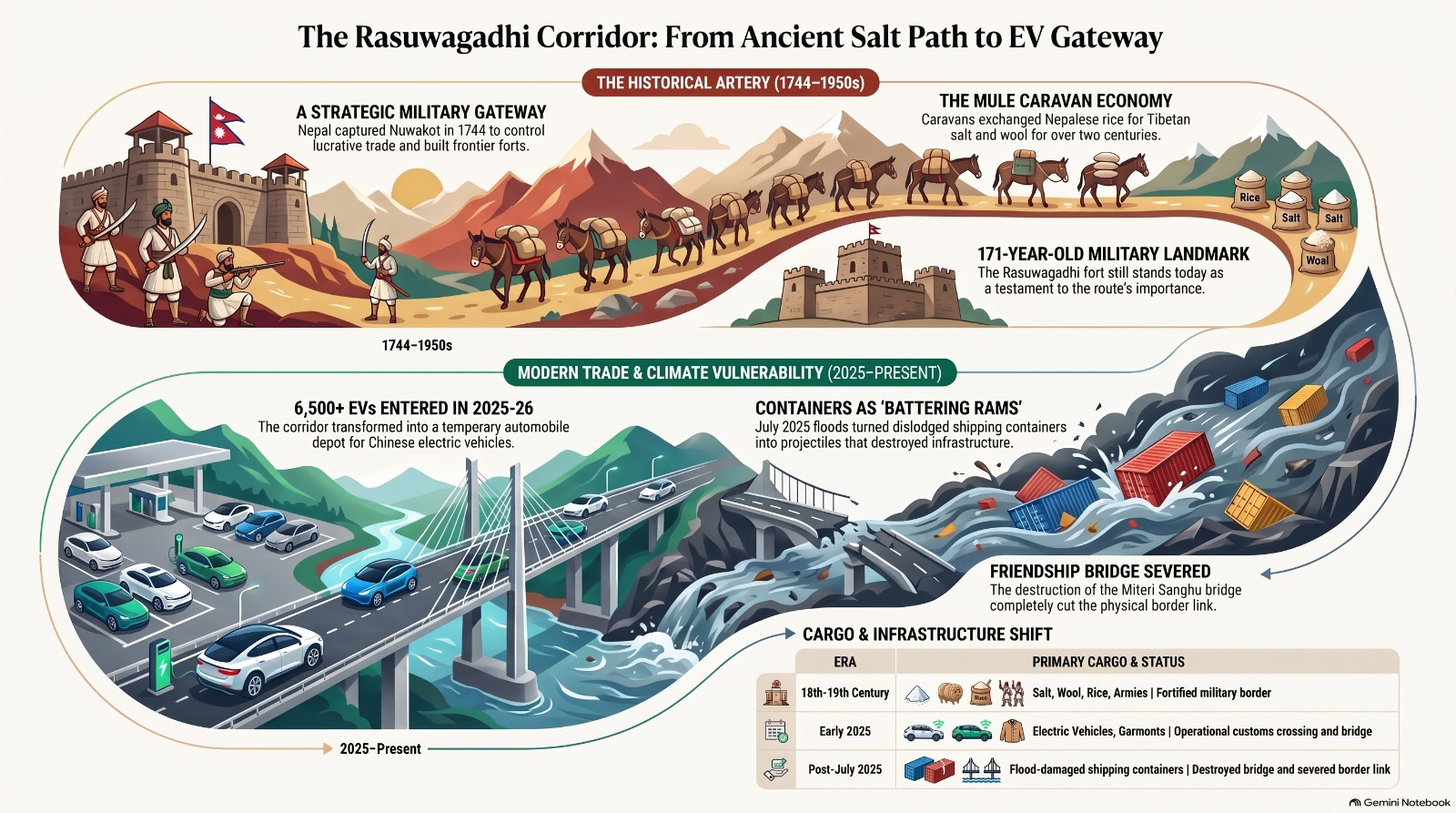
The Himalayan corridor, particularly Rasuwagadhi, devastated by the flash flood had served for more than 260 years as one of Nepal’s key trans-Himalayan arteries, carrying traders, pilgrims and armies before becoming a major gateway for Chinese electronics, garments, footwear and electric vehicles entering the country.
-
The Rasuwagadhi corridor has been a vital Himalayan trade route between Nepal and Tibet for over 260 years.
-
Historically, mule caravans transported rice and grains northward, while Tibetan salt and wool moved south. The corridor also held major strategic and military importance for Nepal.
-
In modern times, it became an important gateway for Chinese goods and electric vehicles entering Nepal.
-
However, its location in a fragile Himalayan environment makes it highly vulnerable to floods, landslides and avalanches.
-
Recent flash floods damaged roads, swept away vehicles and cargo containers, and destroyed the Miteri (Friendship) Bridge, disrupting Nepal–China trade and connectivity.