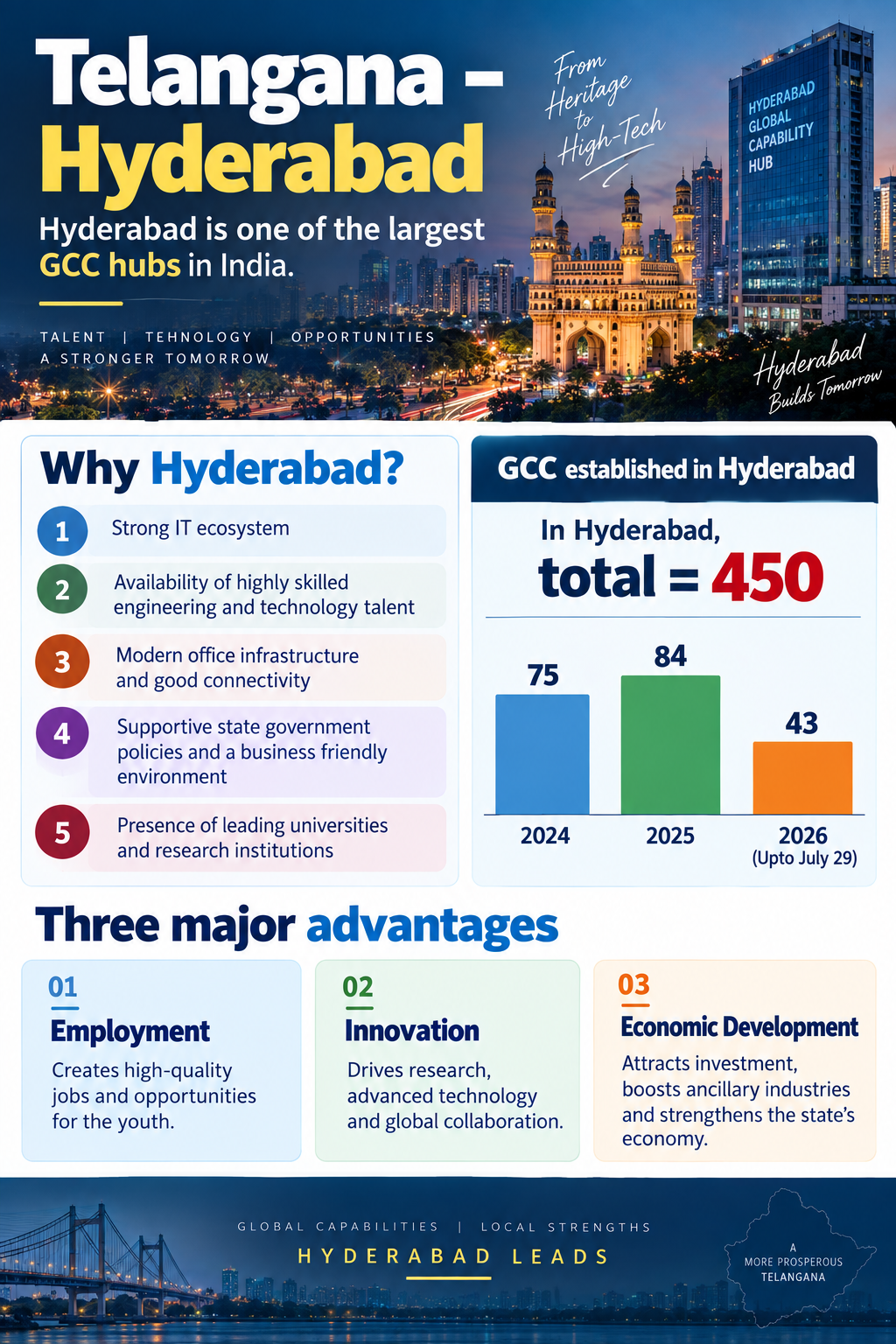
Global Capability Centres (GCCs) are transforming India into a strategic hub for talent, technology, innovation and global business operations, with Hyderabad emerging as a major destination.
Syllabus Areas:
GS III - Economy | Science and Technology
In India, which already hosts Global Capability centres -GCC- of prominent Japanese players – Sony, Nomura, MUFG, Rakuten, Hitachi, Mizuho, Canon, Denso, Sharp, Isuzu, Nissan, Suzuki, Toyota, Toshiba, NEC – primarily focus on engineering, IT, automotive design, and financial operations.
The demographic crisis is projected to shrink Japan's workforce by 11 million by 2040, creating a dire labour shortage that threatens economic stability and business continuity.
Also Read: Data Centres in News
What is GCC?
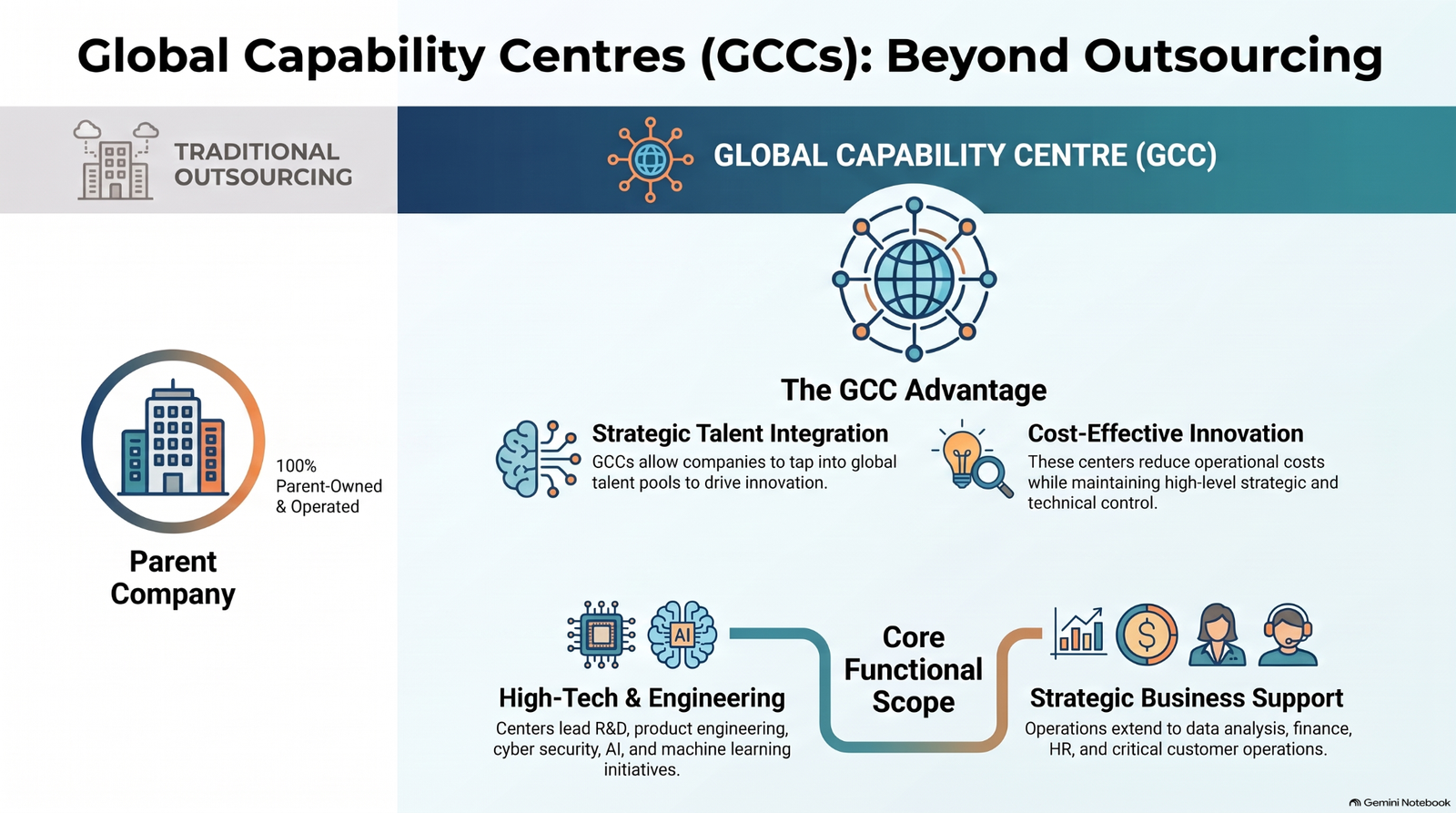
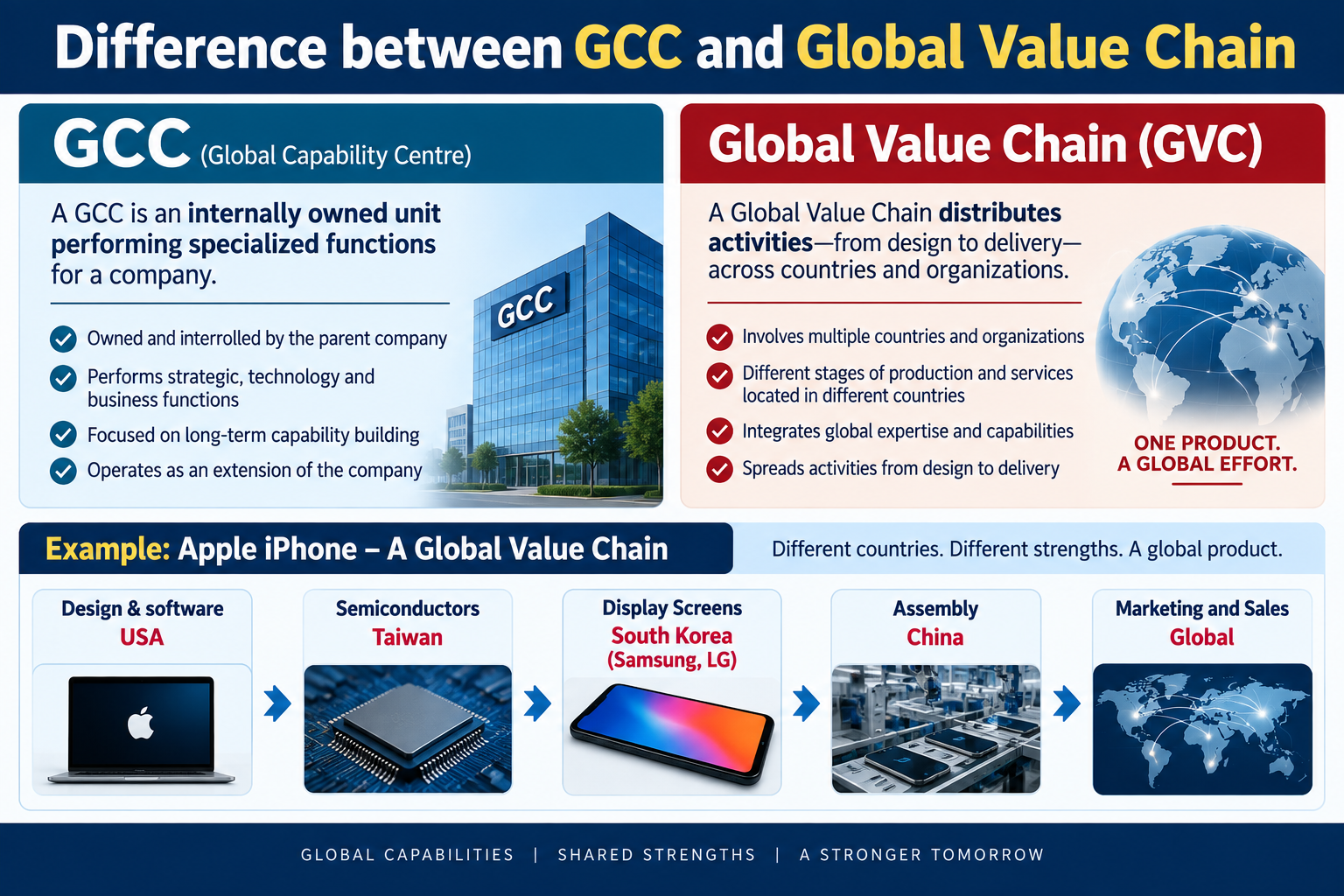
GCC (Global Capability Centre) is a company-owned unit established in another country to perform specialized functions such as technology, R&D, finance, analytics, HR, and customer operations for its global business.
-
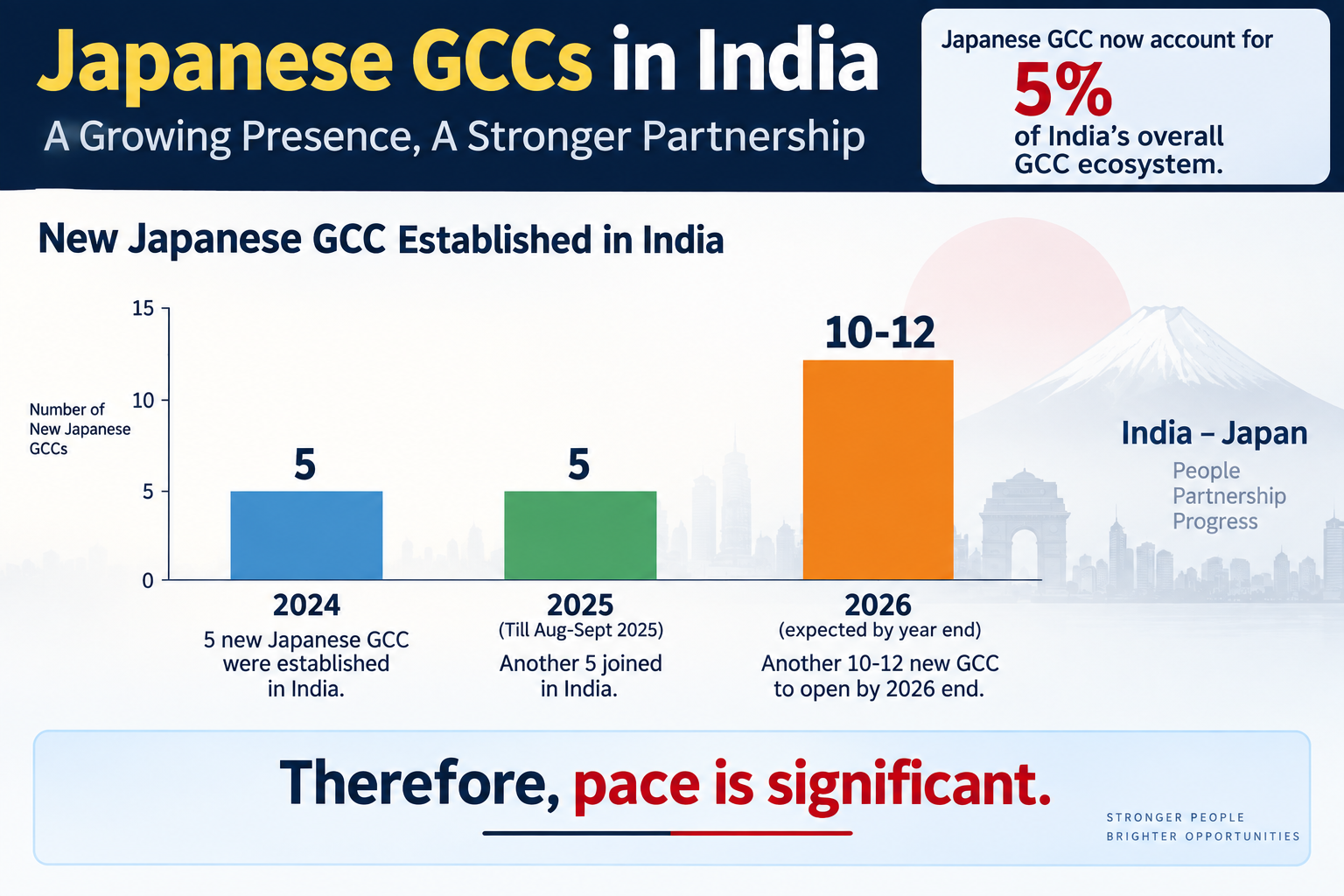
A number of large Japanese financial institutions – including top-tier banks, insurers and fintech players – have established GCC in India.
-
Japanese companies with long-standing manufacturing presence in India, are now expanding their footprint in technology and operations through GCC.
-
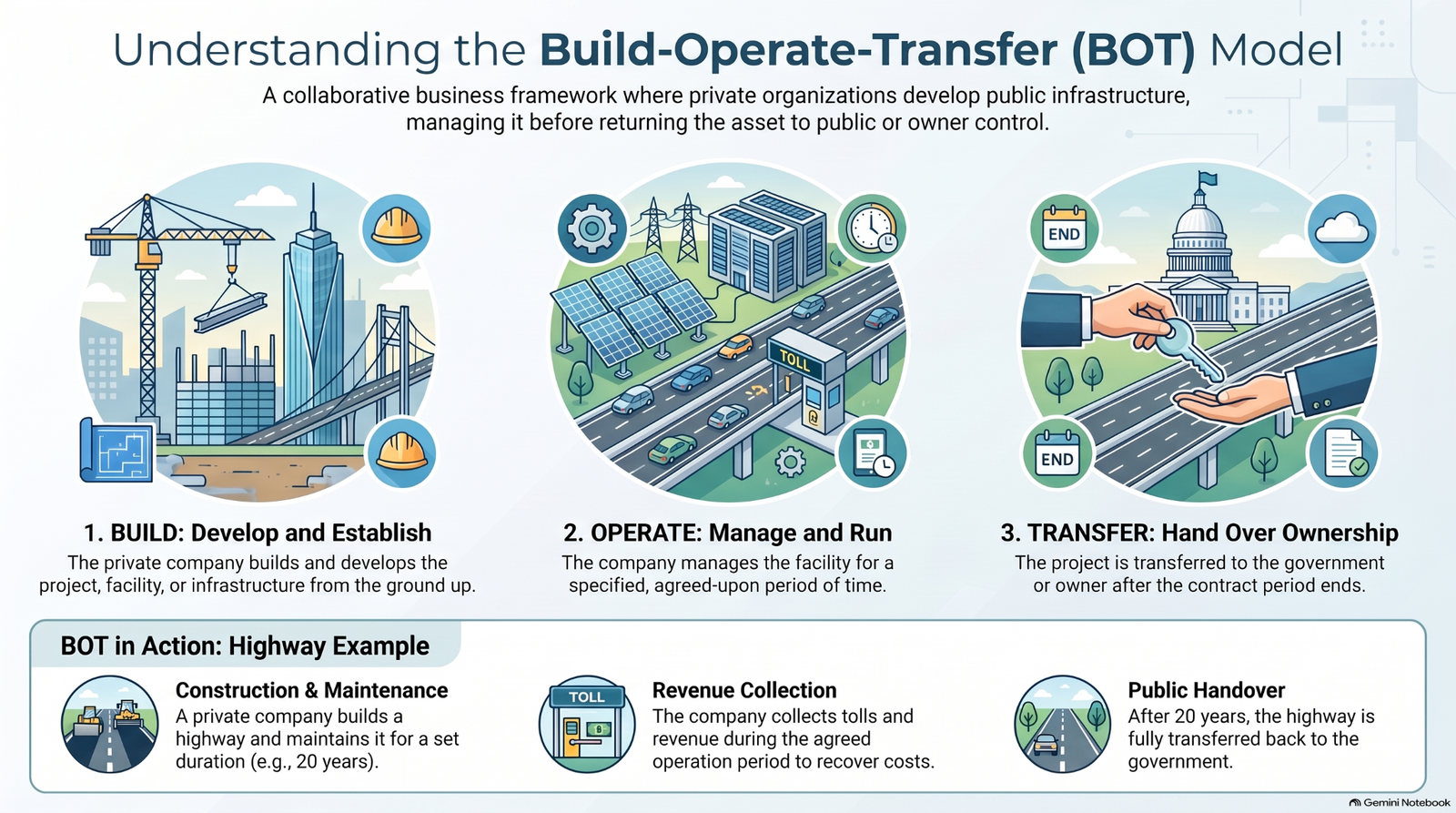
Japanese firms also prefer the Build – Operate – Transfer BOT model, which suits their cautious approach.
-
This cautious approach has also meant that most Japanese GCC are still smaller in size.
-
The average size is around 500-750 employees. Till 2019-20 the presence of Japanese financial services firms in India's GCC ecosystem was minimal.
-
India is no longer just a cost hub – it is now seen as a value centre for innovation and enterprise capability building.
-
Japanese companies are seeing 30-40% operational savings by offshoring to India which has the ability to deliver quality at scale.The looming 2025 Digital cliff too is playing a key role in pushing them to India.
-
The 2025 Digital Cliff refers to Japan’s projected shortage of digital-skilled workers around 2025, creating pressure on companies to seek overseas talent, technology capabilities, and digital expertise.
-
But culture and language still pose barriers.
Global capability centre also called Global In-house centre, Global captive centre, Global Innovation Hub
Difference between outsourcing and GCC
Outsourcing involves hiring third-party vendors for specific, often non-core or transactional tasks, whereas a GCC is an internally owned and controlled unit providing strategic, technology, and business functions.
Key functions of GCC include
• IT and software development
• Research and development
• Finance and accounting
• Human Resources
• Data Analytics and AI
• Customer support and business operations.
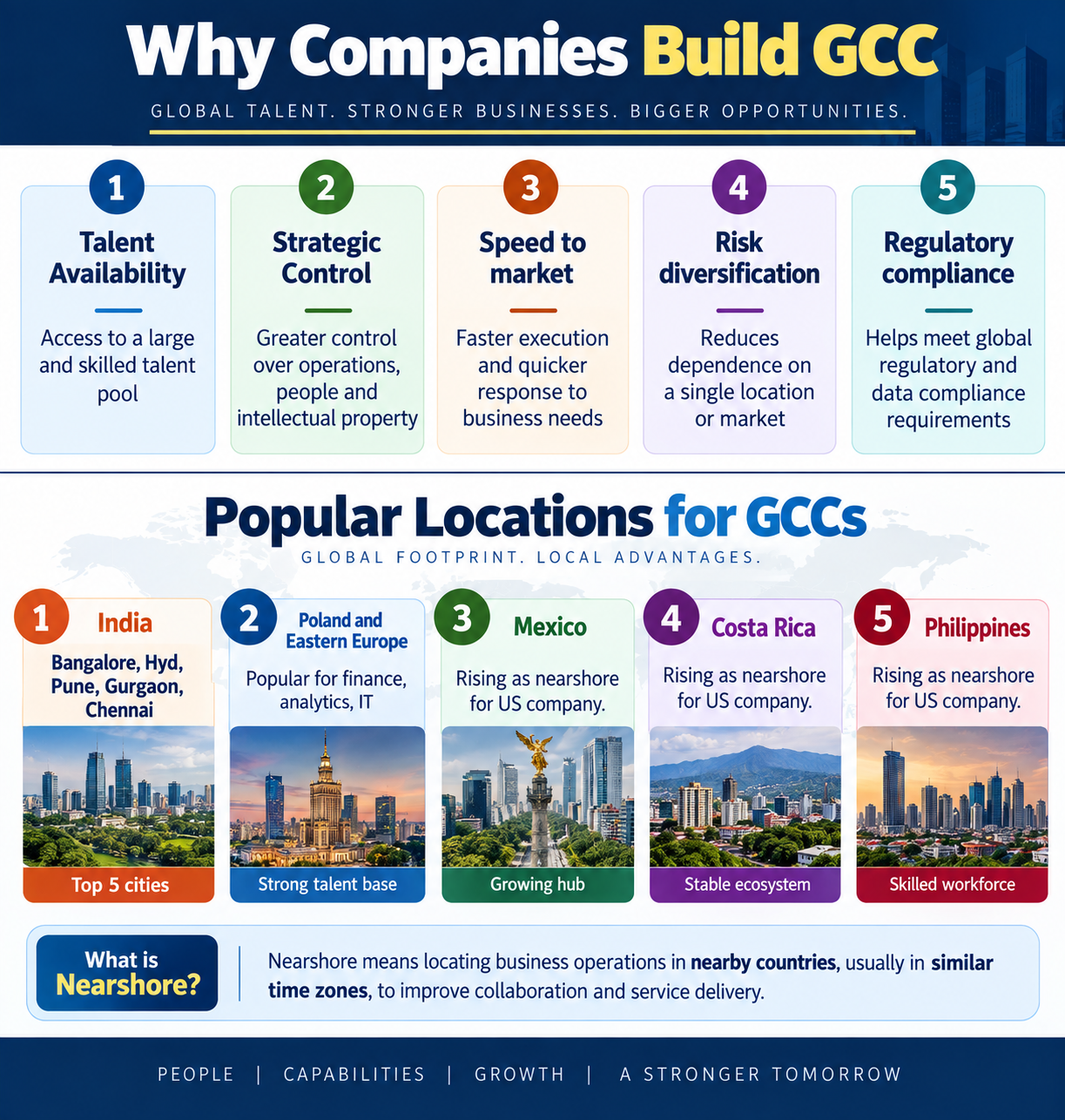
Companies such as Microsoft, Google, Amazon, JPMorgan etc have GCC in India esp Bengaluru, Hyderabad, Pune, Chennai, Gurgaon, Noida
Why India is preferred GCC destination
• A large pool of skilled professionals
• Strong IT and engineering ecosystem
• Competitive operating costs
• Robust digital infrastructure
• Govt support for IT and services sector
India hosts 1806 GCC
Economic significance
• GCC generate high skilled employment
• They boost IT exports and foreign investment
• They promote innovation, R&D, digital transformation.
• they strengthen India's position in global value chains
Highest demand through GCC in descending order
-
AI / ML engineering
-
Software engineering
-
Cloud Engineering
-
Data and Analytics
-
Cyber security
-
Product management
-
Hardware / ASIC
-
Process Engineering
-
Finance and Accounting
-
Project management
-
Scientific research
-
Legal and compliance