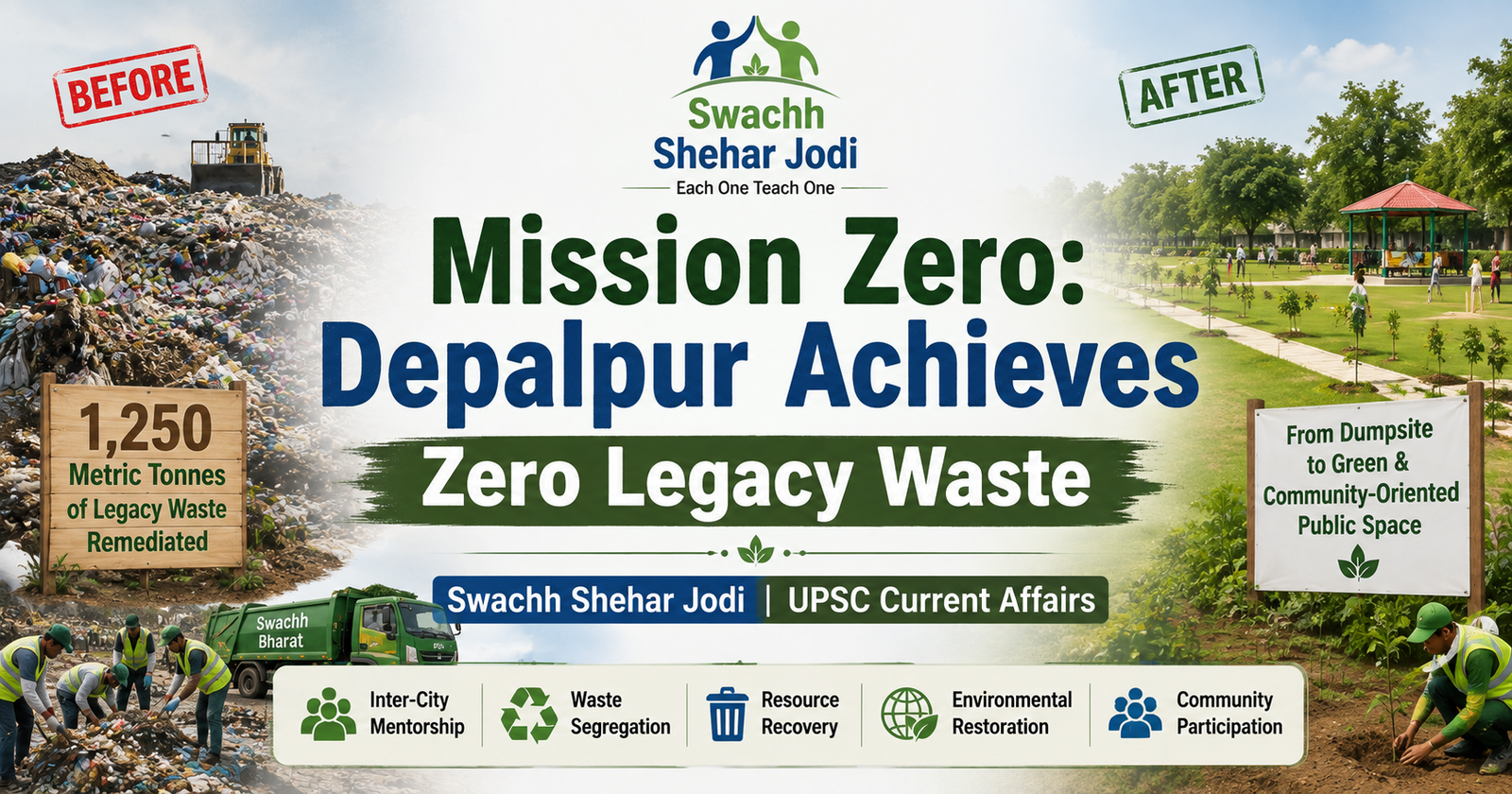
Depalpur becomes the first city under Swachh Shehar Jodi to achieve Zero Legacy Waste by remediating 1,250 MT of waste through scientific processing, recycling and community participation.
Syllabus Areas:
GS III - Environmental Pollution (Waste Management)
Depalpur in Madhya Pradesh has achieved a significant milestone in urban waste management by becoming the first city under the Swachh Shehar Jodi initiative to achieve “Zero Legacy Waste.” The initiative resulted in the complete remediation of 1,250 metric tonnes of legacy waste that had accumulated over a period of five years.
The achievement demonstrates how inter-city collaboration, scientific waste management, source segregation, resource recovery and community participation can transform long-standing urban waste challenges into opportunities for environmental restoration and public welfare.
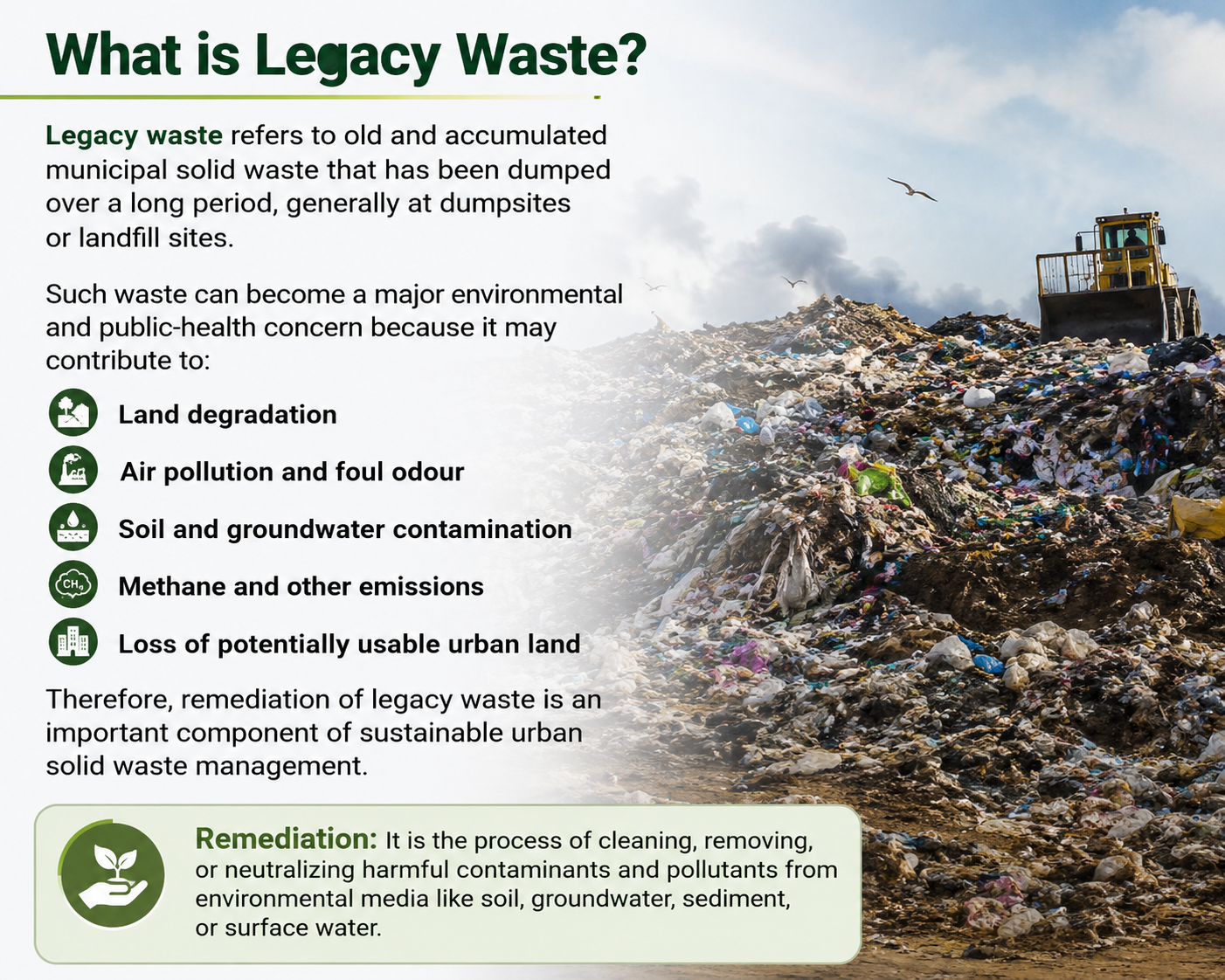
Depalpur’s Journey Towards “Zero Legacy Waste”
Depalpur's transformation was undertaken through cooperation between the Indore Municipal Corporation and Depalpur Nagar Parishad under the Swachh Shehar Jodi initiative.
Before focusing on the old dumpsite, Depalpur had established a waste-management system based on:
-
Door-to-door waste collection
-
Four-category waste segregation
-
100% coverage of waste collection and segregation
Once this system was institutionalised, the focus shifted towards the challenge of clearing the accumulated legacy waste.
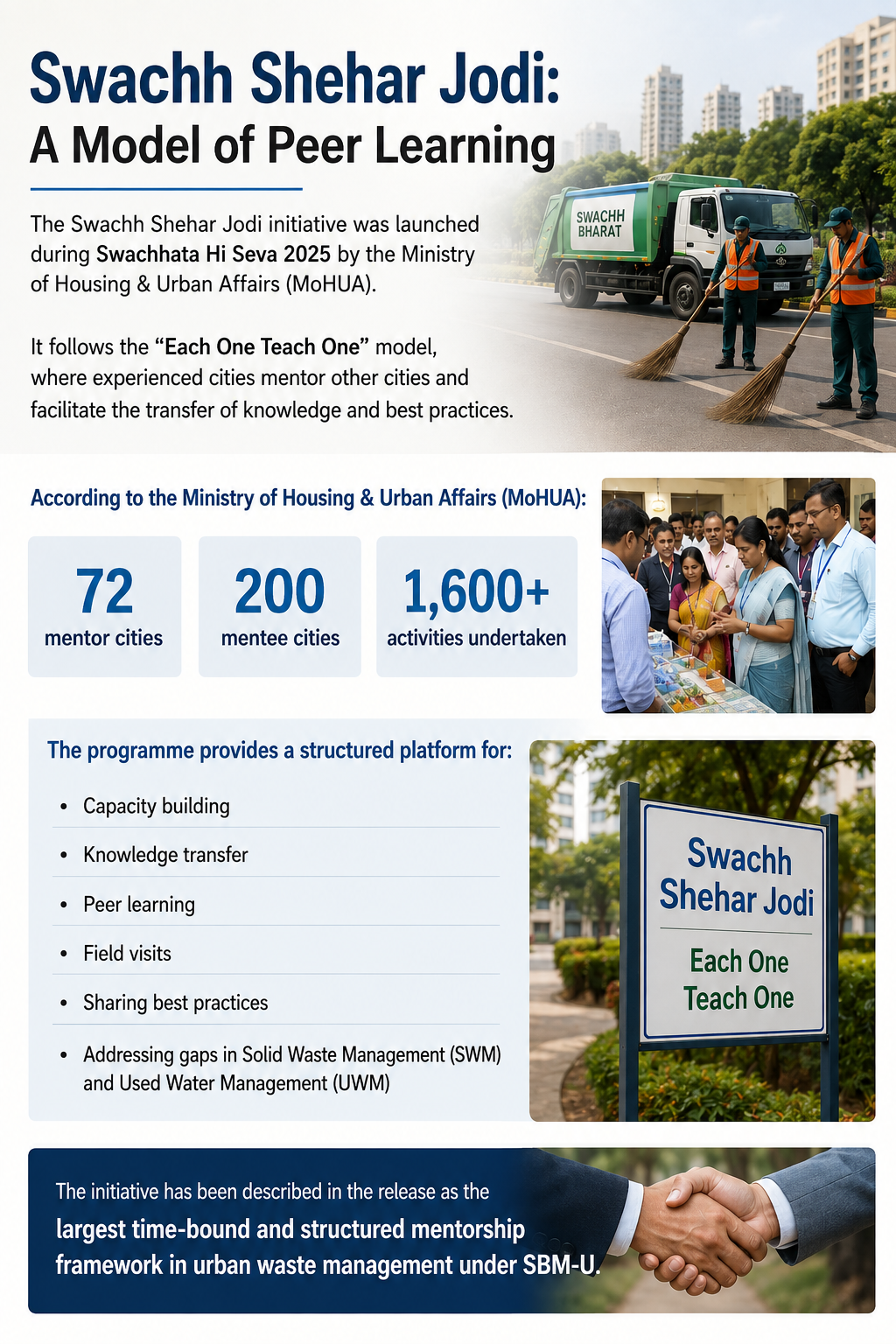
Scientific Remediation of 1,250 Tonnes of Waste
Under the initiative, Depalpur undertook the complete remediation of its dumpsite.
The operation involved:
-
1,250 metric tonnes of legacy waste
-
Waste accumulated over five years
-
More than 500 ragpickers from Indore Municipal Corporation
-
Dumpers
-
JCBs
-
Loaders
The waste was systematically segregated at the dumpsite into different streams so that each fraction could be directed towards its appropriate destination.
This ensured that the operation was not merely a process of shifting waste from one location to another, but involved scientific processing and resource recovery.
Resource Recovery from Legacy Waste
The remediation process focused not only on removing waste but also on recovering useful resources.
-
4.5 tonnes of recyclables — plastic, metal and glass — were recovered and sold to authorised recyclers.
-
50–60 tonnes of Refuse Derived Fuel (RDF) was generated.
-
The RDF was taken to the NEPRA plant in Indore, shredded and sent to cement factories for co-processing.
What is Refuse Derived Fuel (RDF)?
RDF is a fuel produced from the combustible portion of municipal solid waste after removing recyclable and unsuitable materials. It can be processed into a fuel suitable for use in industries such as cement manufacturing, reducing dependence on conventional fossil fuels.
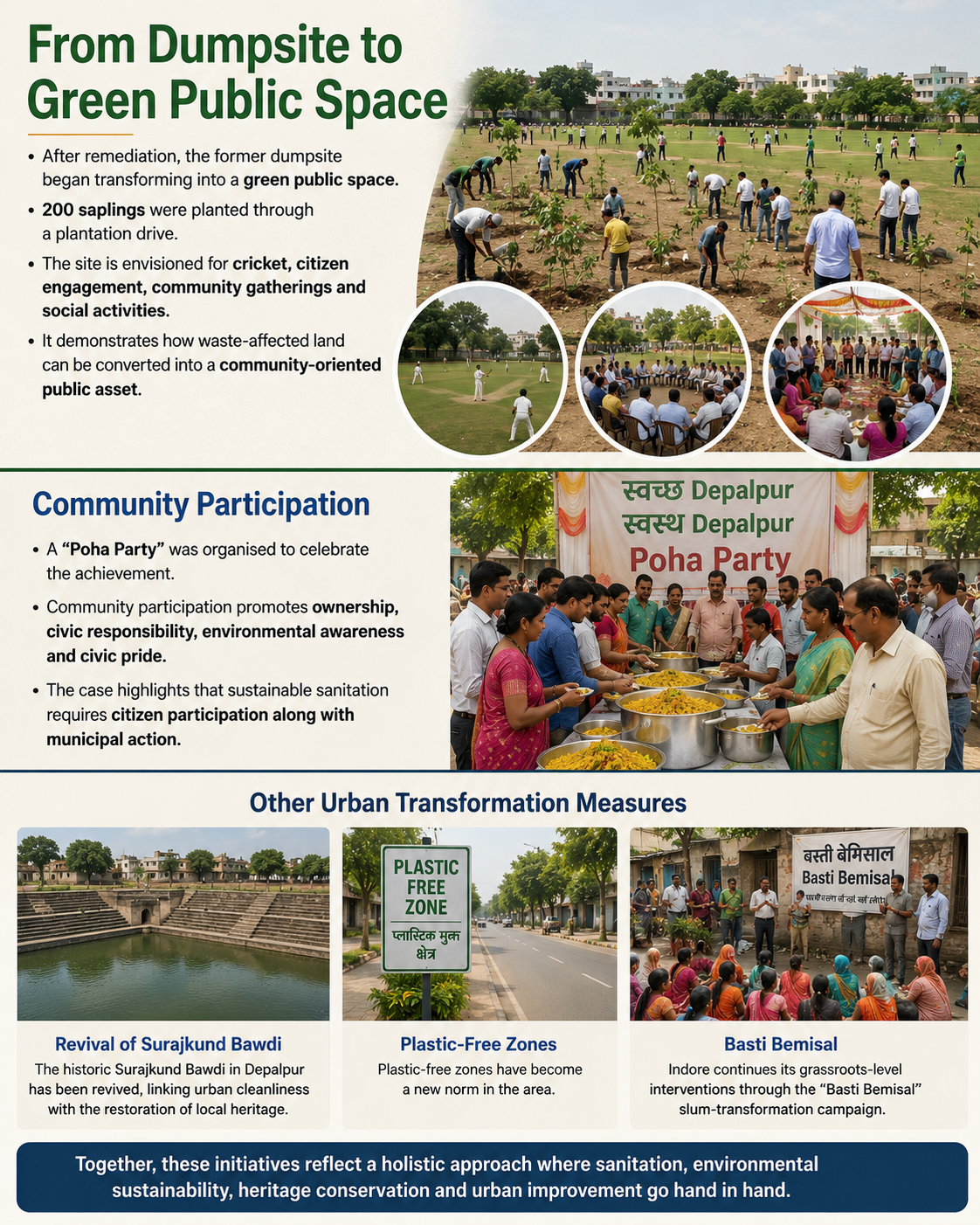
These initiatives illustrate a broader approach in which sanitation, environmental sustainability, heritage conservation and urban improvement are addressed together.
Why Depalpur’s Model Matters
The Depalpur experience offers several important lessons for urban governance.
1. Peer Learning Can Accelerate Governance Outcomes: Instead of every city developing solutions independently, successful cities can share their experience and technical knowledge with other urban local bodies.
2. Source Segregation is Fundamental: Four-category segregation and door-to-door collection created the foundation for effective waste processing.
3. Waste Can Be a Resource: Recovery of recyclables and RDF shows how waste-management systems can incorporate resource recovery and recycling.
4. Legacy Waste Requires Scientific Remediation: Old dumpsites cannot simply be shifted elsewhere. Scientific segregation, processing and authorised channelisation are essential.
5. Citizen Participation Improves Sustainability: Community involvement can convert sanitation programmes from government-led projects into people-owned initiatives.
6. Urban Land Can Be Reclaimed: Remediation can release previously degraded land for green spaces and community use.
Way Forward
The Depalpur experience suggests that tackling India's urban waste problem requires a combination of prevention, segregation, processing, recycling, scientific remediation and citizen participation.
Urban local bodies can strengthen this approach by:
-
Ensuring universal door-to-door collection.
-
Promoting segregation at source.
-
Expanding scientific remediation of legacy dumpsites.
-
Strengthening recycling and resource recovery systems.
-
Building technical capacity of smaller urban local bodies.
-
Encouraging mentor–mentee partnerships between cities.
-
Involving citizens in maintaining reclaimed spaces.
-
Converting remediated dumpsites into environmentally productive public spaces.
Depalpur’s Mission Zero demonstrates integrated urban governance through mentorship, scientific remediation, segregation, resource recovery, restoration and community participation, transforming 1,250 MT of legacy waste into cleaner, greener public space.