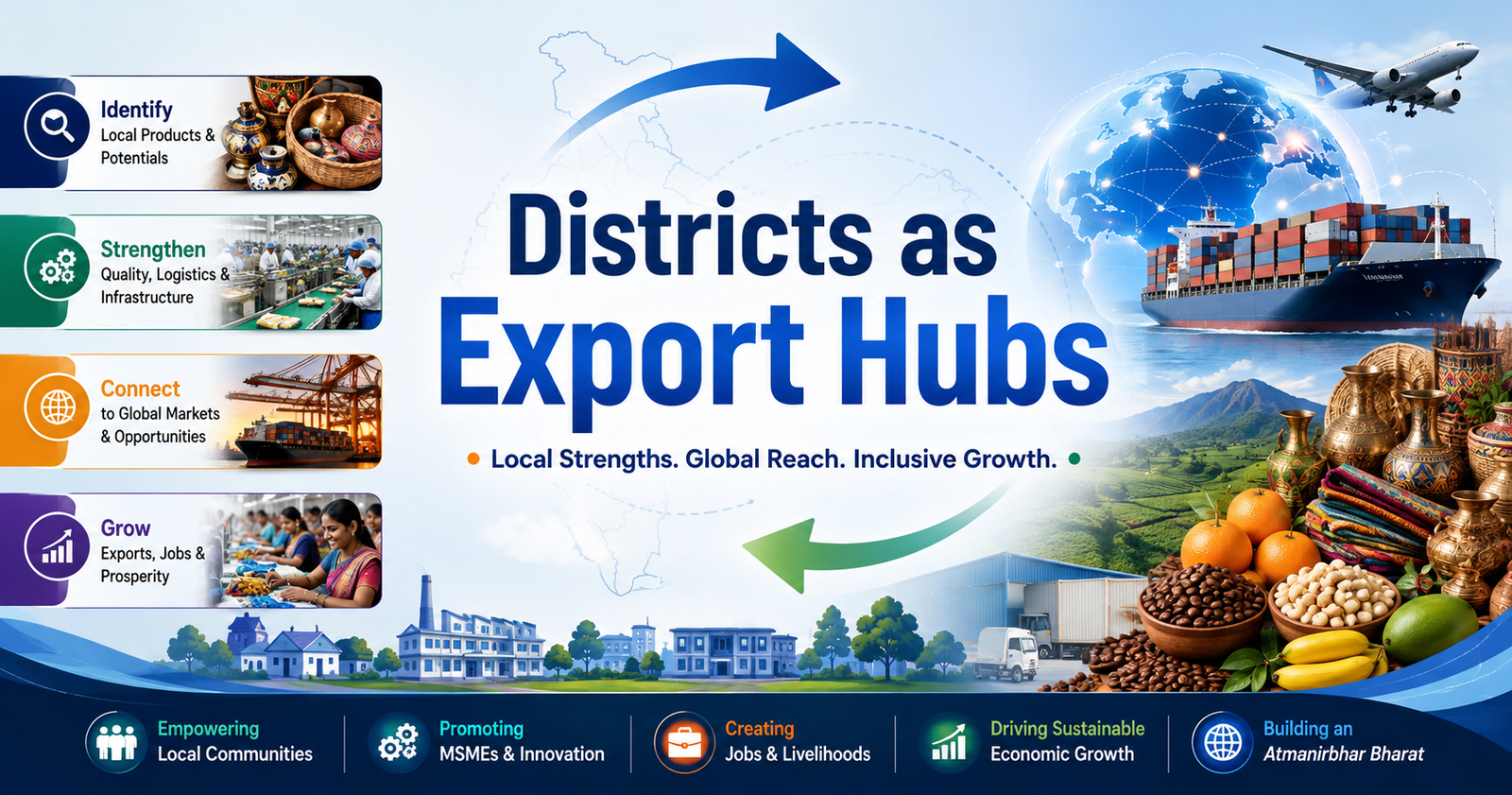
India’s Districts as Export Hubs initiative shifts focus from local production to global markets, strengthening MSMEs, exports, employment, competitiveness, and inclusive district-led economic growth.
Syllabus Areas:
GS II - Governance
GS III - Economy
Watch the Video on District's GDP
India’s export growth is entering a new phase—moving beyond traditional industrial centres to unlock the potential of every district, empower local producers, strengthen MSMEs, and integrate them with global markets.
Why India Needed a District-Led Export Model
-
Exports have become a key engine of India's growth story. Every rupee earned from overseas markets adds to jobs, incomes and industry at home.
-
India's total exports of goods and services touched an all-time high of US$ 825.25 billion in 2024-25, growing further to an estimated US$ 863.11 billion in 2025-26.
-
For decades, export activity stayed concentrated around a handful of established industrial clusters and port cities.
-
Small towns, rural districts and remote regions rarely found their way into shipment manifests, even though many held unique, high-quality products.
-
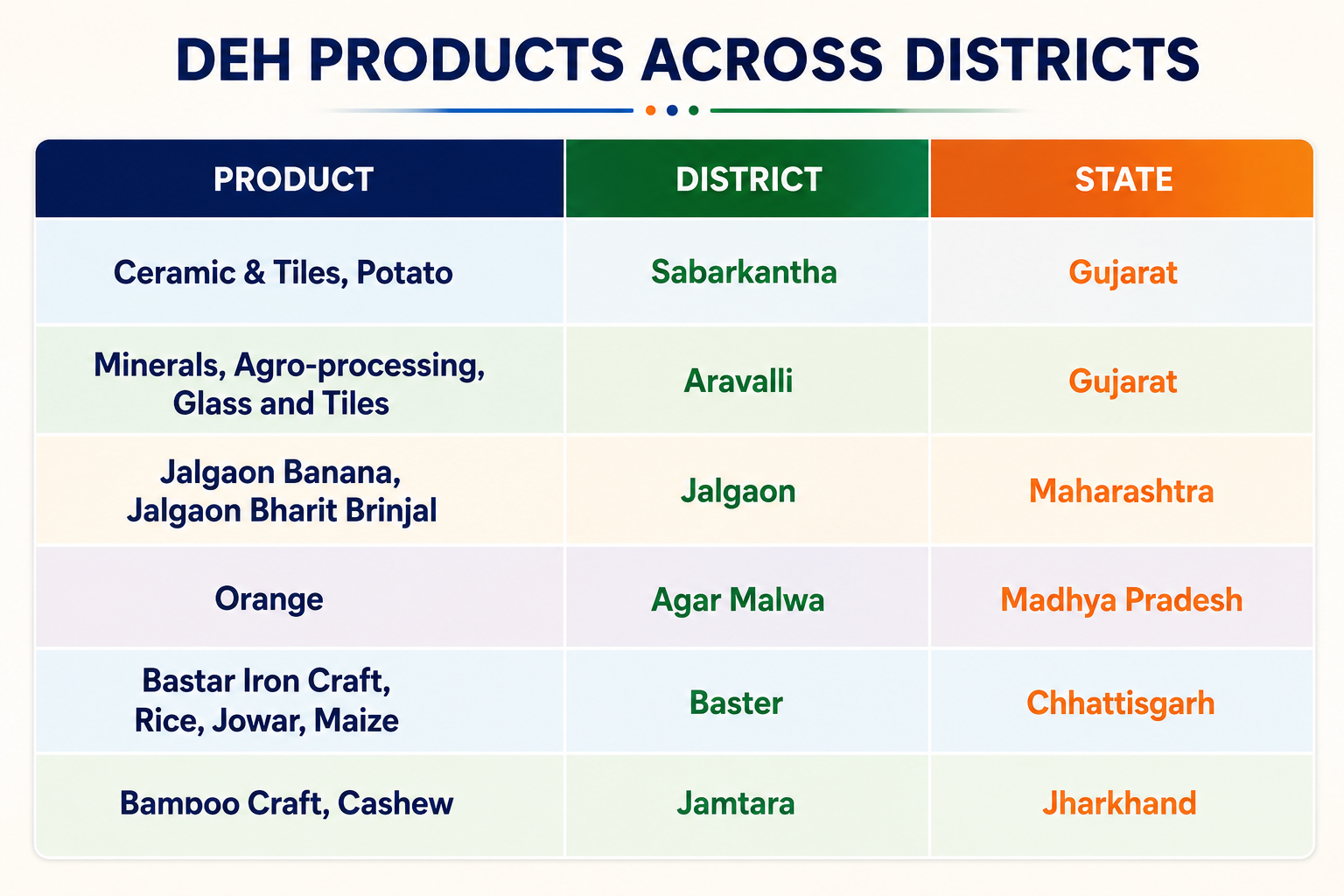
Products such as Bastar's iron craft, Jalgaon's bananas and Meghalaya's Mandarin Oranges reflected this untapped strength.
-
Recognising this opportunity, the Government brought in a district-led export strategy in the form of Districts as Export Hubs Initiative, enabling every district to contribute to India's export growth by leveraging its unique strengths.
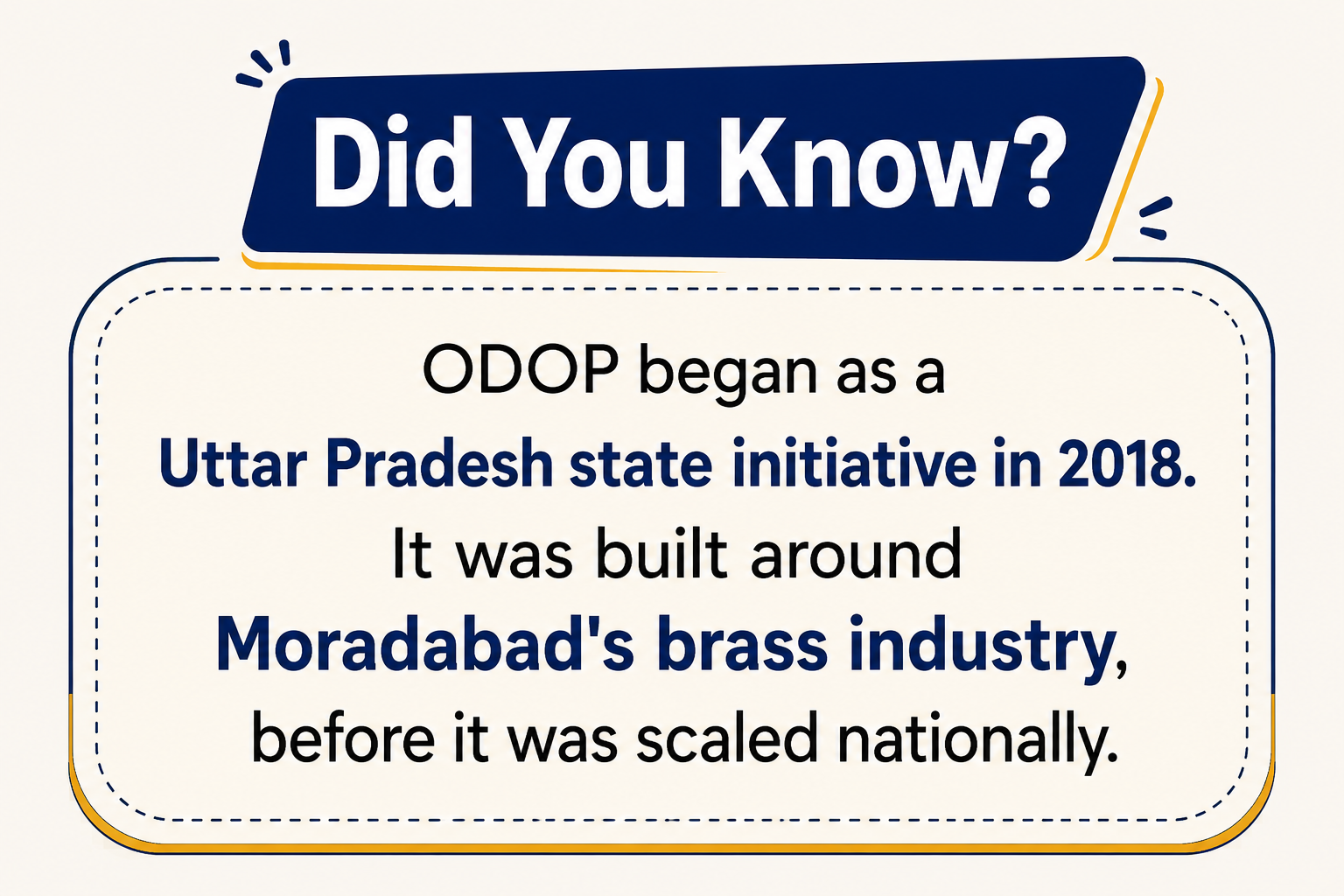
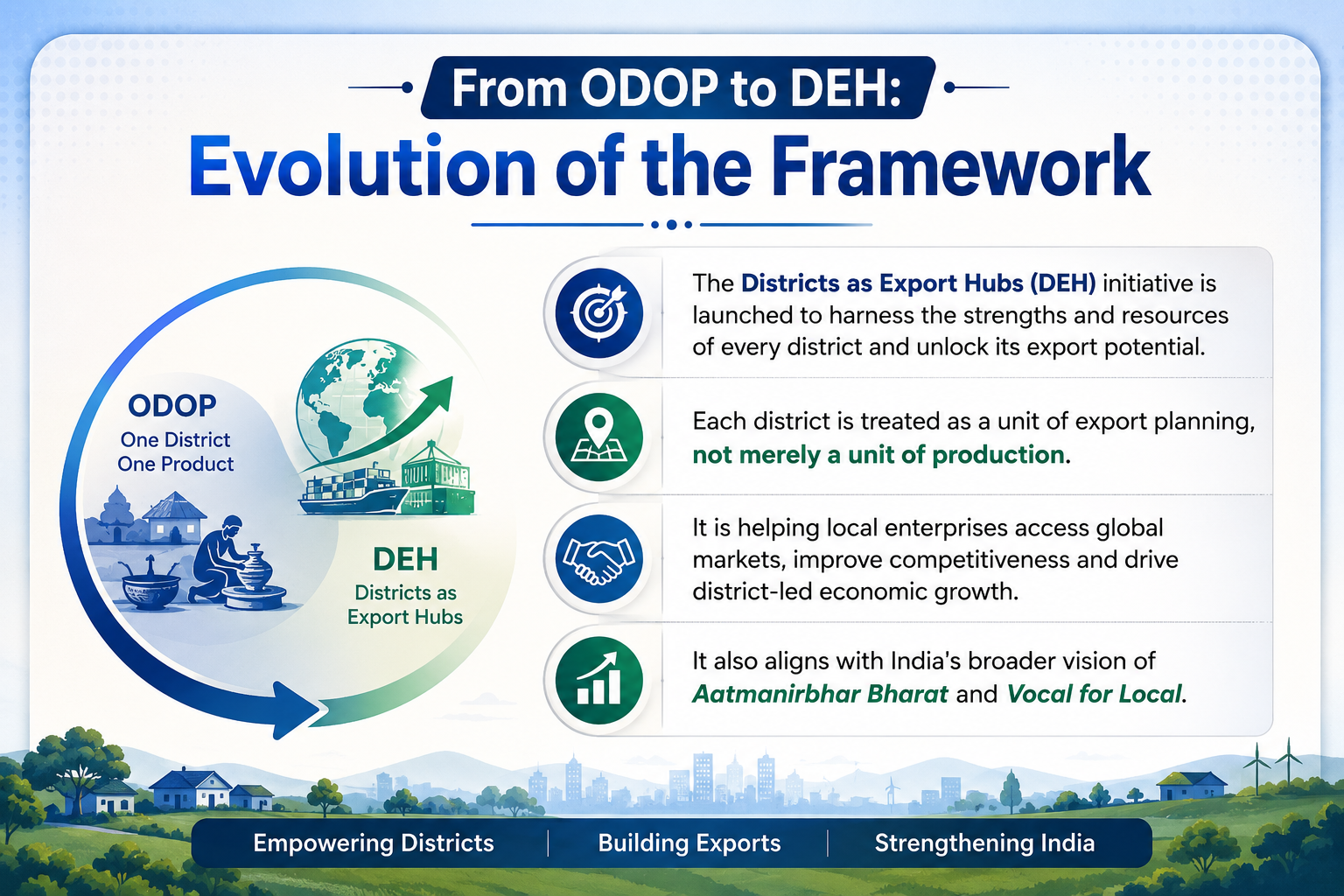
The story of DEH begins with the One District One Product (ODOP) programme. ODOP set out to select, brand and promote one distinctive product from each district, converting local identity into economic opportunity.
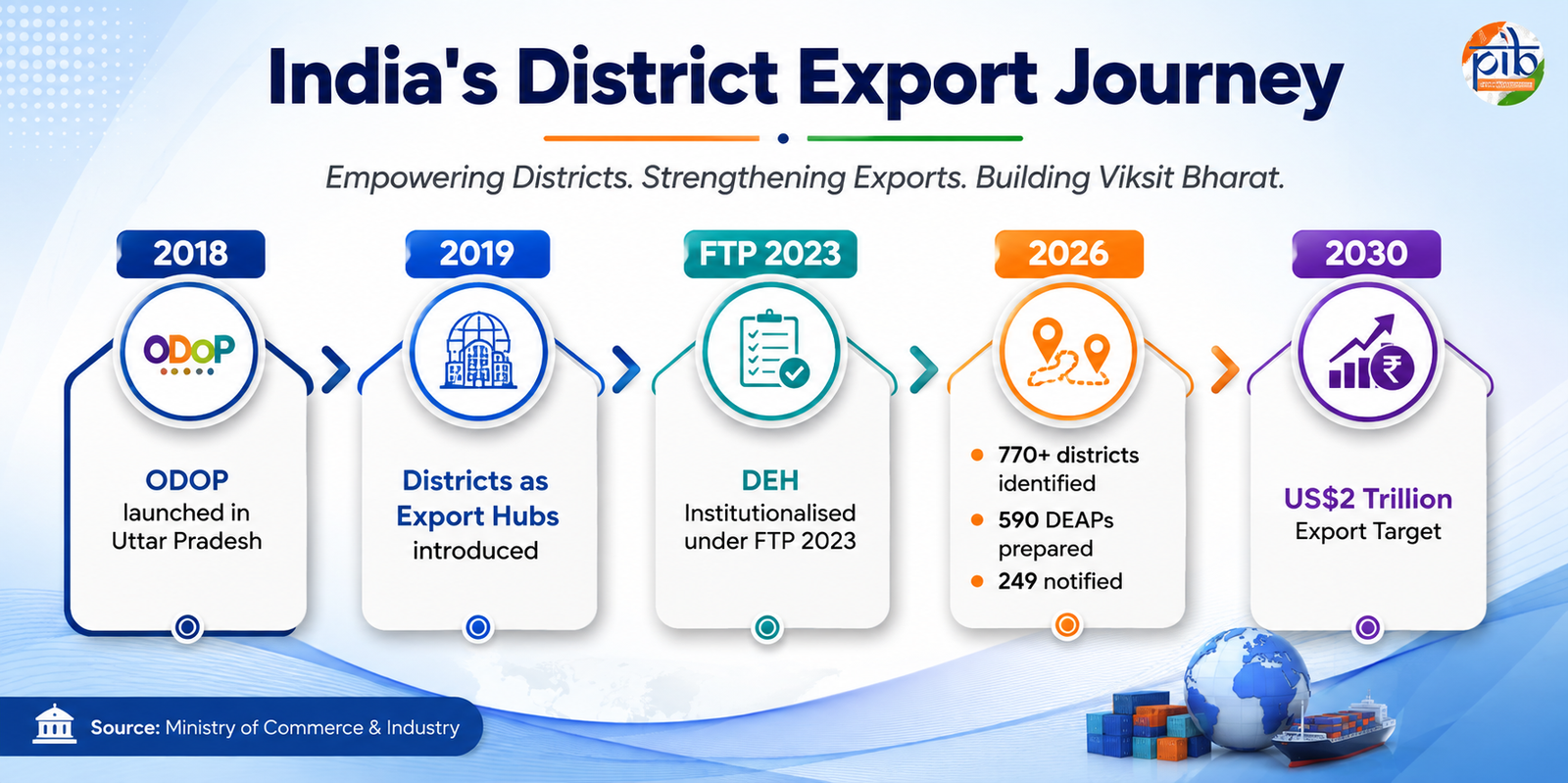
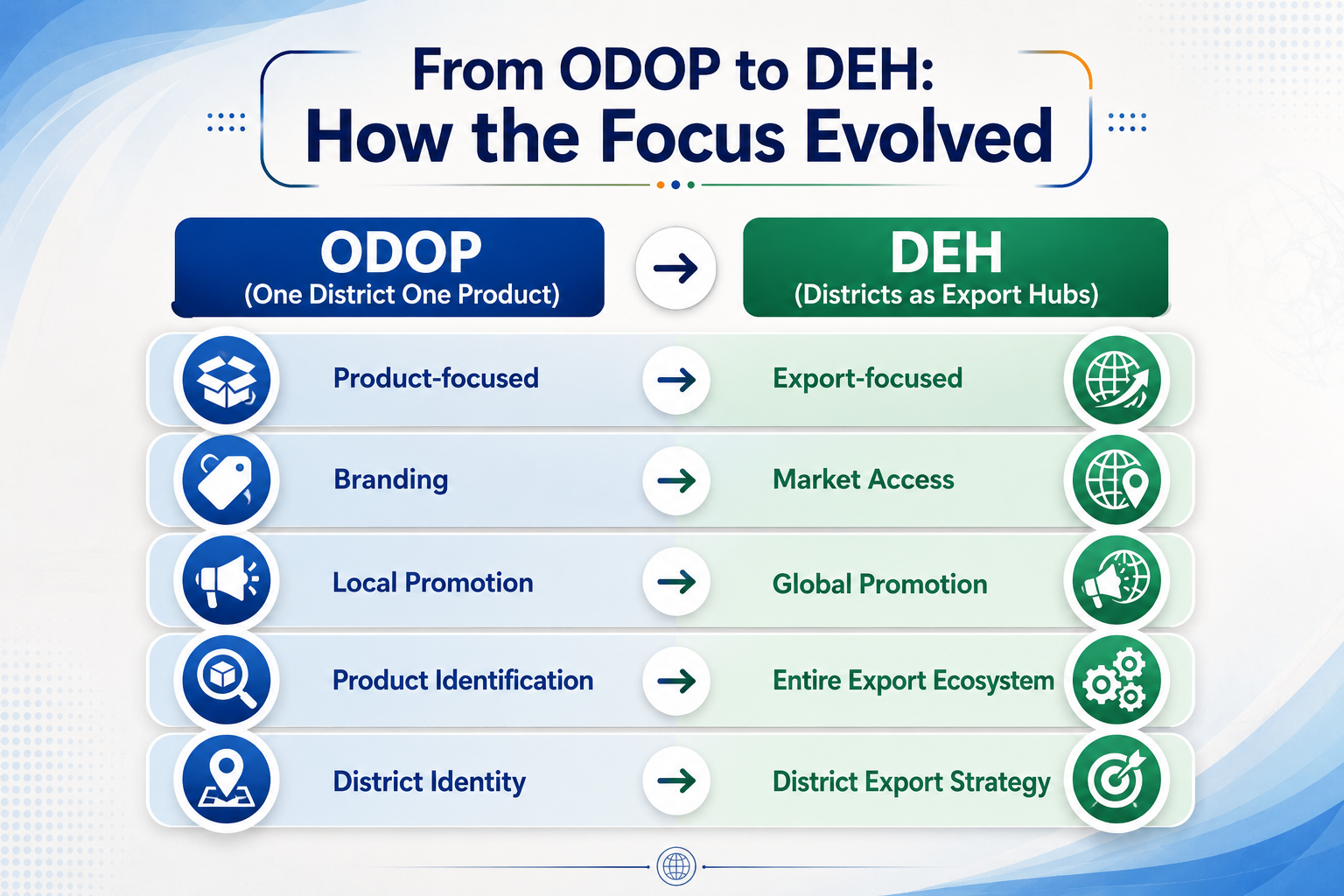
To strengthen this approach, the Department of Commerce through the DEH initiative under the Directorate General of Foreign Trade (DGFT) has expanded the focus from product promotion to a comprehensive export promotion and ecosystem strengthening. As on January 2026, the DEH initiative covers more than 770 districts across the country, reflecting its expanding reach and stronger integration with overall export planning.
Mapping products and services
DEH identifies export-worthy products and services across districts. These include GI-tagged products, agricultural clusters, and toy clusters, engineering goods etc. District-specific mapping helps prepare targeted export strategies. Some of the products with export potential include: