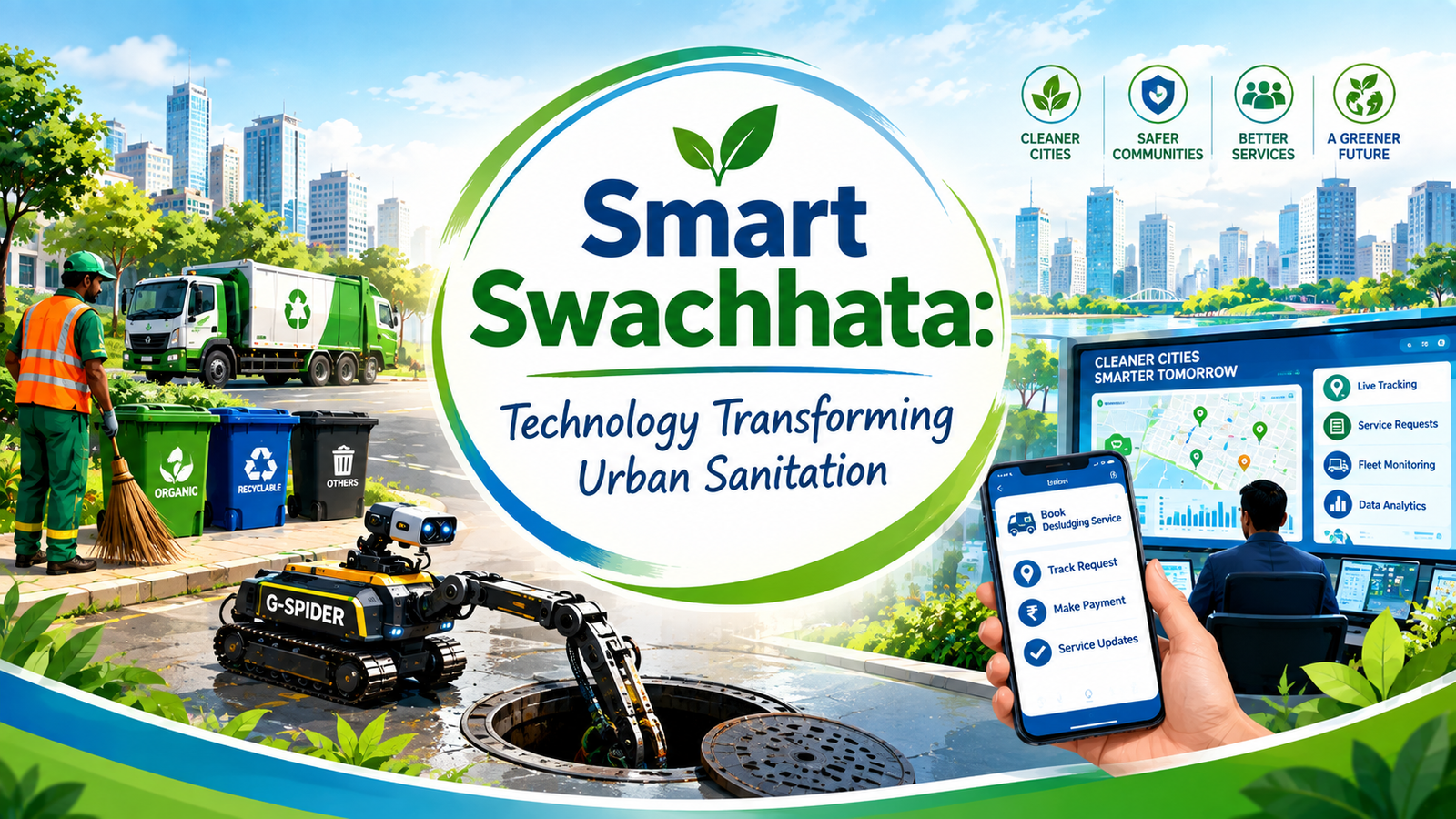
The article explores how digital platforms, AI-powered robots and electric vehicles are transforming urban sanitation into a safer, smarter and more efficient system.
Syllabus areas:
GS Paper II – Governance
GS Paper III – Science & Technology, Environment
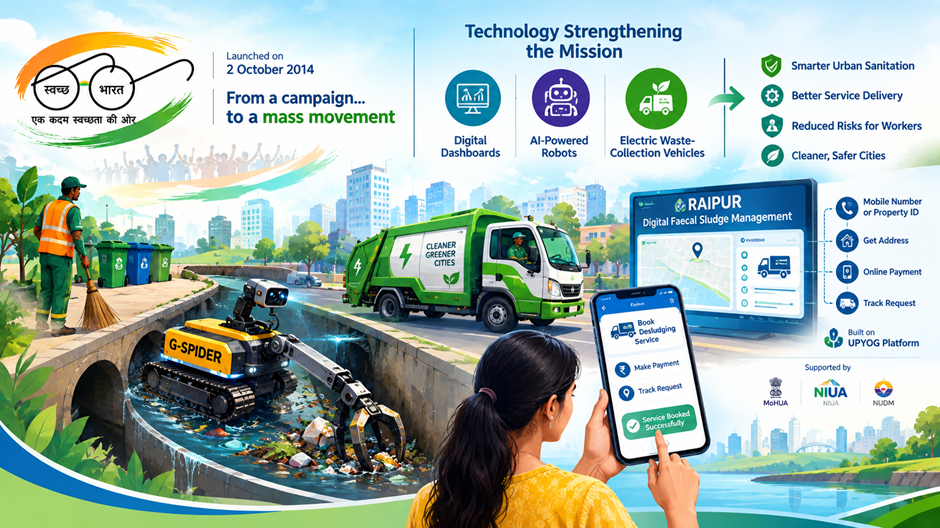
Launched on October 2, 2014, the Swachh Bharat Mission transformed cleanliness into a mass movement. Today, technology is strengthening this mission through digital dashboards, AI-powered robots for hazardous sanitation work and electric waste-collection vehicles. These innovations are making urban sanitation smarter, improving service delivery, reducing risks for workers and supporting cleaner, safer cities.
Raipur has introduced a digital Faecal Sludge Management dashboard based on the UPYOG platform, enabling residents to book desludging services, make payments and track requests online. Developed with MoHUA, NIUA and NUDM support, the system uses mobile numbers or property IDs to retrieve addresses, reducing office visits, waiting time and improving sanitation service delivery.
Digital Urban Governance: From Services to Data-Driven Cities
Digital dashboards, GPS tracking and Integrated Command and Control Centres enable cities to monitor sanitation services in real time. Such systems improve transparency, accountability, resource allocation and service delivery. By connecting citizens, service providers and municipalities, digital governance can make urban sanitation more responsive, efficient and data-driven.
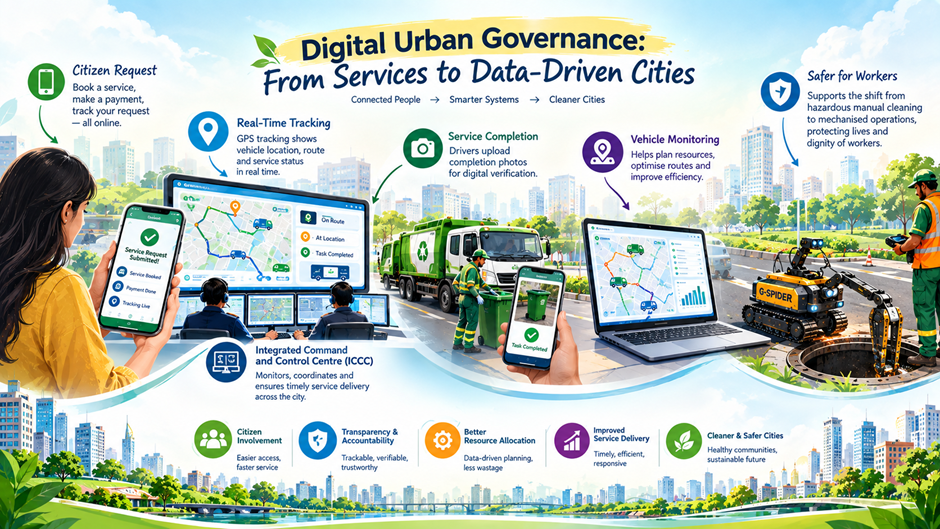
Once a request is placed, the system tracks services in real time, while drivers upload completion photographs for digital verification. Vehicle monitoring improves resource planning. Technology also supports the shift from hazardous manual sewer cleaning to mechanised operations, improving worker safety. Thus, the dashboard connects citizens, service providers and municipalities, transforming sanitation delivery from paperwork into a transparent, trackable digital process.
G-SPIDER: Inside the Canal, a Robot Takes Over
In Thiruvananthapuram, the covered Amayizhanchan Canal presents hazardous conditions, including restricted clearance, continuous water flow and limited worker access. To address these challenges, the Municipal Corporation deployed G-SPIDER, an AI-powered canal-cleaning robot developed by Technopark-based Genrobotic Innovations, known for its Bandicoot robotic scavenger, enabling safer and mechanised sanitation operations.
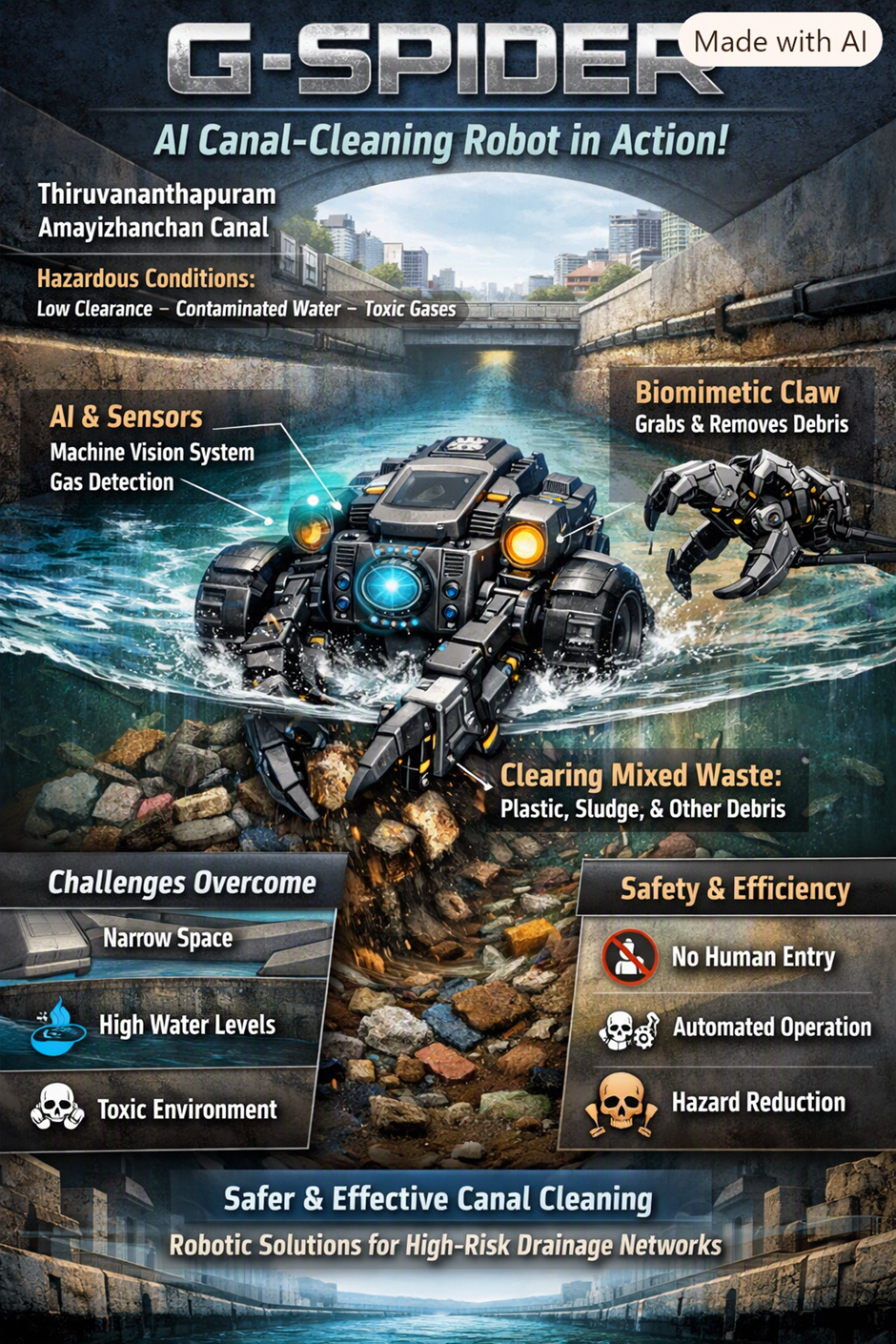
G-SPIDER uses machine vision, sensors and a biomimetic claw to detect and remove mixed debris under challenging conditions. It reduces workers’ exposure to toxic gases, contaminated water and hazardous waste while operating during high water levels. Its deployment demonstrates how robotics can enable safer, systematic sanitation and provide a scalable model for other high-risk canals and drainage networks.
Technology and Worker Safety: Ending Hazardous Manual Sanitation
Technology can reduce sanitation workers’ exposure to toxic gases, contaminated water and hazardous waste. AI-powered robots and mechanised cleaning systems can replace human entry into dangerous sewers and canals. This promotes occupational safety, protects worker dignity and supports the transition towards safer, technology-driven sanitation practices in urban areas.
Garbage Trucks Get an Electric Upgrade
The daily garbage collection vehicle is also becoming part of the clean-city transition. Across Guntur (in Andhra Pradesh), Chennai and Indore cities, electric vehicles are integrated into door-to- door waste collection, combining cleaner mobility with smarter waste management.
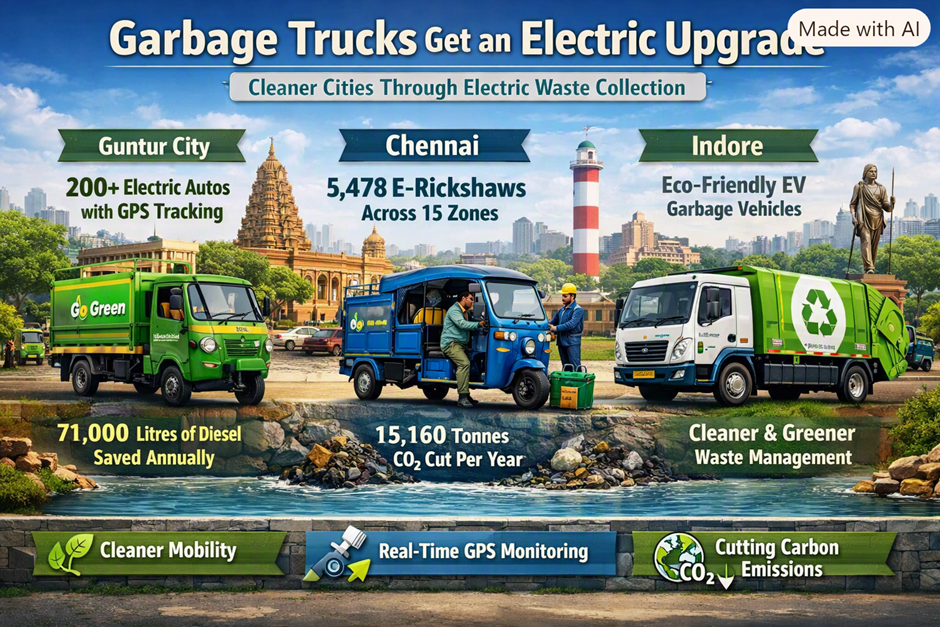
In Guntur city, more than 200 electric autos have brought cleaner mobility to door-to-door waste collection across the city. Each vehicle is with GPS tracking, allowing real-time monitoring of collection operations. The initiative eliminates the need for more than 71,000 litres of diesel annually and is estimated to reduce grwnhouse gas emissions by 21 0M) tonnes over a decade.
Chennai has deployed 5,478 battery-operated e-rickshaws across all 15 zones for door-to-door waste collection. Replacing diesel vehicles, the fleet supports cleaner urban mobility and reduces pollution. The e-rickshaws collectively cut around 41 tonnes of carbon emissions daily, equivalent to approximately 15,160 tonnes annually, strengthening sustainable and low-carbon waste management.
Green Urban Sanitation: Electrification and Renewable Energy
Electric waste-collection vehicles can reduce fossil-fuel consumption, air pollution and carbon emissions from urban sanitation services. When supported by solar-powered charging infrastructure, they can further strengthen clean-energy integration. The Chennai and Indore examples demonstrate how electrification, renewable energy and digital monitoring can contribute to low-carbon, sustainable and efficient urban sanitation.
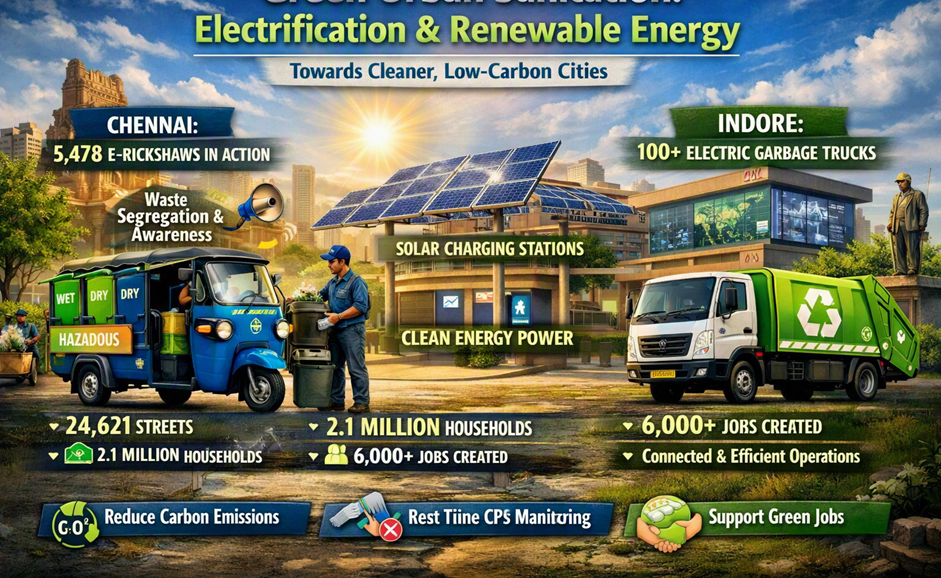
Each e-rickshaw carries separate bins for wet, dry and hazardous waste, promoting segregation at source. The fleet covers 24,621 streets and over 2.1 million households, while audio messages promote awareness. The initiative also supports employment for more than 6,000 people.
Indore has deployed 100 electric waste-collection vehicles with GPS monitoring through the Integrated Command and Control Centre. The city also operates 20 solar charging stations, supporting green energy and cleaner mobility. The initiative is expected to reduce emissions and fuel costs, making waste collection more connected, efficient and environmentally sustainable.
The Next Chapter: Smarter, Safer Swachhata
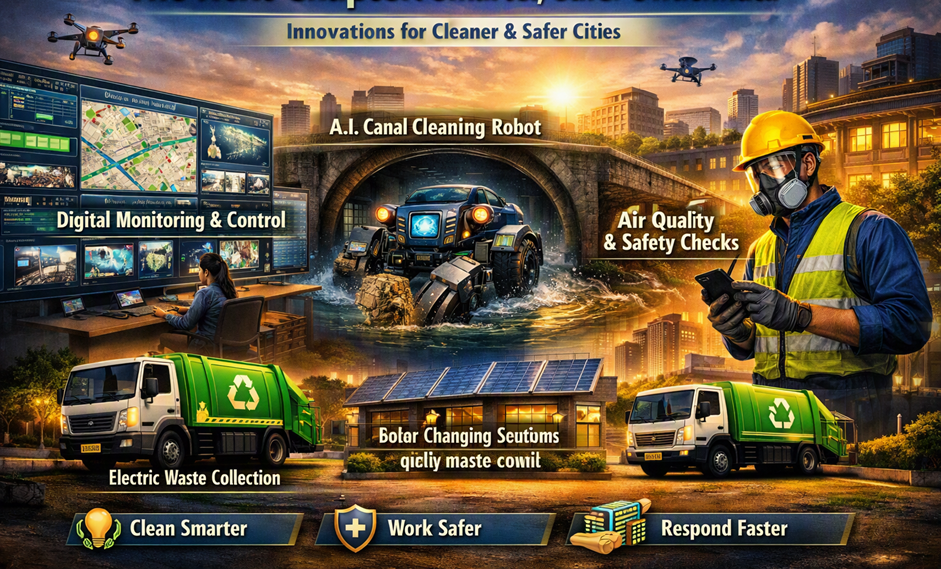
Technology is giving urban sanitation new tools to clean smarter, work safer and respond faster. From digital dashboards and A1-powered robots to electric waste collection, these innovations are bringing technology closer to everyday Swachhata. The next chapter is taking these innovations to more cities, adopting them in daily life, making urban sanitation cleaner, safer and more responsive.