Explore the first Investment Friendliness Index (IFI) of NITI Aayog, assessing investment ecosystems, rankings, eight pillars, top performers, and reforms supporting in states for the Viksit Bharat @2047.
Syllabus Areas:
GS III - Economy and Development
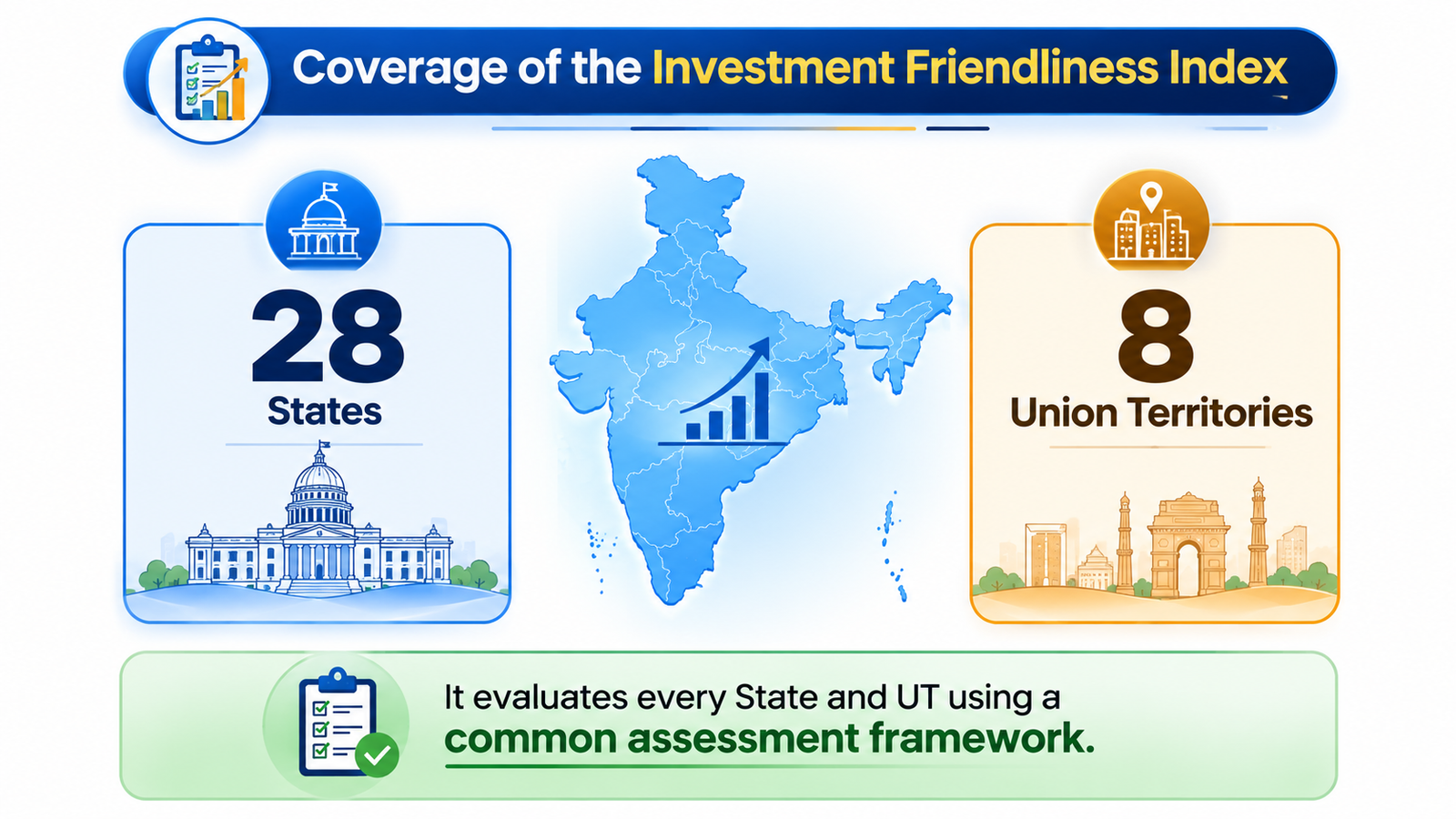
The Investment Friendliness Index (IFI) is NITI Aayog's first comprehensive framework to assess the investment ecosystem across States and Union Territories. Announced in the Union Budget 2025–26 and first edition was released on 17 July 2026 to benchmark policy, infrastructure, governance, and regulatory efficiency, promoting competitive federalism, investment-led growth, and the vision of Viksit Bharat @2047.
Objectives of the Investment Friendliness Index
The IFI aims to:
-
Benchmark the investment ecosystem across States and UTs.
-
Identify strengths and gaps in investment-related governance.
-
Encourage States to adopt best practices.
-
Promote healthy competition among States.
-
Accelerate reforms for attracting domestic and foreign investments.
-
Support the vision of Viksit Bharat @2047 through stronger State-level investment ecosystems.
Why the Investment Friendliness Index (IFI) Matters
1. Supports India's Development Vision: India has witnessed sustained economic growth over the past three decades and is progressing towards the vision of Viksit Bharat @2047. Achieving this goal requires a substantial increase in investment across sectors to sustain economic growth and development.
2. Promotes Private Investment: Private investment plays a crucial role in driving industrialisation, innovation, employment generation, and long-term economic growth, making it a key pillar of India's development strategy.
3. Recognises the Importance of States: While the Central Government provides the overall policy and macroeconomic framework, the investment climate is largely shaped by States through efficient governance, infrastructure, and business-friendly policies.
4. Identifies Key Determinants of Investment Attractiveness: The Index evaluates factors such as industrial land availability, physical and digital infrastructure, regulatory efficiency, institutional capacity, and policy predictability that influence investment decisions.
5. Provides an Evidence-Based Benchmarking Framework: The IFI offers a structured, objective, and data-driven framework to benchmark the investment ecosystem of all States and Union Territories, enabling meaningful comparison and performance assessment.
6. Acts as a Reform Catalyst: Beyond rankings, the Index identifies strengths, highlights improvement areas, promotes best practices, and encourages peer learning, thereby driving continuous policy and institutional reforms.
7. Strengthens Competitive and Cooperative Federalism: The IFI encourages healthy competition among States while promoting cooperative federalism through knowledge sharing, reform-oriented governance, and continuous improvement in the investment climate.
8. Enhances India's Global Competitiveness: By strengthening investor confidence and improving the ease of investment, the IFI enhances India's attractiveness as a preferred global investment destination and supports inclusive, sustainable, and investment-led economic growth.
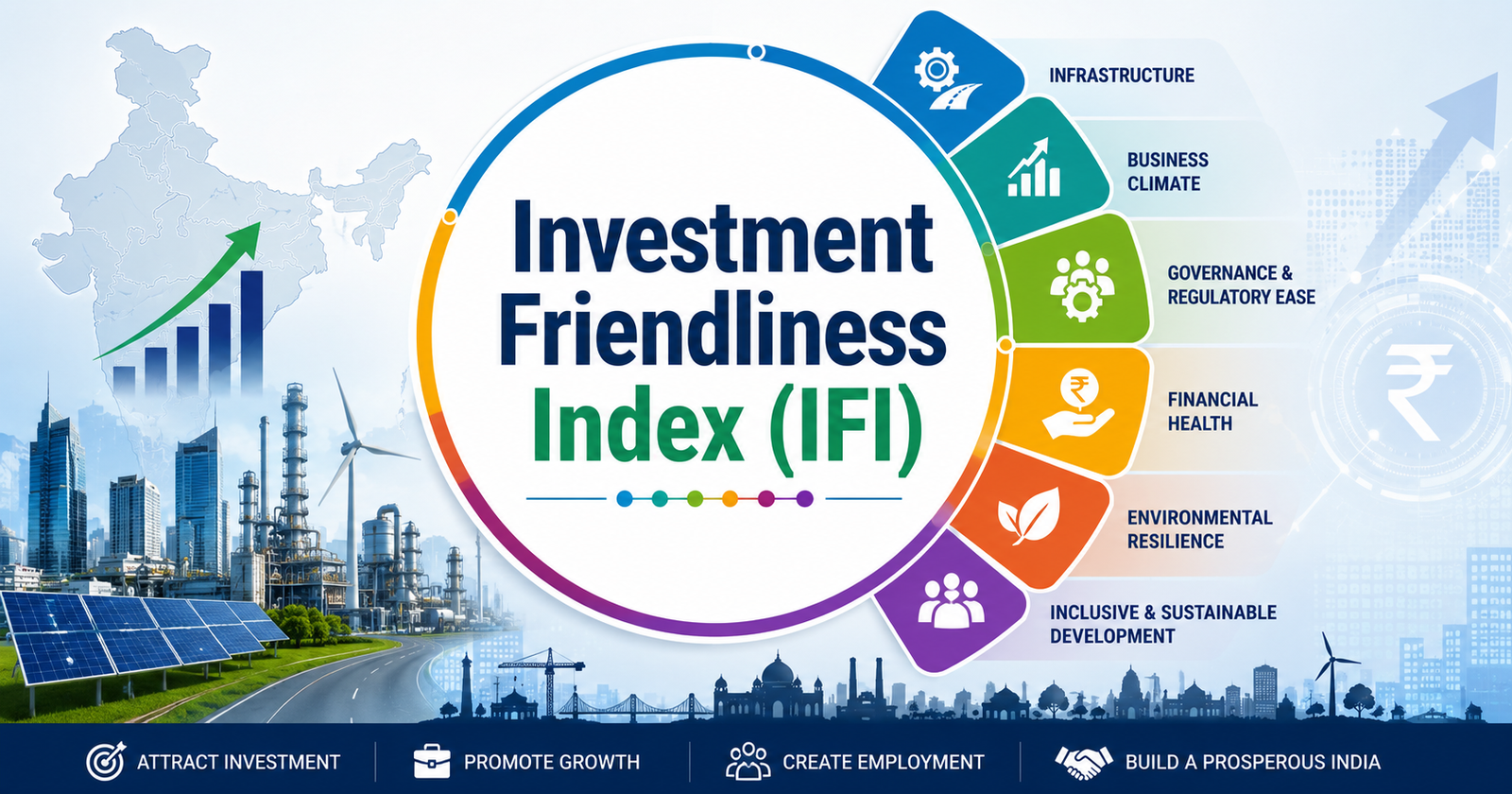
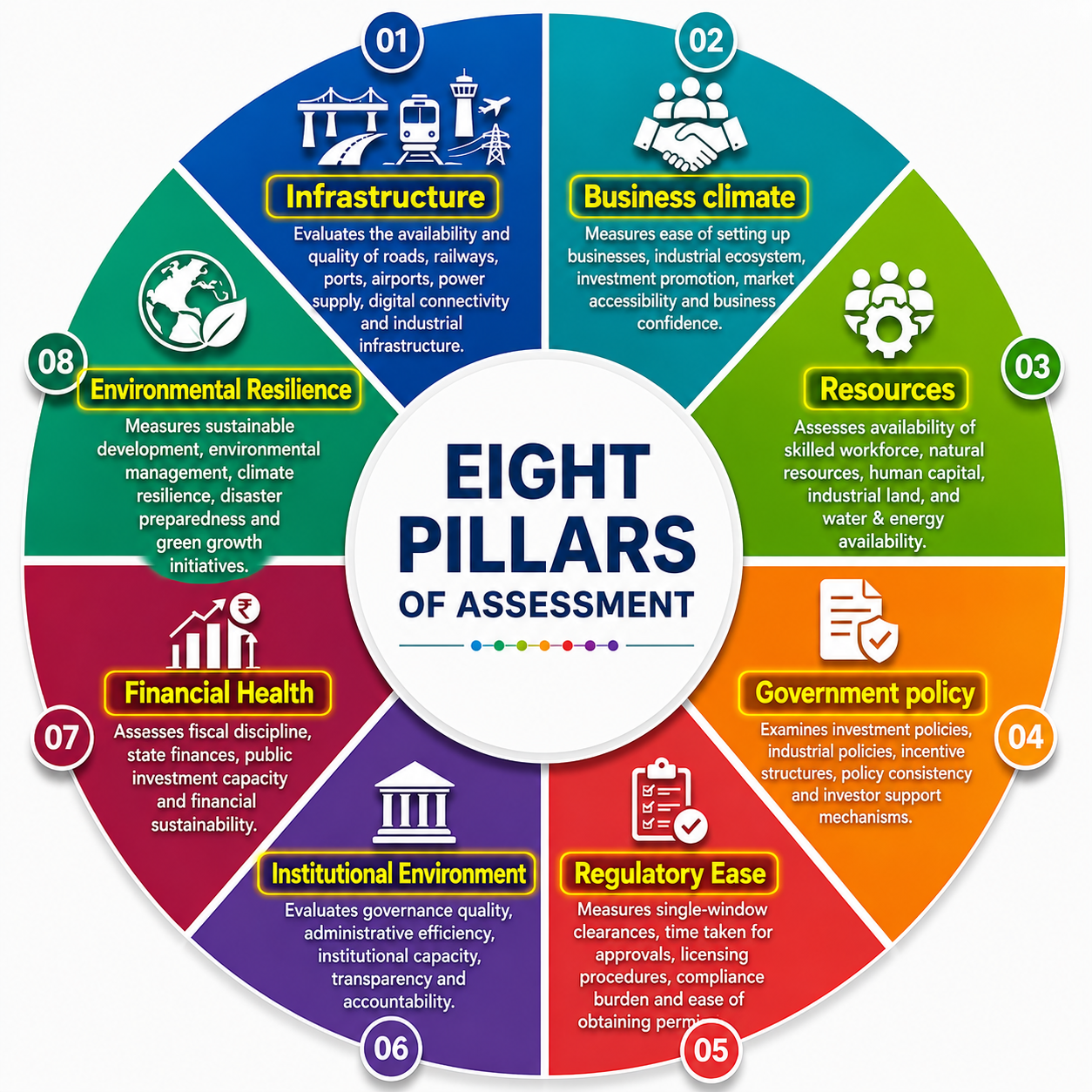
Eight Pillars of Assessment
Methodology
The Investment Friendliness Index has been developed through:
-
Extensive consultation with stakeholders.
-
Review of global investment benchmarking methodologies.
-
Study of Indian best practices.
-
A rigorous evidence-based framework.
The framework includes:
-
84 indicators
-
Secondary data from government sources
-
Primary survey based on investor perceptions
This combination ensures both objective measurement and feedback from businesses.
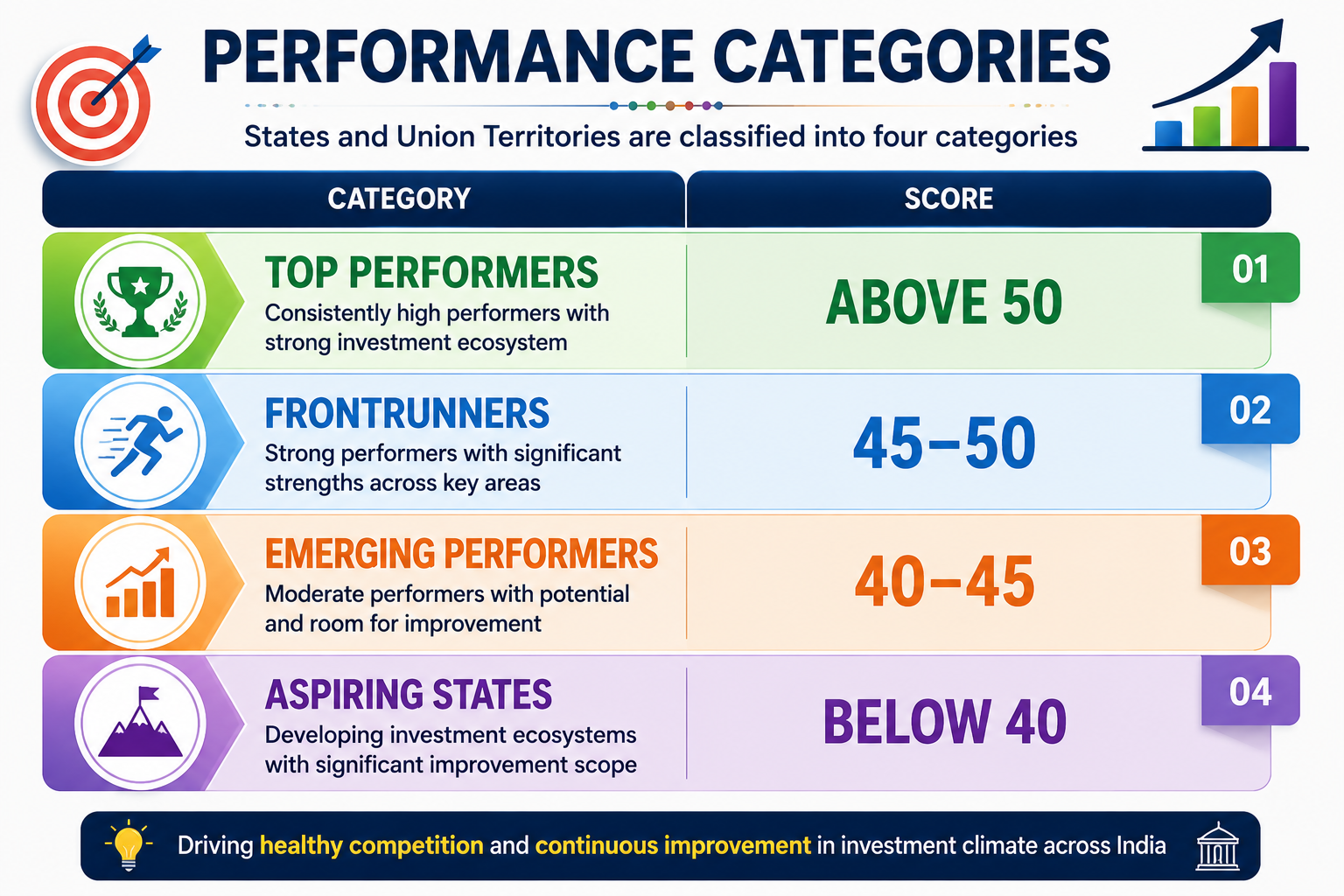
Top Performing States:
The highest-performing States in the Investment Friendliness Index are:
-
Gujarat
-
Maharashtra
-
Tamil Nadu
-
Goa
-
Odisha
Additionally:
-
15 States are classified as Frontrunners.
-
8 States/UTs are classified as Emerging Performers.
-
8 States/UTs fall under the Aspiring States category
Lowest Performing States/Union Territories
-
Lakshadweep
-
Ladakh
-
Andaman & Nicobar Islands
-
Manipur
-
Sikkim
State Profiles
The report provides a detailed profile for every State and Union Territory.
Each profile includes:
-
Performance across all eight pillars.
-
Comparison with peer States.
-
Key indicators affecting investment.
-
Investor perception survey findings.
-
Strengths and opportunities.
-
Areas requiring policy intervention.
-
Reform priorities for improving investment climate.
These profiles help governments benchmark their performance and support investors in understanding the business environment.
Telangana:
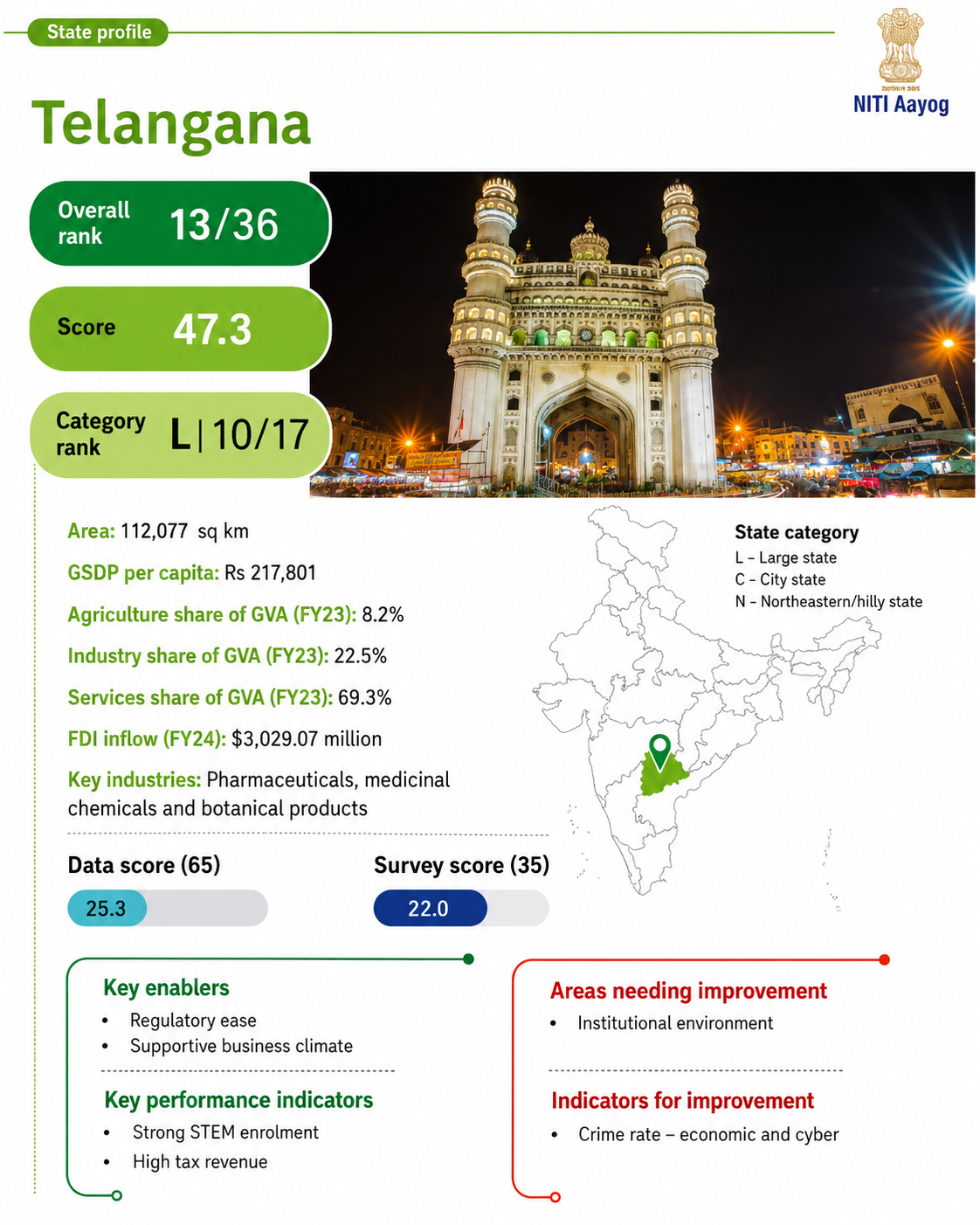
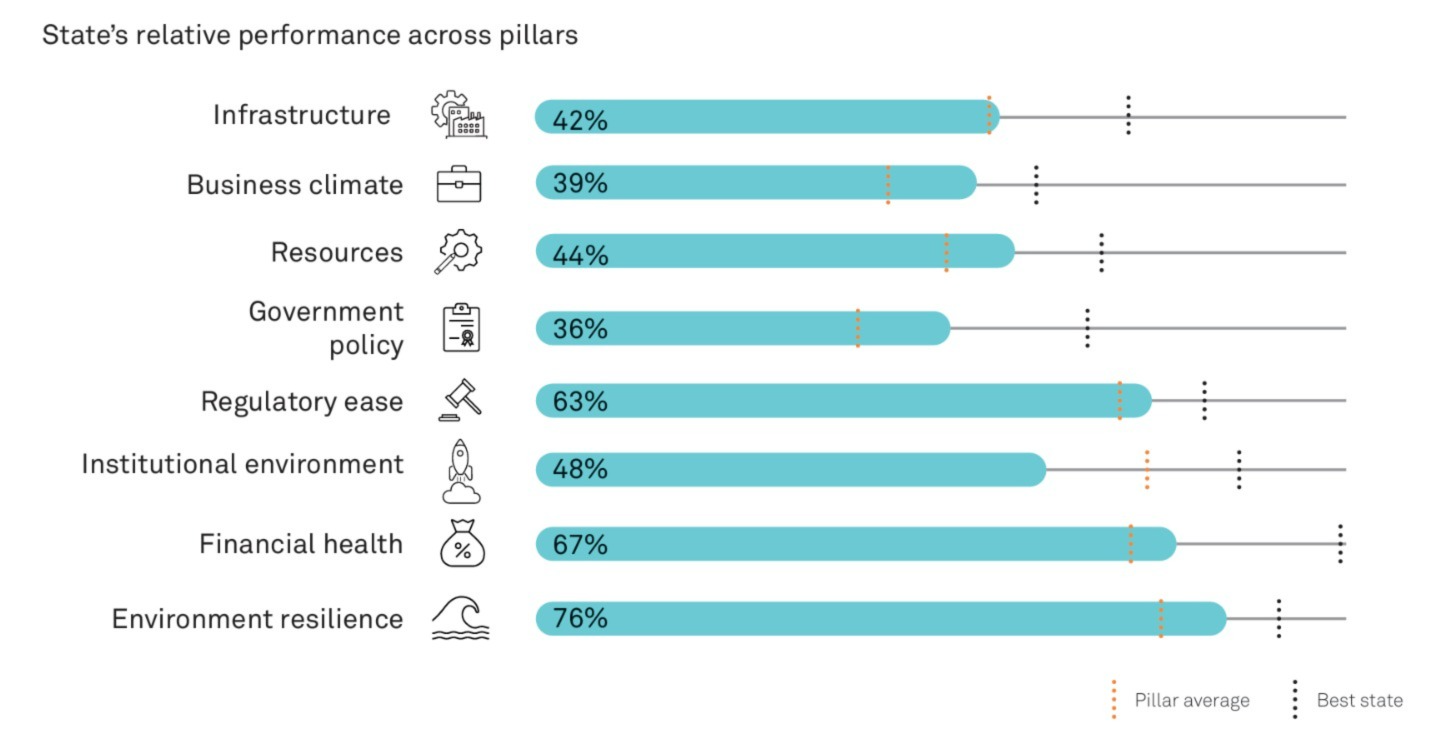
Telangana has an overall score of 47.3, ranking 10th in the large state category and 13th overall. The state’s score is driven by its performance in the business climate and regulatory ease pillars. However, there are areas for improvement in the institutional environment pillar.
Andhra Pradesh:
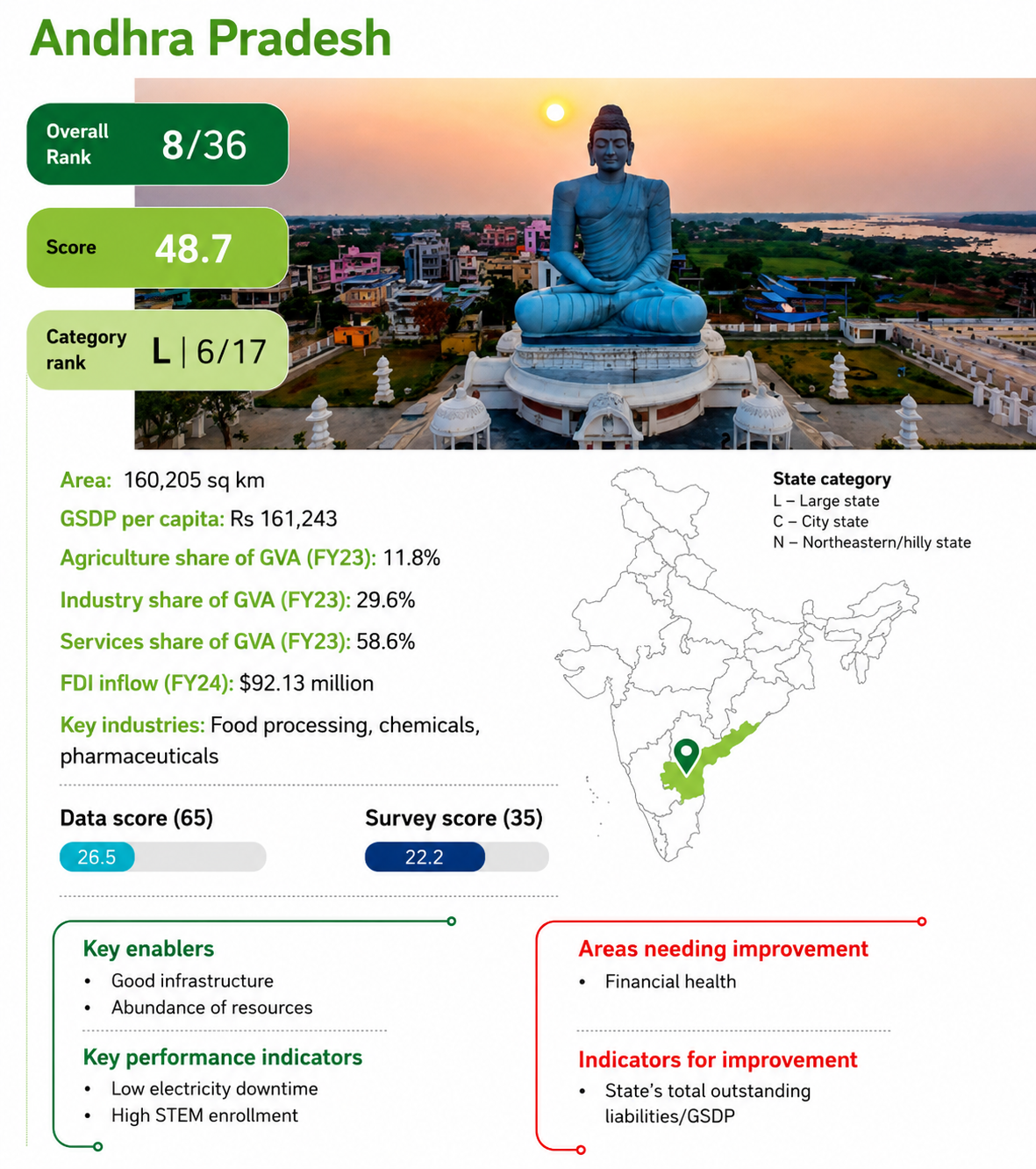
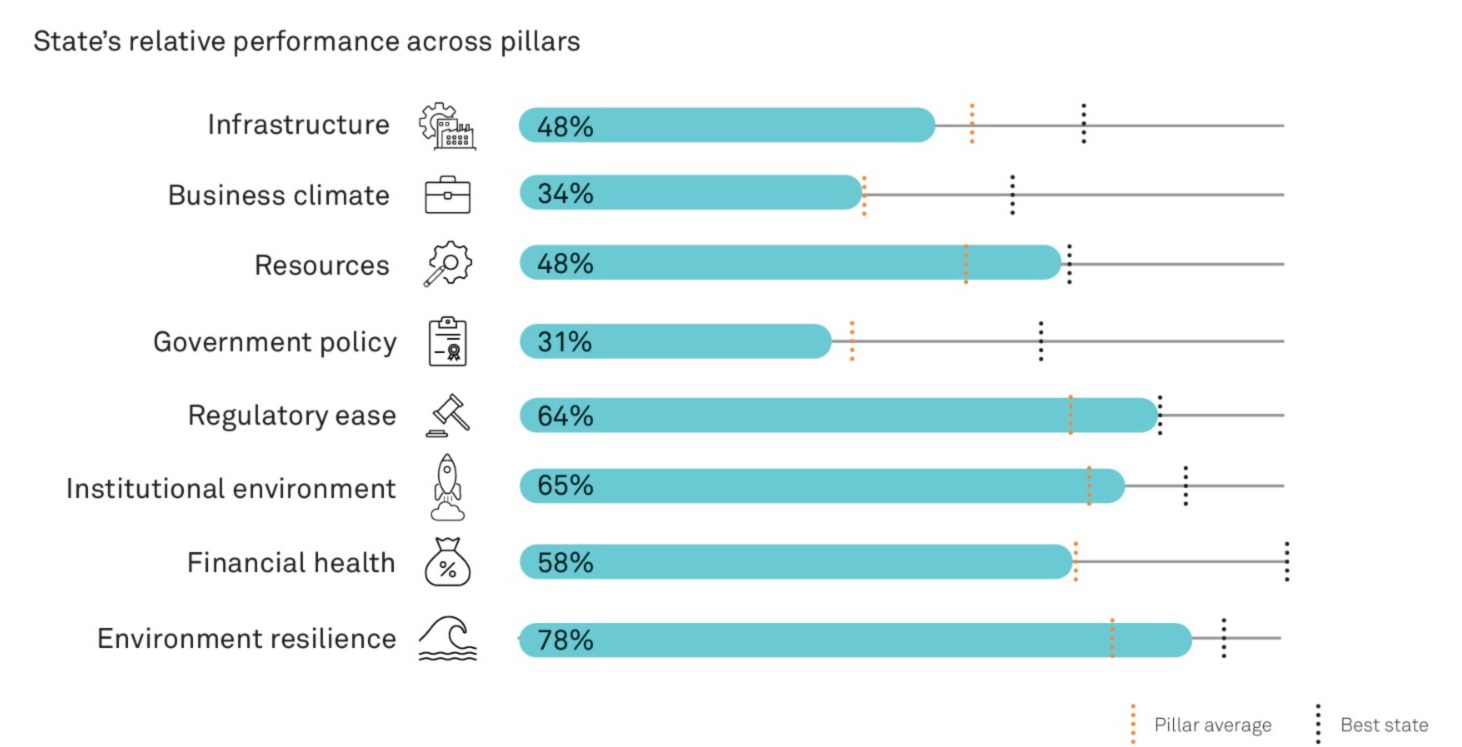
Andhra Pradesh has an overall score of 48.7, ranking sixth in the large state category and eighth overall. Andhra Pradesh’s score is driven by its performance in infrastructure, highest digital transactions per capita across all states and UTs, and the resources pillar, with further improvement to the score weighed down by a below-average score in the financial health pillar.