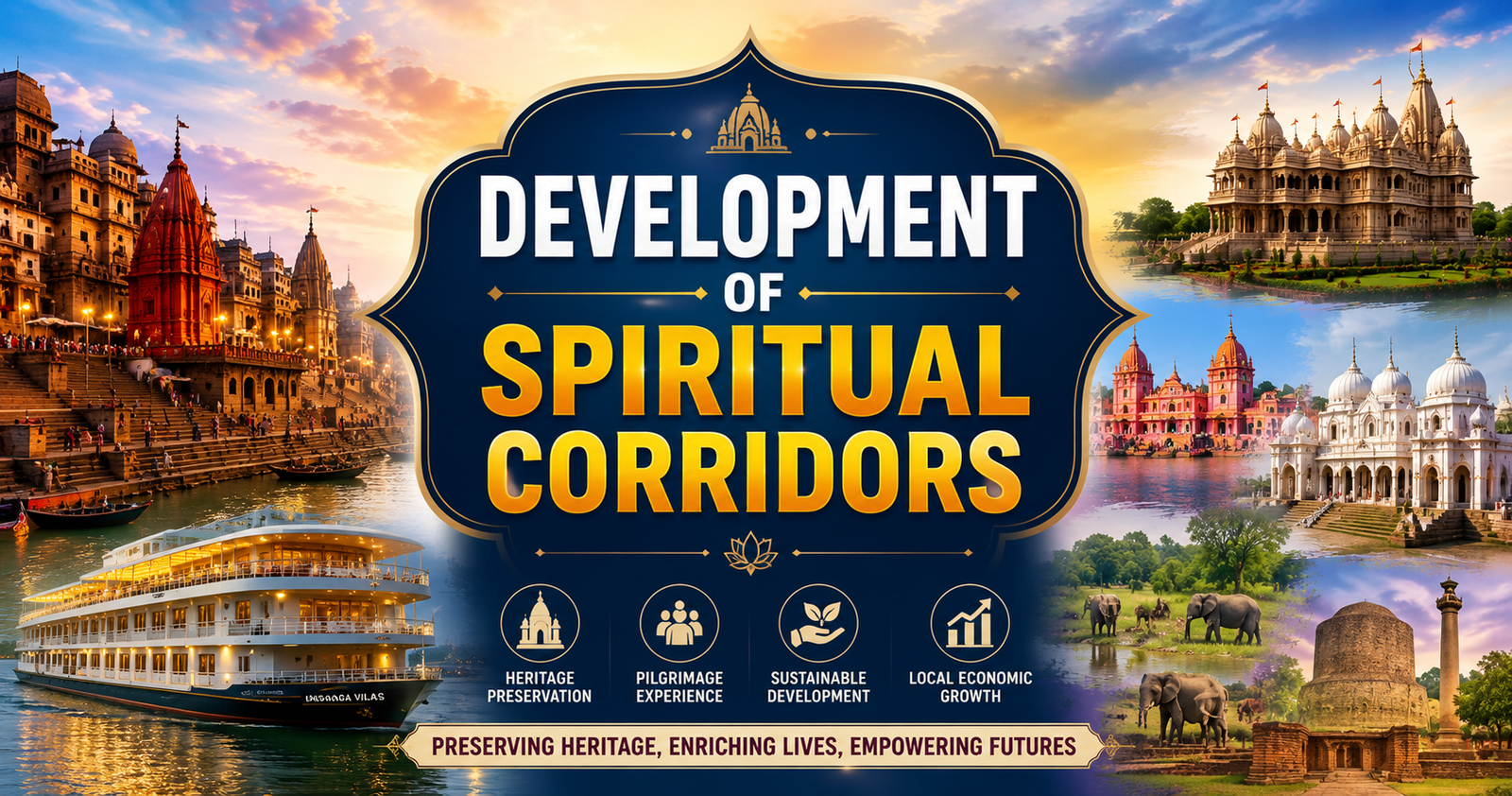
Explore spiritual corridor development in Kashi, Ayodhya, and Mathura, highlighting infrastructure, heritage conservation, river tourism, sustainability, pilgrimage enhancement, and regional economic growth.
Syllabus Areas:
GS I - Culture
The Government of India is undertaking the infrastructural and aesthetic development of major spiritual destinations such as Kashi (Varanasi), Ayodhya, and Mathura–Vrindavan to enhance pilgrimage tourism while preserving their cultural and heritage significance.
The Union Minister for Culture and Tourism, Shri Gajendra Singh Shekhawat, informed the Rajya Sabha about the progress made in the development of spiritual corridors across major pilgrimage centres in India.
Schemes Supporting the Development
The projects are sanctioned under various schemes of the Ministry of Tourism, including:
-
PRASHAD Scheme
-
Pilgrimage Rejuvenation and Spiritual, Heritage Augmentation Drive
-
Swadesh Darshan Scheme
-
Swadesh Darshan 2.0
-
Challenge Based Destination Development (CBDD)
-
Assistance to Central Agencies (ACA)
-
Special Assistance to States for Capital Investment (SASCI)
Projects are approved based on proposals submitted by State Governments and Union Territory Administrations, subject to scheme guidelines and availability of funds.
Major Development Works
1. Kashi (Varanasi)
Major projects undertaken include:
-
Infrastructure Development: Development of Varanasi (Phase I & II).
-
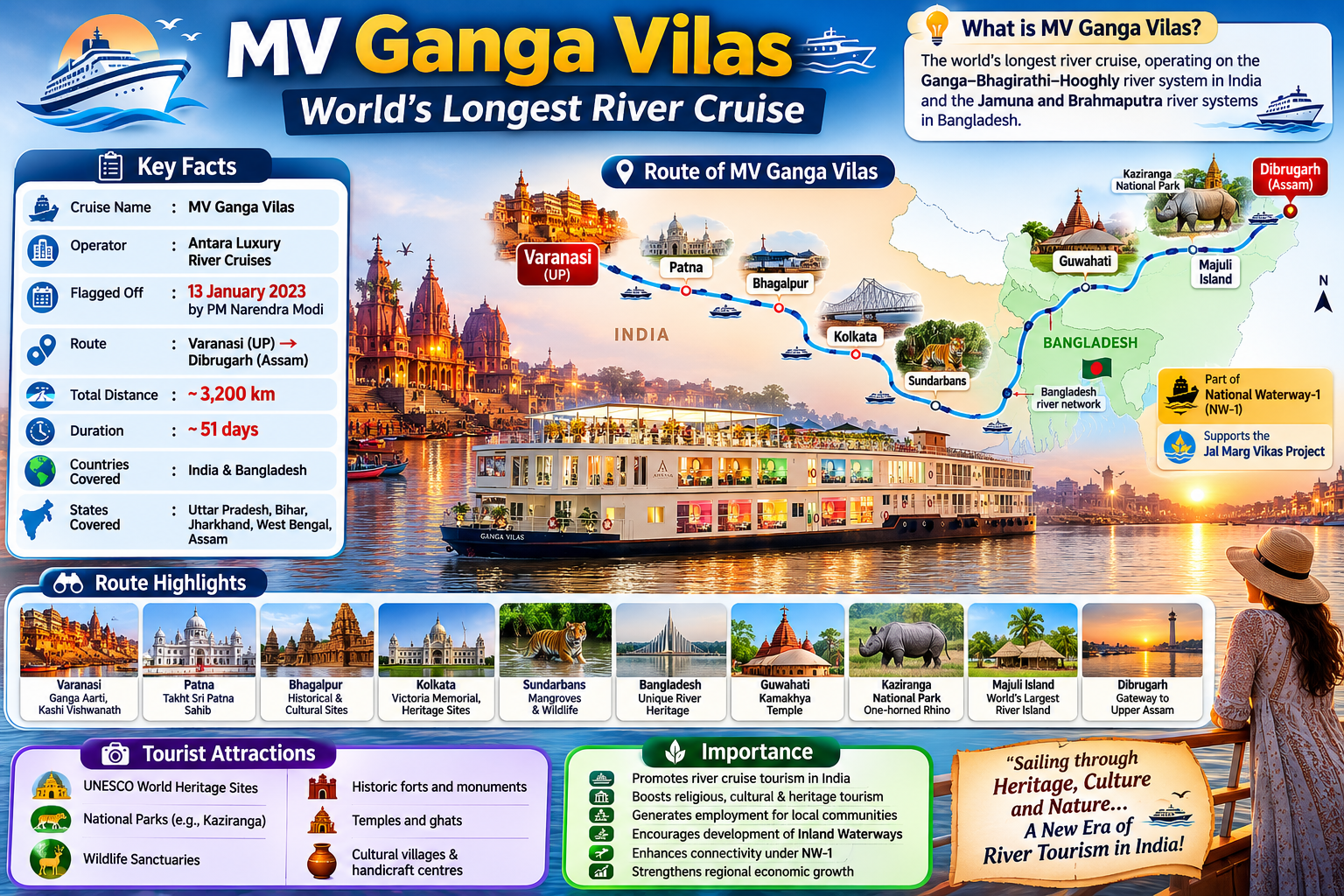
River Tourism: Development of River Cruise Tourism on the Ganga River.
River Cruise Tourism on the Ganga River:
River Cruise Tourism on the Ganga River refers to organized passenger cruises operating along the River Ganga, offering tourists a combination of pilgrimage, cultural heritage, historical exploration, and leisure travel. It is part of India's effort to promote inland water tourism while showcasing the rich heritage along the Ganga.
Key Features
-
Cruise-based sightseeing along the Ganga River.
-
Connects important religious, cultural, and historical destinations.
-
Offers luxury, premium, and short-duration pilgrimage cruises.
-
Includes guided tours of ghats, temples, forts, museums, and heritage sites.
-
Promotes eco-friendly transportation through inland waterways
-
Heritage Conservation: Illumination of important monuments and heritage sites including:
-
Dashashwamedh Ghat
-
Darbhanga Ghat
-
Tulsi Manas Mandir
-
Sarnath Museum
-
Dhamekh Stupa
-
Chaukhandi Stupa
-
Tomb of Lal Khan
-
Man Mahal
These initiatives improve both visitor experience and heritage conservation.
2. Ayodhya
Major initiative:
-
Development of the Ramayana Circuit, aimed at strengthening religious tourism connected with the life and legacy of Lord Rama.
3. Mathura–Vrindavan
Development activities include:
-
Construction of a Tourist Facilitation Centre.
-
Development of Mathura–Vrindavan as a Mega Tourist Circuit.
-
Development of infrastructure facilities at Govardhan.
These projects seek to improve accessibility, visitor services, and tourism infrastructure across the Krishna pilgrimage circuit.
Focus on Sustainable Development
The Ministry has directed States and Union Territories to incorporate sustainable infrastructure in all sanctioned projects, including:
-
Solid waste management systems
-
Sewage treatment facilities
-
Public sanitation infrastructure
-
Landscaping and plantation
-
Rainwater harvesting
-
Energy-efficient lighting
-
Solar lighting systems
-
Eco-friendly mobility solutions
-
Other environmentally responsible measures
These initiatives aim to ensure ecological balance around heavily visited heritage sites.
Expected Benefits
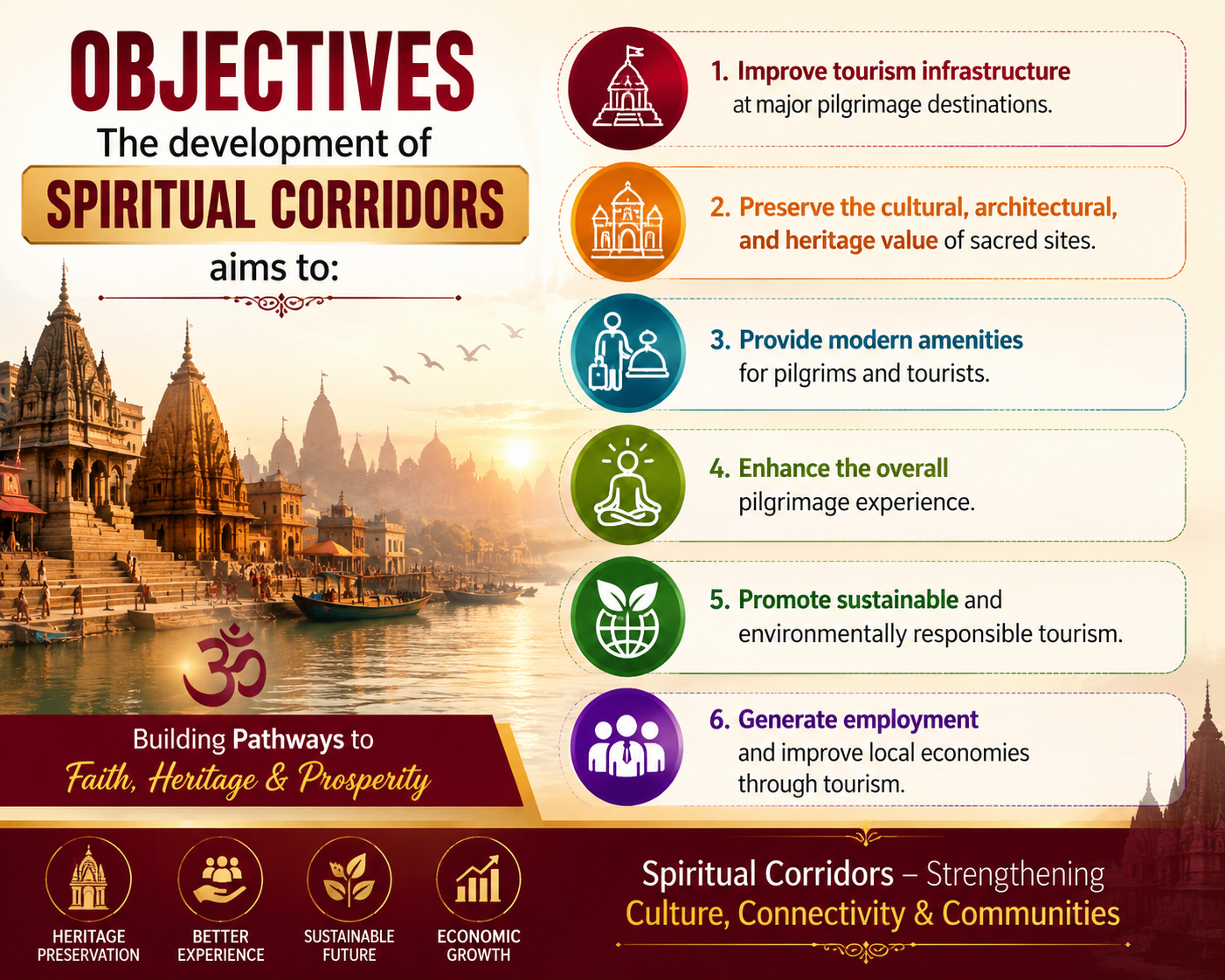
The development of spiritual corridors is expected to:
-
Increase domestic and international pilgrimage tourism.
-
Preserve India's rich cultural and religious heritage.
-
Improve infrastructure and public amenities.
-
Boost tourist footfall.
-
Generate employment opportunities for:
-
Local artisans
-
Tour guides
-
Hospitality sector
-
Small businesses
-
Promote inclusive and sustainable regional economic growth.
Development of spiritual corridors strengthens heritage conservation, pilgrimage tourism, sustainable infrastructure, and local livelihoods, transforming India's sacred destinations into globally attractive, culturally vibrant, and economically prosperous centres.