
Explore the key features of NIPU-2026, new urea investment policy of India aimed at boosting domestic production, reducing imports, strengthening fertilizer security, and advancing Atmanirbhar Bharat.
Syllabus Areas:
GS III - Economy, Infrastructure and Environment
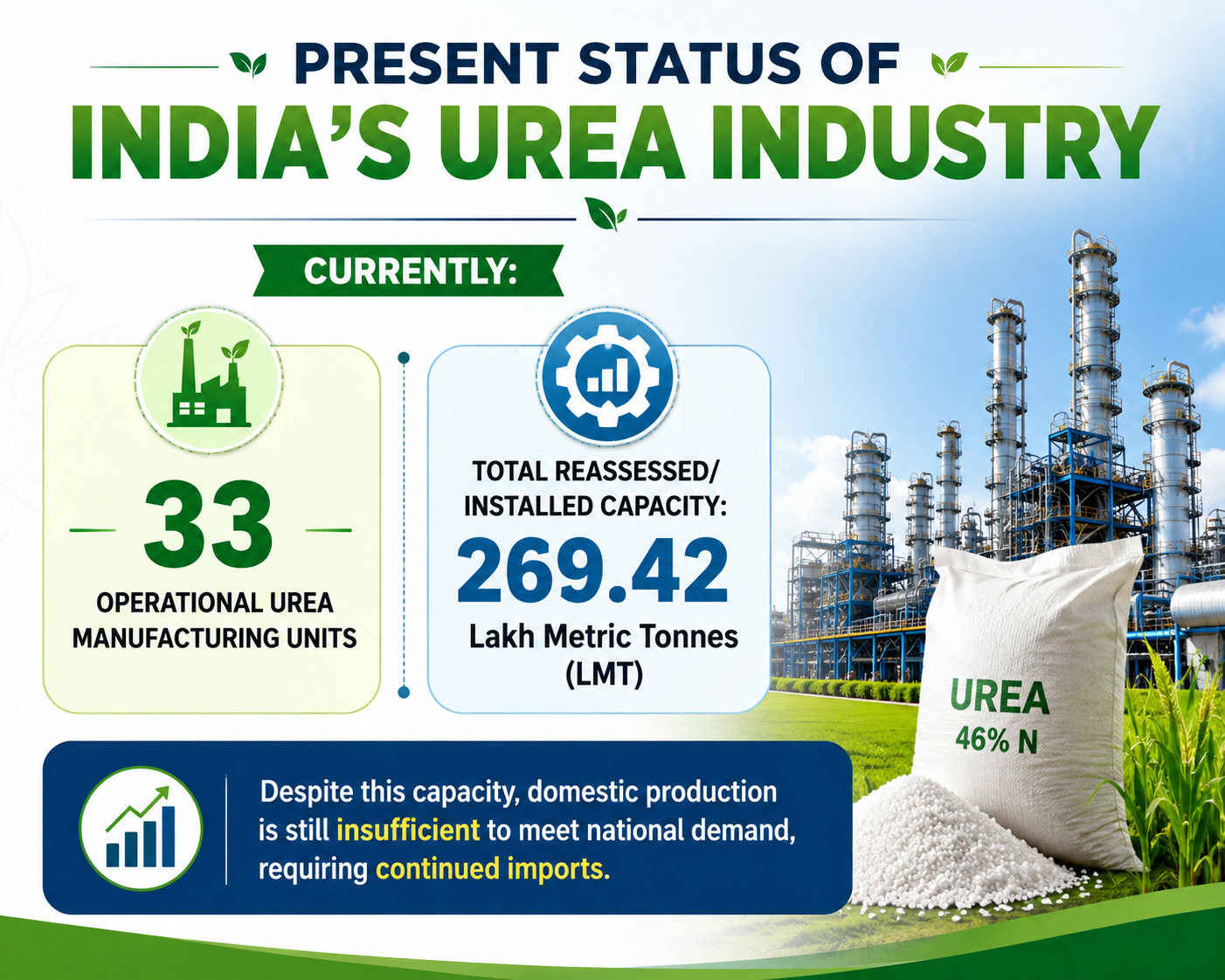
The Union Cabinet, chaired by the Prime Minister, has approved the National Investment Policy for Urea-2026 (NIPU-2026) to promote investments in domestic urea manufacturing with the establishment of eight to nine new gas-based urea plants with a combined production capacity of 10 million tonnes, reduce import dependence, and strengthen India's fertilizer security under the vision of Atmanirbhar Bharat.
India's Urea Production
-
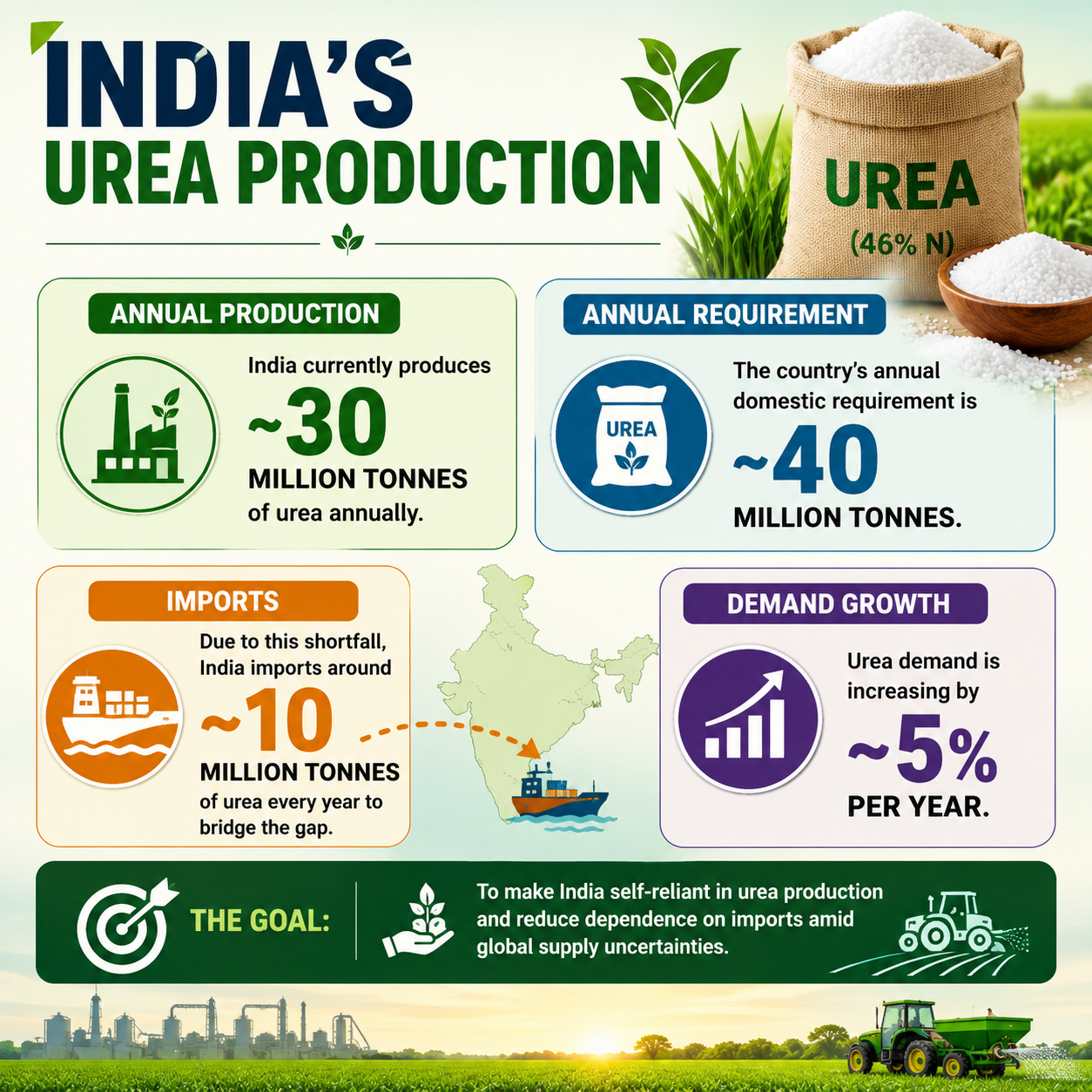
India currently produces about 30 million tonnes of urea annually.
-
The country's annual domestic requirement is nearly 40 million tonnes.
-
Due to this shortfall, India imports around 10 million tonnes of urea every year.
-
Urea demand is increasing by nearly 5% annually, making additional production capacity essential.
-
The policy aims to make India self-reliant in urea production, reducing dependence on imports amid global supply uncertainties.
Features of NIPU-2026
1. Encouragement for New Investments
The policy provides incentives for establishing new gas-based urea plants across the country, attracting both public and private sector investments.
2. Improved Cost Structure
Compared to the earlier National Investment Policy (NIP)-2012, the new policy separates fixed costs and variable costs.
This improves transparency in determining subsidies and operational costs.
3. Assured Return on Equity (RoE)
The policy introduces a viable Return on Equity (RoE) framework of minimum 12% to maximum 16%. This offers reasonable profitability while protecting government finances.
4. Reduction of Foreign Exchange Risk
One of the major reforms is the mitigation of exchange rate risk.
Under NIPU-2026:
-
Fixed costs can be converted into Indian Rupees after four years.
-
This reduces exposure to fluctuations in foreign exchange rates.
5. Significant Cost Savings
The reforms are expected to generate savings of over ₹250 crore per plant compared to projects established under NIP-2012.
National Investment Policy (NIP)-2012
The National Investment Policy (NIP)-2012 was introduced by the Department of Fertilizers, Ministry of Chemicals and Fertilizers in 2012 to encourage fresh investment in India's urea sector. Its primary objective was to increase domestic urea production, reduce dependence on imports, and ensure long-term fertilizer security for Indian agriculture
Types of Projects Covered
NIP-2012 provided incentives for:
-
Greenfield Projects – Establishment of new urea manufacturing plants.
-
Brownfield Projects – Expansion or modernization of existing plants.
-
Revamp Projects – Upgrading old plants to improve efficiency.
-
Revival Projects – Restarting closed or sick fertilizer units.
Major Achievements
-
Facilitated the establishment of 6 new urea plants:
-
4 plants through Joint Venture Companies (JVCs) of nominated Public Sector Undertakings (PSUs).
-
2 plants by private companies.
-
Contributed significantly to increasing India's domestic urea production capacity
Types of Fertilizers Used in India
Fertilizers are substances added to soil or plants to supply essential nutrients required for healthy crop growth. Based on the primary nutrient supplied, fertilizers used in India are broadly classified into Nitrogenous, Phosphatic, Potassic, Complex, Micronutrient, Biofertilizers, and Organic Fertilizers.
India uses many types of fertilizers, but they are mainly grouped into three major categories:
1. Nitrogenous Fertilizers (N)
Nitrogen is the most important nutrient for vegetative growth, chlorophyll formation, protein synthesis, and photosynthesis.
Examples:
-
Urea (46% N)
-
Ammonium Sulphate (AS)
-
Calcium Ammonium Nitrate (CAN)
-
Ammonium Chloride
2. Phosphatic Fertilizers (P)
Phosphorus is essential for root growth, flowering, seed formation, and energy transfer (ATP).
Examples:
-
Diammonium Phosphate (DAP)
-
Single Super Phosphate (SSP)
-
Triple Super Phosphate (TSP)
3. Potassic Fertilizers (K)
Potassium strengthens plants and improves their resistance to diseases and environmental stress.
Example:
-
Muriate of Potash (MOP)
In addition, farmers also use:
1. Complex Fertilizers (NPK)
Complex fertilizers contain two or more primary nutrients (Nitrogen, Phosphorus, Potassium) in a single granule.
2. Micronutrient Fertilizers
Plants require micronutrients in small quantities, but they are essential for normal growth and development.
Examples:
-
Zinc, Boron, Iron, Copper, Manganese, Molybdenum
3. Biofertilizers
Biofertilizers contain living microorganisms that naturally enhance soil fertility and nutrient availability.
Examples:
-
Rhizobium, Azotobacter, Azospirillum, Phosphate Solubilizing Bacteria (PSB), Mycorrhiza.
4. Organic Fertilizers
Organic fertilizers are derived from plant and animal residues
Examples:
-
Farm Yard Manure (FYM), Compost, Vermicompost, Green Manure
What is Urea?
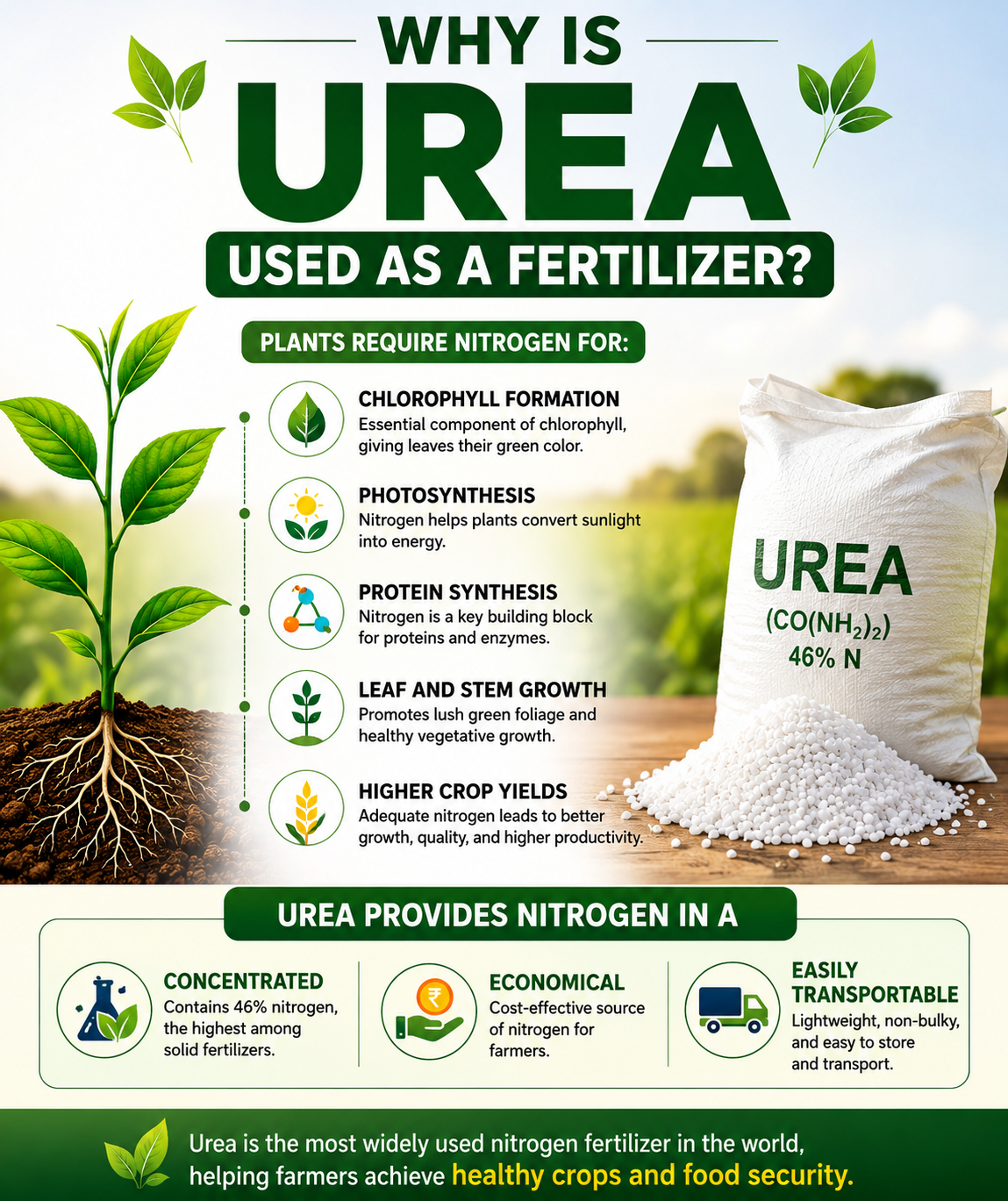
Urea is an organic chemical compound with the molecular formula CO(NH₂)₂. It is the most widely used nitrogenous fertilizer in the world because it contains 46% nitrogen, the highest nitrogen content among all solid nitrogen fertilizers. It is primarily used to supply nitrogen to crops, promoting healthy plant growth and increasing agricultural productivity.
How is Urea Produced?
Urea is produced through the Bosch–Meiser process, which involves the chemical reaction of ammonia (NH₃) and carbon dioxide (CO₂) under high pressure and high temperature. The process consists of two major stages:
-
Production of Ammonia (Haber–Bosch Process)
-
Conversion of Ammonia into Urea (Bosch–Meiser Process)
Major Uses of Urea
-
Agriculture (Largest Use): Nitrogen fertilizer for crops such as rice, wheat, maize, sugarcane, cotton, pulses, and oilseeds.
-
Industrial Uses
-
Urea-formaldehyde resins
-
Adhesives and plywood manufacturing
-
Plastics
-
Pharmaceuticals
-
Cosmetics
-
Environmental Applications: Used in Diesel Exhaust Fluid (DEF/AdBlue) to reduce nitrogen oxide (NOₓ) emissions from diesel vehicles.
-
Animal Husbandry: Used in limited quantities as a non-protein nitrogen source for ruminant animals.
Limitations and Concerns of Urea:
-
Soil Nutrient Imbalance: Excessive use of urea supplies only nitrogen, causing deficiencies of phosphorus, potassium, and micronutrients.
-
Declining Soil Health: Continuous use reduces soil organic matter, microbial activity, and overall soil fertility.
-
Low Nitrogen Use Efficiency: Crops utilize only 30–50% of the applied nitrogen; the rest is lost.
-
Nitrate Leaching: Excess nitrogen seeps into groundwater, causing water pollution and health risks.
-
Eutrophication: Fertilizer runoff promotes algal blooms in lakes and rivers, harming aquatic ecosystems.
-
Greenhouse Gas Emissions: Urea use releases nitrous oxide (N₂O), a potent greenhouse gas that also contributes to ozone depletion.
-
Air Pollution: Ammonia emissions from urea contribute to poor air quality and respiratory problems.
-
Overuse Due to Subsidies: Heavy subsidies encourage excessive and imbalanced application of urea over other nutrients.
-
High Fiscal Burden: Large fertilizer subsidies impose significant expenditure on the government.
-
Import Dependence: Domestic production is insufficient to meet demand, leading to continued urea imports and foreign exchange outflow.
-
Diversion and Misuse: Subsidized urea may be illegally diverted for industrial use or smuggled.
-
Long-term Sustainability Issues: Excessive reliance on urea degrades soil quality and threatens sustainable agricultural productivity.
Measures Taken by the Government
To overcome these limitations, the Government of India has introduced several initiatives:
-
Neem-Coated Urea – Improves nitrogen-use efficiency and reduces diversion.
-
Nano Urea – Enhances nutrient-use efficiency with lower application rates.
-
Soil Health Card Scheme – Promotes scientific fertilizer application based on soil testing.
-
Integrated Nutrient Management (INM) – Combines chemical fertilizers, organic manures, and biofertilizers.
-
PM Programme for Restoration, Awareness, Nourishment and Amelioration of Mother Earth (PM-PRANAM) – Encourages states to reduce excessive use of chemical fertilizers.
-
National Investment Policy for Urea-2026 (NIPU-2026) – Aims to increase domestic urea production and reduce import dependence.
Urea remains indispensable for ensuring India's food security and agricultural productivity. However, achieving long-term sustainability requires balanced fertilizer use, improved nutrient-use efficiency, increased domestic production through NIPU-2026, and adoption of environmentally responsible farming practices to safeguard soil health and reduce import dependence.