
The Prevention of Insults to National Honour (Amendment) Bill, 2026 extends legal protection to Vande Mataram, strengthens national honour laws, and explains key provisions, historical significance, and important sections.
Syllabus Areas:
GS II - Polity and Governance
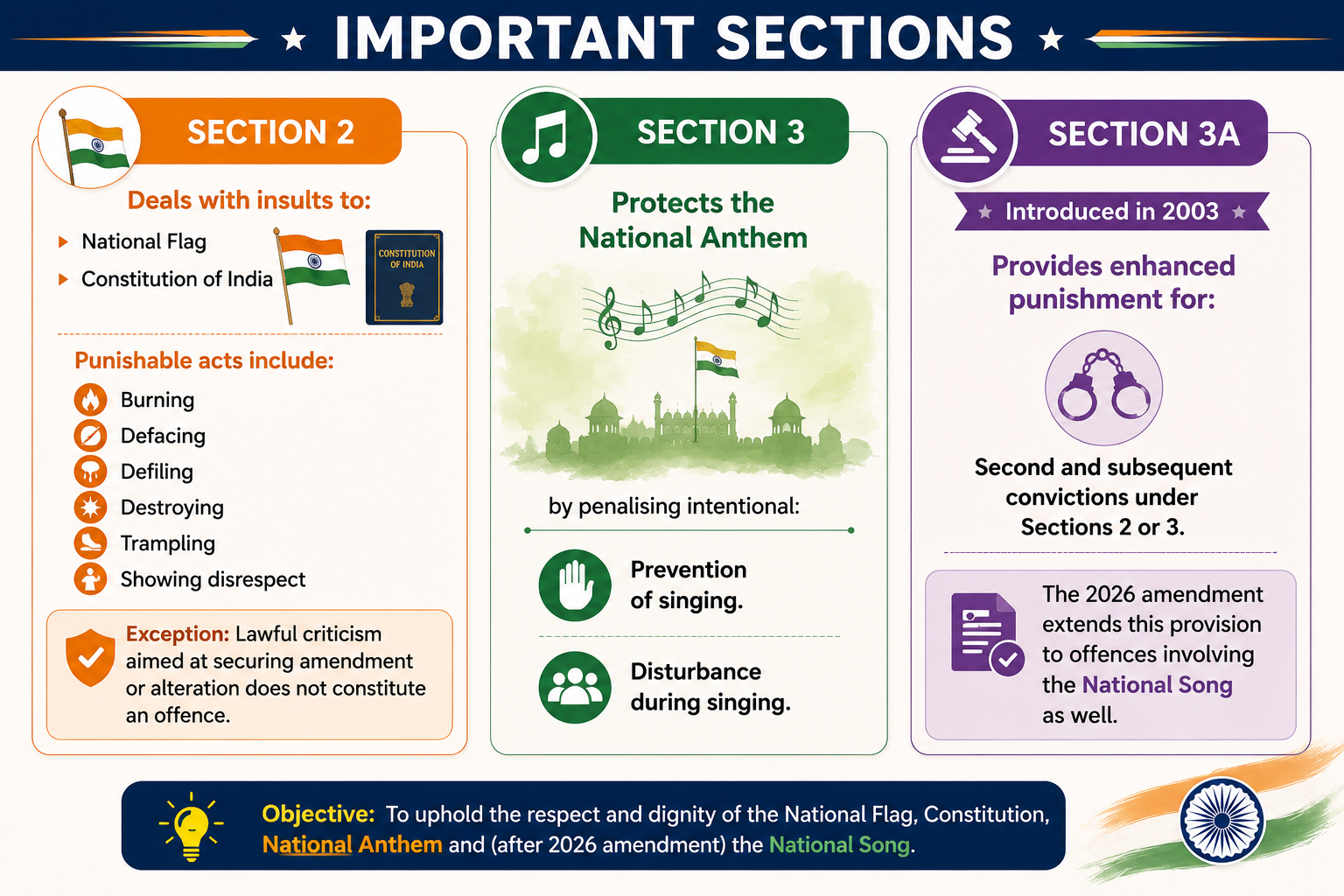
The Prevention of Insults to National Honour (Amendment) Bill, 2026 seeks to amend the Prevention of Insults to National Honour Act, 1971 by extending the same legal protection currently available to the National Anthem (Jana Gana Mana) to the National Song (Vande Mataram). The Bill makes it a punishable offence to intentionally prevent the singing of the National Song or disturb an assembly engaged in its singing.
Why is the Amendment Needed?
The existing Prevention of Insults to National Honour Act, 1971 protects the National Anthem by making it a criminal offence to deliberately interrupt or prevent its singing. However, there was no similar statutory protection for the National Song, Vande Mataram, despite its historical and national significance.
The amendment aims to:
-
Remove this legal gap.
-
Provide equal legal protection to Vande Mataram.
-
Recognize its contribution to India's freedom movement.
-
Uphold the dignity of national symbols.

Historical Significance of Vande Mataram
-
Composed by Bankim Chandra Chatterjee.
-
Means "Mother, I Bow to Thee."
-
First published in Bangadarshan in 1875.
-
Included in the novel Anandamath (1882).
-
Rabindranath Tagore first sang it publicly at the 1896 Indian National Congress Session.
-
Became a powerful slogan during the Swadeshi Movement and India's freedom struggle.
-
On 24 January 1950, Constituent Assembly President Dr. Rajendra Prasad stated that Vande Mataram should be honoured equally with Jana Gana Mana and accorded equal status.
Background: Prevention of Insults to National Honour Act, 1971
The Act extends to the whole of India and provides statutory protection to:
-
The Indian National Flag
-
The Constitution of India
-
The National Anthem (Jana Gana Mana)
Significance of the Amendment
-
Provides equal legal recognition to the National Song.
-
Removes a longstanding legislative gap.
-
Reinforces respect for India's national symbols.
-
Recognizes the historical role of Vande Mataram in the freedom struggle.
-
Ensures uniform legal treatment of both the National Anthem and National Song.
-
Strengthens protection against intentional acts that undermine national honour.
Read More About the History of National Anthem and National Song: