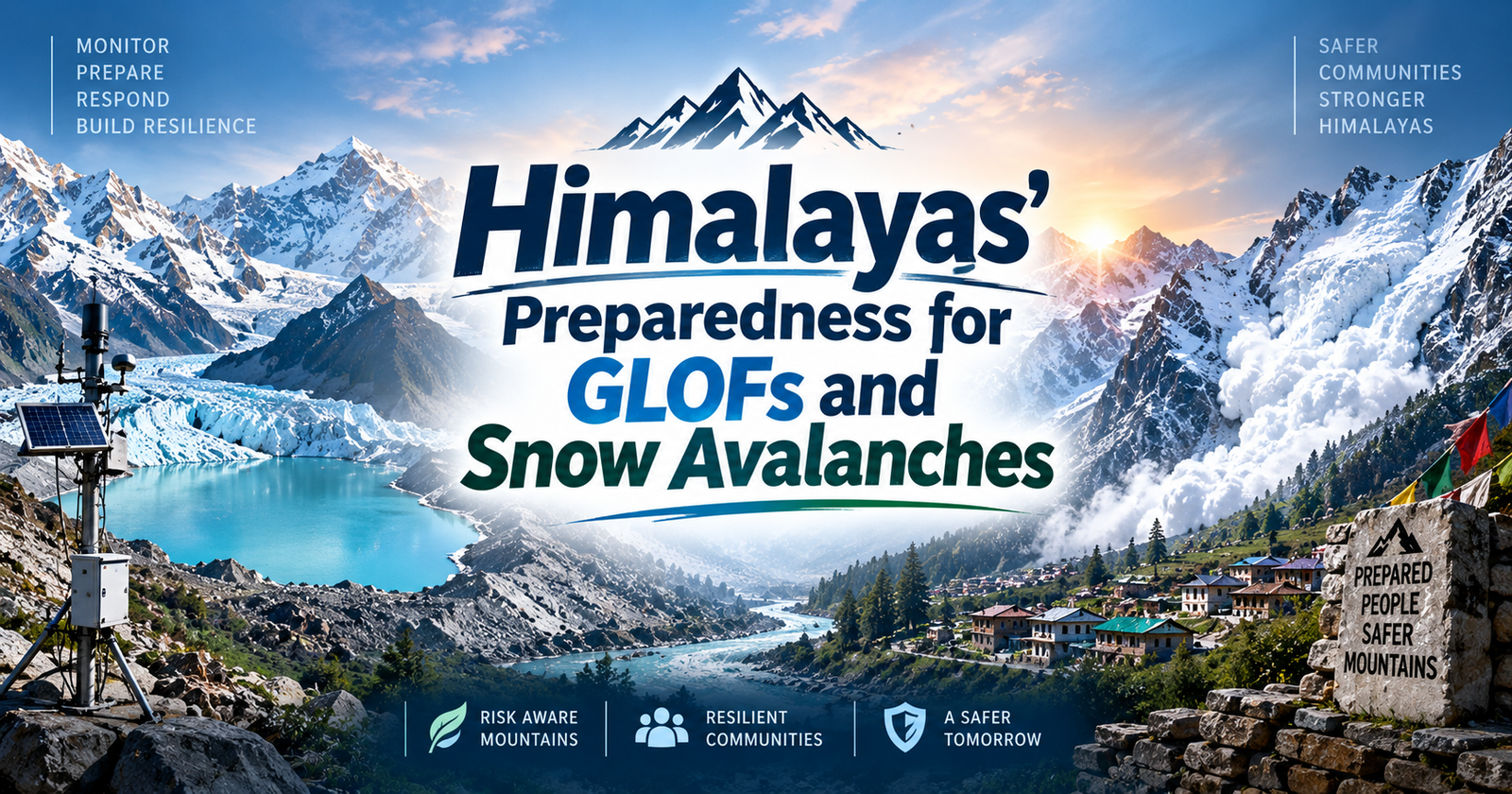
A disaster-management perspective on Himalayan preparedness for GLOFs and snow avalanches, highlighting early warning, preventive mitigation, community resilience, evacuation and coordinated response mechanisms.
Syllabus Areas:
GS III - Disaster Management
Read Recent Disaster in Himalayas
The Himalayan region requires anticipatory, risk-informed disaster management for GLOFs and snow avalanches. On 3 September 2026, the Union Home Secretary reviewed preparedness, focusing on monitoring, early warning, evacuation, preventive mitigation, community preparedness and coordinated response across vulnerable Himalayan States/UTs.
The Key Shift: From Disaster Response to Disaster Risk Reduction
The most important takeaway is the government's emphasis on moving beyond a response-oriented approach.
Traditionally, disaster management tends to become visible after an extreme event—through rescue, relief, rehabilitation and reconstruction. However, disasters in fragile mountain environments can evolve rapidly, leaving very little time for emergency response.
Therefore, the focus needs to shift towards:
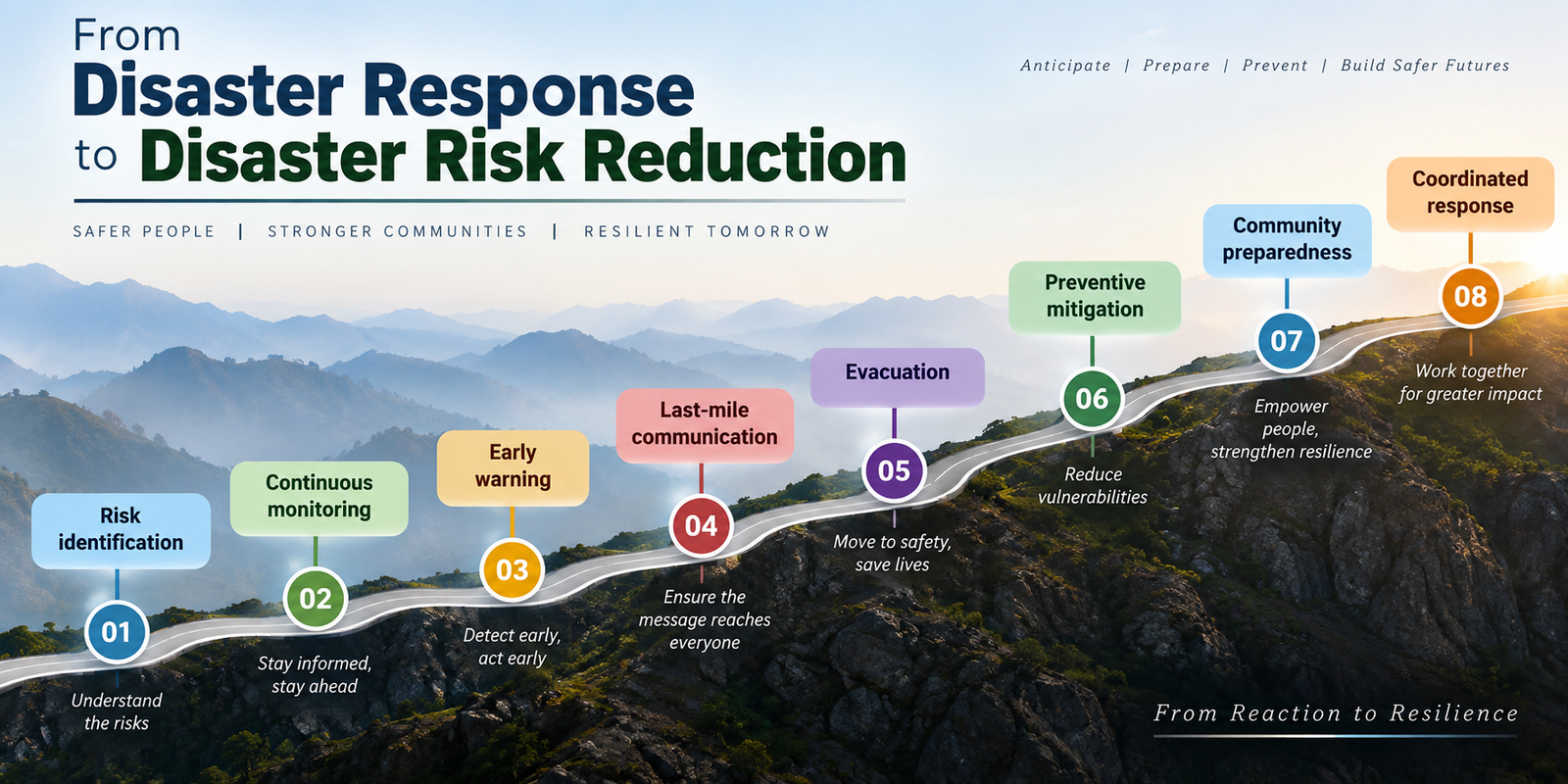
The recent review explicitly emphasised risk-informed planning, preventive mitigation and community-level preparedness.
This represents an important evolution in India's disaster-management approach: the objective is not merely to respond faster, but to reduce the probability and impact of disasters beforehand.
From Risk Identification to Resilient Response
Continuous & Proactive Risk Monitoring
Continuously monitor vulnerable glacial lakes, snow-covered and avalanche-prone areas, high-risk locations and flood flow paths, especially during heightened-risk periods. Strengthen coordination among scientific institutions, technical agencies and local administrations.
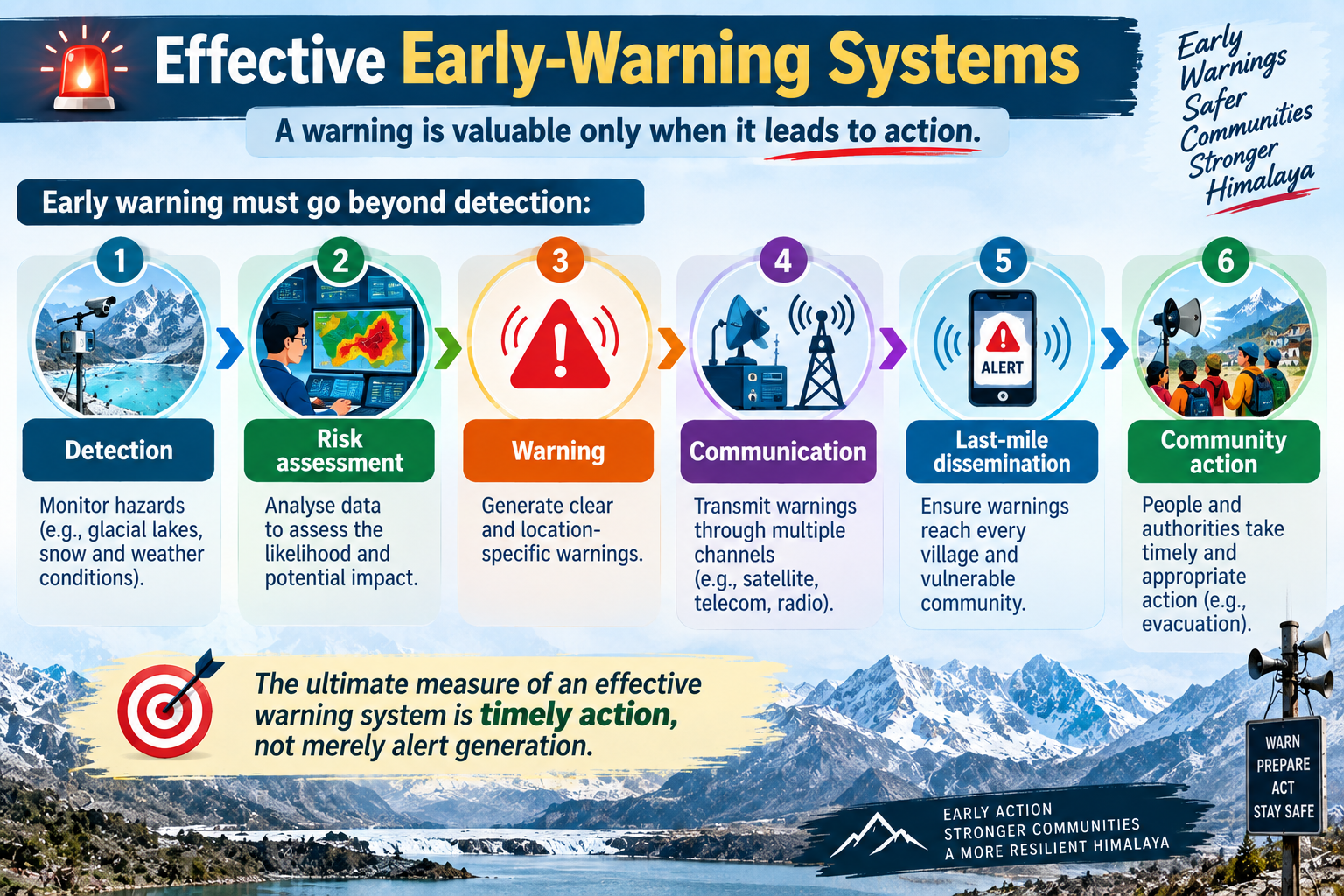
Last-Mile Connectivity
Ensure alerts reach remote villages, vulnerable settlements, downstream communities, local authorities and response teams. Technology must be supported by reliable local communication and community participation.
Evacuation Preparedness
Warnings are effective only when people can evacuate quickly and safely. Preparedness should identify vulnerable areas, evacuation routes, shelters, responsible authorities and emergency response arrangements.
Flow-Path Planning
Map potential flood-flow paths to identify exposed settlements and infrastructure, enabling better evacuation, response and resource positioning.
Risk mapping must translate into action mapping.
District & Local-Level Implementation
Convert policies into location-specific actions, as Himalayan vulnerabilities vary across regions. Effective preparedness requires:
National framework → State strategy → District planning → Community action.
Major Governance Challenges
The recent review also highlights several broader challenges that India needs to address:
1. Last-mile warning gap: Scientific warnings must reach vulnerable communities quickly and in an actionable form.
2. Implementation gap: Preparedness plans need to translate into concrete district- and village-level actions.
3. Coordination gap: Multiple agencies generate and use risk information, making institutional coordination essential.
4. Evacuation gap: Warning without clearly planned evacuation can fail to prevent loss of life.
5. Monitoring gap: High-risk glacial lakes and avalanche-prone areas require continuous rather than occasional monitoring.
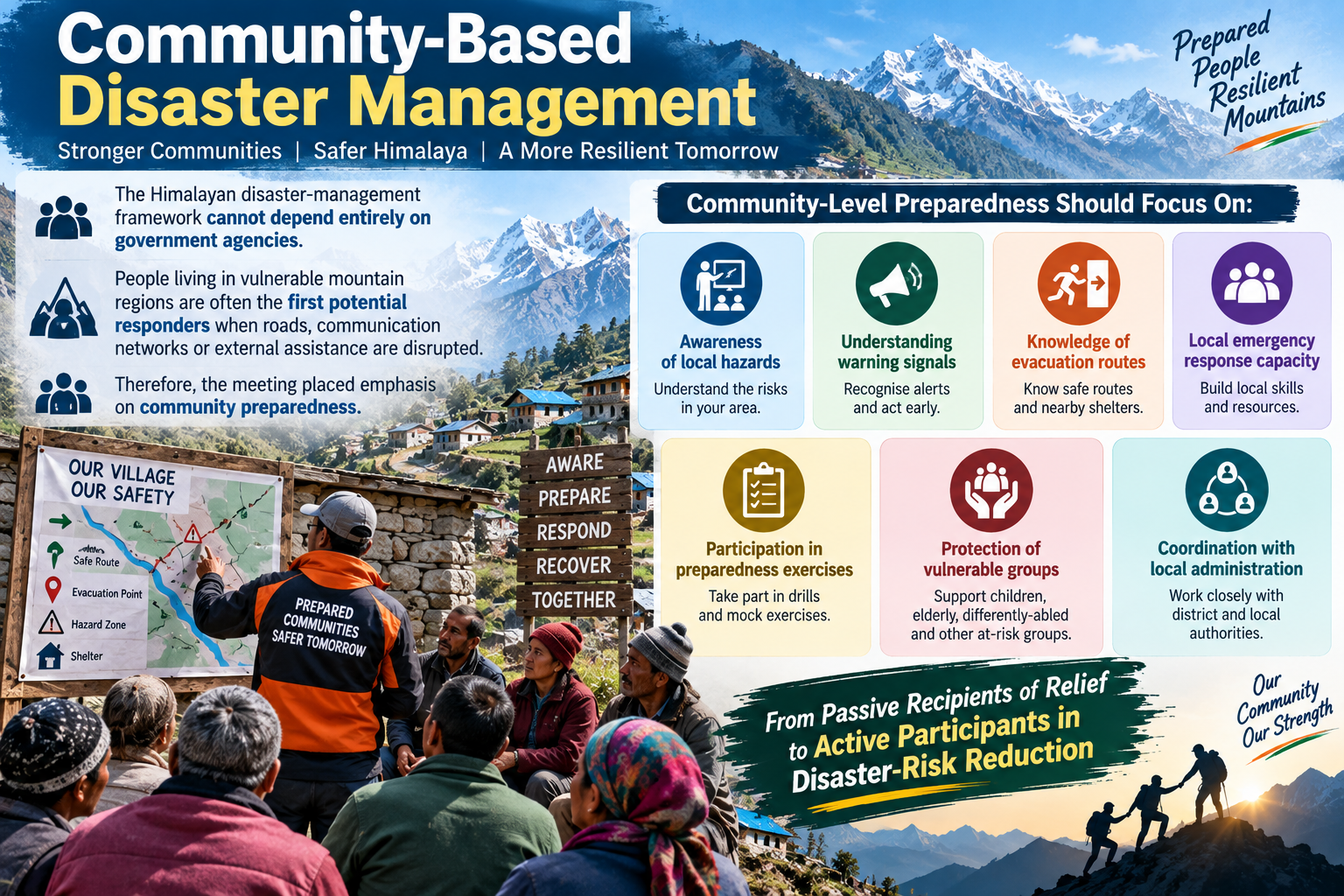
6. Community preparedness gap: Local populations need to be integrated into disaster-risk reduction rather than treated merely as beneficiaries.
7. Preventive mitigation gap: Investment should increasingly focus on reducing risk before disasters occur.
These challenges explain why the latest review emphasised proactive monitoring, preventive mitigation, community preparedness and regular plan reviews.
Way Forward
A resilient Himalayan disaster-management framework should focus on the following:
1. Strengthen end-to-end early warning: Develop systems that connect hazard detection with rapid warning dissemination and community action.
2. Improve last-mile communication: Combine technological systems with reliable local communication mechanisms for remote communities.
3. Make evacuation plans operational: Prepare location-specific evacuation routes, shelters, responsibilities and emergency protocols.
4. Strengthen district-level disaster governance: Ensure that national and State-level risk assessments translate into actionable district and local plans.
5. Institutionalise community participation: Conduct regular awareness programmes, preparedness exercises and community-level drills.
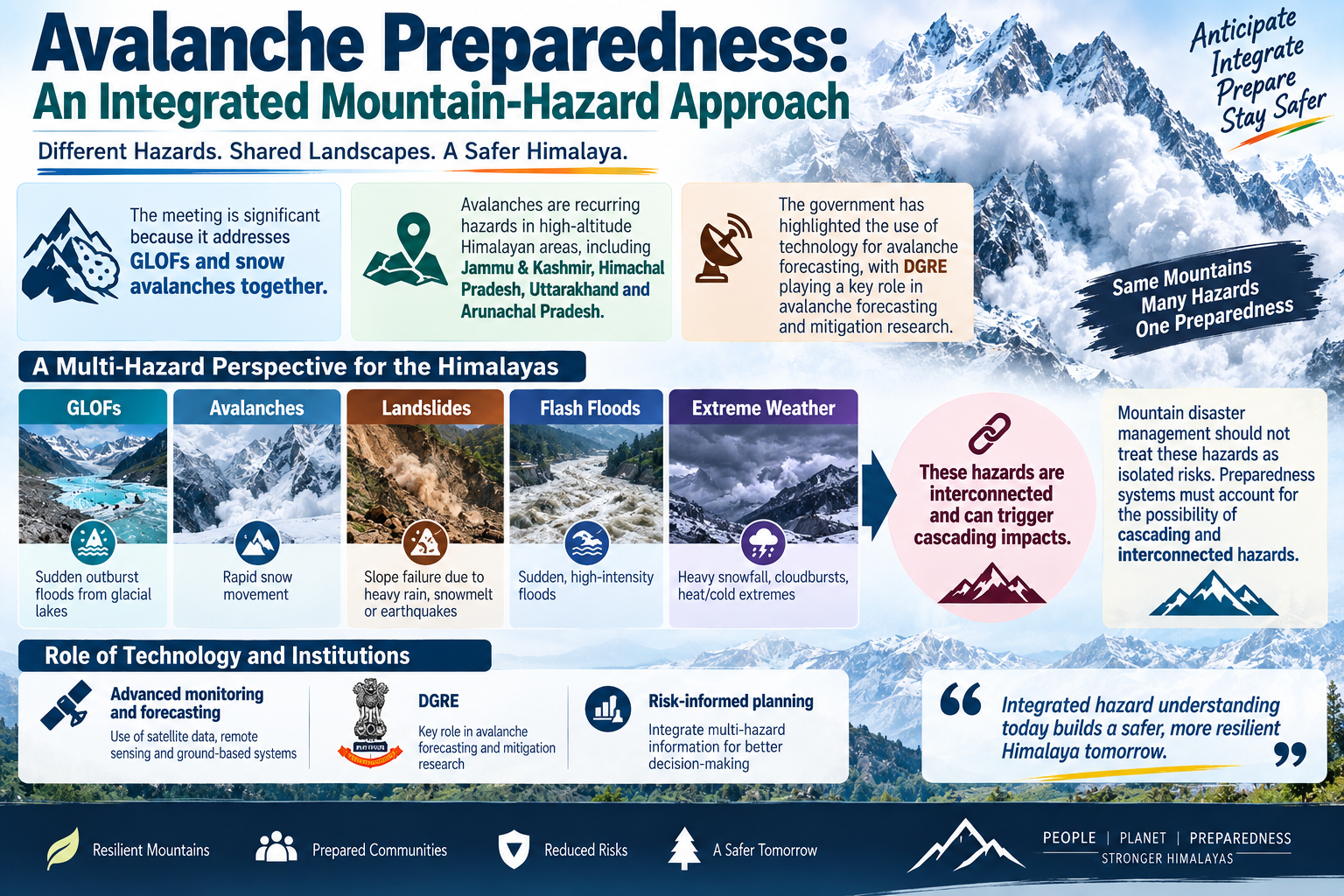
6. Promote multi-agency coordination: Enable seamless information sharing among MHA, NDMA, CWC, IMD, DGRE, State agencies, district administrations and scientific institutions.
7. Adopt a multi-hazard approach: Integrate preparedness for GLOFs, avalanches and other Himalayan hazards rather than treating each hazard in isolation.
8. Prioritise preventive mitigation: Move resources and planning towards reducing exposure and vulnerability before an extreme event occurs.
9. Regularly stress-test preparedness: Preparedness plans should be periodically reviewed, gaps identified and corrective measures implemented.
10. Expedite ongoing mitigation initiatives: Projects already sanctioned for GLOF mitigation should be implemented efficiently and monitored for outcomes.
The Himalayan disaster challenge is not simply about the occurrence of natural hazards; it is about how effectively institutions, infrastructure and communities are prepared to deal with them.
The real test of disaster management will therefore not be how quickly the government responds after a GLOF or avalanche, but how effectively it can anticipate risk, communicate warnings, evacuate vulnerable populations and reduce exposure before the disaster strikes.
For the Himalayan region, resilience must become a continuous process—not an emergency response activated after a disaster.
Mains Questions:
Q. “Disaster management in the Himalayan region needs to move from a response-centric approach to a risk-informed and community-based preparedness framework.” Discuss.