UPSC Mains 2026 GS III analysis covering every question paper, subject-wise trends, question patterns, key themes, difficulty level, and evolving UPSC trends.
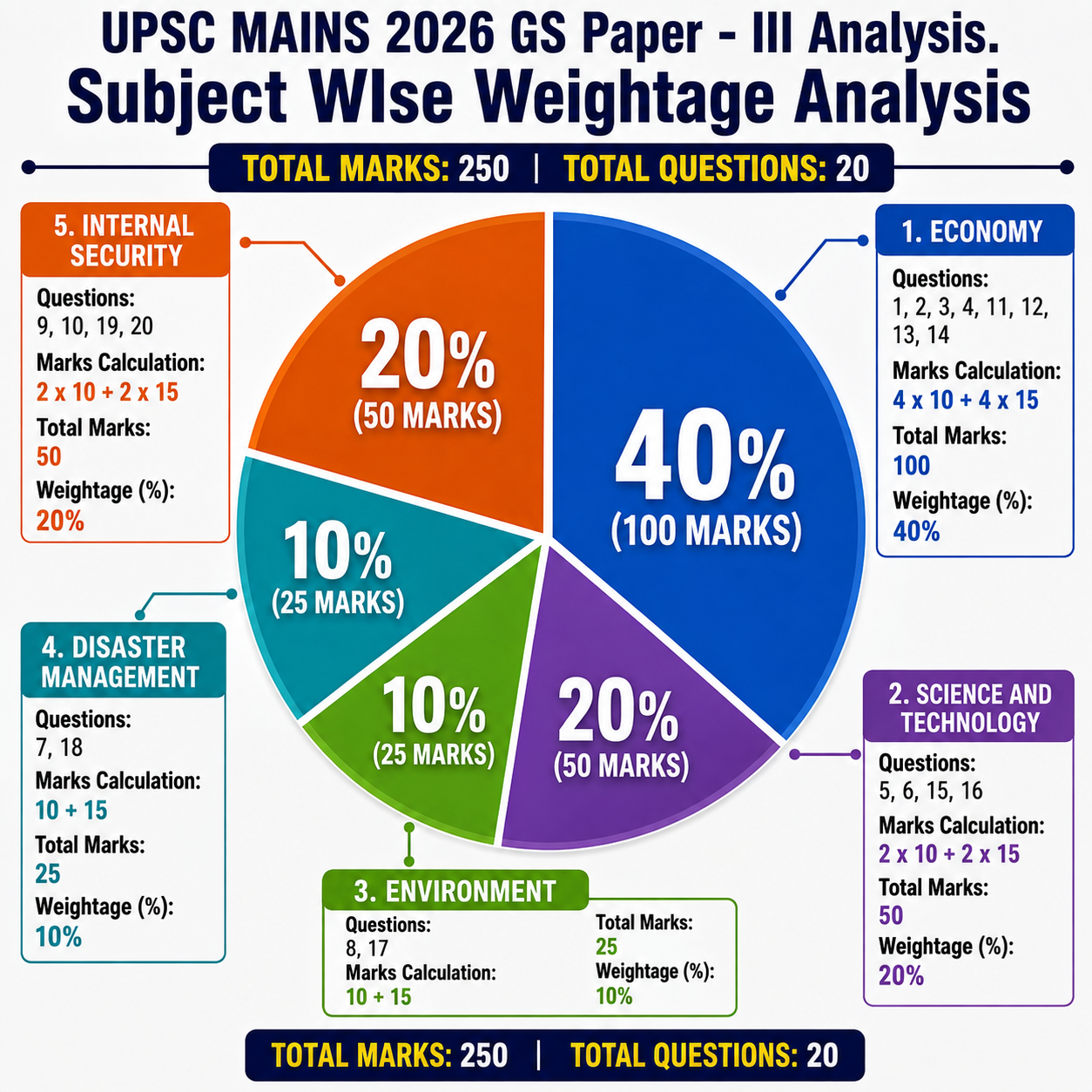
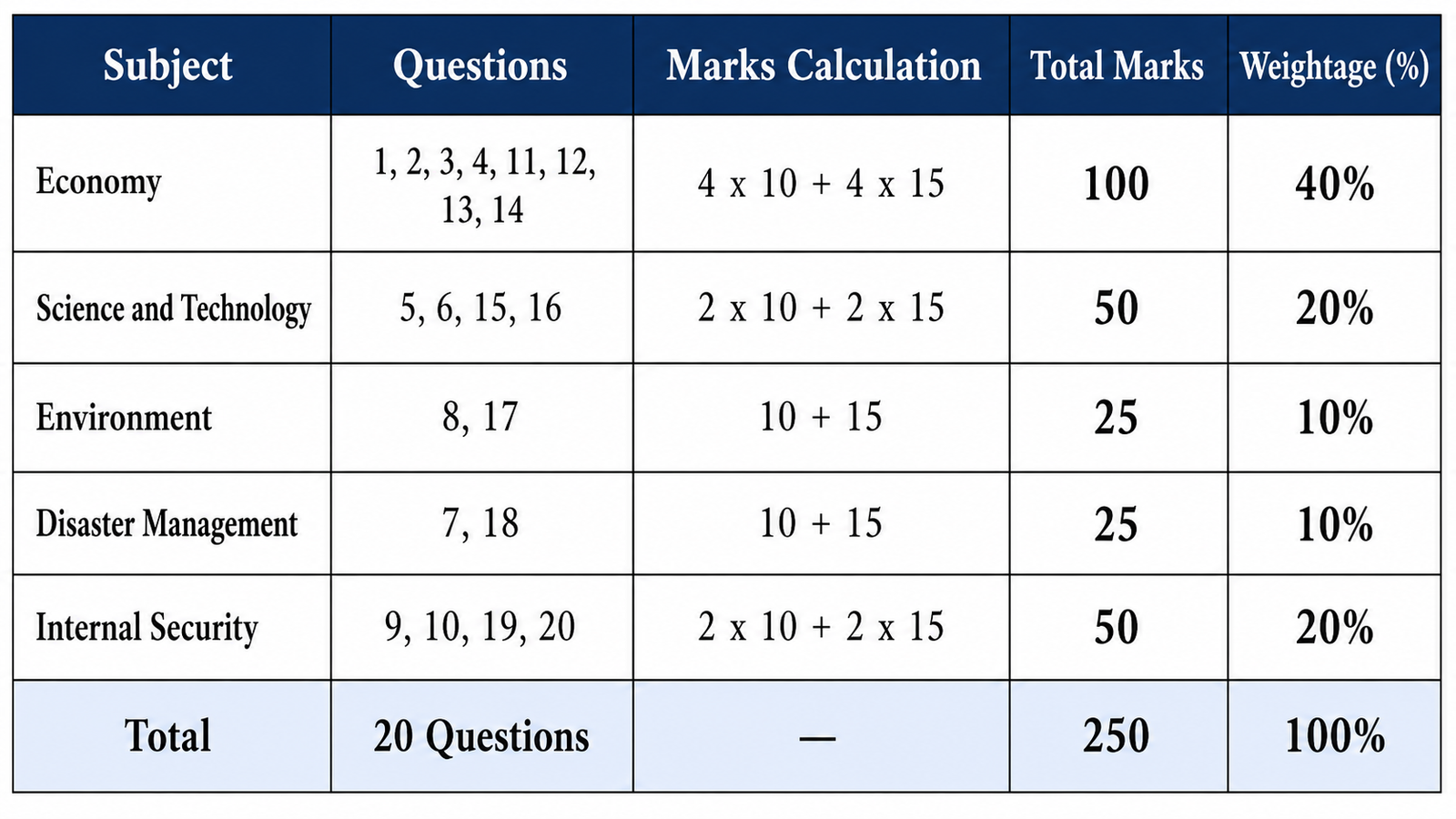
UPSC Mains 2026 General Studies Paper-I consisted of 20 questions carrying 250 marks.
Download the GS I Question Paper 2026: Click Here
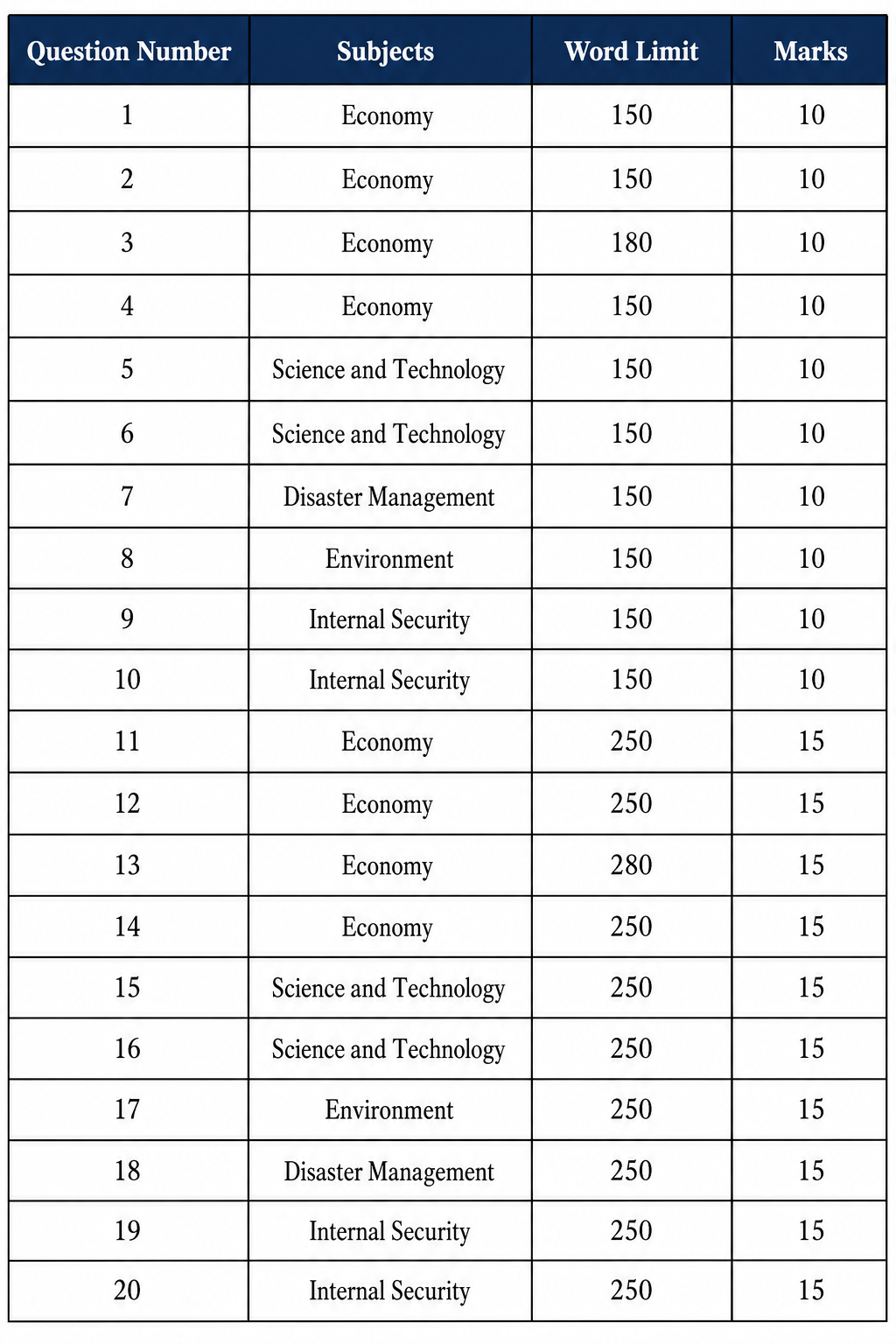
1. Economy is the clear dominant area
100 out of 250 marks (40%) are attributed to Economy.
2. Science & Technology + Internal Security form another major block
Together, they account for: 50 + 50 = 100 marks → 40% of the paper.
3. Environment and Disaster Management have lower weightage—but shouldn't be ignored
Each contributes 25 marks (10%).
4. The paper appears highly integrated
There is an important UPSC-style implication here: these subjects should not be prepared as isolated silos.
This integration is where strong Mains answers can separate themselves from merely factual answers.
Key Observations:
-
Difficulty: Moderate – tested conceptual clarity and analytical thinking.
-
Question Nature: Mostly conceptual and application-based, not purely factual.
-
Current Affairs: Played a significant role, especially in S&T, Economy and Environment.
-
Static + Current Link: Strong static fundamentals had to be connected with recent developments and policies.
-
How to Tackle: Focus on concepts + current affairs + examples/data + regular answer writing with multidimensional answers.
Mains 2026:
Paper I – Essay - Download the Question Paper - Click Here For Detailed Analysis
Paper II – General Studies I - Download the Question Paper - Click Here For Detailed Analysis
Paper III – General Studies II - Download the Question Paper - Click Here For Detailed Analysis
Paper IV – General Studies III - Download the Question Paper - Click Here For Detailed Analysis
Paper V – General Studies IV - Download the Question Paper - Click Here For Detailed Analysis
Paper VI – Optional Subject Paper I - Download the Question Paper - Click Here For Detailed Analysis
Paper VII – Optional Subject Paper II - Download the Question Paper - Click Here For Detailed Analysis