Learn about Fast Track Special Courts (FTSCs), their objectives, funding pattern, operational status, state-wise highlights, and role in ensuring speedy justice for rape and POCSO cases.
Syllabus Areas:
GS II - Polity and Governance
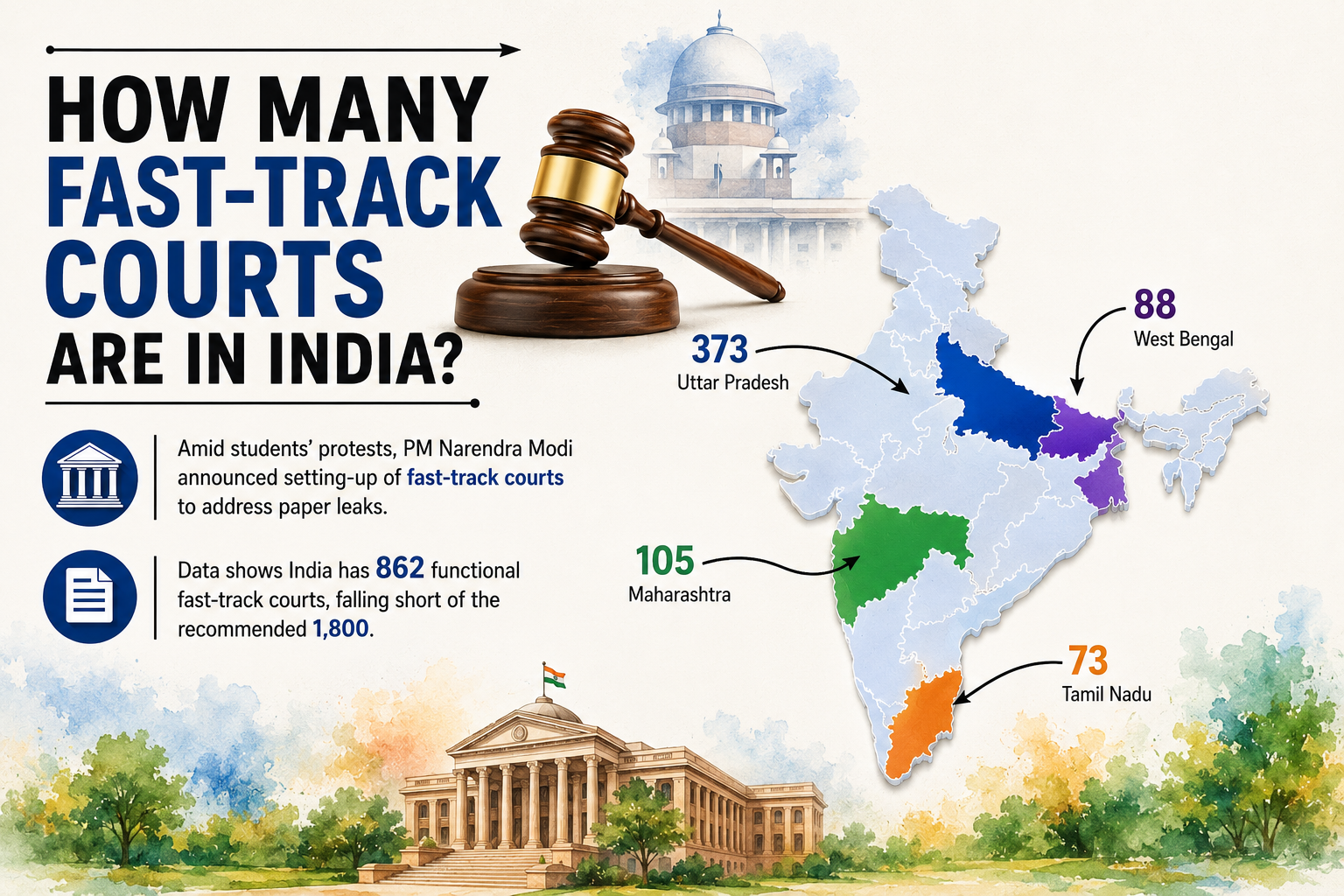
PM Modi announced the setting up of Fast Track Courts to address paper leaks.
What are Fast Track Courts?
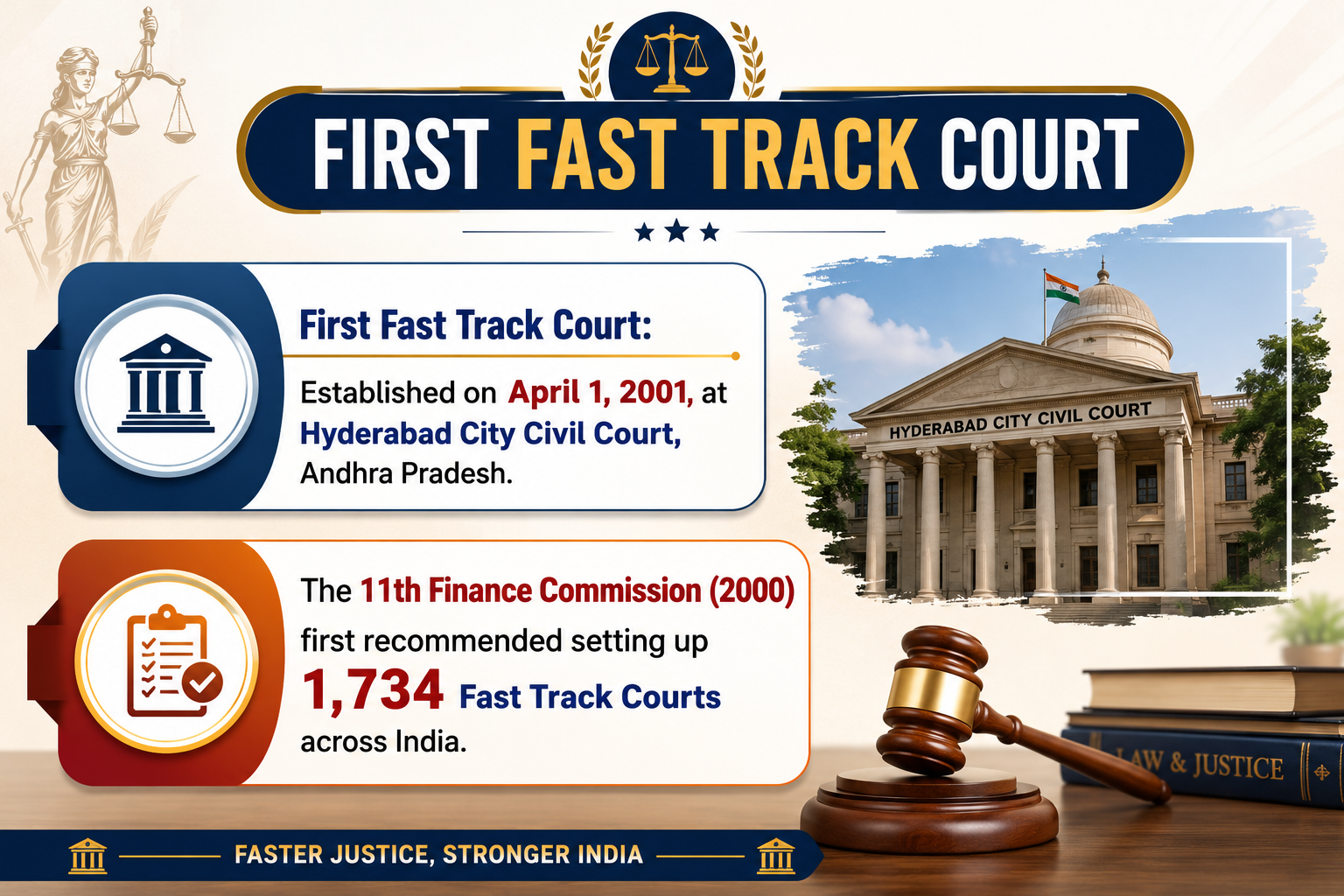
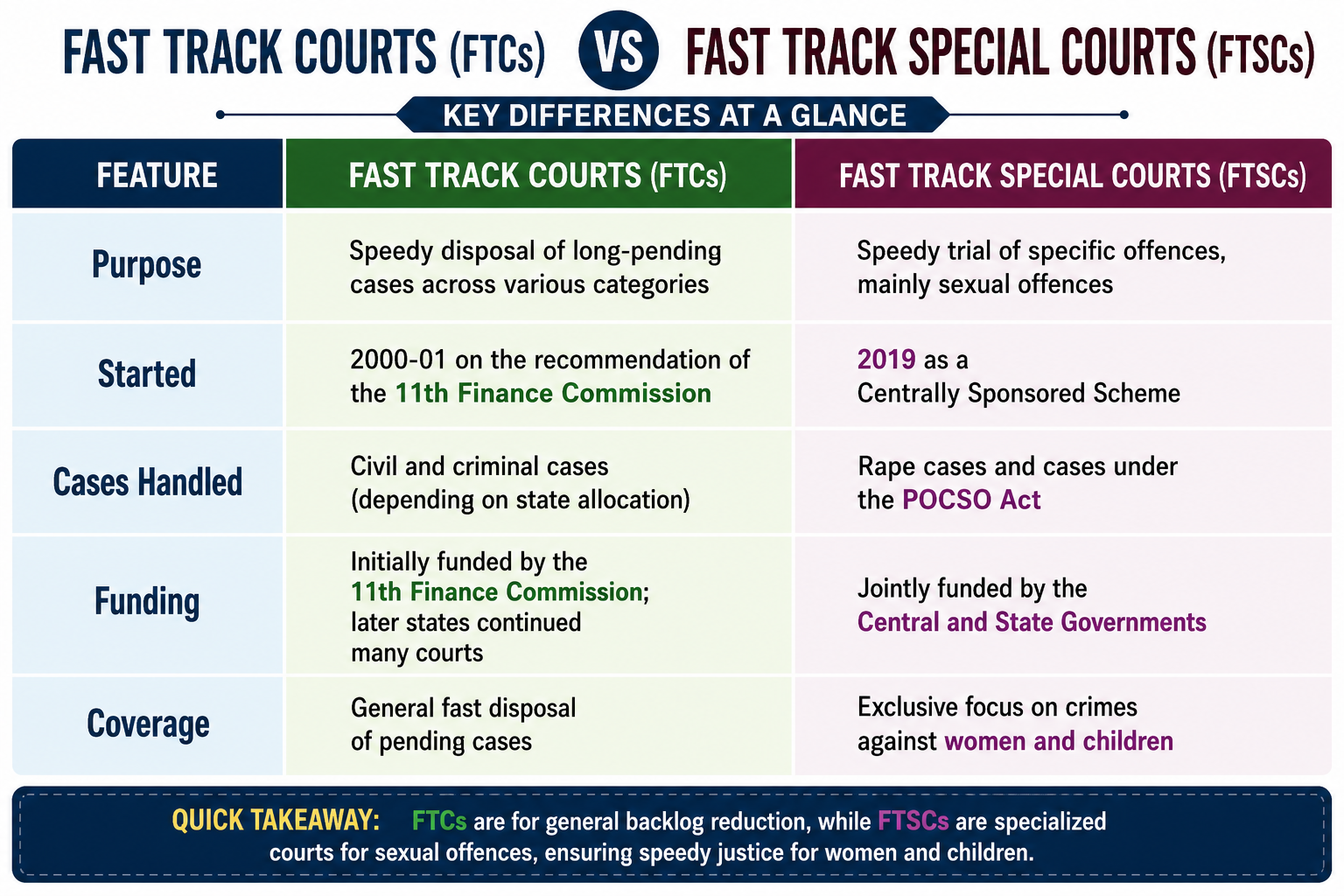
A Fast Track Court (FTC) is a special court that disposes of pending cases quickly, especially serious criminal and long-pending matters, ensuring faster justice and reducing delays in the judicial system.
Establishment
-
Established by the Central Government in consultation with State Governments/UTs and High Courts.
-
State Governments are primarily responsible for establishing these courts.
-
Generally set up under Article 247 (Parliament's power to establish additional courts for better administration of laws).
-
Administered under the Code of Criminal Procedure (CrPC) and directions issued by the Supreme Court.
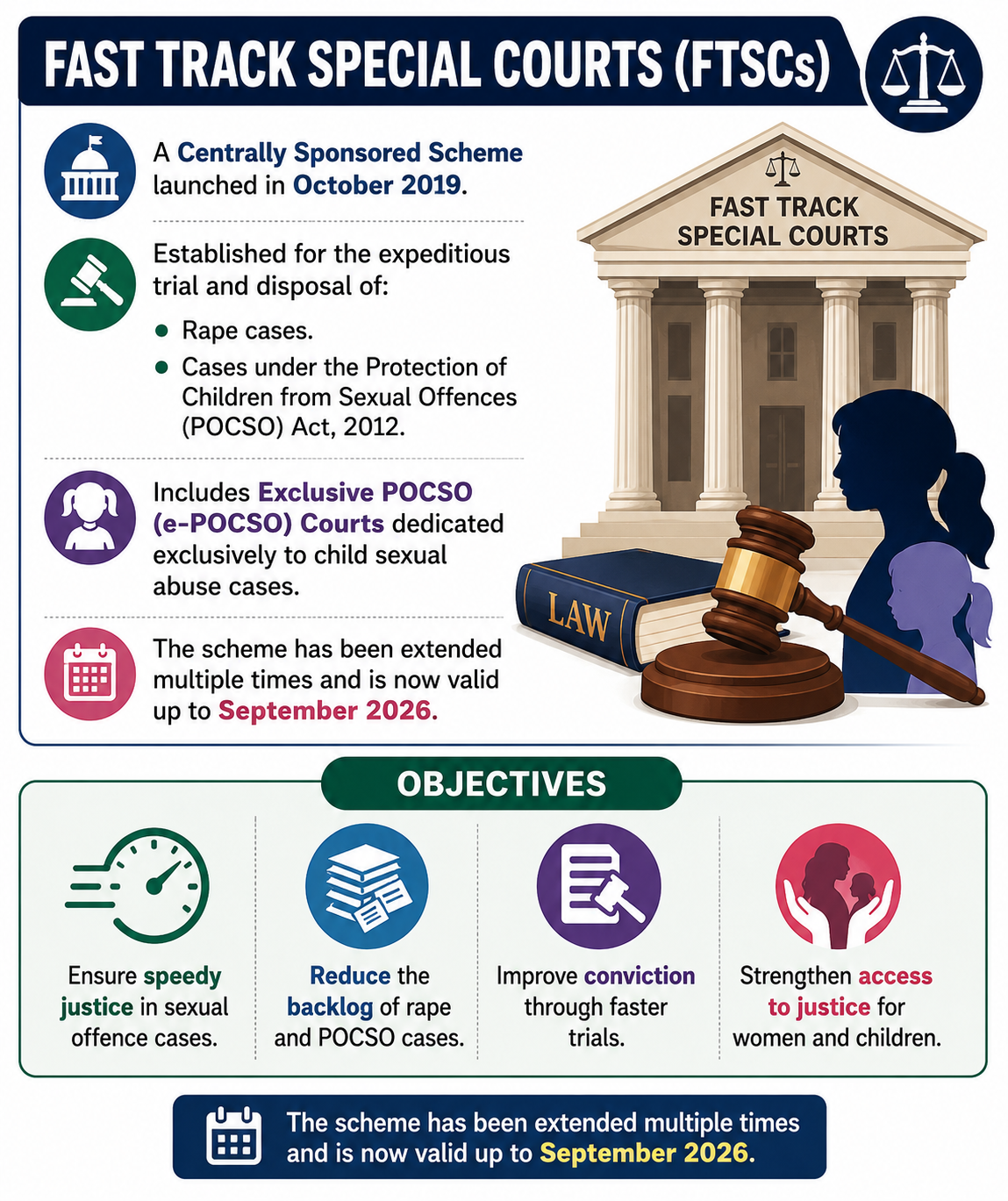
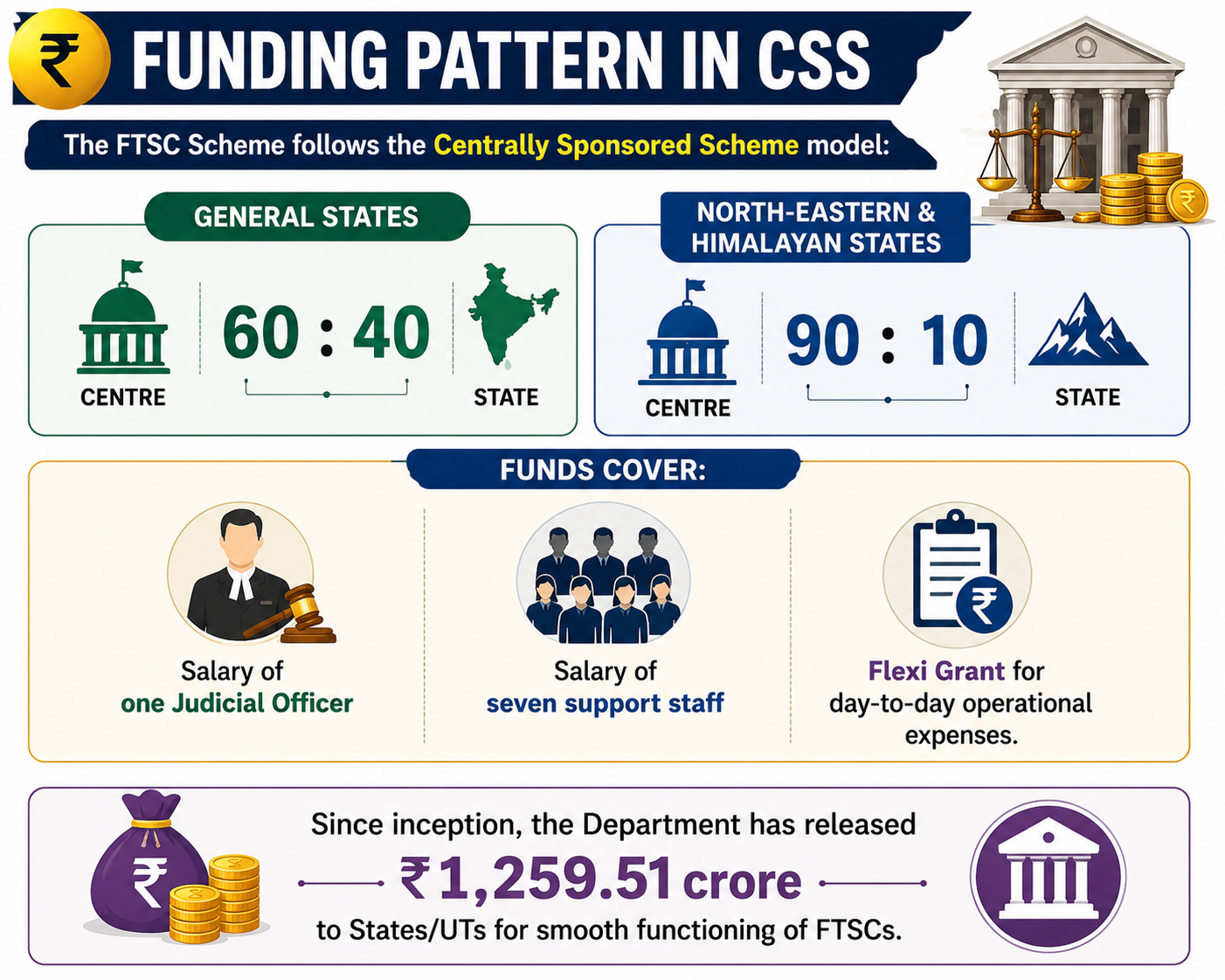
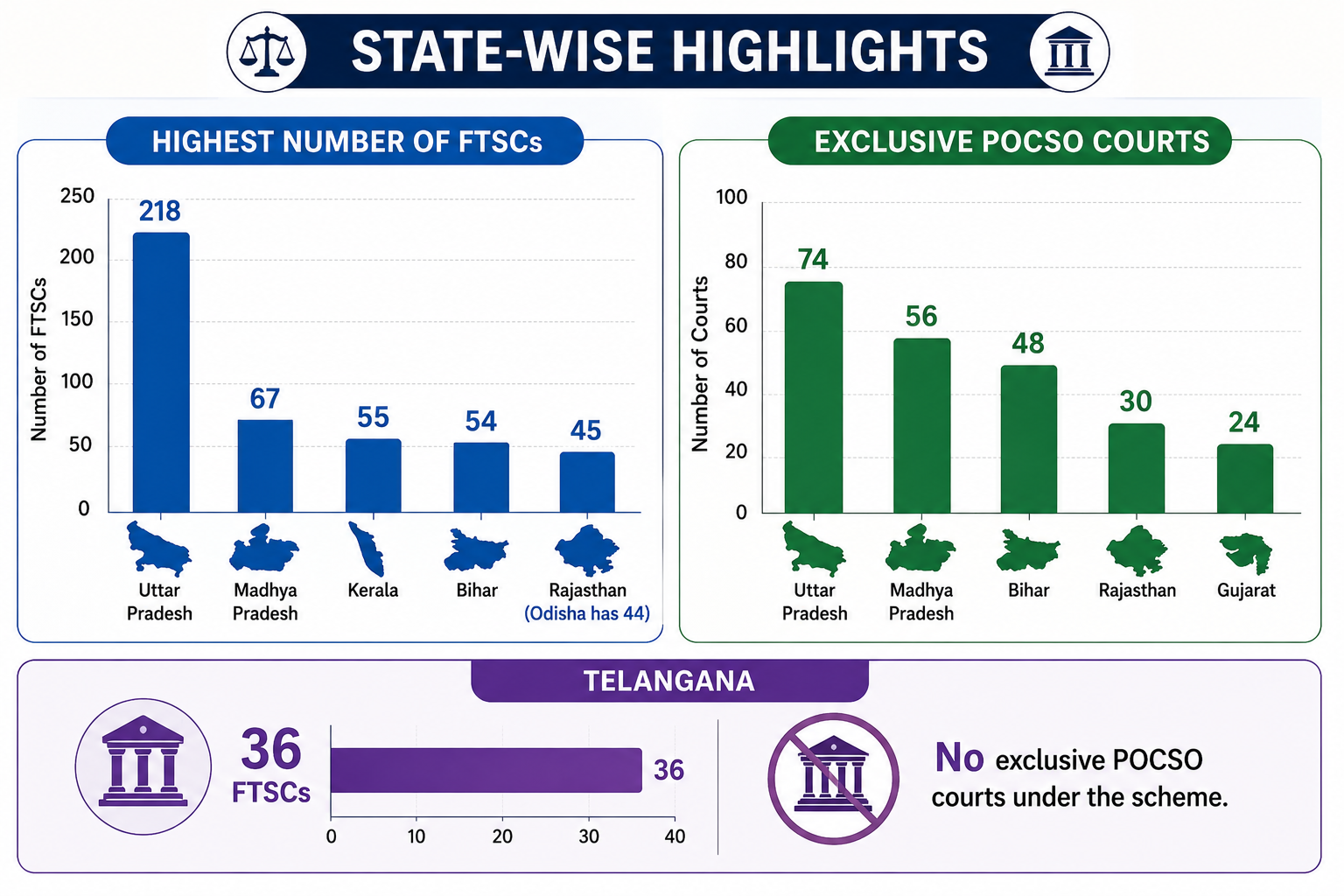
The Government of India has extended the Centrally Sponsored Fast Track Special Courts (FTSCs) Scheme till September 2026 to ensure the speedy disposal of rape and POCSO cases. As of 30 April 2026, 775 FTSCs, including 398 exclusive POCSO Courts, are functioning across 29 States and Union Territories.
What are Fast Track Special Courts (FTSCs)
Fast Track Special Courts (FTSCs): Dedicated courts launched in 2019 under a Centrally Sponsored Scheme to ensure the speedy disposal of rape and POCSO cases, providing timely justice to women and children.
-
At present 398 Exclusive POCSO Courts are functioning covering 29 States and Union Territories.
Monitoring Mechanism
The Government has adopted several measures to improve the functioning of FTSCs:
-
Regular review meetings through Video Conferencing.
-
Continuous monitoring with States/UTs and High Courts.
-
Union Minister of Law & Justice has written to:
-
Chief Ministers.
-
Chief Justices of High Courts.
-
Emphasis on strict compliance with:
-
POCSO Act, 2012
-
Bharatiya Nagarik Suraksha Sanhita (BNSS), 2023
-
FTSC performance is regularly reviewed during Inter-State Zonal Council meetings
Recruitment of Judges
-
Recruitment of Judicial Officers is the responsibility of:
-
State Governments.
-
Concerned High Courts.
-
Recruitment is governed under:
-
Article 309 provides the legal basis for framing rules regarding the recruitment and service conditions of government employees.
-
Article 233 deals with the appointment, posting, and promotion of District Judges by the Governor in consultation with the High Court.
-
Article 234 provides for the recruitment of judicial officers (other than District Judges) by the Governor in consultation with the State Public Service Commission and the High Court.
-
Recruitment rules are framed by State Governments in consultation with the respective High Courts.
Judicial Infrastructure Support
The Union Government also supports judicial infrastructure through another Centrally Sponsored Scheme.
Financial assistance is provided for:
-
Court Halls
-
Residential Units
-
Lawyers' Halls
-
Toilet Complexes
-
Digital Computer Rooms
During the 15th Finance Commission period, the Centre has provided ₹4,519.47 crore to States/UTs for strengthening judicial infrastructure.
Fast Track Special Courts strengthen India's justice system by ensuring faster trials, reducing pendency in rape and POCSO cases, protecting vulnerable victims, and reinforcing public confidence through timely and effective justice.