Legislative reforms in India focus on decriminalisation, trust-based governance, ADR, judicial efficiency, reduced compliance burdens, investor confidence, and improved Ease of Doing Business.
Syllabus Areas:
GS II - Polity and Governance
GS III - Economy
The Government has been undertaking continuous legislative and policy reforms to make laws more balanced, practical and business-friendly. A major focus has been to reduce the criminalisation of minor violations and replace disproportionate criminal penalties with civil penalties and administrative mechanisms.
Jan Vishwas Act: Decriminalising Minor Offences
Jan Vishwas (Amendment of Provisions) Act, 2023
The Jan Vishwas (Amendment of Provisions) Act, 2023 marked an important step towards rationalising India's regulatory framework.
Key objective
The Act sought to:
-
Remove criminal penalties for a number of minor offences.
-
Replace disproportionate criminal provisions with more appropriate civil penalties.
-
Reduce unnecessary fear of criminal prosecution for technical or minor regulatory violations.
-
Improve the ease of doing business.
-
Promote a relationship based on trust between citizens, businesses and the government.
Jan Vishwas (Amendment of Provisions) Act, 2026
The reform process has subsequently continued.
According to the PIB release, the Jan Vishwas (Amendment of Provisions) Act, 2026 was published in the Official Gazette on 8 April 2026.
It rationalises provisions across 79 Central Acts administered by 23 Ministries and Departments.
Significance
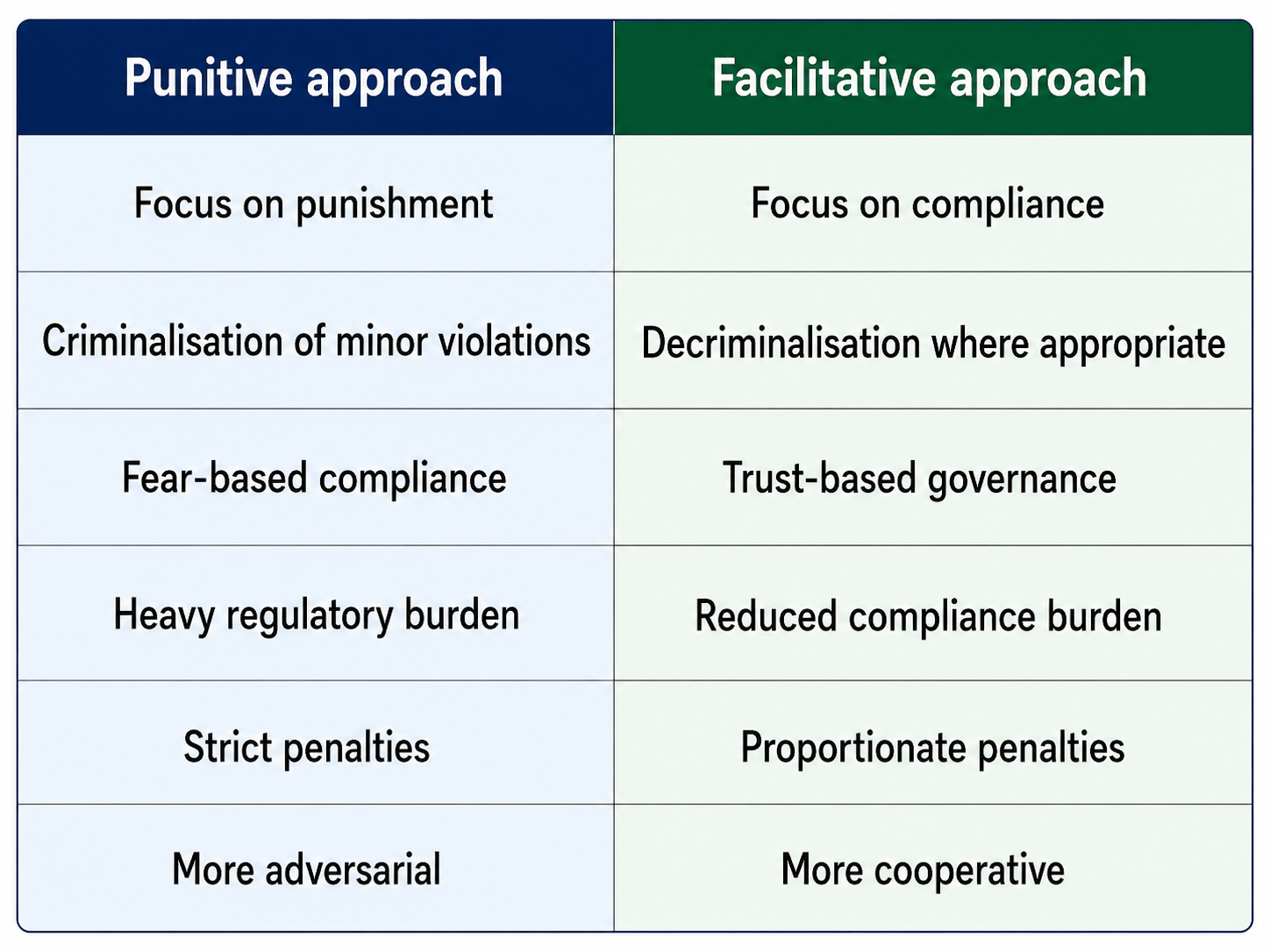
This represents a shift from a punitive regulatory approach towards a more proportionate and facilitative system.
Promotion of Alternative Dispute Resolution (ADR)
The Government is also strengthening Alternative Dispute Resolution (ADR) mechanisms.
ADR provides alternatives to conventional court-based litigation.
Major ADR mechanisms highlighted in the release include:
-
Arbitration
-
Mediation
-
Conciliation
-
Institutional dispute resolution
Why ADR is important
ADR mechanisms are generally Less adversarial, Potentially faster, More flexible, Capable of reducing the burden on courts, Useful for commercial disputes, Conducive to business and investment.
The Government is undertaking policy and legislative interventions to make ADR mechanisms more efficient, effective and accessible.
Arbitration and Conciliation Act, 1996
Arbitration: A dispute resolution process where parties submit their dispute to a neutral arbitrator, who examines evidence and arguments and delivers a decision, generally binding on the parties involved.
Conciliation: A flexible dispute resolution process where a neutral conciliator assists disputing parties in identifying issues, improving communication, and developing mutually acceptable solutions, while sometimes suggesting possible settlement terms.
The Arbitration and Conciliation Act, 1996 has been progressively amended in 2015, 2019, 2020.
The amendments have attempted to keep India's arbitration framework aligned with developments in the international arbitration landscape.
Major objectives of the amendments
The reforms seek to promote:
-
Timely conclusion of arbitration proceedings
-
Neutrality of arbitrators
-
Reduction of unnecessary judicial intervention
-
Effective enforcement of arbitral awards
-
Promotion of institutional arbitration
Importance
A strong arbitration ecosystem is particularly important for commercial activity because businesses require predictable, efficient and credible mechanisms for resolving disputes.
Pre-Institution Mediation and Settlement
The Commercial Courts Act, 2015 was amended in 2018 to introduce the mechanism of:
Pre-Institution Mediation and Settlement (PIMS)
Under this mechanism, where a commercial dispute does not contemplate urgent interim relief, parties are required to first exhaust the mandatory mediation remedy before approaching the court.
Objective
PIMS aims to:
-
Encourage settlement before litigation
-
Reduce unnecessary court cases
-
Provide parties an opportunity to resolve commercial disputes amicably
-
Reduce judicial workload
-
Promote a more efficient commercial dispute-resolution environment
This is particularly significant for Ease of Doing Business, since prolonged commercial litigation can increase the cost and uncertainty associated with business operations.

India International Arbitration Centre Act, 2019
The India International Arbitration Centre Act, 2019 provides for the establishment of the India International Arbitration Centre (IIAC).
Objectives of the Centre
The Centre is intended to:
-
Facilitate institutional arbitration
-
Function as an independent and autonomous institution
-
Develop a world-class arbitration ecosystem
-
Build confidence among domestic and international parties
-
Provide a neutral platform for resolving commercial disputes
The Centre has been established with the objective of strengthening India's position as a credible destination for international commercial dispute resolution.
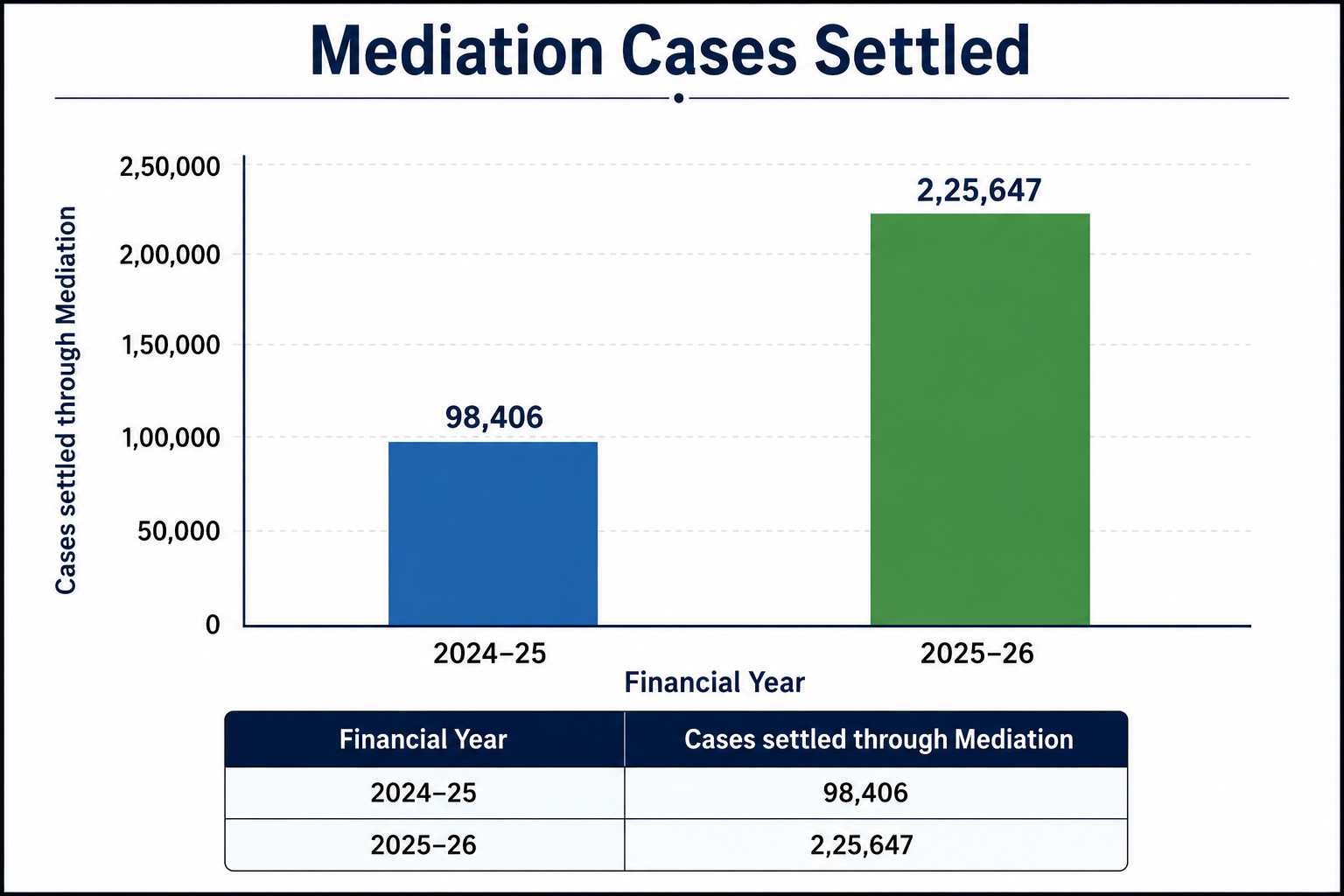
Mediation Act, 2023
Mediation: A voluntary process where a neutral mediator facilitates communication between disputing parties, helping them understand interests, explore solutions, and reach a mutually acceptable settlement without imposing a decision.
The Mediation Act, 2023 provides a legislative framework for mediation.
Key significance
The Act seeks to:
-
Provide a standalone legal framework for mediation.
-
Encourage disputing parties to adopt mediation.
-
Promote institutional mediation.
-
Encourage amicable settlement of disputes outside courts.
-
Develop a stronger culture of consensual dispute resolution.
This can contribute to:
Faster resolution → Lower litigation burden → Reduced costs → Better business environment
Legal Services Authorities and Mediation
Authorities established under the Legal Services Authorities Act, 1987 are also promoting alternative dispute resolution mechanisms, including mediation.
Their efforts include:
-
Legal awareness programmes
-
Strengthening court-annexed mediation
-
Promoting Pre-Institution Mediation
-
Improving awareness about alternative methods of dispute resolution
Infrastructure for District and Subordinate Courts
The Government also highlighted the Centrally Sponsored Scheme for the Development of Infrastructure Facilities for District and Subordinate Courts.
The scheme is periodically reviewed by:
-
Department-related Parliamentary Standing Committee
-
Internal audit teams
The scheme was also evaluated by a third-party agency under the aegis of NITI Aayog at the time of its extension.
Importance
Adequate infrastructure in district and subordinate courts is essential for:
-
Reducing case pendency
-
Improving judicial efficiency
-
Faster delivery of justice
-
Better access to justice
-
Strengthening grassroots judicial institutions
Impact of Court Infrastructure
The latest third-party assessment highlighted the relevance of the scheme to:
-
National policies
-
Sustainable Development Goals (SDGs)
-
Needs of beneficiaries
-
Infrastructure development
An important finding was that districts with higher court-room density reported:
-
3–8% decline in average case pendency
-
16% reduction in case resolution time
The average case resolution time was reported to have declined from:
3.1 years → 2.6 years
This highlights the connection between judicial infrastructure and efficiency in justice delivery.
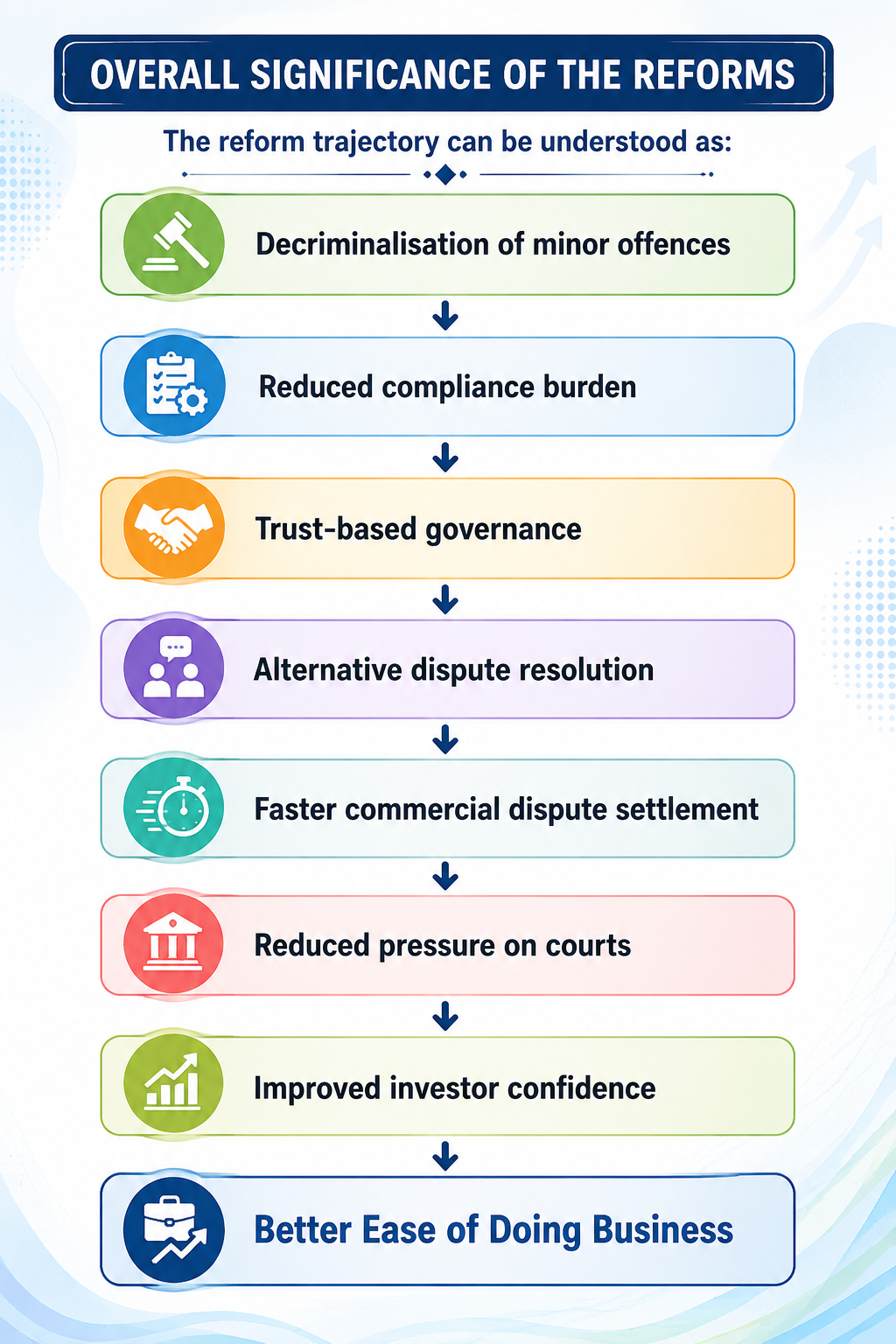
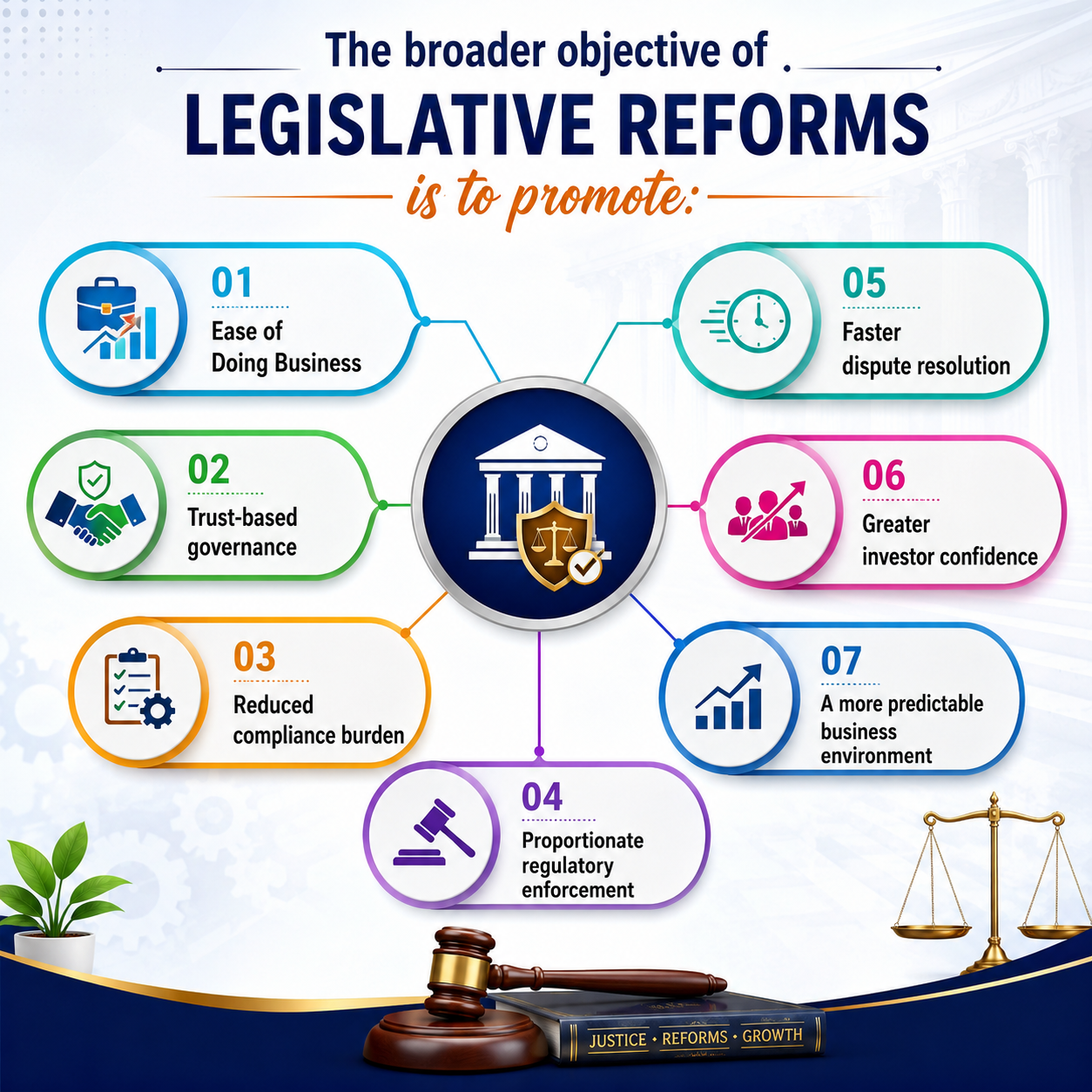
India’s legislative reforms aim to shift from punitive regulation toward trust-based governance, proportionate enforcement, efficient dispute resolution, stronger judicial infrastructure, and a more predictable business environment.