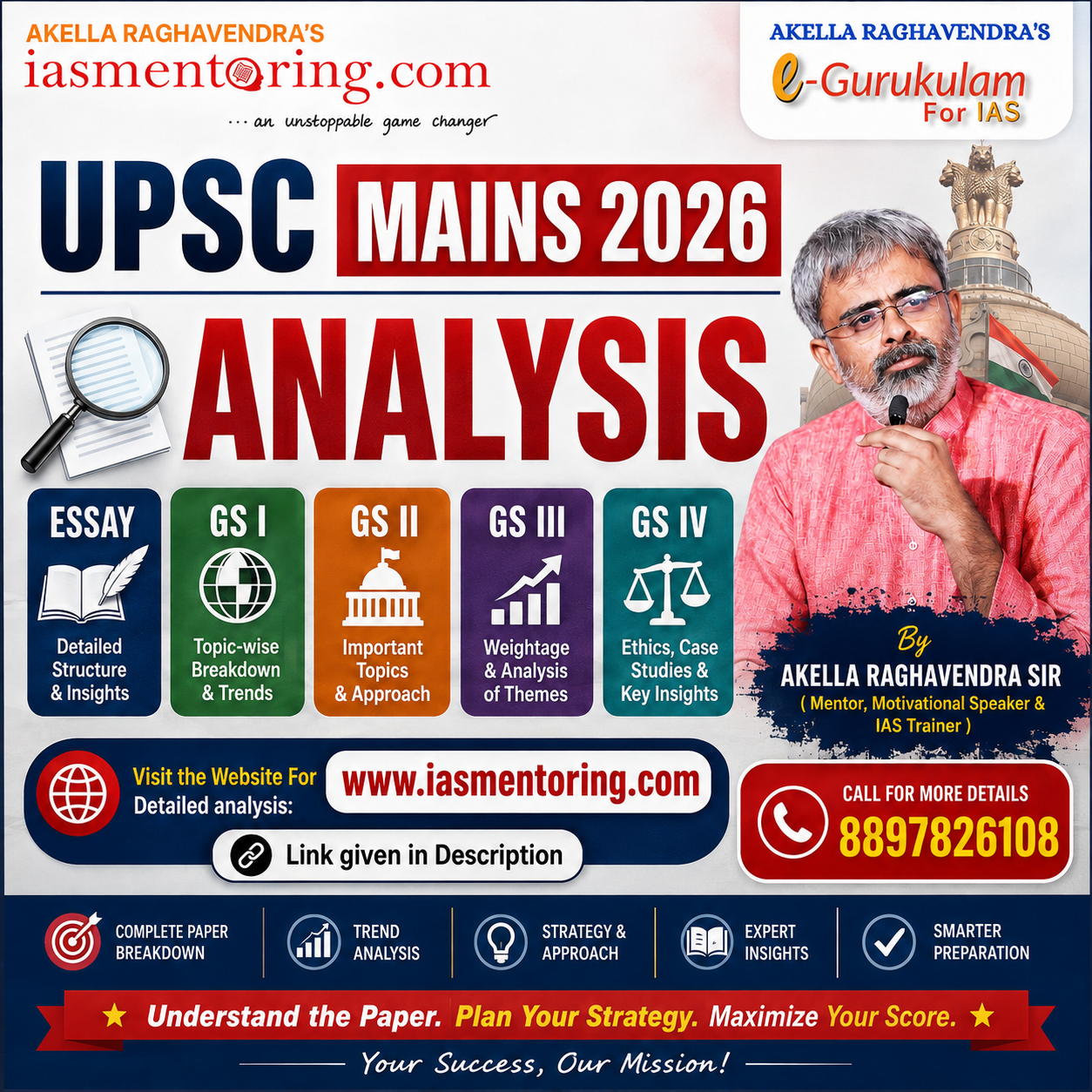
UPSC Mains 2026 GS II analysis covering every question paper, subject-wise trends, question patterns, key themes, difficulty level, and evolving UPSC trends.
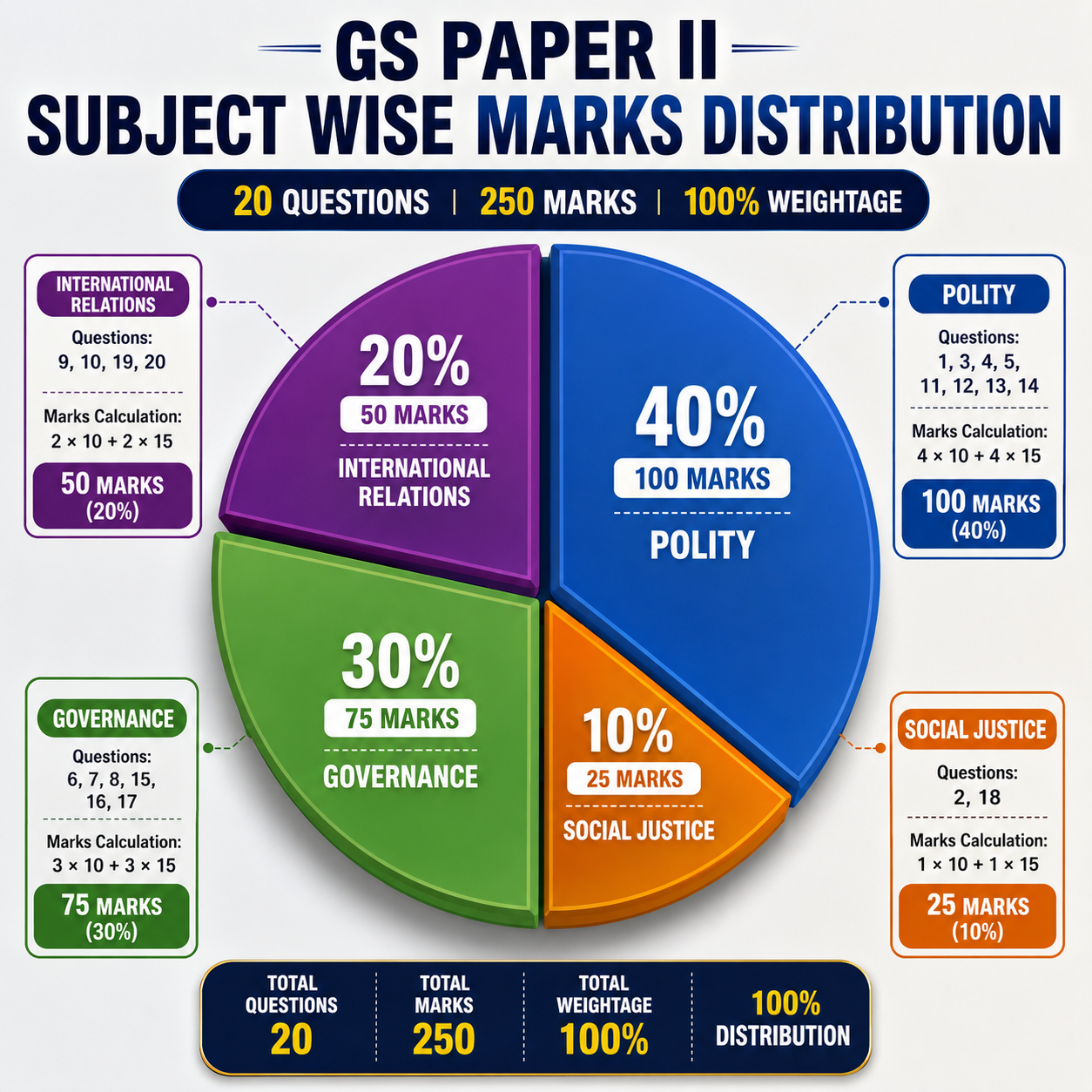
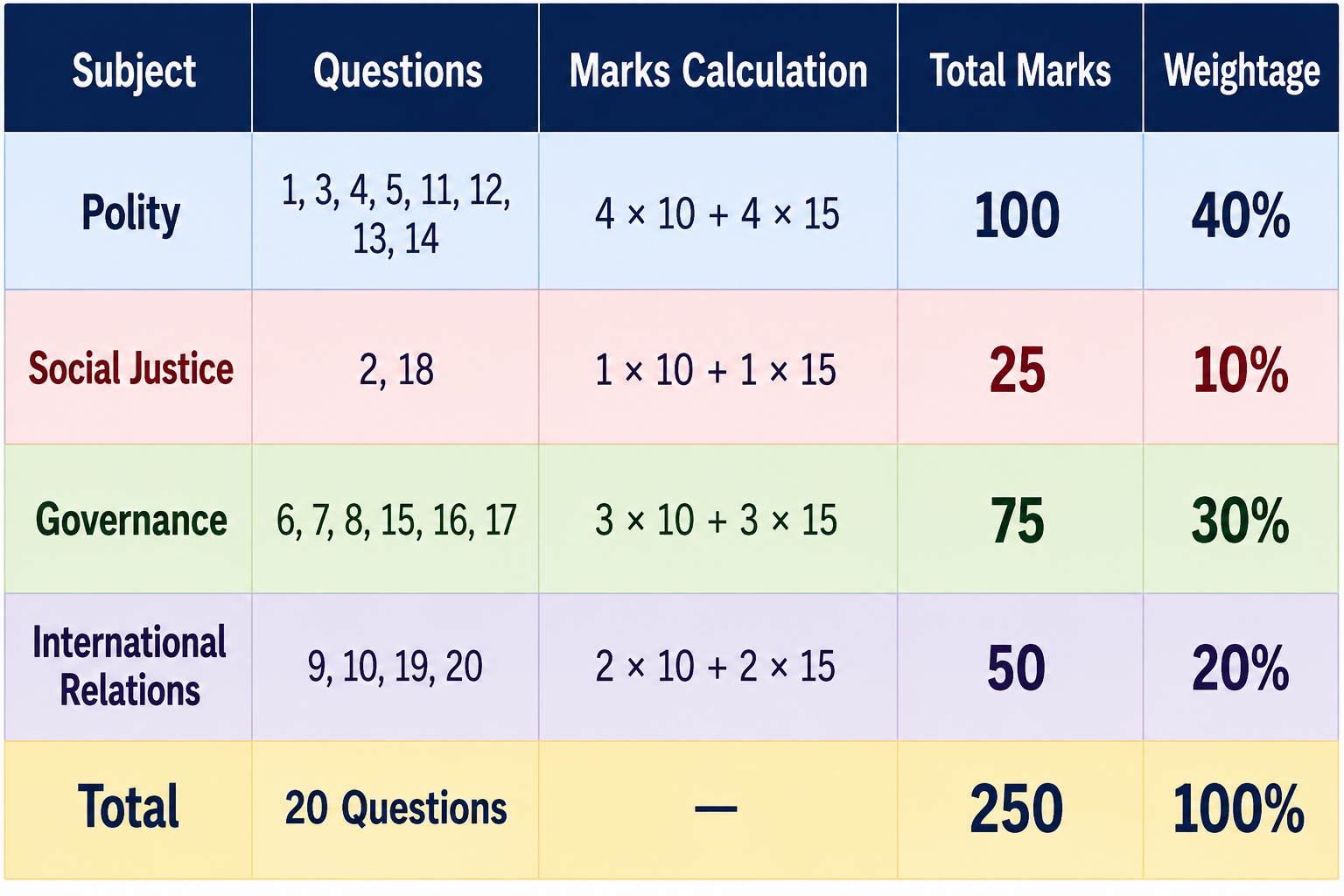
UPSC Mains 2026 General Studies Paper-II consisted of 20 questions carrying 250 marks.
Download the GS II Question Paper 2026: Click Here
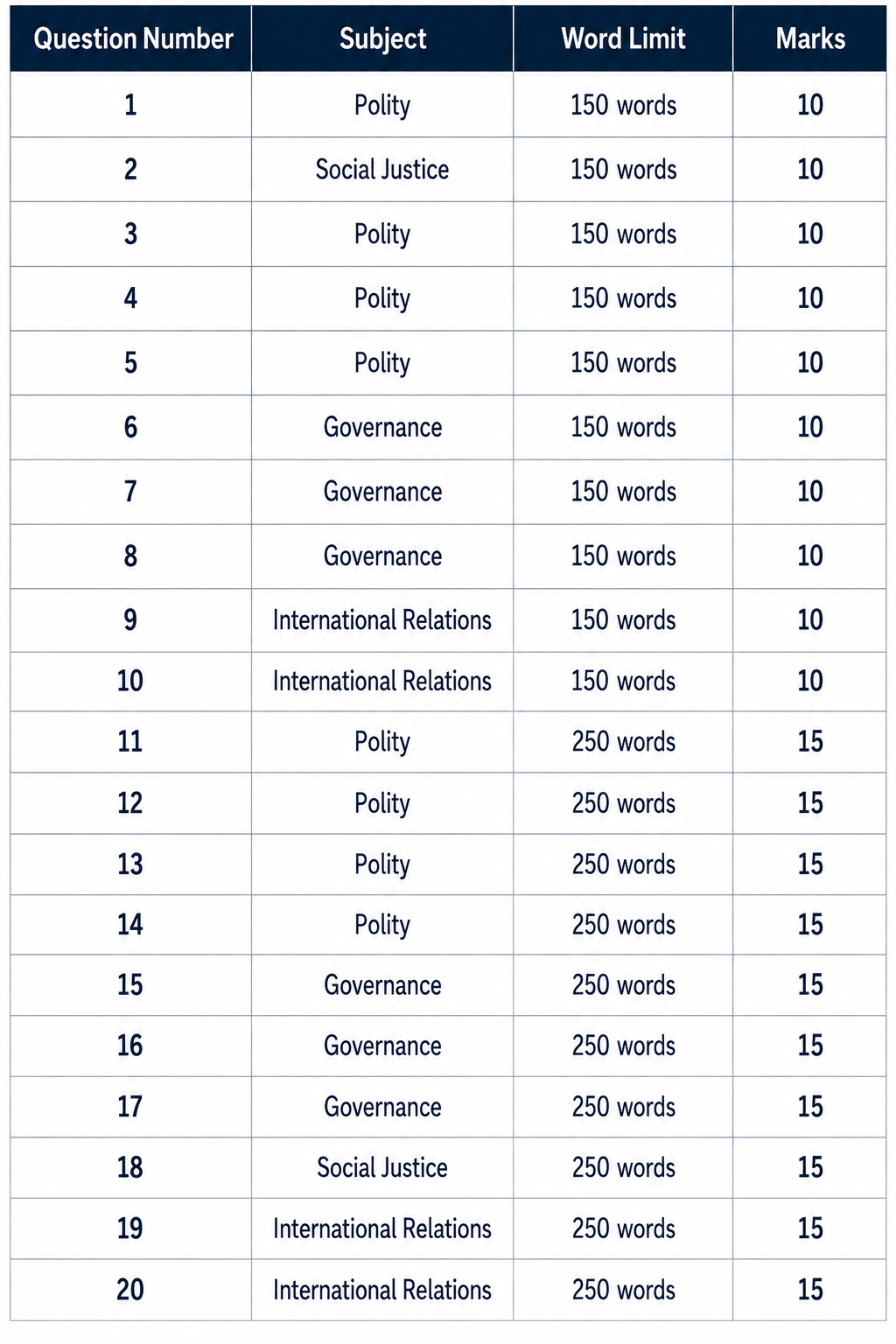
Key Analysis of the Paper
1. Polity Dominates the Paper: Polity carries 100 marks (40%), making it the most important area.
2. Polity + Governance = 70%
3. Governance Has Strong Weightage: Governance contributes 75 marks (30%).
4. International Relations Has Significant Presence: IR contributes 50 marks (20%).
5. Social Issues Has the Lowest Weightage: Social Issues contributes 25 marks (10%).
Key Observations:
- The paper was a bit difficult, with questions demanding deeper understanding and careful application.
- Questions were largely conceptual and application-based, not purely factual.
- Static knowledge remained the foundation, supported by current affairs.
- Current Affairs played an important role, with questions linked to recent developments.
- One standard source + repeated revision is better than multiple books.
- Answers required examples, judgments, constitutional provisions and practical solutions.
- Static + Current Affairs integration was essential.
- Mere newspaper reading or factual compilation would not be sufficient.
UPSC Mains 2026:
Paper I – Essay - Download the Question Paper - Click Here For Detailed Analysis
Paper II – General Studies I - Download the Question Paper - Click Here For Detailed Analysis
Paper III – General Studies II - Download the Question Paper - Click Here For Detailed Analysis
Paper IV – General Studies III - Download the Question Paper - Click Here For Detailed Analysis
Paper V – General Studies IV - Download the Question Paper - Click Here For Detailed Analysis
Paper VI – Optional Subject Paper I - Download the Question Paper - Click Here For Detailed Analysis
Paper VII – Optional Subject Paper II - Download the Question Paper - Click Here For Detailed Analysis