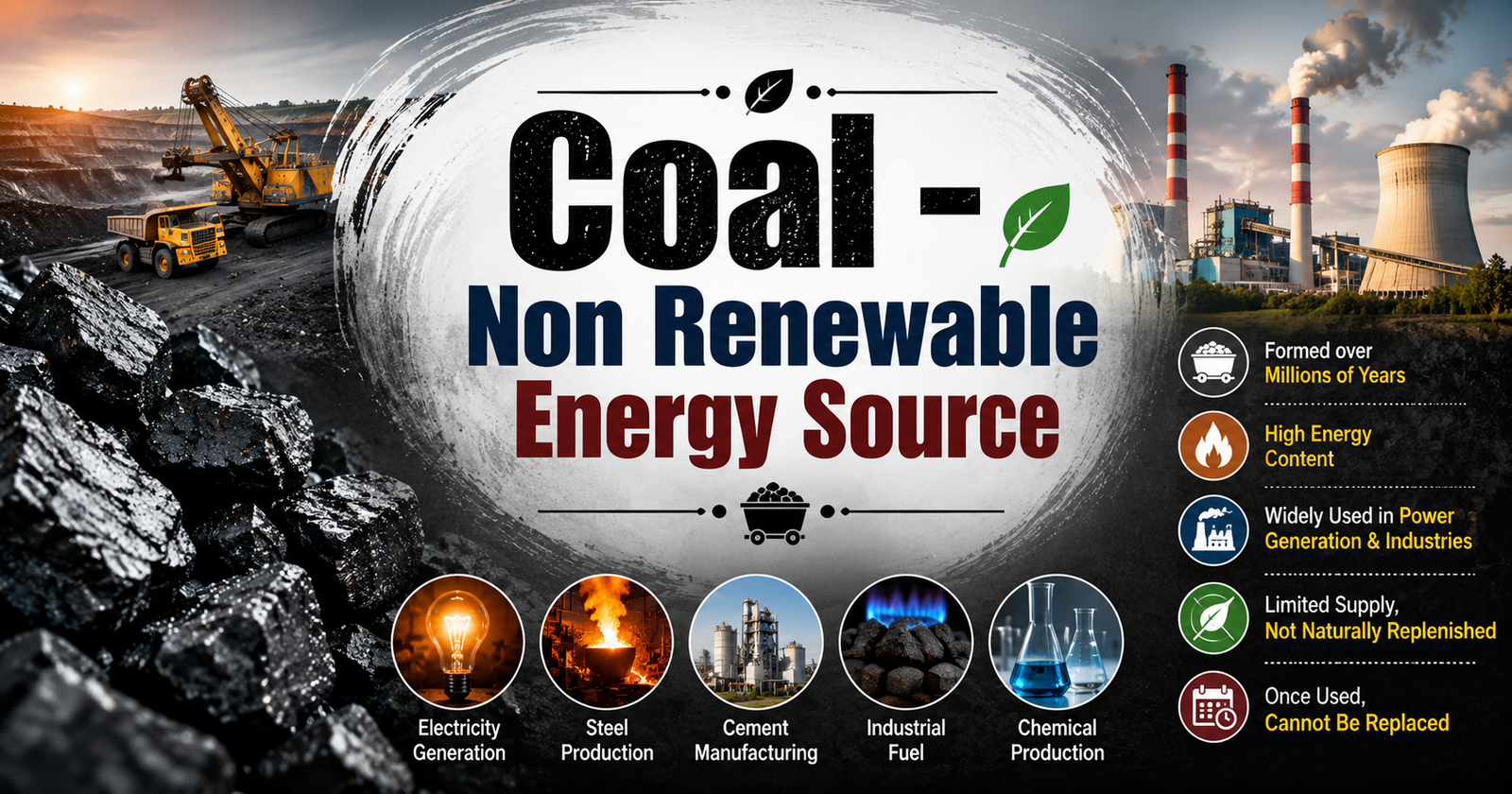
Coal is a vital non-renewable energy source that powers industries, generates electricity, and supports economic growth, while also posing significant environmental and climate challenges worldwide.
Syllabus Areas:
GS I - Geography, Environmental Pollutions
Read More About Coal in News: Coal Gasification and Clean Coal Technologies
What is Coal?
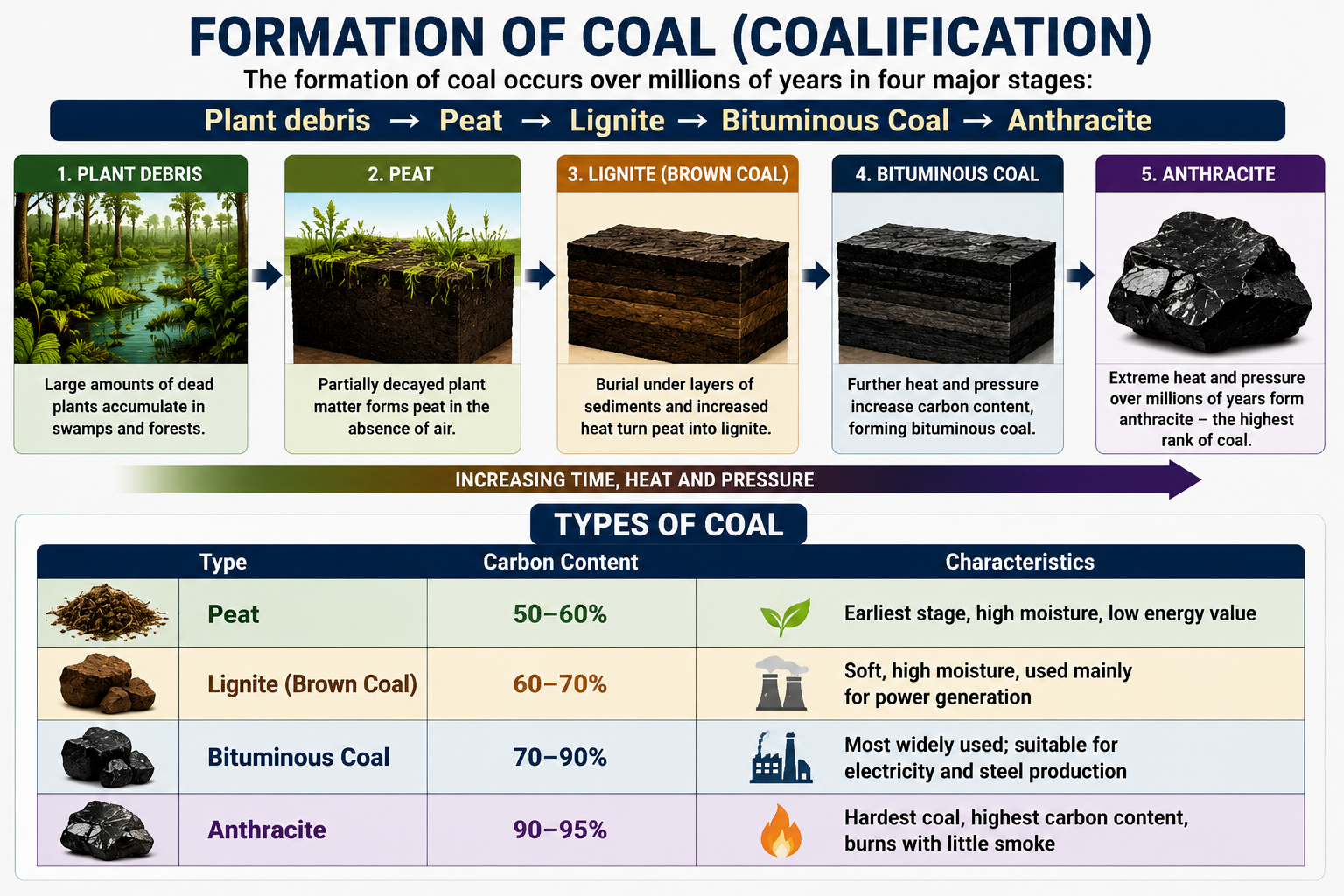
Coal is a naturally occurring combustible sedimentary rock, rich in carbon, formed from the fossilized remains of plants over millions of years under heat and pressure.
Advantages of Coal
-
Abundant and Widely Available
-
Coal is one of the most abundant fossil fuels, with large reserves distributed across many countries.
-
It ensures a long-term and stable energy supply.
-
Provides Reliable Base-Load Power
-
Coal-fired power plants can operate continuously, supplying uninterrupted electricity regardless of weather conditions.
-
They are essential for meeting constant electricity demand.
-
Supports Key Industries
-
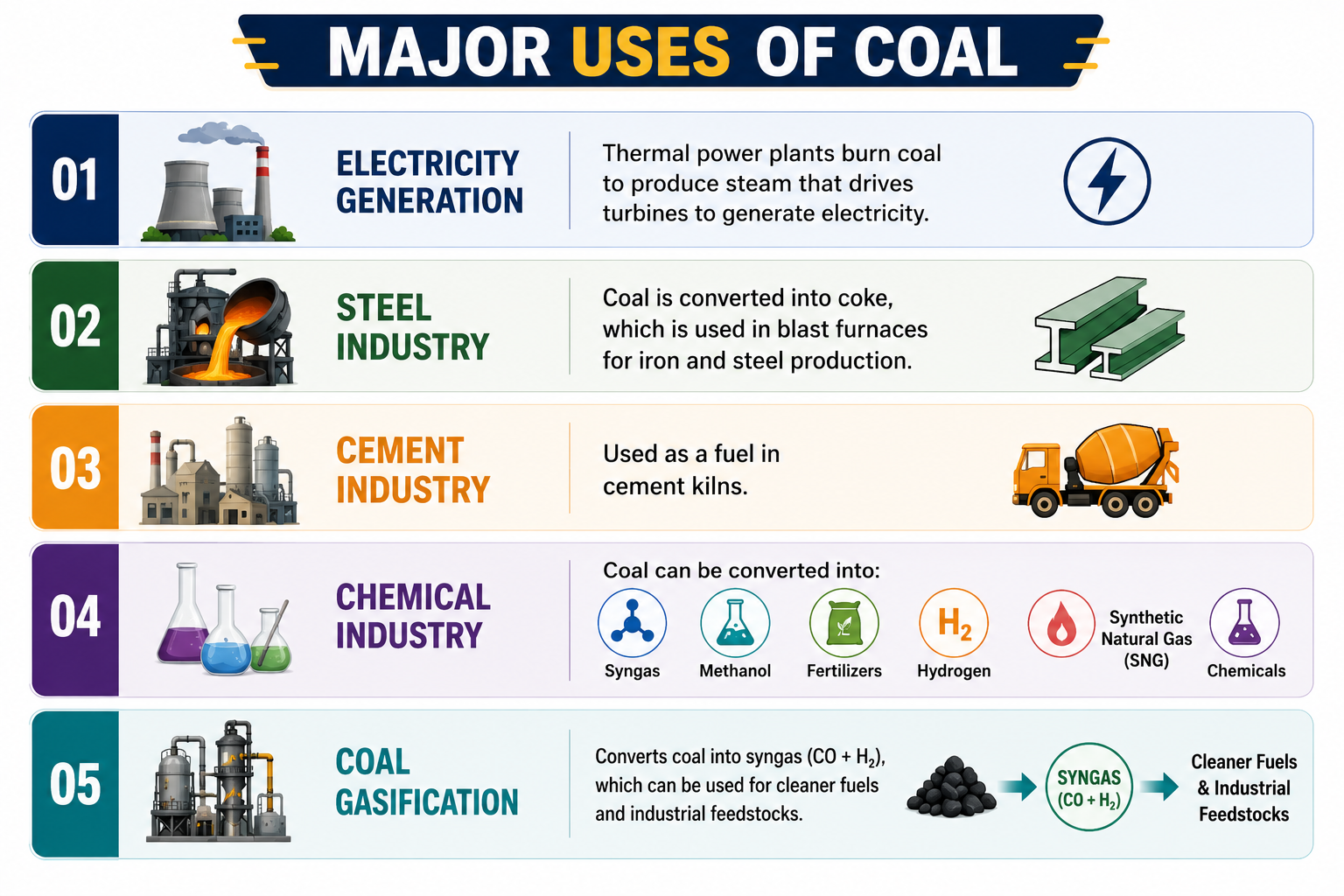
Coal, especially coking coal, is a vital raw material for the steel industry.
-
It is also widely used in cement, brick, and several other manufacturing industries.
-
Can Be Converted into Value-Added Products
-
Through coal gasification, coal can be converted into syngas, which is used to produce hydrogen, methanol, fertilizers, synthetic fuels, and chemicals.
-
Enhances Energy Security
-
Countries with abundant coal reserves can reduce dependence on imported oil and natural gas, improving energy security and economic stability.
Disadvantages of Coal
-
High Carbon Dioxide (CO₂) Emissions
-
Coal combustion releases large amounts of CO₂, making it one of the biggest contributors to global warming and climate change.
-
Air Pollution
-
Burning coal emits sulfur dioxide (SO₂), nitrogen oxides (NOₓ), and particulate matter (PM), which cause acid rain, smog, and respiratory diseases.
-
Environmental Impacts of Mining
-
Coal mining can lead to deforestation, land degradation, loss of biodiversity, and water pollution, affecting ecosystems and local communities.
-
Ash Generation and Disposal
-
Coal combustion produces large quantities of fly ash and bottom ash, requiring safe disposal to prevent soil and water contamination.
-
Major Contributor to Climate Change
-
Without technologies such as Carbon Capture, Utilization and Storage (CCUS), coal remains one of the largest sources of greenhouse gas emissions worldwide.