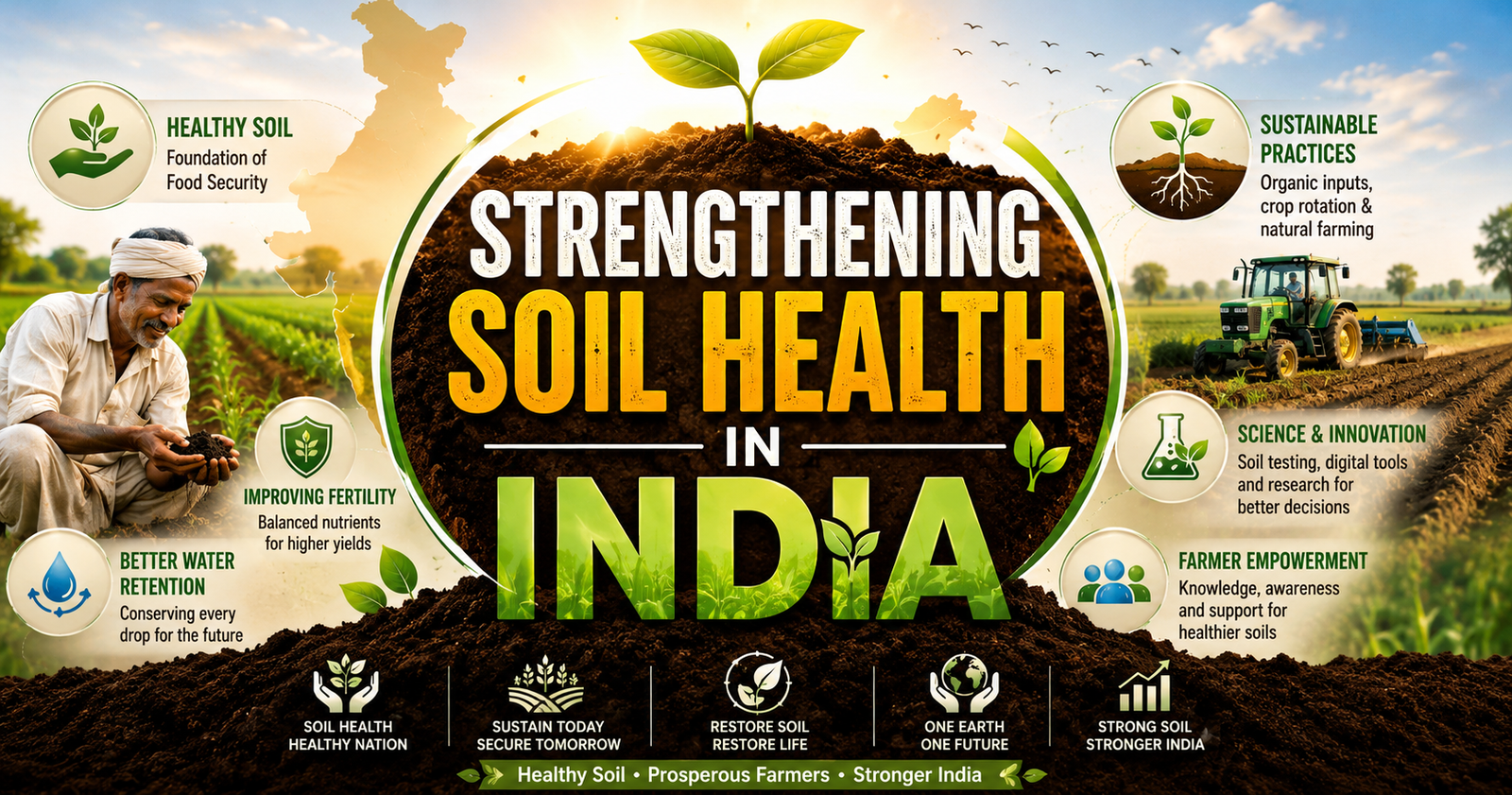
Understand soil resources in India, major soil types, soil health initiatives, sustainable agriculture, AI-based soil management, and government schemes crucial for UPSC Prelims and Mains preparation.
Syllabus Areas:
GS I - Geography and Environment
GS III - Agriculture
Soil is one of India's most valuable natural resources, forming the foundation of food security, agricultural productivity, environmental sustainability, and rural livelihoods. The Government of India has adopted a comprehensive strategy combining scientific soil management, digital technologies, sustainable farming, and climate-resilient policies to protect and restore soil health
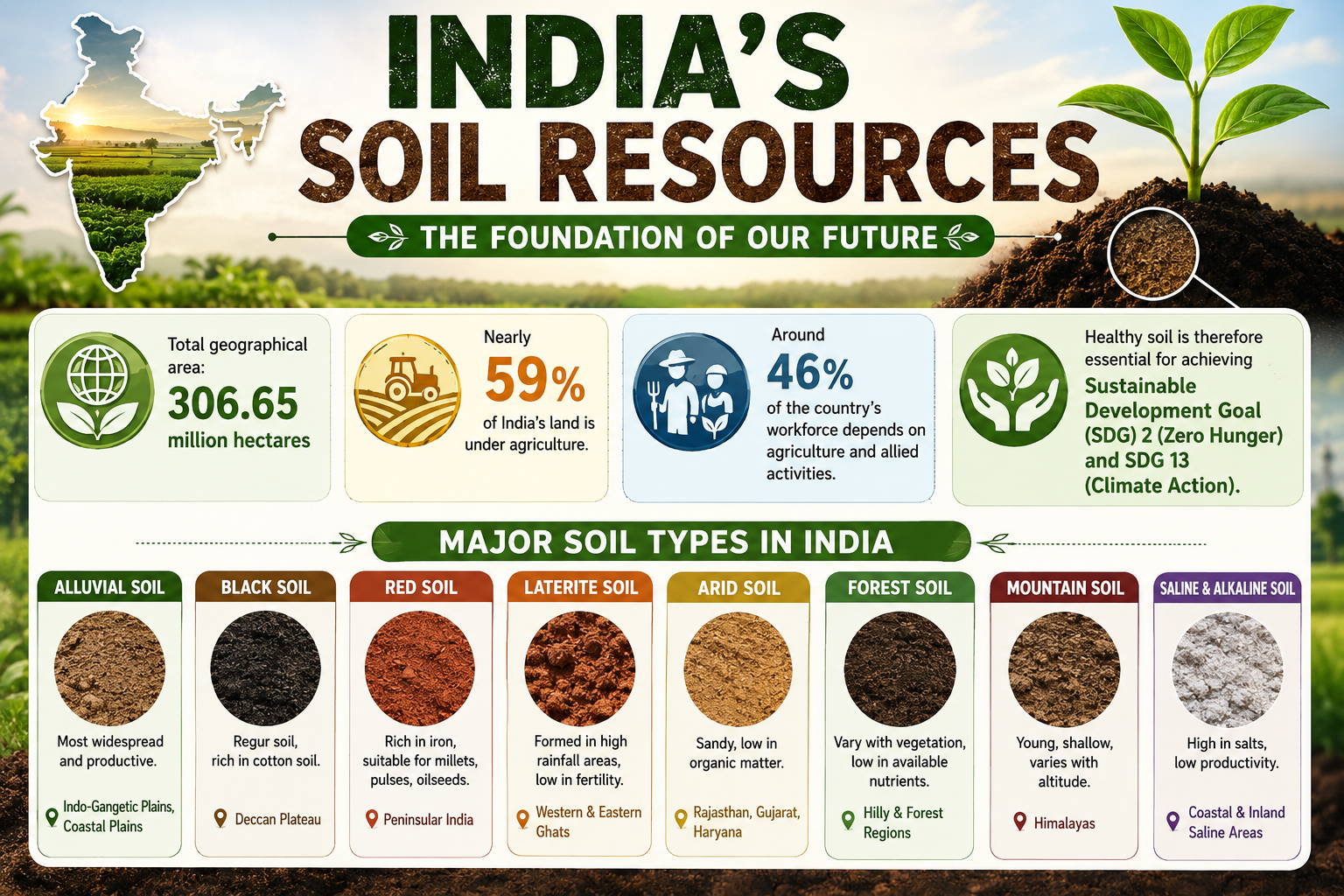
Why is Healthy Soil Important?
-
Supports agricultural productivity and food security.
-
Sustains ecosystems and biodiversity.
-
Regulates water storage and groundwater recharge.
-
Stores carbon and helps mitigate climate change.
-
Provides livelihoods for millions of farmers.
-
Prevents land degradation and desertification.
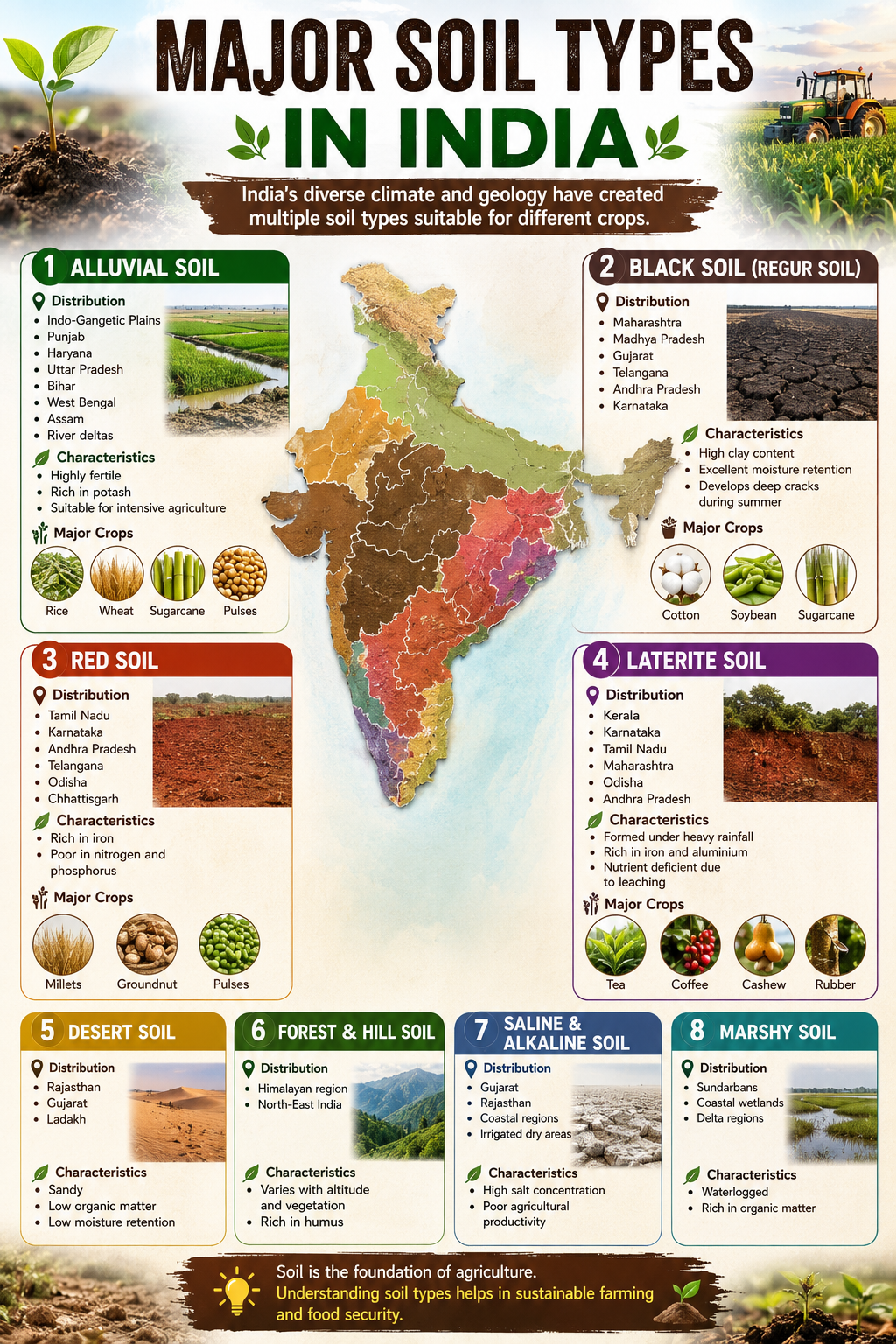
Major Government Initiatives
1. National Mission for Sustainable Agriculture (NMSA) (2014–15)
-
Promotes climate-resilient agriculture, soil health, and water-use efficiency.
-
Achievements: ₹2,194.84 crore released; 8.50 lakh ha covered; 14.35 lakh farmers benefited.
2. National Mission on Natural Farming (NMNF) (2024)
-
Promotes chemical-free, low-cost, sustainable farming.
-
Progress: 18,786 clusters; 8.80 lakh ha; 18.19 lakh farmers enrolled; 33,676 Community Resource Persons trained.
3. National Mission for a Green India (GIM)
-
Restores degraded forests, increases tree cover, and enhances carbon sequestration.
-
Achievement: Forest carbon stock increased by 2.29 billion tonnes CO₂ equivalent (2005–2021).
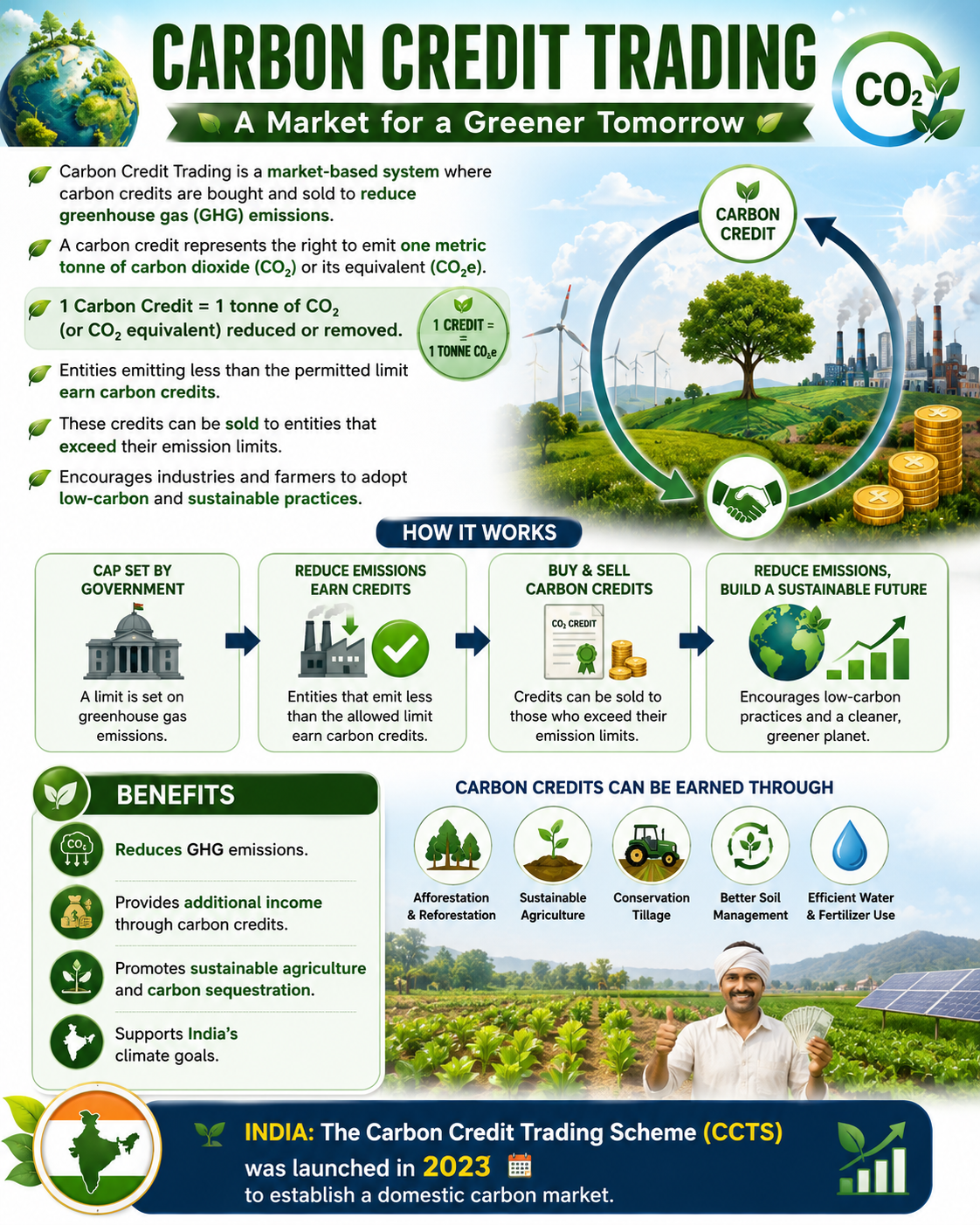
4. Carbon Credit Trading Scheme (CCTS) (2023)
-
Encourages greenhouse gas reduction through carbon credits.
-
Benefits: Additional farmer income, climate mitigation, and promotion of carbon farming.
5. Soil Health Card Scheme (2015)
-
Provides scientific soil testing and crop-specific fertilizer recommendations.
-
Achievements: 26 crore Soil Health Cards issued; 7.17 lakh demonstrations; 70,002 Krishi Sakhis trained; 4,430 schools and 1.29 lakh students covered (2025–26).
Balanced Nutrient Management
Government Initiatives for Efficient Fertilizer Use
1. Nutrient Based Subsidy (NBS)
Objective: Promote balanced application of plant nutrients.
-
Subsidy is linked to the nutrient content of fertilizers rather than the product itself.
-
Applicable to Phosphatic (P) and Potassic (K) fertilizers.
-
Encourages farmers to adopt balanced fertilization, improving soil health and crop productivity.
2. Aadhaar-enabled Point of Sale (AePDS/PoS) System
Objective: Ensure transparent and targeted fertilizer distribution.
-
Records real-time fertilizer sales at retail outlets.
-
Uses Aadhaar authentication to identify genuine beneficiaries.
-
Prevents leakages, duplication, and unauthorized diversion of fertilizers.
3. Neem-Coated Urea
Neem-Coated Urea (NCU) is ordinary urea fertilizer coated with neem oil or neem-based compounds. The coating slows the release of nitrogen into the soil, improving its efficiency and reducing wastage.
Objective: Improve nitrogen-use efficiency and reduce misuse.
-
Neem coating slows the release of nitrogen, ensuring gradual nutrient availability.
-
Enhances nutrient-use efficiency and reduces fertilizer wastage.
-
Prevents diversion of urea for non-agricultural and industrial purposes.
4. Integrated Fertiliser Management System (IFMS)
Objective: Strengthen fertilizer supply chain management.
-
Digitizes and streamlines fertilizer production, movement, and distribution.
-
Improves logistics and inventory management.
-
Enhances transparency, timely availability, and efficient monitoring of fertilizer supplies.
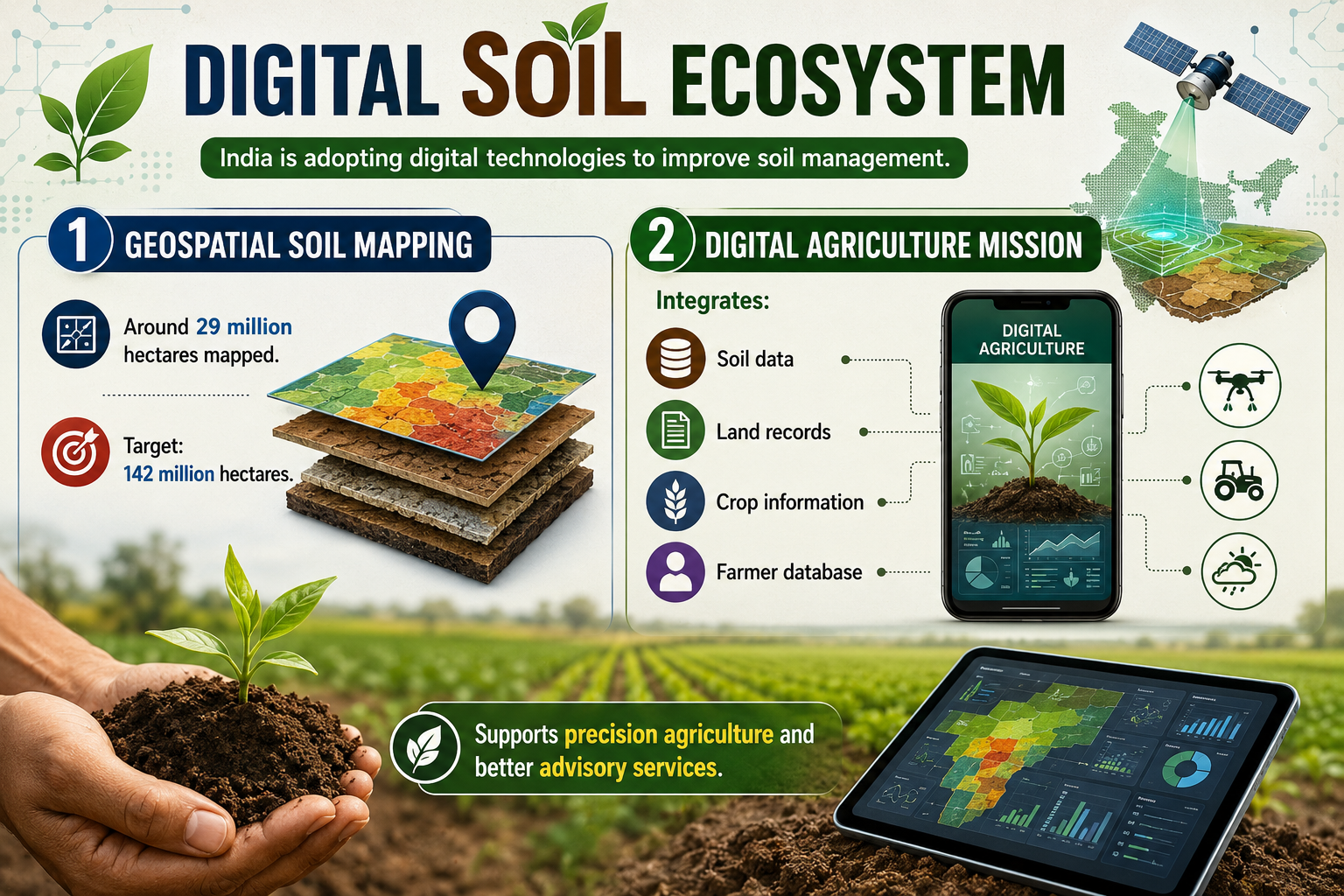
AI-Based Soil Management
-
Soil Nutrient Deficiency Detection: AI identifies deficiencies of N, P, K, and micronutrients using soil tests, sensors, and crop images.
-
Precision Fertilizer Recommendations: Suggests the right fertilizer type, dose, and timing based on soil and crop needs.
-
Remote Sensing: Uses satellites, drones, and IoT sensors to monitor soil moisture, fertility, salinity, and erosion.
-
AI-Driven Crop Planning: Recommends suitable crops, crop rotation, and sowing schedules based on soil and climate.
-
GIS & Satellite Mapping: Creates digital soil maps for land-use planning and precision agriculture.
-
Decision Support Systems (KDSS): Provides scientific recommendations for irrigation, fertilization, and sustainable soil management.
Way Forward:
-
Strengthen scientific soil health assessment and regular soil testing.
-
Promote natural, organic, and climate-smart farming practices.
-
Encourage balanced fertilizer use and integrated nutrient management.
-
Expand carbon farming and carbon credit mechanisms.
-
Enhance digital soil mapping and AI-based precision agriculture.
-
Increase farmer awareness through extension services and capacity-building programmes.
-
Improve long-term agricultural resilience and ensure sustainable food security.
Healthy soils are the foundation of sustainable agriculture, food security, and climate resilience. Scientific management, balanced fertilization, digital innovations, and farmer-centric initiatives will ensure productive soils for future generations.