Explore the cotton journey of India from cultivation to global leadership, covering history, production, MSP, government initiatives, exports, technology, farmer welfare, and the cotton value chain.
Syllabus Areas:
GS III - Economy, S & T, Environment
White Gold Driving India's Agricultural and Textile Economy
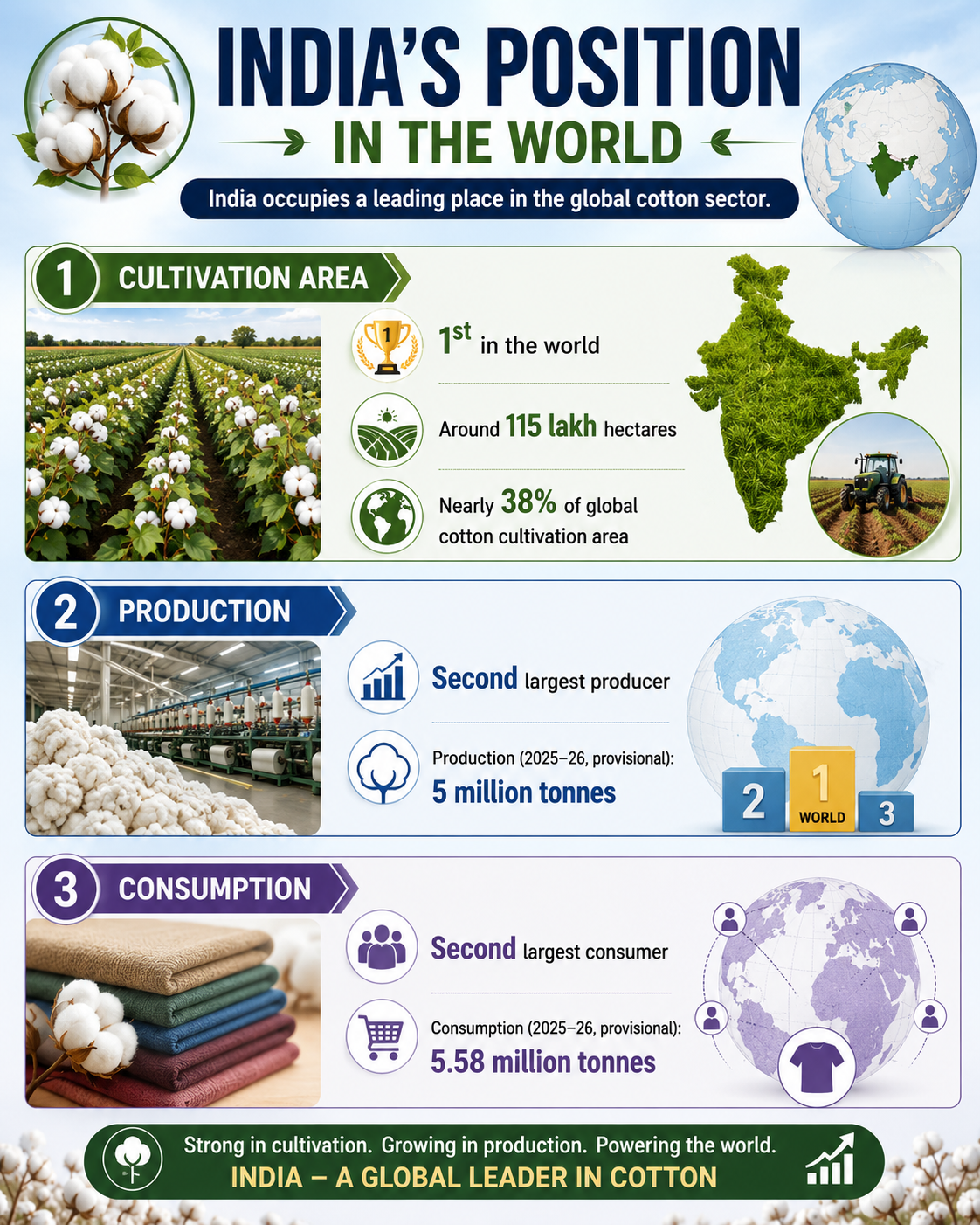
India's cotton sector forms the backbone of both agriculture and the textile industry, supporting millions of farmers, workers, and businesses. Often referred to as "White Gold," cotton is one of India's most valuable commercial crops due to its significant contribution to employment, exports, rural livelihoods, and industrial growth. India is the only country in the world that cultivates all four commercially grown cotton species and occupies a leading position in global cotton production and consumption.
Why is Cotton Important?
Cotton plays a crucial role in India's economy because it:
-
Supports nearly 6 million cotton farmers.
-
Provides employment to about 40–50 million people in farming, ginning, spinning, weaving, textiles, and trade.
-
Contributes significantly to India's textile exports.
-
Supplies raw material for one of India's largest manufacturing industries.
-
Generates valuable by-products such as cottonseed oil, animal feed, and medical cotton.
Cotton Species Grown in India
India is the only country that cultivates all four major cotton species:
-
G. arboreum (Indian/Asian cotton)
-
G. herbaceum (Asian cotton)
-
G. hirsutum (American upland cotton)
-
G. barbadense (Egyptian cotton)
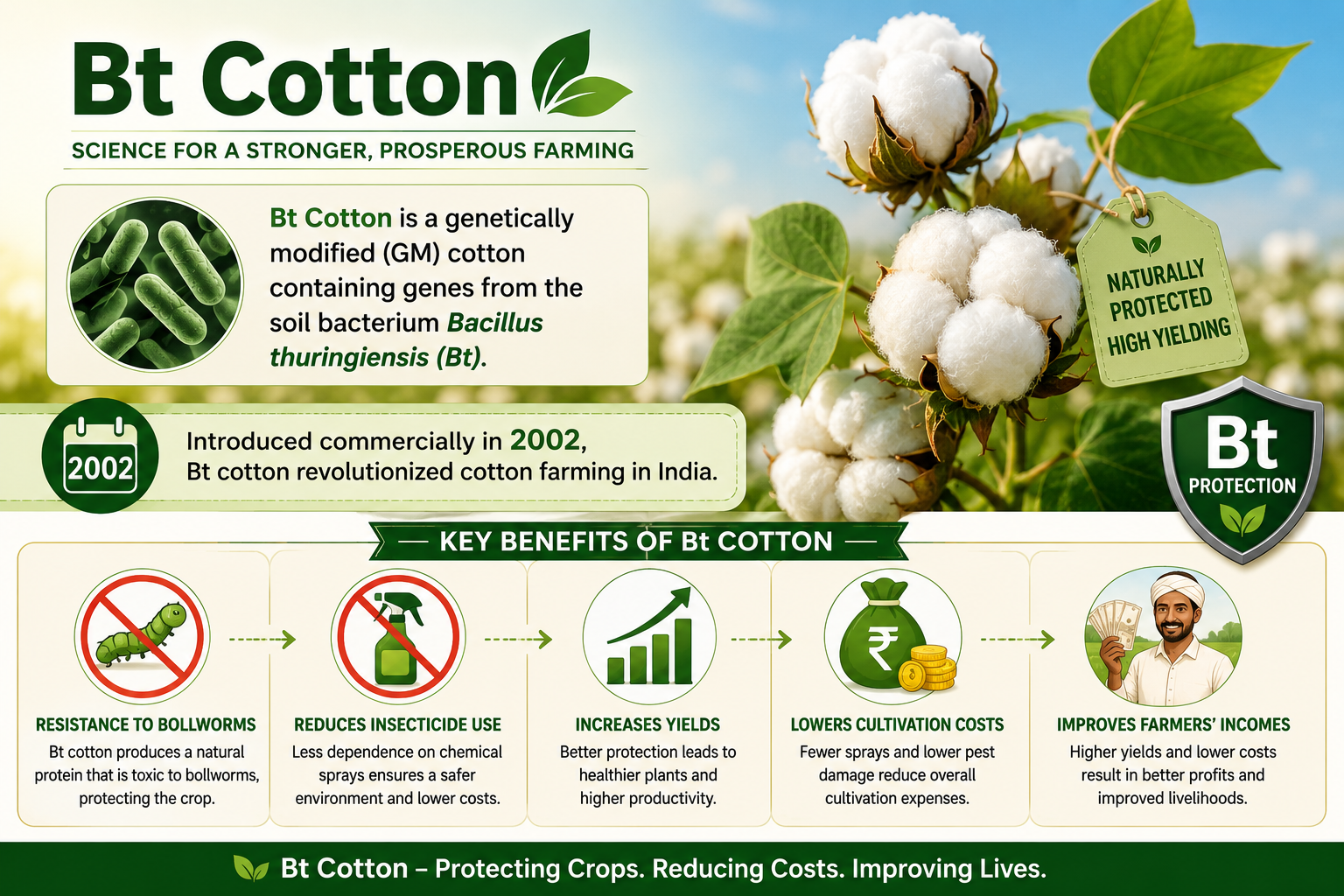
G. hirsutum accounts for about 90% of India's hybrid cotton production, and all Bt cotton hybrids belong to this species.
Major Cotton Producing States
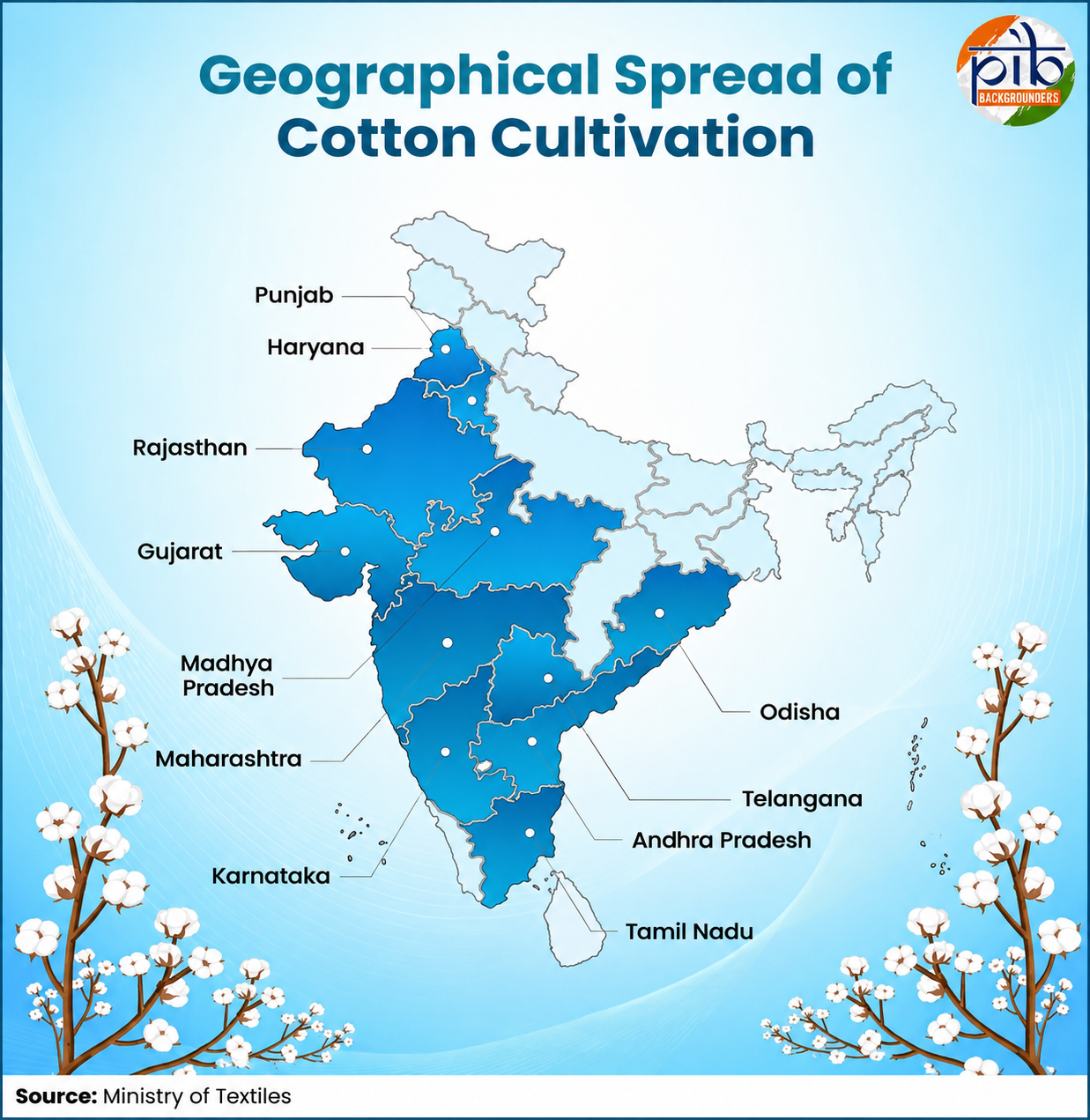
Cotton production in India is largely concentrated in 9 major states, grouped into 3 distinct agro-ecological zones:
• Northern Zone comprising Punjab, Haryana, and Rajasthan
• Central Zone comprising Gujarat, Maharashtra, and Madhya Pradesh
• Southern Zone comprising Telangana, Andhra Pradesh, and Karnataka
In addition to these states, cotton is also grown in Odisha and Tamil Nadu
Cotton Exports
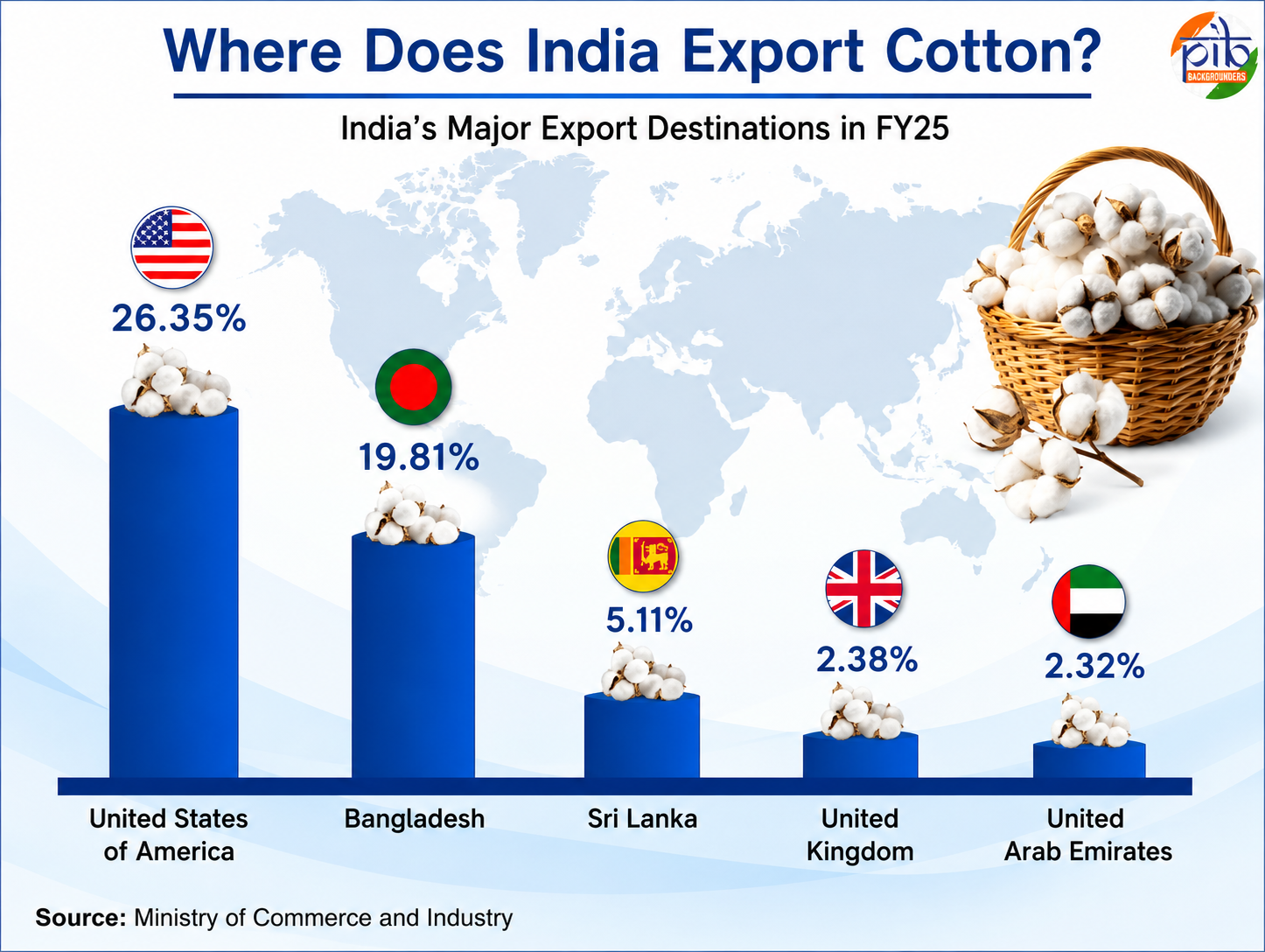
India is one of the world's largest cotton exporters.
2024–25 Export Performance
-
Exported 31 lakh bales
-
Export value: ₹11,419 crore
Government Initiatives for Cotton
1. Minimum Support Price (MSP) for Cotton
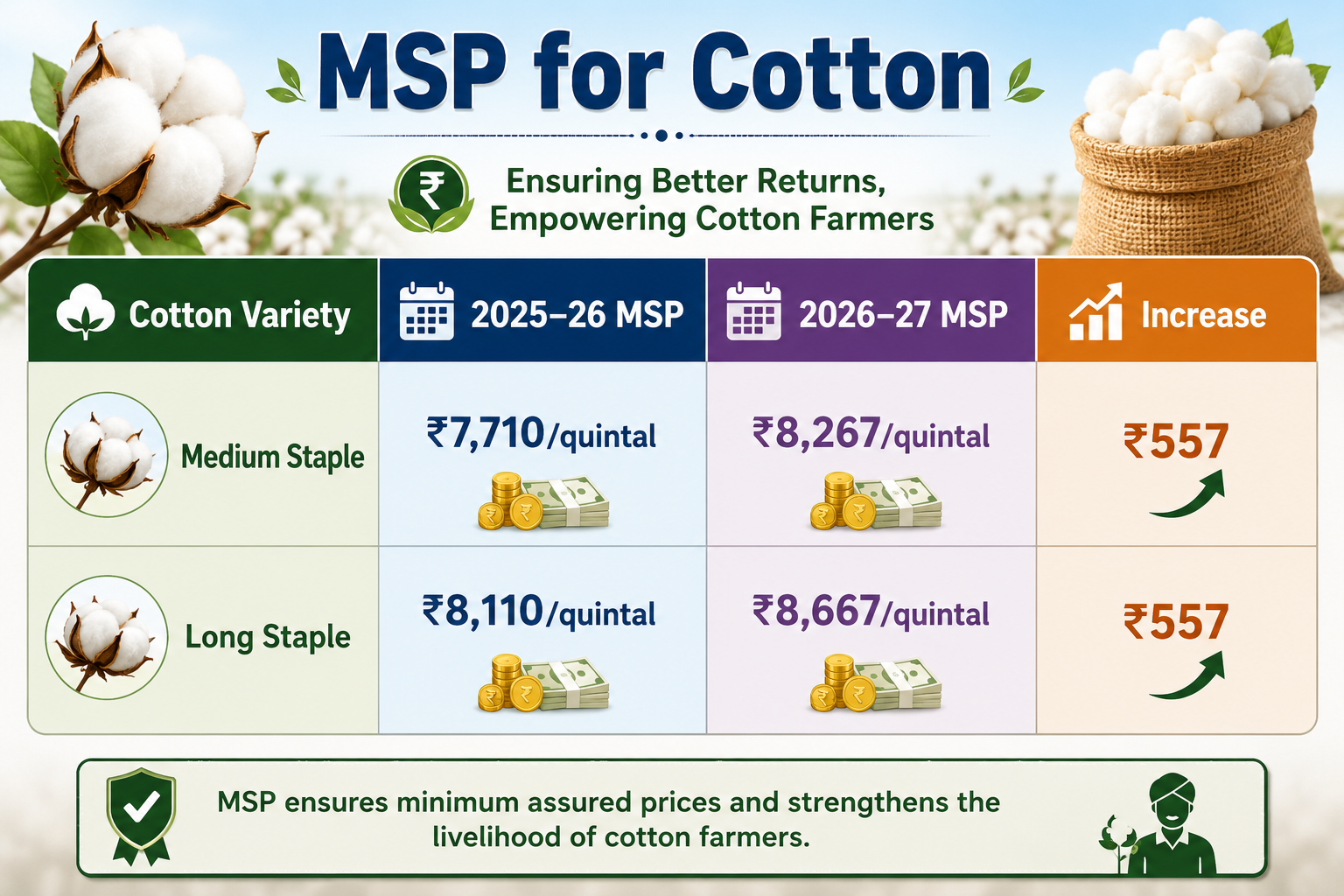
The Minimum Support Price (MSP) is a government-backed price that protects cotton farmers from low market prices. It is recommended every year by the Commission for Agricultural Costs and Prices (CACP) before the cotton season (October–September) for Medium Staple and Long Staple cotton. The MSP aims to ensure farmers receive at least 50% profit over their production cost.
Role of Cotton Corporation of India (CCI)
The Cotton Corporation of India (CCI) is the nodal agency responsible for procuring cotton at MSP whenever market prices fall below the support price.
Key Facts
-
Procurement centres increased from 508 (2024–25) to 571 (2025–26).
-
Operations covered 152 districts across 11 cotton-growing states.
2. Mission for Cotton Productivity
The Mission for Cotton Productivity is a five-year initiative launched in 2025–26 to improve cotton productivity and strengthen India's cotton sector.
Key Features
-
Budget: ₹5,659.22 crore.
-
Focuses on research, innovation, climate-resilient, pest-resistant, and high-yielding cotton varieties.
-
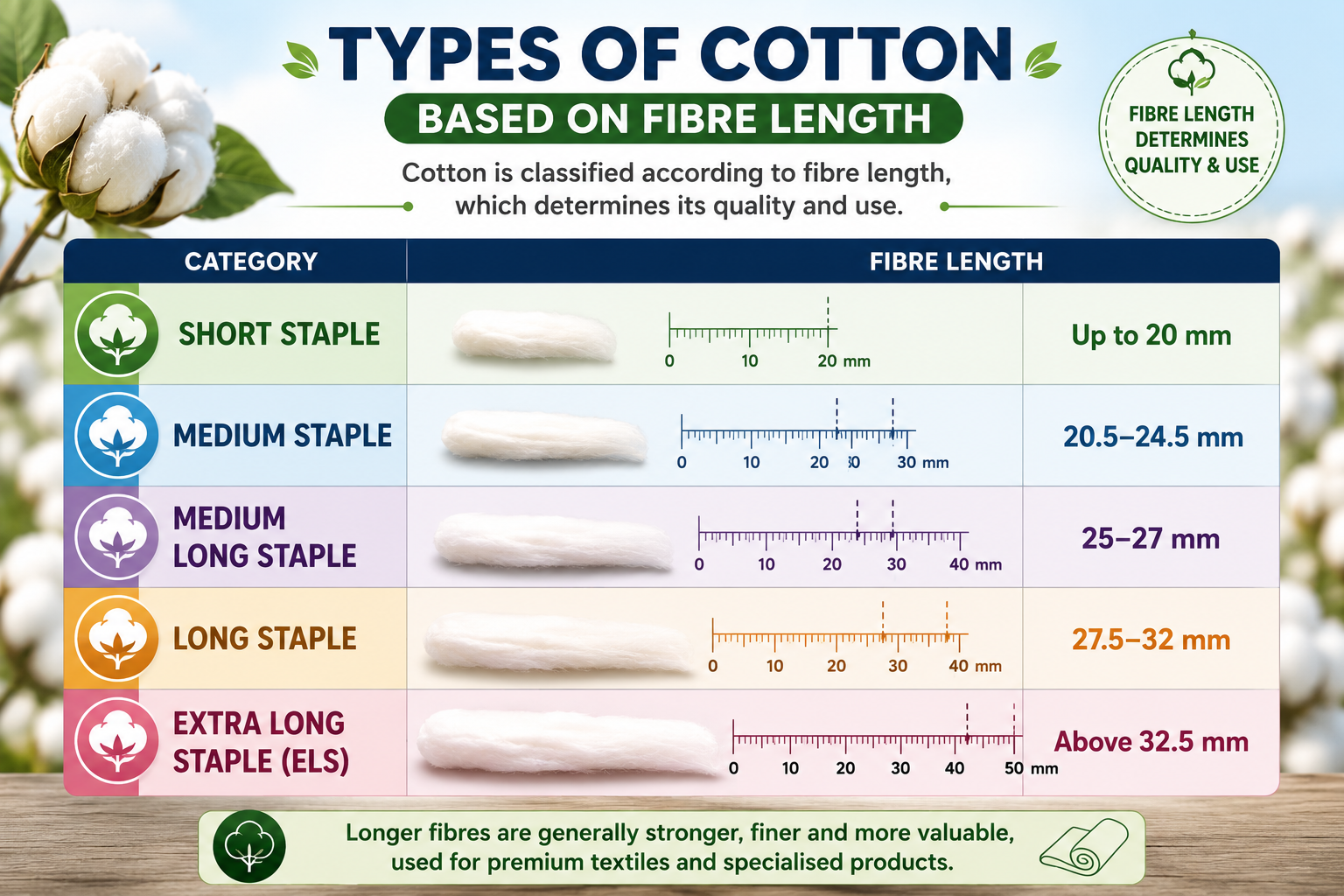
Special emphasis on Extra Long Staple (ELS) cotton using advanced breeding and biotechnology.
Coverage
-
Covers 24 lakh hectares across 140 districts in 14 cotton-producing states.
-
Expected to benefit 32 lakh cotton farmers.
Targets
-
Increase cotton production from 297 lakh bales to 498 lakh bales by 2031.
-
Improve cotton productivity and domestic availability.
-
Reduce import dependence and strengthen India's textile industry.
-
Supports the 5F Vision: Farm → Fibre → Factory → Fashion → Foreign.
3. Special Project on Cotton under NFSM
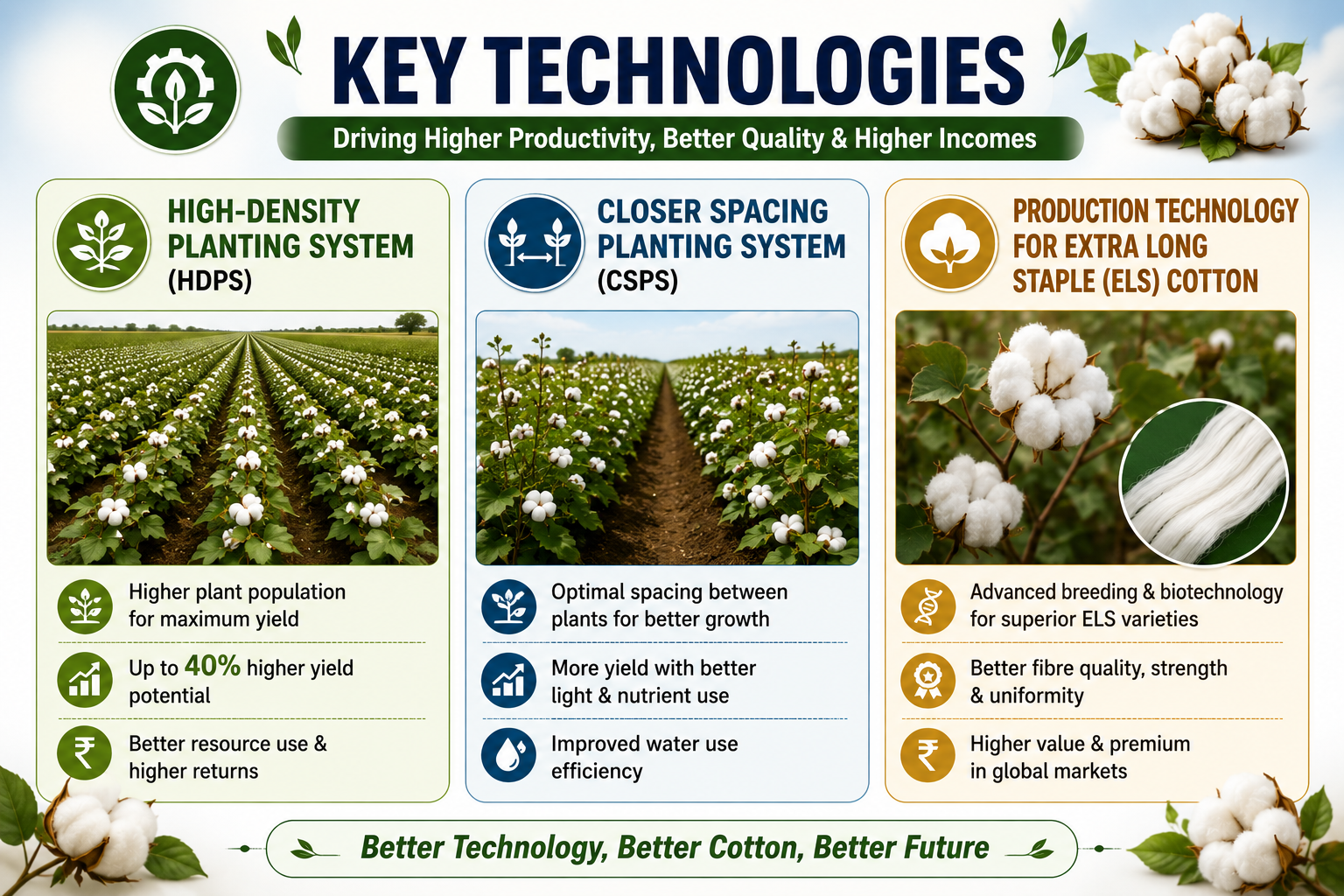
The Special Project on Cotton, launched under the National Food Security Mission (NFSM) in 2023–24, aims to improve cotton productivity through field demonstrations of modern technologies across 8 major cotton-growing states.
Key Technologies
-
High-Density Planting System (HDPS)
-
Closer Spacing Planting System (CSPS)
-
Production technology for Extra Long Staple (ELS) cotton
Achievements
-
2023–24: ₹41.87 crore; covered 9,175 hectares.
-
2024–25: ₹50.98 crore; covered 14,740 hectares.
-
2025–26: Extended with an outlay of ₹60.32 crore.
Results
-
HDPS: Around 40% increase in cotton yield.
-
CSPS: Over 32% increase in cotton yield.
-
Improved productivity, fibre quality, and farmers' incomes through technology adoption
Kapas Kisan App
The Kapas Kisan App is a digital platform introduced to make cotton procurement under the MSP system transparent, efficient, and farmer-friendly.
Key Features
-
Enables self-registration and online procurement slot booking.
-
Reduces waiting time and long queues at procurement centres.
-
Supports Aadhaar-linked payments and real-time SMS updates.
-
Provides a paperless procurement system.
Achievements
-
Over 41 lakh farmers registered.
-
Improved transparency and efficiency in MSP operations.
Kasturi Cotton Bharat
Kasturi Cotton Bharat is a flagship initiative to promote premium Indian cotton through branding, certification, and traceability, enhancing its global reputation.
Objectives
-
Improve the global branding of Indian cotton.
-
Ensure quality certification and end-to-end traceability.
-
Promote sustainable cotton production.
Key Highlights
-
Total outlay: ₹30 crore.
-
116 registered units, including 41 ginners and 75 supply chain members.
-
3,29,550 certified cotton bales (as of 30 June 2026).
-
Certification covers Long Staple (≥28 mm) and Extra Long Staple (ELS) cotton (≥35 mm).
-
Uses QR-based certification and blockchain technology for complete traceability.
-
Promotes initiatives like Kasturi Villages, awareness programmes, sustainability, and branding to position Indian cotton as a global symbol of purity, quality, and sustainability
The Versatility of Cotton
Cotton is not only a textile fibre but also an important source of food, animal feed, healthcare products, and rural energy.
Major Uses of Cotton
-
Cottonseed produces edible oil and nutritious animal feed.
-
Cottonseed oil ("Heart Oil") is rich in healthy polyunsaturated fatty acids.
-
De-oiled cake is used as feed for cattle, poultry, and fish.
-
Linters and hulls are used in various industries.
-
Cotton stalks serve as biomass fuel in rural areas.
-
Short-staple cotton fibres are processed into absorbent and surgical cotton used in healthcare.
Thus, cotton supports nutrition, livestock, industry, healthcare, and rural livelihoods, making it one of India's most versatile crops
Challenges
Despite its global leadership, India's cotton sector faces several challenges:
-
Climate variability
-
Pest attacks
-
Yield fluctuations
-
Price volatility
-
Need for higher productivity
-
Increasing demand for superior fibre quality
Government initiatives aim to address these issues through research, technology, improved varieties, digital procurement, and market support.
India's cotton story is a remarkable journey from "Seed to Shirt." With its rich history, vast cultivation area, strong textile industry, and continuous government support, cotton remains a pillar of India's agricultural and industrial economy. Initiatives such as MSP, Cotton Corporation of India, Mission for Cotton Productivity, Kapas Kisan App, and Kasturi Cotton Bharat are strengthening the sector by improving productivity, ensuring better farmer incomes, promoting sustainability, and enhancing India's competitiveness in the global cotton market. As technology and innovation continue to transform cotton cultivation, India is well-positioned to remain a global leader in the cotton value chain.