AI can support learning, creative work and policy analysis, but overreliance can weaken independent reasoning. The article uses examples from education, eldercare policy and law to show where human judgment and accountability matter.
UPSC relevance:
|
GS Paper II |
Governance and Education — AI regulation, institutional accountability, and AI use in education and policymaking |
|
GS Paper III |
Science and Technology — AI capabilities, applications, limitations, and effects on work |
|
GS Paper IV |
Ethics — human judgment, professional responsibility, verification of AI outputs, and risks of overreliance |
|
Essay |
Technology and human autonomy — the role of AI in learning, creativity, and decision-making |
Society’s response to the rapid expansion of artificial intelligence (AI) can be understood through Elisabeth Kübler-Ross’s five stages of grief: denial, anger, bargaining, depression and acceptance. Early doubts about AI’s impact gave way to frustration over its errors, followed by an effort to define which tasks machines could perform and which responsibilities humans should retain.
From Underestimating AI to Rethinking Its Role
AI was initially seen as an advanced search engine or a chatbot that could mimic human conversation. This led many to underestimate its potential impact on daily life and work. As its use spread, concerns grew over fabricated legal citations, errors and security flaws in AI-generated code, unreliable customer-service bots, and AI-written student assignments.
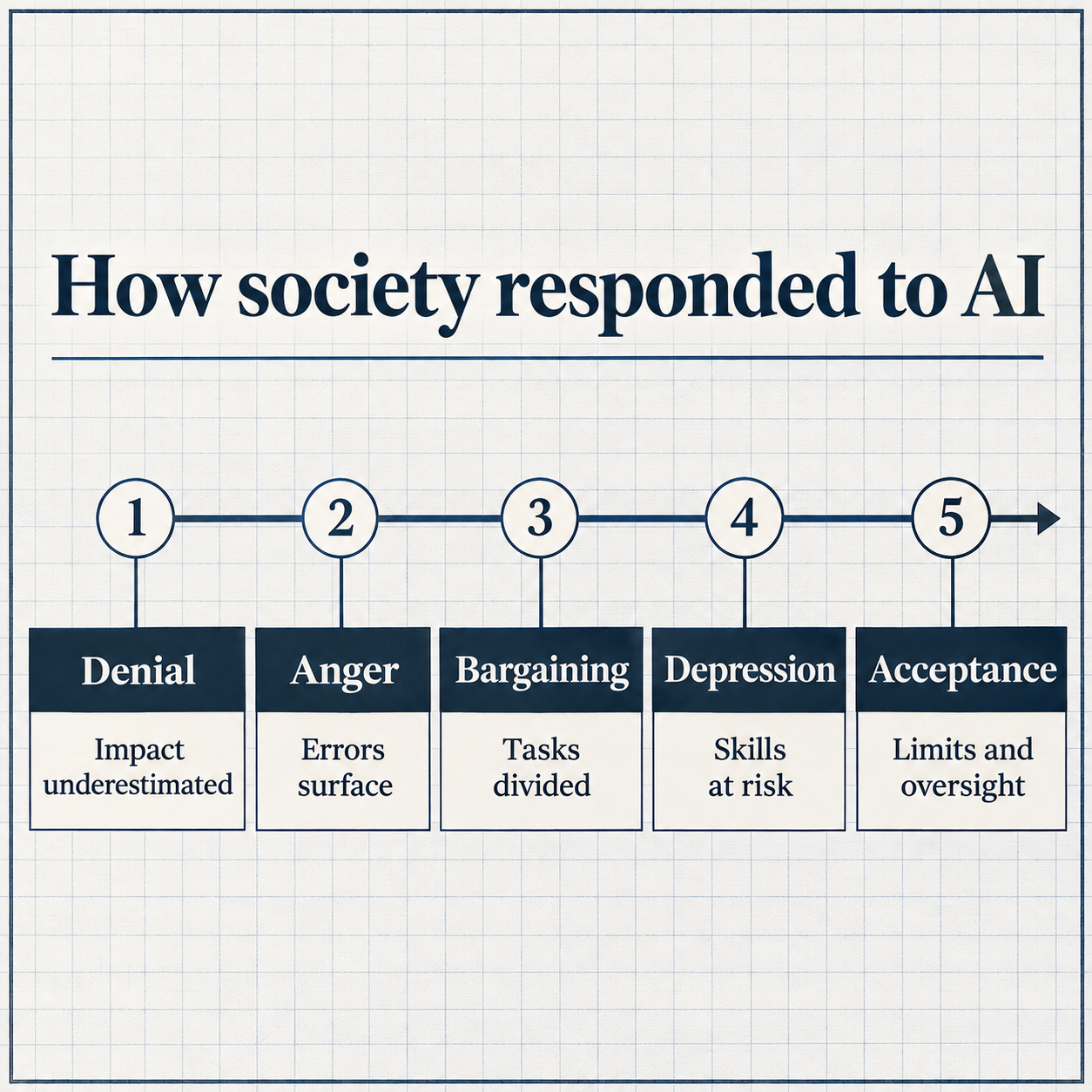
As AI became more reliable and students increasingly used it, educators began to recognise its potential to support learning. An apparent division of labour emerged. AI could handle routine and analytical tasks quickly, while humans would retain responsibility for judgment, creativity and value-based decisions.
AI challenged this assumption by suggesting new lines of inquiry, reframing problems and drawing connections across projects. Its ability to adapt a manuscript into an engaging stand-up comedy routine illustrated how it could also contribute humour and imagination to creative work.
What AI Can Contribute to Policymaking
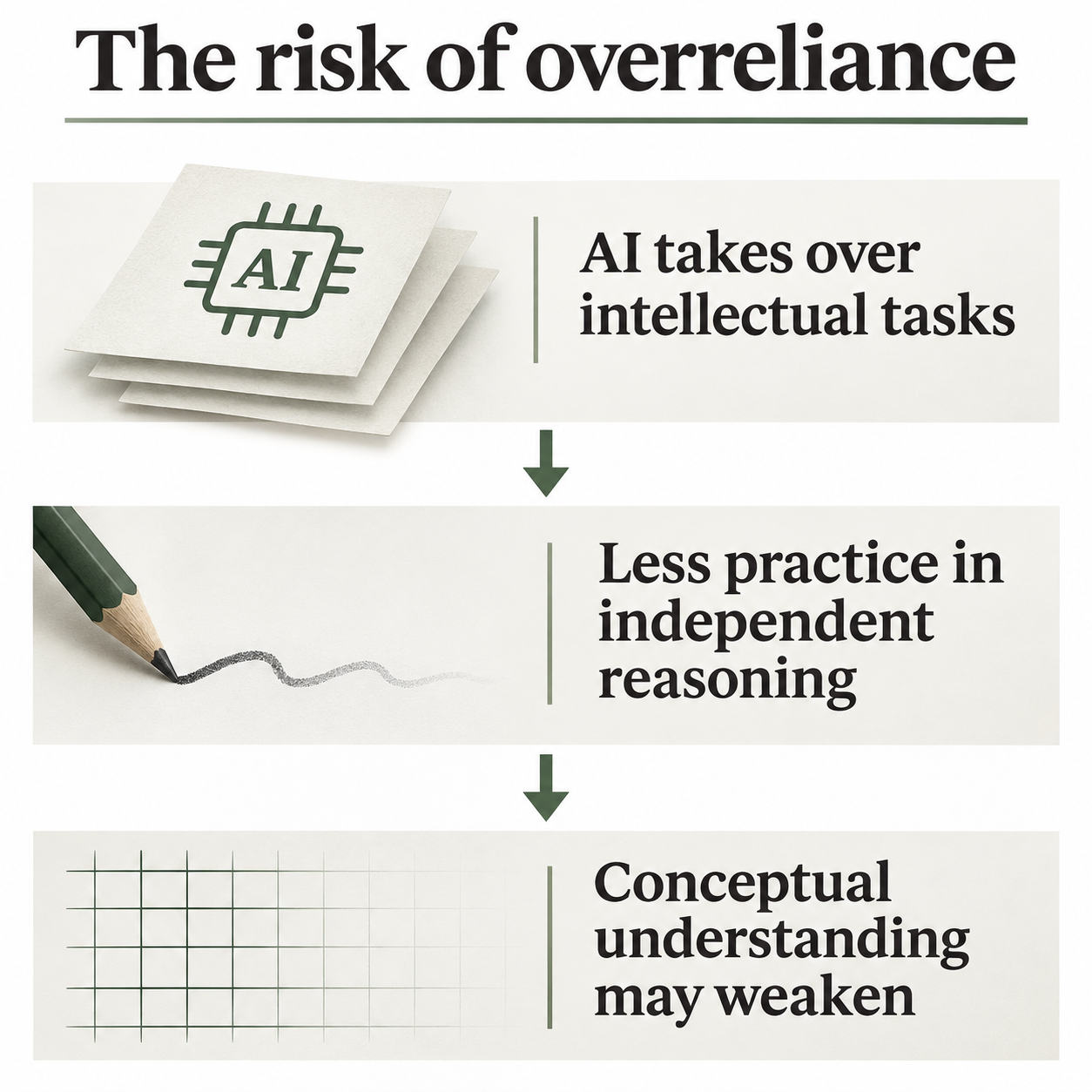
When asked to address a hypothetical US shortage of home-care workers, AI drafted a policy memo proposing federal matching grants, changes to Medicaid payment rates and a caregiver visa programme. It estimated the fiscal costs and suggested a political strategy to build support for the proposals.
Asked to set aside political constraints, AI proposed two unconventional responses to the eldercare shortage. A National Care Corps would enlist young people to care for older adults. Care districts would convert underused offices and malls into hubs where care providers could share facilities and serve more people. The example shows how AI can assess options within existing institutions and generate proposals that go beyond them.
The Risks of Overreliance
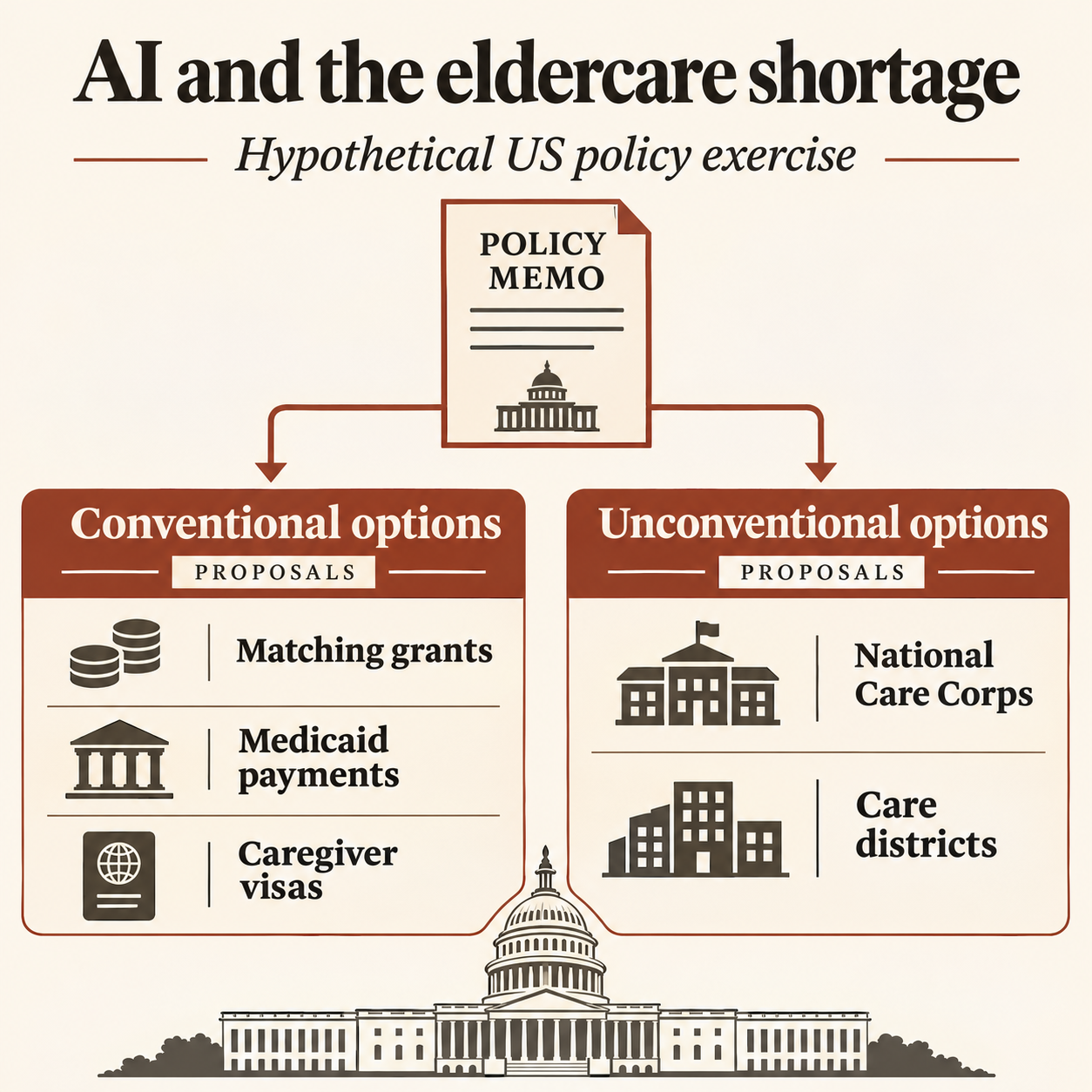
AI can enhance human capabilities in the short term, while the costs of overreliance may emerge gradually. Delegating intellectual work can reduce opportunities to practise independent reasoning and may erode conceptual understanding and insight. Limits on AI use can help preserve human judgment and autonomy.
Accepting AI’s growing role therefore involves decisions about how it is designed, deployed and governed. Technology firms shape its design, businesses decide how to use it, professional bodies set standards for responsible use, and governments can establish rules and enforce accountability.
Where Human Oversight Matters
The extent of human oversight should reflect the consequences of an error. AI can support learning, analysis and drafting, while people remain responsible for verifying its outputs and making decisions that affect others.
In education, AI can explain concepts and give feedback after students attempt a problem independently. Asking students to explain their reasoning helps teachers assess understanding and gives students practice in spotting errors in AI-generated answers.
In public policy, AI can compare proposals, estimate costs and identify trade-offs. In the eldercare example, it can help assess the cost of a caregiver visa programme or higher Medicaid payments. Public officials must decide whose needs to prioritise, who bears the costs and which trade-offs they can justify.
In law, AI can summarise documents and help draft arguments. Lawyers must check citations against original judgments, assess whether those judgments apply to the case and take responsibility for what they submit to the court.
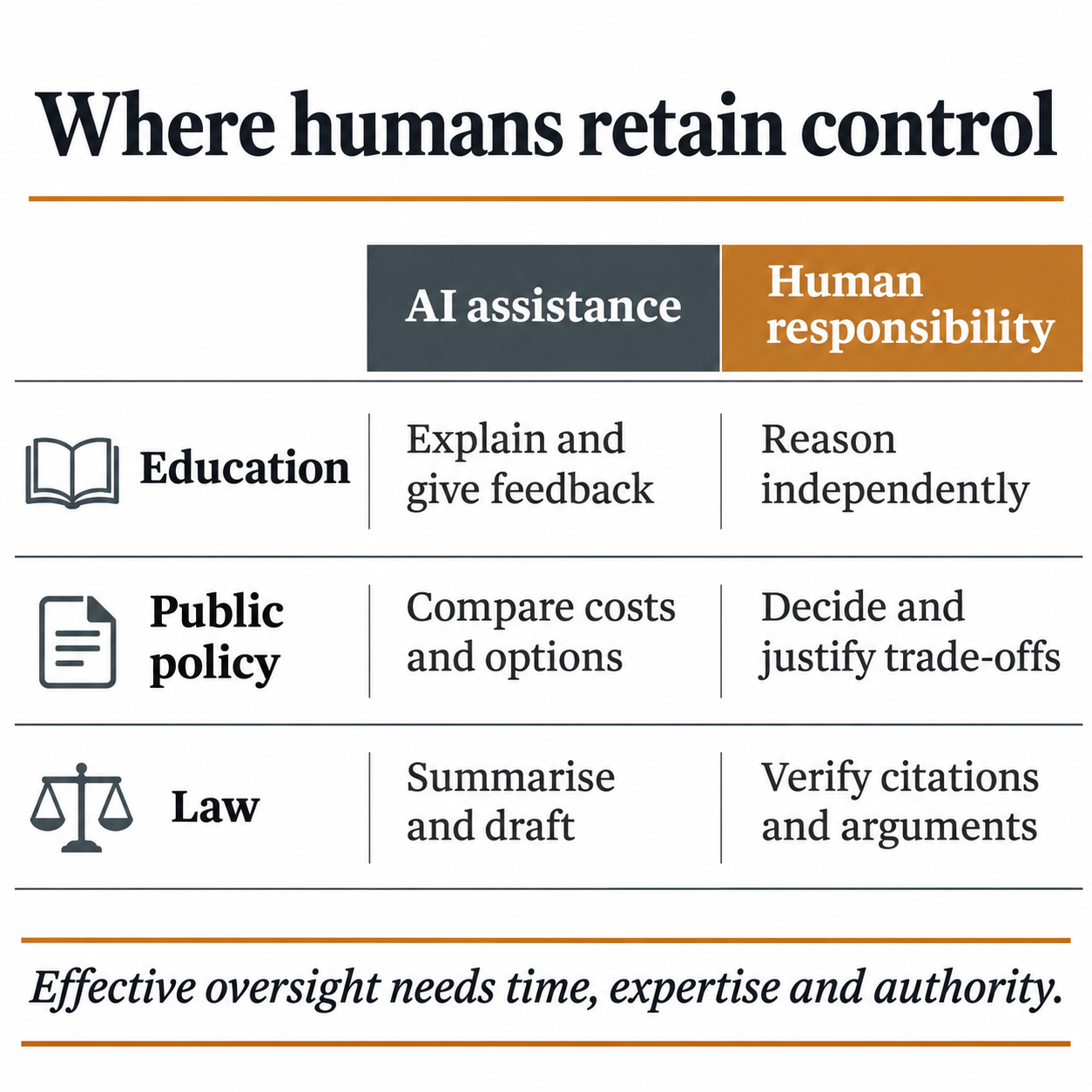
Human oversight works when reviewers have the time, expertise and authority to check evidence, question assumptions and change a decision. Institutions that reward speed and volume can weaken that oversight by reducing the time available for verification and the opportunities people have to practise independent judgment.