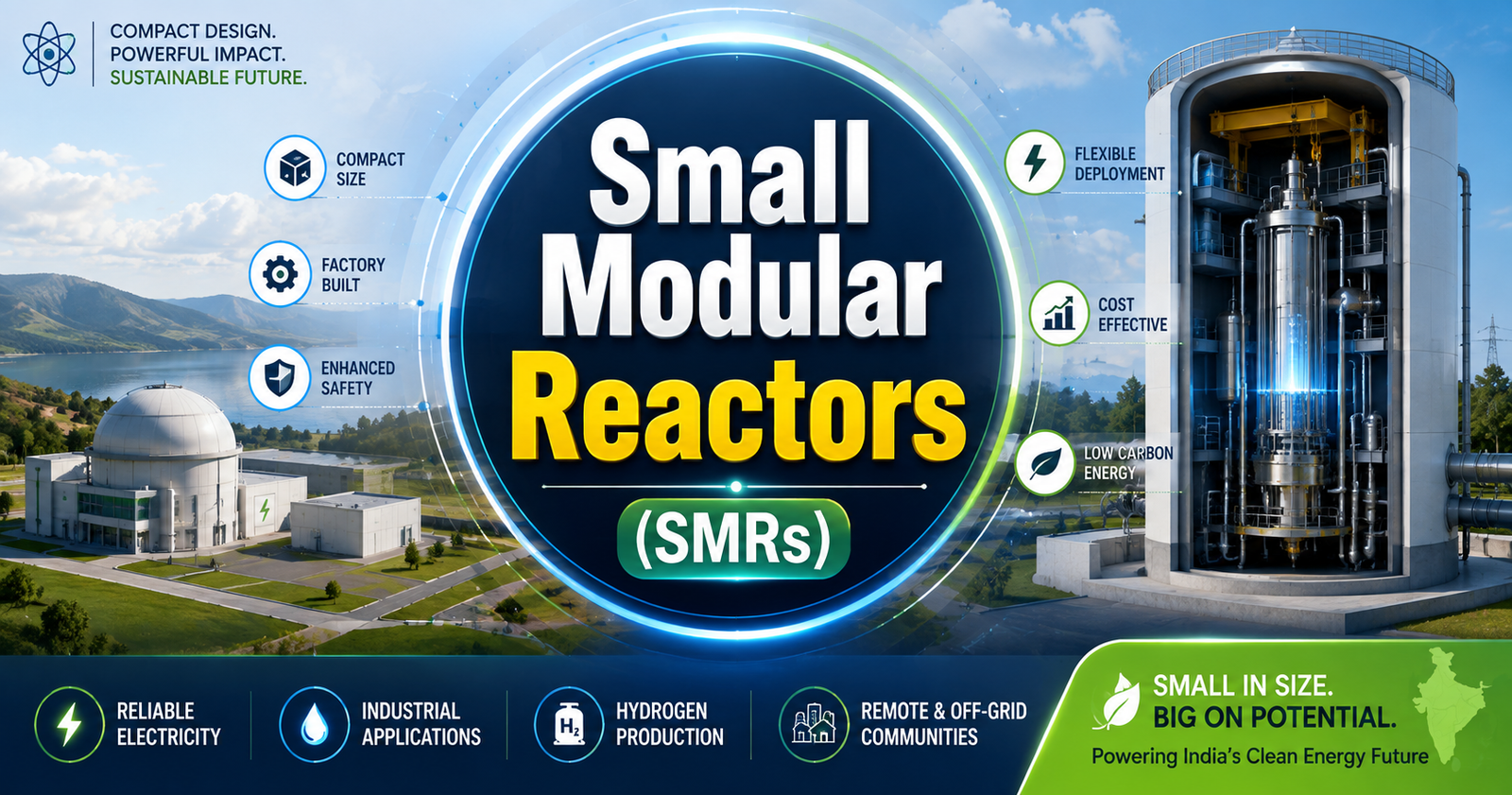
Small Modular Reactor mission of India advances indigenous nuclear technology, targeting 100 GWe capacity by 2047 through innovation, domestic manufacturing, safety, and strategic energy security.
Syllabus Areas:
GS III - Science and Technology
The Nuclear Energy Mission (NEM), announced in Union Budget 2025–26, aims to develop at least five indigenous SMRs and achieve 100 GWe of nuclear power capacity by 2047.
Bhabha Atomic Research Centre (BARC) is developing the 220 MWe BSMR-200, 55 MWe SMR-55, and 5 MWth HTGCR for hydrogen production. These will serve as demonstration reactors, with BSMR-200’s capacity planned to be enhanced to 300 MWe based on operational experience.
What are Small Modular Reactors (SMRs)?
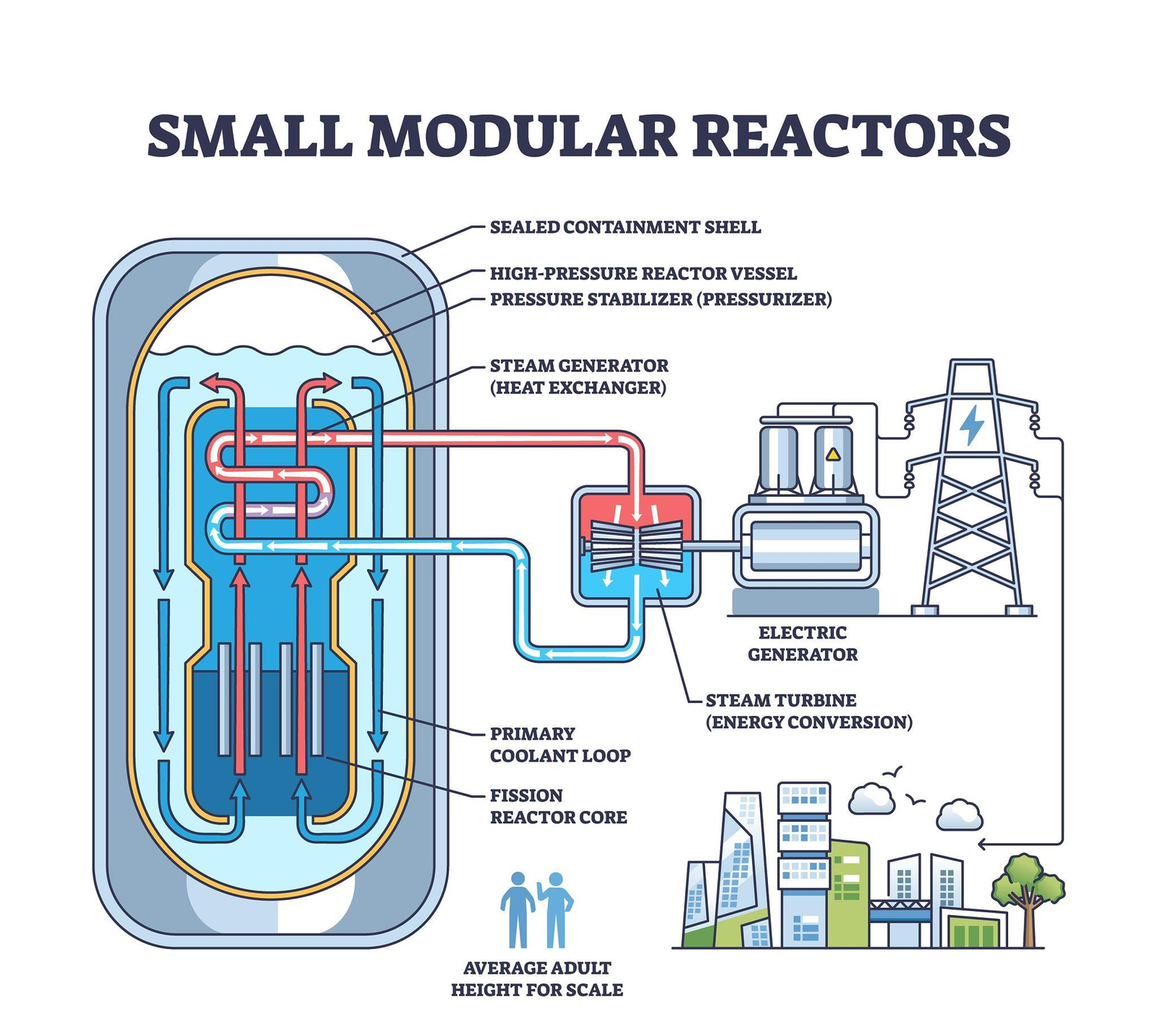
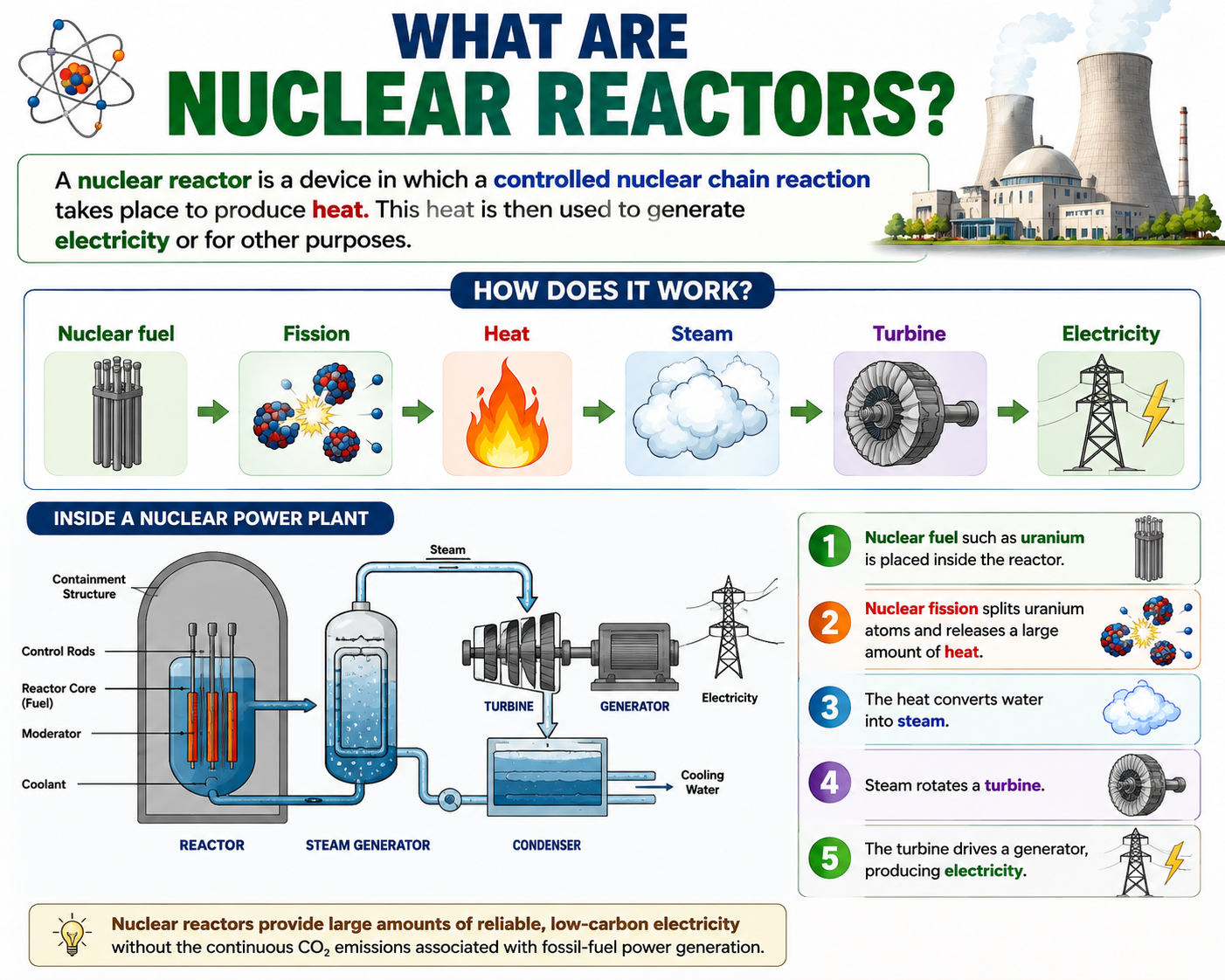
Small Modular Reactors (SMRs) are compact nuclear reactors designed to generate electricity on a smaller scale than conventional nuclear power plants. They use nuclear fission to produce heat, which is converted into electricity.
Why are SMRs important for India?
For India, SMRs can complement large nuclear power plants and help decarbonise industries, provide reliable low-carbon electricity and expand nuclear capacity in a more flexible manner.
Under the Nuclear Energy Mission, India is developing indigenous designs such as BSMR-200 and SMR-55, alongside a High Temperature Gas Cooled Reactor (HTGCR) for applications including hydrogen production.
Indigenous Development of SMRs
-
BARC is developing Small Modular Reactors (SMRs) in collaboration with Indian industries.
-
The programme leverages India’s experience in designing, manufacturing and constructing indigenous Pressurised Heavy Water Reactors (PHWRs).
-
Most SMR equipment can be manufactured by Indian industries, with technological support from BARC.
Indigenous Technologies & Materials
-
ApuRVA (Advanced Purified Reactor Vessel Alloy) has been developed indigenously.
-
Technology for forging reactor pressure vessels for BSMR-200 and SMR-55 has also been developed in collaboration with Indian industry.
-
The Control Rod Drive Mechanism has been developed in-house.
Strengthening Nuclear Regulation
-
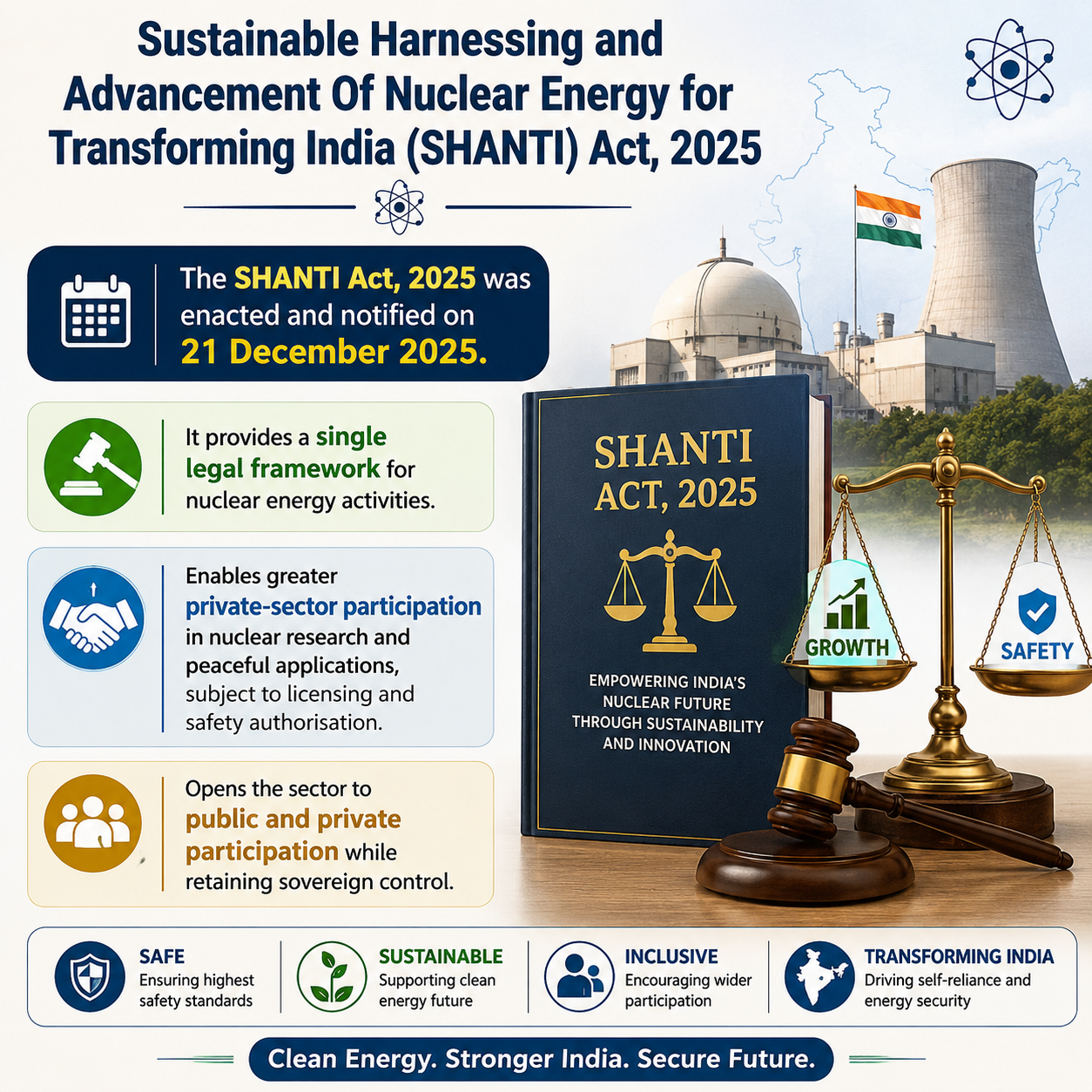
The SHANTI Act gives statutory status to the Atomic Energy Regulatory Board (AERB).
-
AERB provides regulatory oversight and safety supervision of nuclear facilities.
-
Its safety requirements cover Light Water Reactors, PHWRs and Sodium-Cooled Fast Reactors.
-
The existing regulatory framework is largely technology-neutral, allowing it to be applied to advanced reactors such as SMRs, with technology-specific assessments wherever required.
₹20,000 Crore Allocation
-
Under the Nuclear Energy Mission, ₹20,000 crore has been allocated for the research, development and deployment of SMRs.
Progress of Major Demonstration SMRs
BSMR-200
-
In-principle approval received for engineering and construction.
-
Administrative and Financial sanction proposal cleared by the Atomic Energy Commission (AEC).
-
Approval obtained from the Empowered Technology Group (ETG).
-
Tarapur, Maharashtra approved as the site.
SMR-55
-
In-principle approval received for engineering and construction.
-
Tarapur, Maharashtra approved as the site.
HTGCR
-
In-principle approval received.
-
Proposed site: BARC, Vizag.
-
Siting consent received.
Also Read the Background: Nuclear Fission and Fusion