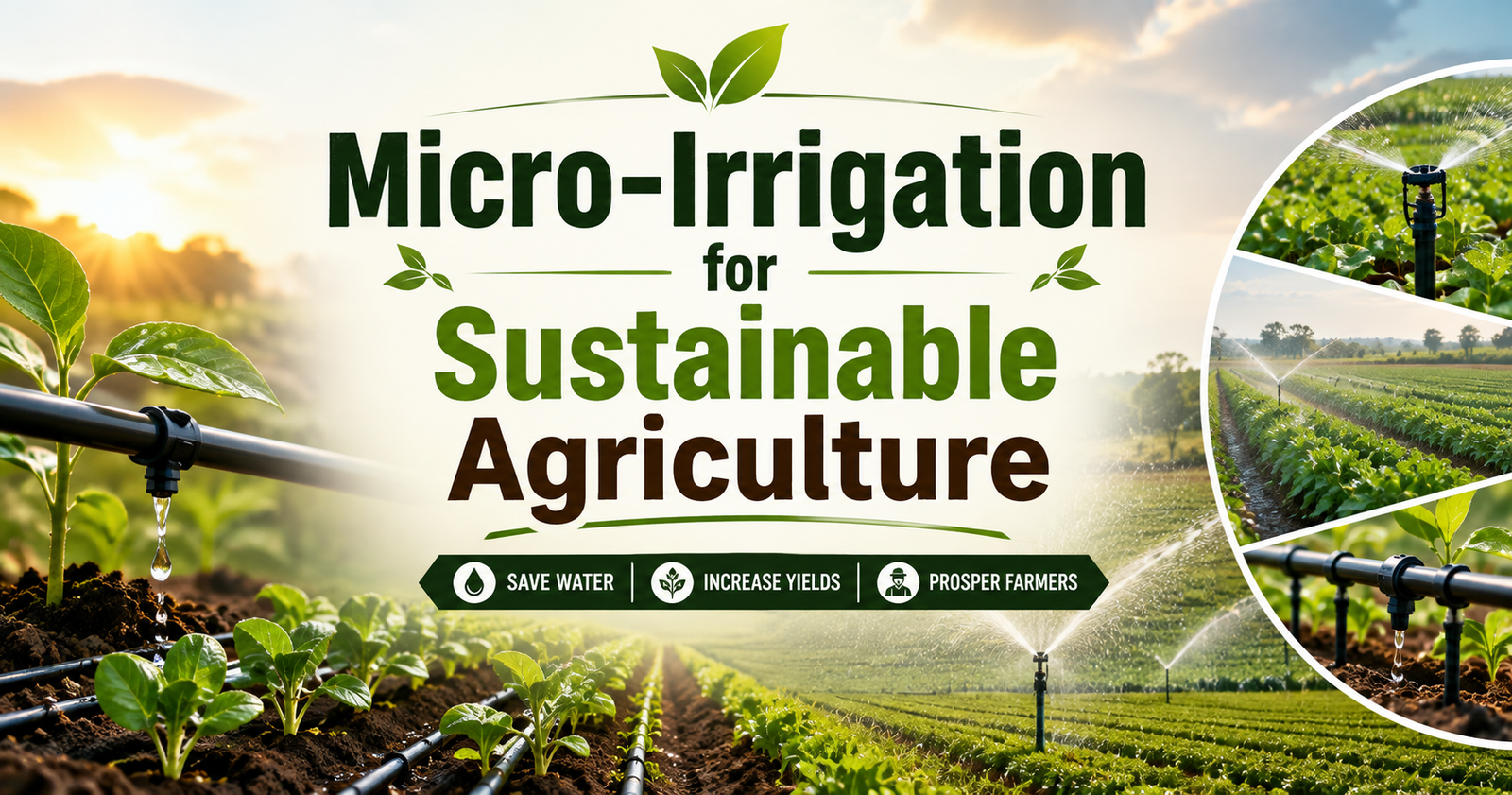
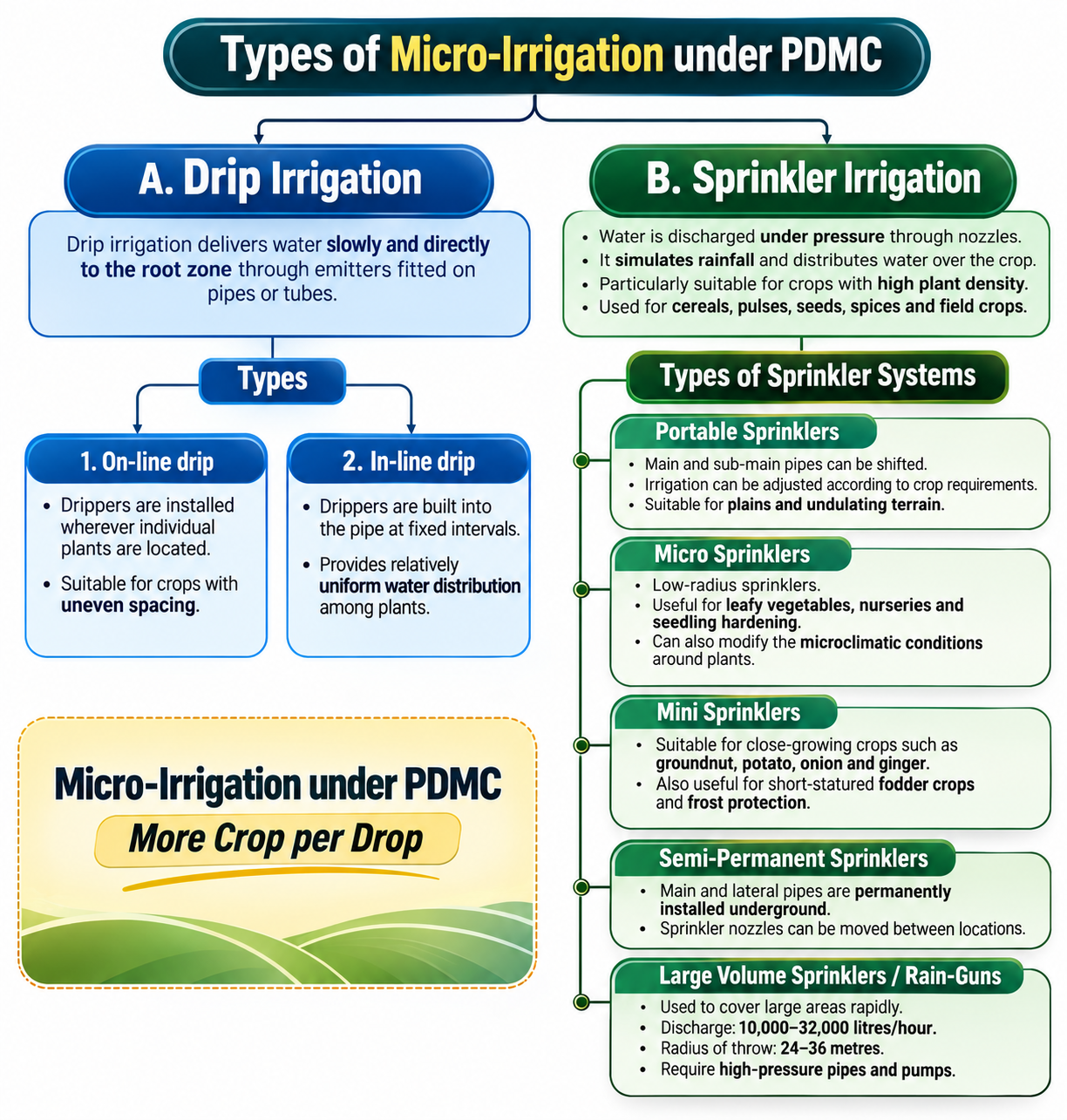
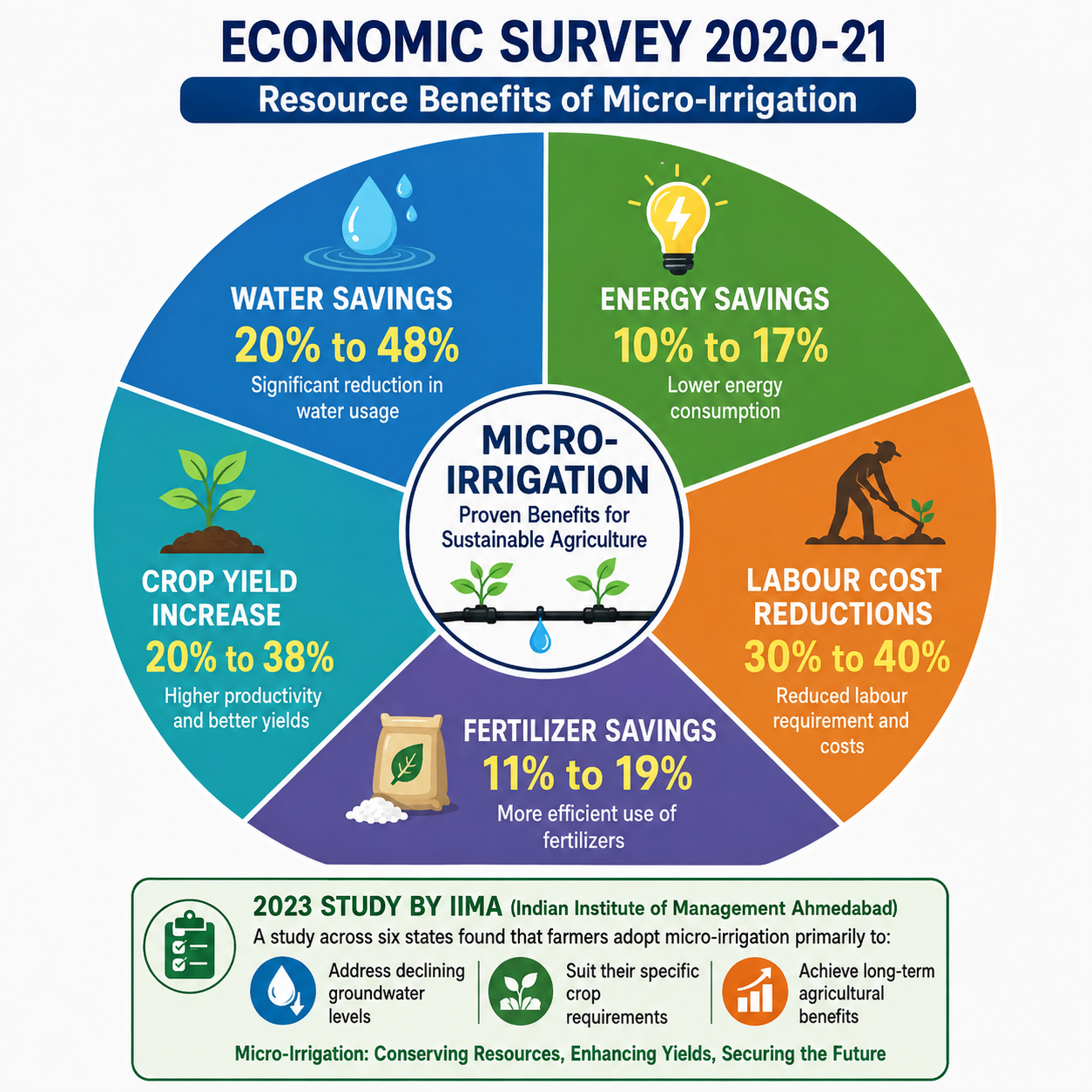
Types of Micro-Irrigation under Per Drop - More Crop, Economic Survey 2020-21 data on PDMC.
Syllabus Areas
Impact Assessment Studies
Independent studies have highlighted the positive impact of the PDMC scheme. An evaluation by NITI Aayog during 2020-21 found the scheme aligned with national priorities. These include improving water use efficiency, increasing crop productivity, generating employment, and enhancing farmers' incomes. The study reported income gains ranging from 10% to 69%. Water use efficiency improved by 30%-70%. The scheme also created direct and indirect employment opportunities.
Significance for Indian Agriculture
PDMC is important because it connects water conservation with agricultural productivity and farmer income.
Its broader significance includes:
-
Promoting water-efficient agriculture.
-
Reducing dependence on inefficient irrigation practices.
-
Supporting groundwater-stressed regions.
-
Improving farm-level resource efficiency.
-
Encouraging modern irrigation technologies.
-
Reducing input costs.
-
Increasing crop productivity and farmer incomes.
-
Supporting horticulture and crop diversification.
-
Strengthening climate-resilient agriculture.
-
Contributing to sustainable food and nutritional security.
Per Drop More Crop (PDMC) has transformed India's irrigation approach by promoting efficient water use through micro irrigation technologies. The scheme has expanded access to modern irrigation while improving water use efficiency, crop productivity, and farmers' incomes.
Supported by robust institutional mechanisms, digital implementation, and convergence with other government programmes, PDMC has strengthened sustainable irrigation practices nationwide. As India faces increasing pressure on its water resources, PDMC plays an important role in advancing resource-efficient, sustainable agriculture.