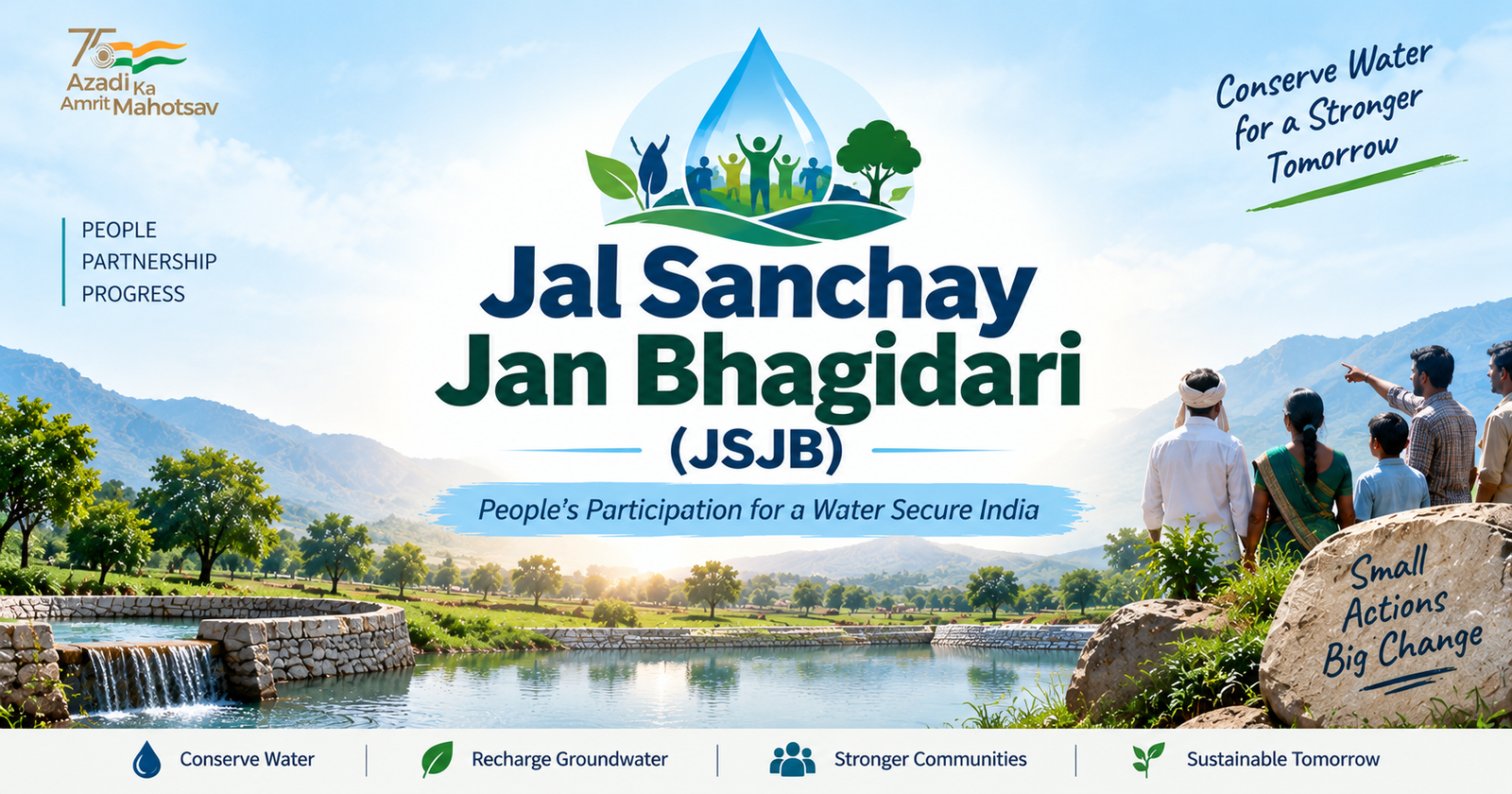
Jal Sanchay Jan Bhagidari promotes community-led water conservation through rainwater harvesting, groundwater recharge, local ownership, scientific planning, and sustainable water-management practices for long-term water security.
Syllabus Areas:
GS II - Governance
GS III - Environment
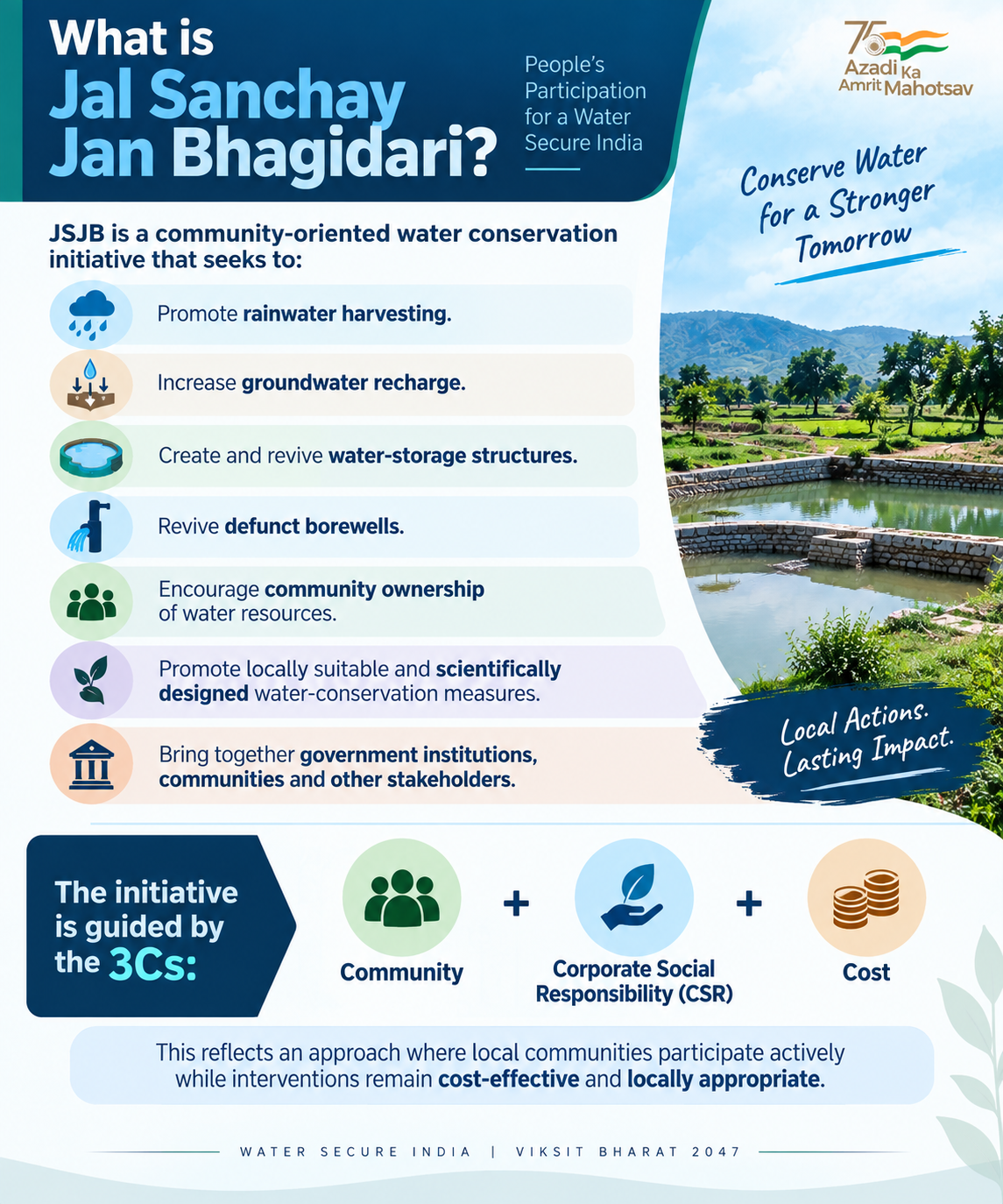
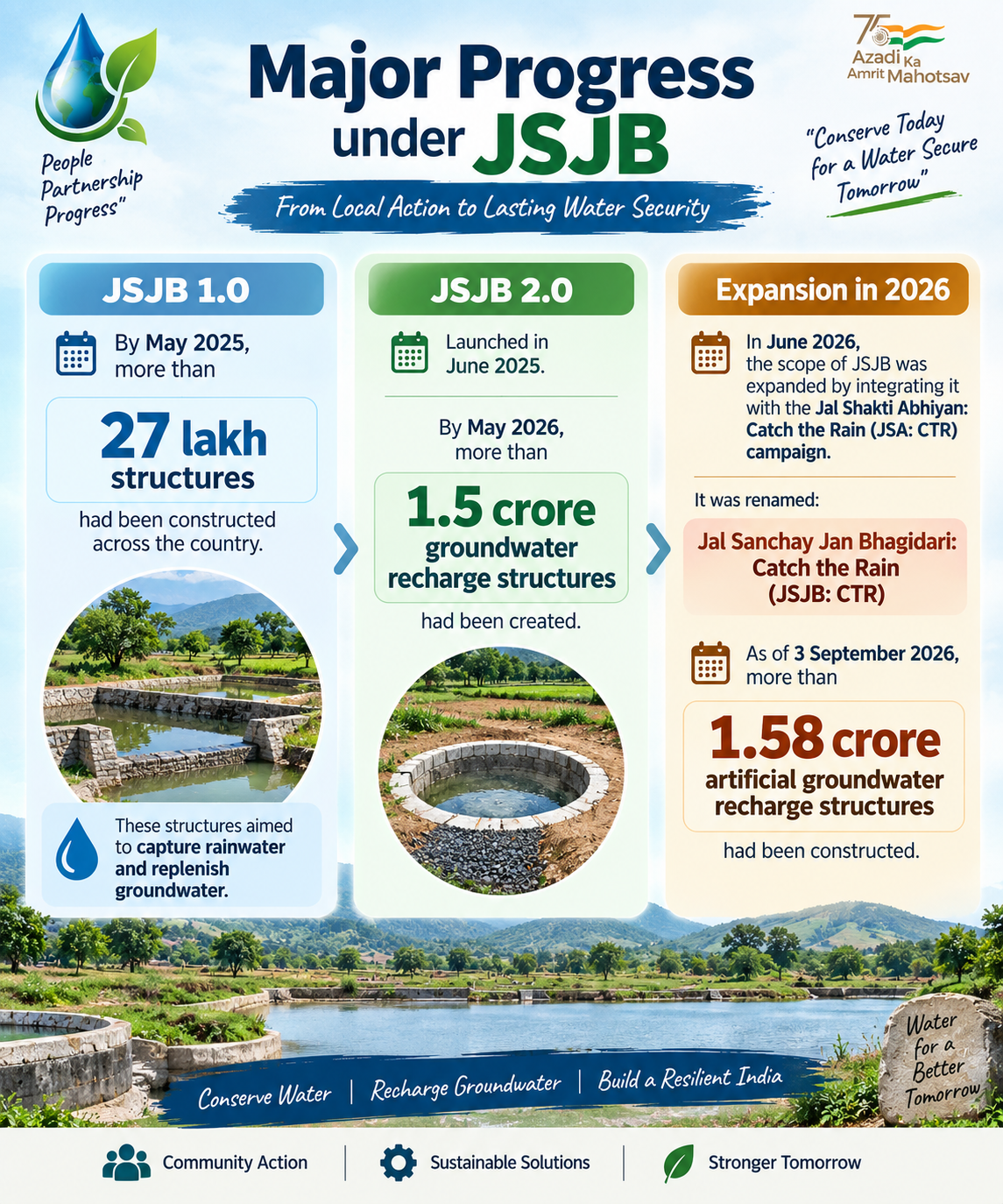
The Jal Sanchay Jan Bhagidari (JSJB) initiative has expanded its focus from local water-conservation interventions to a broader national movement for water security through community participation.
The initiative was launched on 6 September 2024 with the objective of placing community partnership and ownership at the centre of water conservation. It promotes low-cost groundwater recharge and water-storage structures, revival of defunct borewells and locally appropriate solutions through a Whole-of-Government and Whole-of-Society approach.
National Focus on Water Conservation
The Ministry of Jal Shakti Departmental Summit was held in New Delhi on 1–2 September 2026.
It was the first in a series of Departmental Summits aimed at strengthening:
-
Cooperative federalism
-
Centre–State collaboration
-
Water governance
-
Inter-governmental coordination
Jal Sanchay Jan Bhagidari: Catch the Rain was one of the summit's four key thematic areas.
The other areas included:
-
Water infrastructure projects
-
Source sustainability of drinking-water systems
-
Rural water supply under Jal Jeevan Mission 2.0
The summit linked water governance with the broader vision of a Water Secure India and Viksit Bharat 2047.
Importance of Jan Bhagidari
-
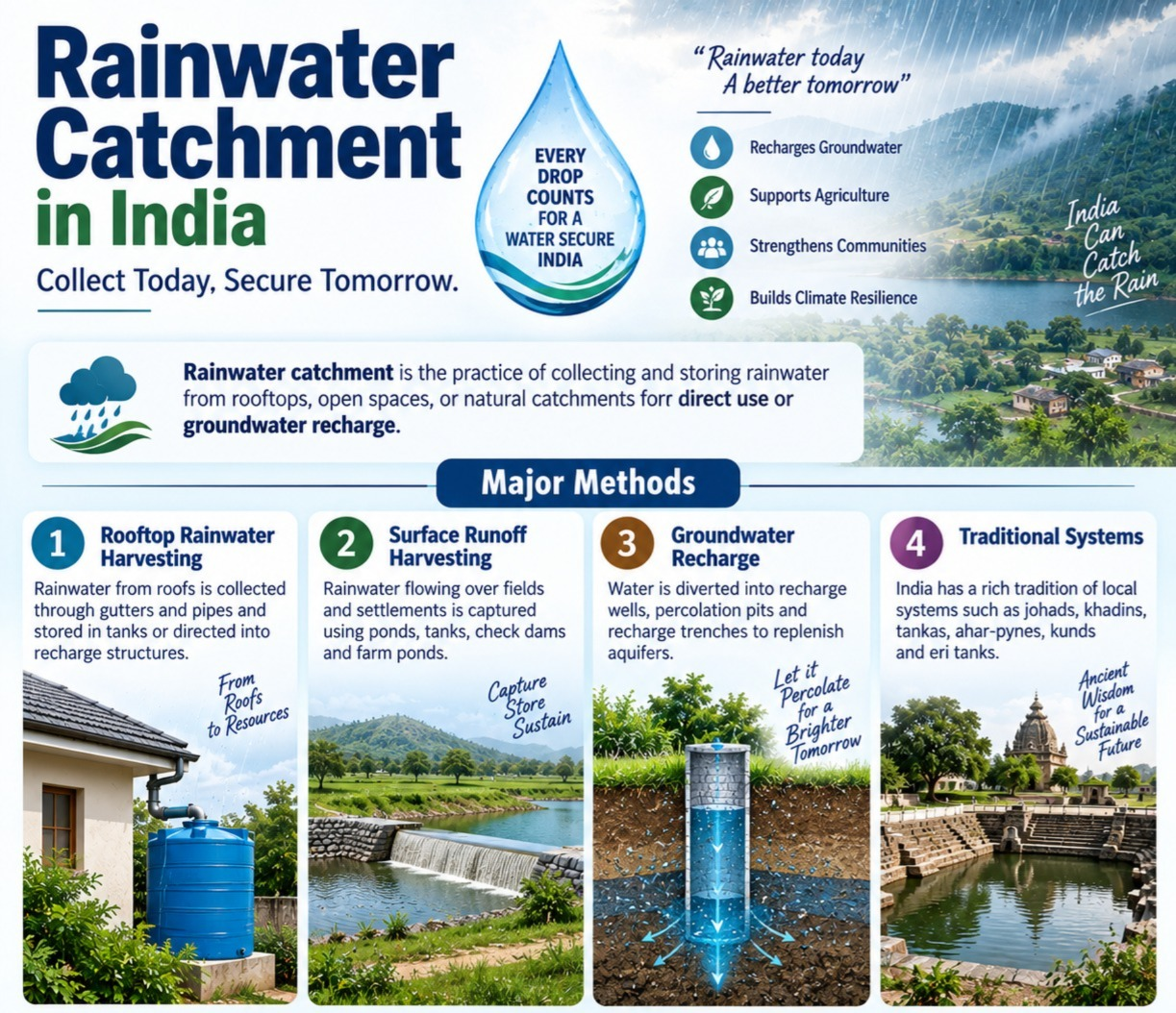
Community participation & local ownership are central to sustainable water conservation.
-
Involves Panchayats, institutions and individuals through collective action.
-
Combines traditional knowledge, scientific planning and institutional support.
-
Aims to transform water conservation from a government programme into a people's movement.
Government Suggestions for Water Governance
-
Jal Utsav: Increase public awareness on water conservation.
-
Capacity Building: Strengthen water-management knowledge in universities and higher institutions.
-
Inter-State Study Visits: Enable officials, farmers and public representatives to replicate successful practices.
-
Water Data Governance: Integrate, systematically manage, analyse and effectively use water-sector data.
Broader Significance
-
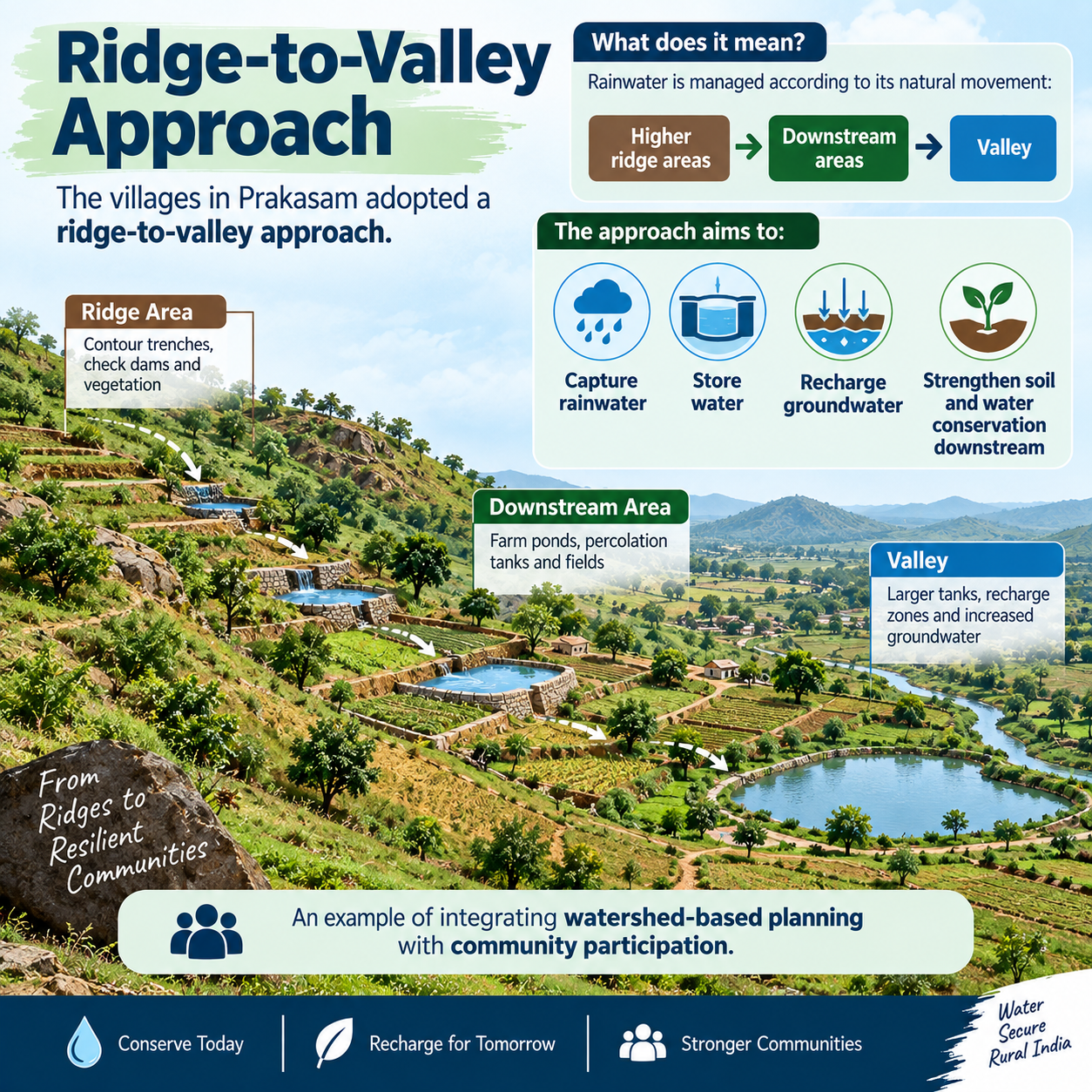
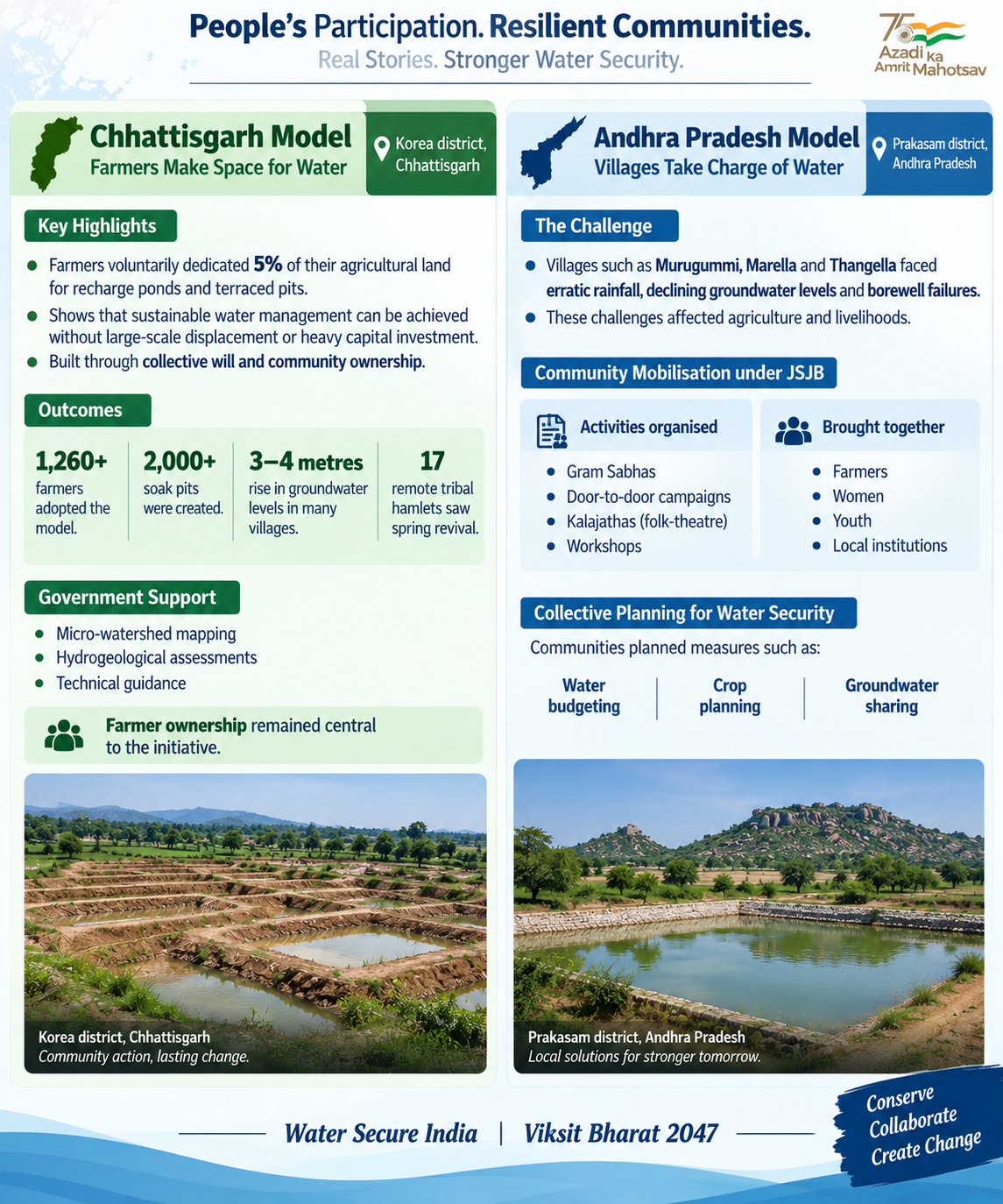
JSJB shifts water security beyond infrastructure creation toward a culture of responsibility.
-
By placing Jan Bhagidari at its core, it integrates traditional knowledge, scientific planning, local ownership and institutional support, linking individual action with collective outcomes to build resilient communities and strengthen India’s water security.
Water Conservation in India:
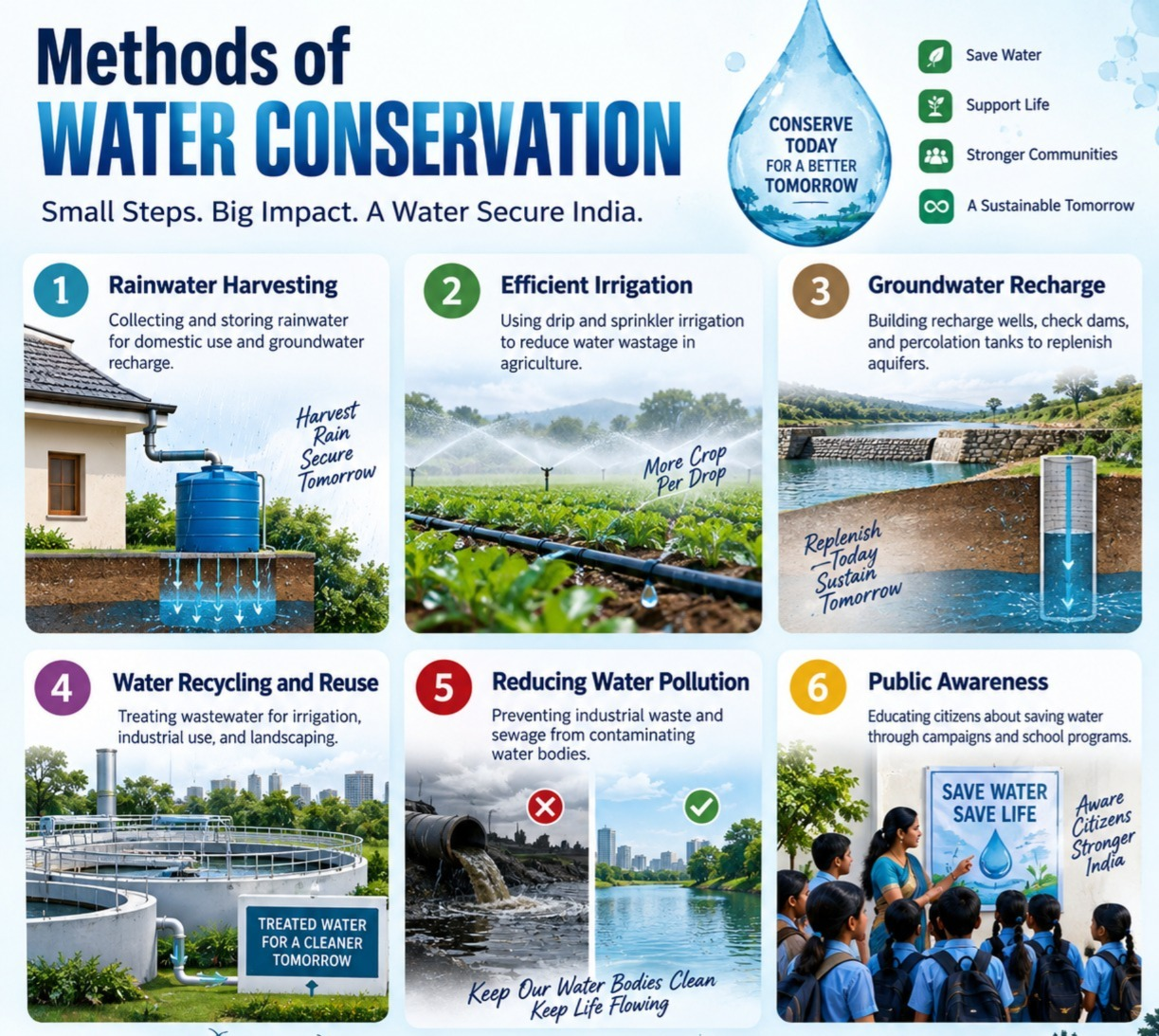
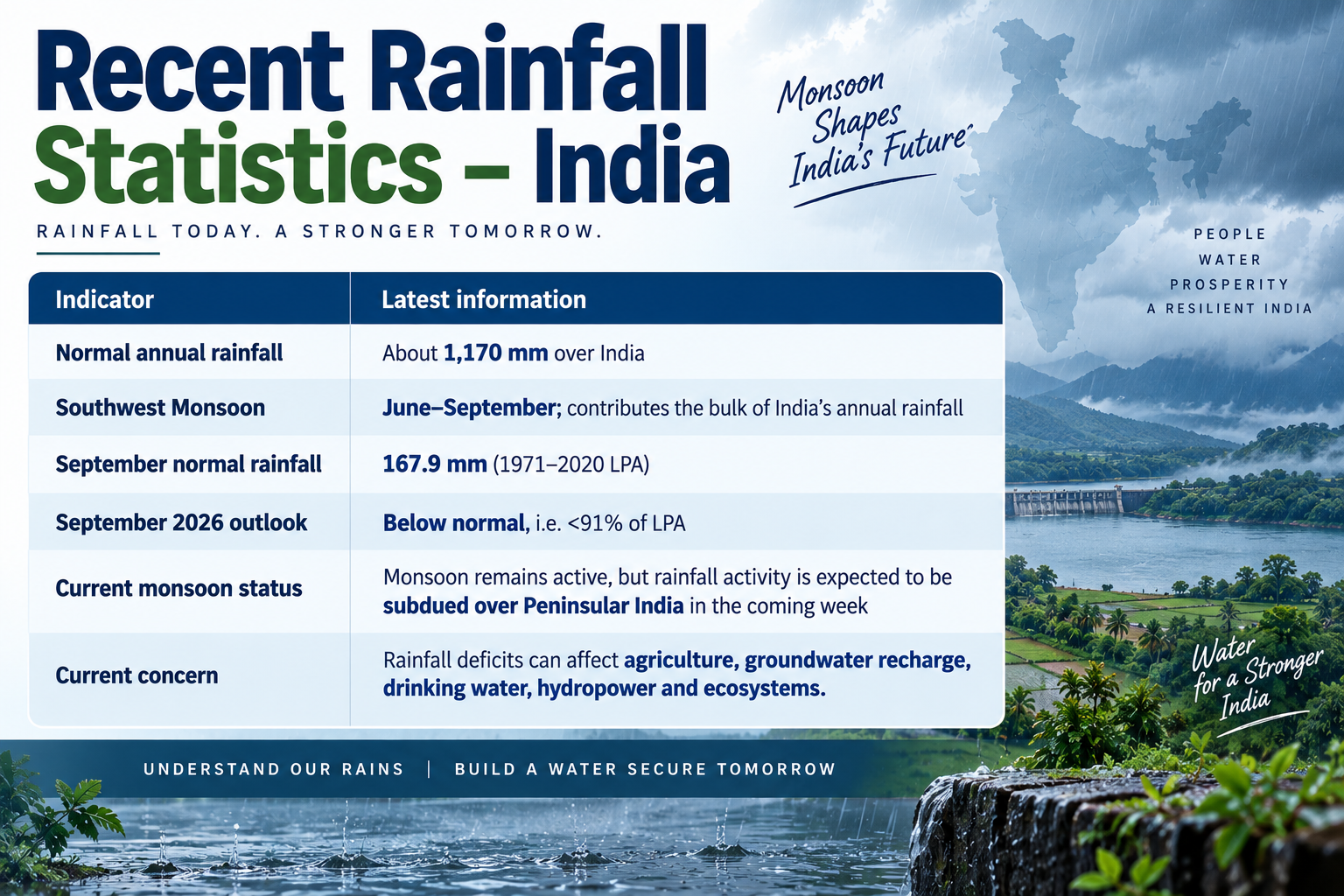
Water conservation in India is essential because the country faces increasing water scarcity due to rapid population growth, urbanization, industrialization, climate change, and overuse of groundwater. Conserving water helps ensure a sustainable supply for agriculture, industries, and households while protecting ecosystems.
Importance of Water Conservation
-
Ensures availability of water for future generations.
-
Supports agriculture, which consumes nearly 80% of India's freshwater.
-
Reduces the impact of droughts and water shortages.
-
Protects rivers, lakes, and groundwater resources.
-
Improves public health by ensuring access to clean water.