Semicon 2.0 strengthens India’s semiconductor ecosystem through end-to-end capabilities, fiscal support, monitoring, domestic manufacturing, advanced R&D, and skilled talent development.
Syllabus Areas:
GS III - Economy | Science and Technology
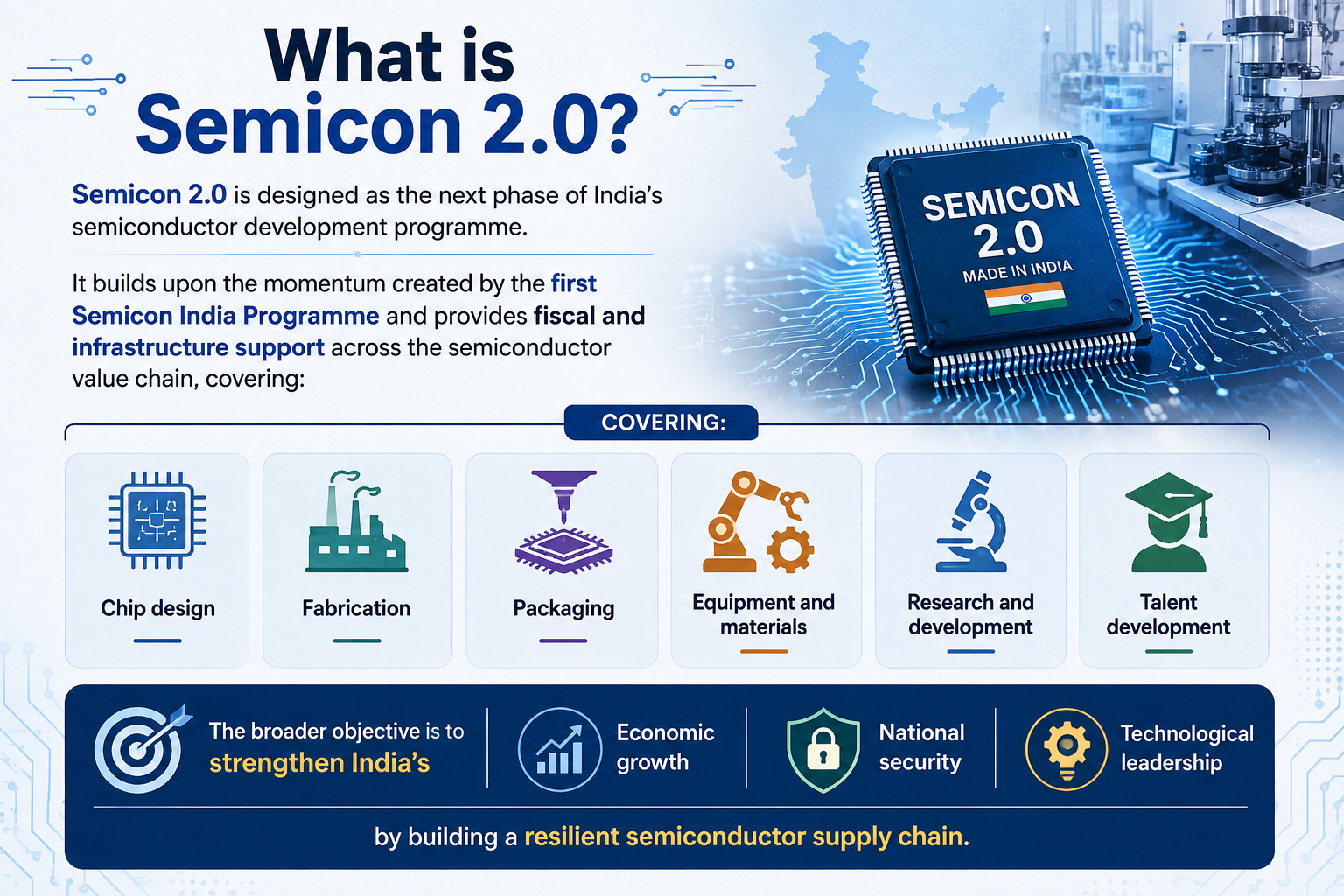
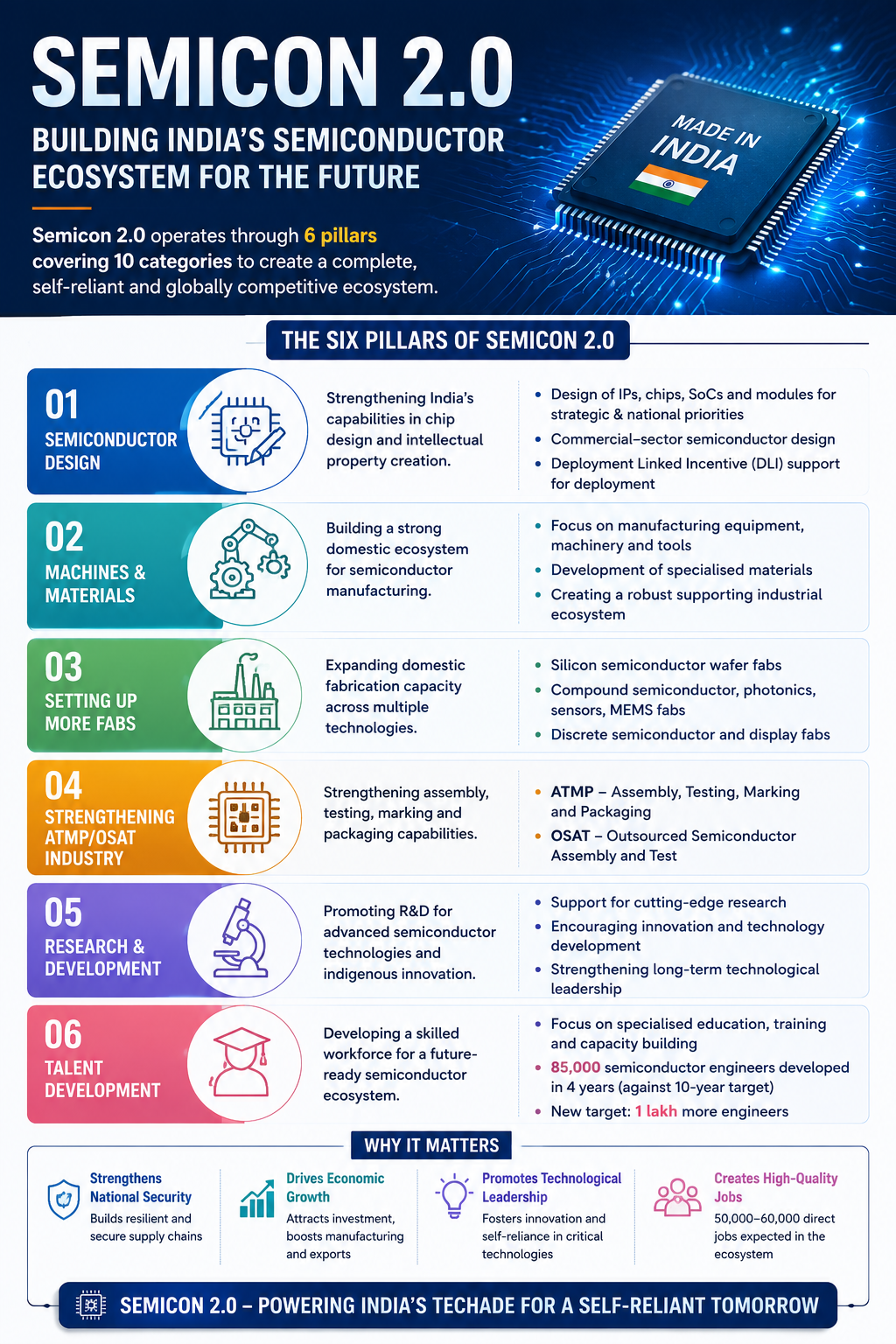
The Union Cabinet has approved Semicon 2.0 to strengthen India’s semiconductor design and manufacturing ecosystem. The initiative covers all six pillars, focusing on design, manufacturing, R&D, packaging and talent development.
What is Semicon?
Semicon is short for Semiconductor. A semiconductor is a material whose electrical conductivity lies between a conductor and an insulator and can be controlled to regulate the flow of electricity. Silicon is the most widely used semiconductor.
Major Applications
-
Computers: Processors, memory and GPUs
-
Smartphones: Processors, sensors and communication chips
-
Automobiles: EVs, sensors and control systems
-
AI: AI processors and accelerators
-
Telecom: 4G/5G and networking
-
Space & Defence: Radar, satellites and avionics
-
Energy: Solar systems, inverters and power electronics
-
Healthcare: Medical equipment and sensors
-
Industry & IoT: Automation, robotics and smart devices
Why are Semiconductors Important?
Semiconductors are foundational to modern technologies and are essential for sectors such as:
-
Artificial Intelligence
-
Electronics and computing
-
Telecommunications
-
Automobiles
-
Defence and strategic technologies
-
Consumer electronics
-
Advanced manufacturing
Therefore, domestic semiconductor capabilities are important not only from an economic perspective, but also from the standpoint of national security and strategic autonomy.
Key Achievements Highlighted
-
85,000 Semiconductor Engineers: India developed 85,000 semiconductor engineers in four years, significantly ahead of the original 10-year target.
-
New Target: 1 Lakh Engineers: A new target has been set to develop another 1 lakh semiconductor engineers.
-
250+ Chips Designed: Students from Tier-II and Tier-III cities have already designed more than 250 semiconductor chips.
This highlights the expansion of semiconductor capabilities beyond major metropolitan and technology centres.
Strategic Significance for India
1. Economic Growth: A stronger semiconductor ecosystem can support electronics manufacturing and high-tech industrial growth.
2. Supply-Chain Resilience: Domestic capabilities can reduce vulnerability to disruptions in global semiconductor supply chains.
3. National Security: Semiconductors are critical to strategic and security-related technologies, making domestic capabilities important for national security.
4. Technological Leadership: Investment in design and advanced R&D can help India move towards higher-value segments of the technology ecosystem.
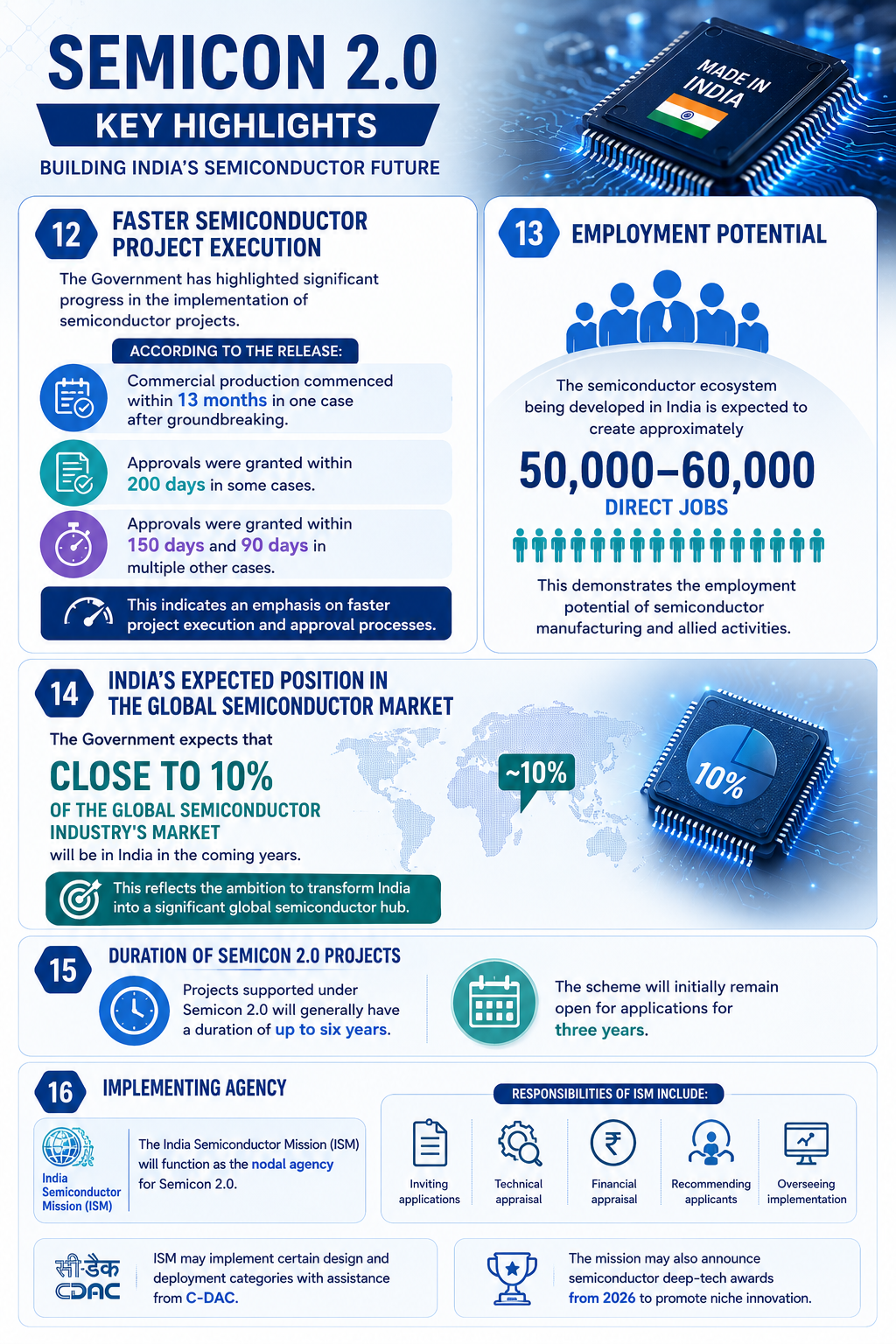
5. Employment Generation: The ecosystem is expected to generate 50,000–60,000 direct jobs.
6. Human Capital: The accelerated development of semiconductor engineers strengthens India's specialised technology workforce.
Key Challenges
While the source focuses primarily on the Government's initiatives and achievements, the broader implementation of such an ecosystem will require sustained attention to:
-
High capital requirements of semiconductor fabrication
-
Access to specialised equipment and materials
-
Advanced R&D capabilities
-
Availability of highly skilled manpower
-
Integration across the entire semiconductor value chain
-
Global competitiveness
-
Long gestation periods for advanced semiconductor projects
Way Forward
India's semiconductor strategy should focus on:
-
Building the complete semiconductor value chain, from design to packaging.
-
Strengthening domestic R&D in advanced semiconductor technologies.
-
Deepening industry–academia collaboration.
-
Expanding semiconductor education and training beyond major cities.
-
Developing a reliable ecosystem for machines, materials and specialised inputs.
-
Encouraging private-sector participation and long-term investment.
-
Focusing on high-value semiconductor design and intellectual property.
-
Continuously evaluating the effectiveness of fiscal incentives.
Semicon 2.0 represents India's attempt to build a comprehensive and resilient semiconductor ecosystem covering design, manufacturing, packaging, R&D, materials and talent.