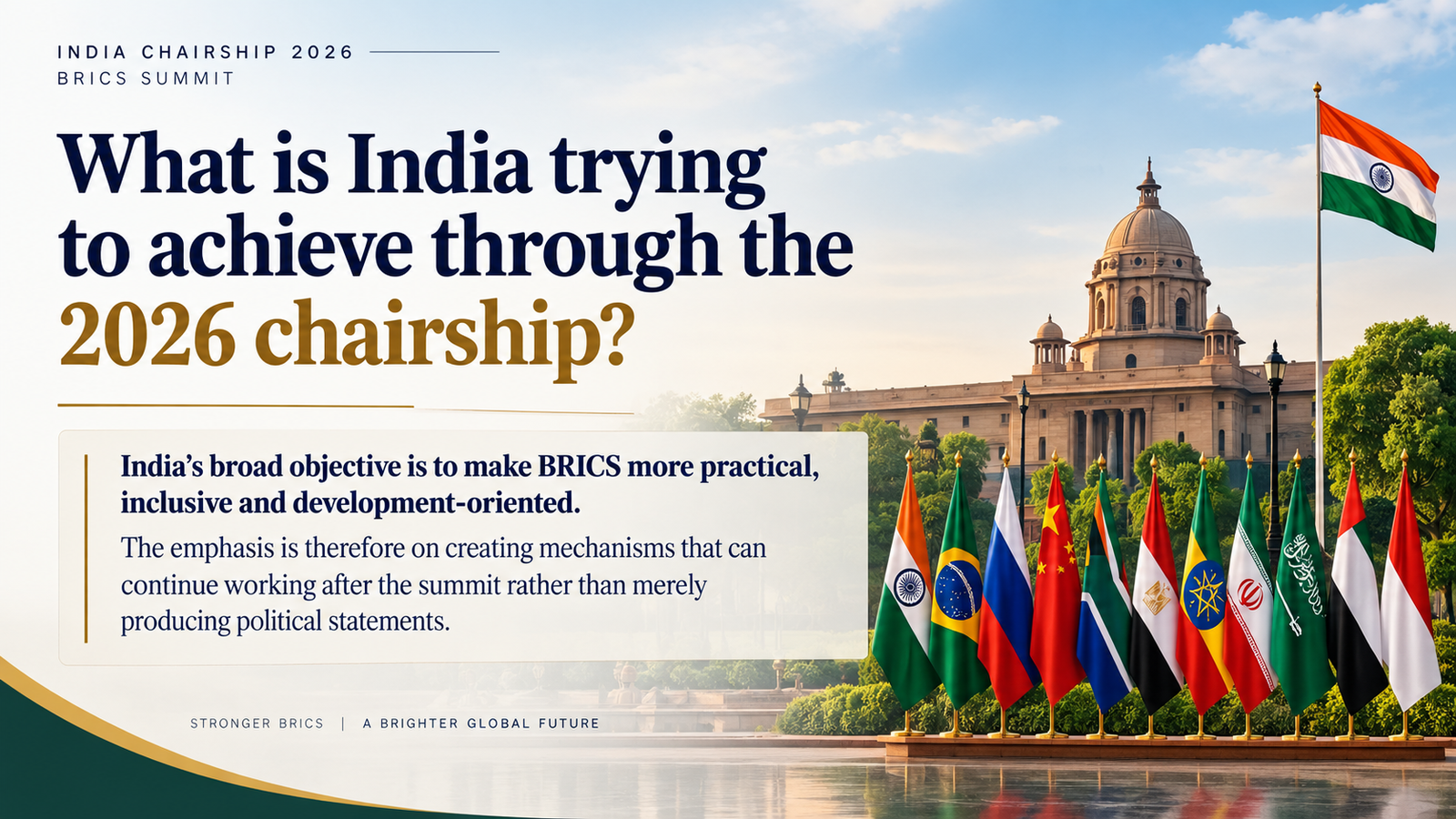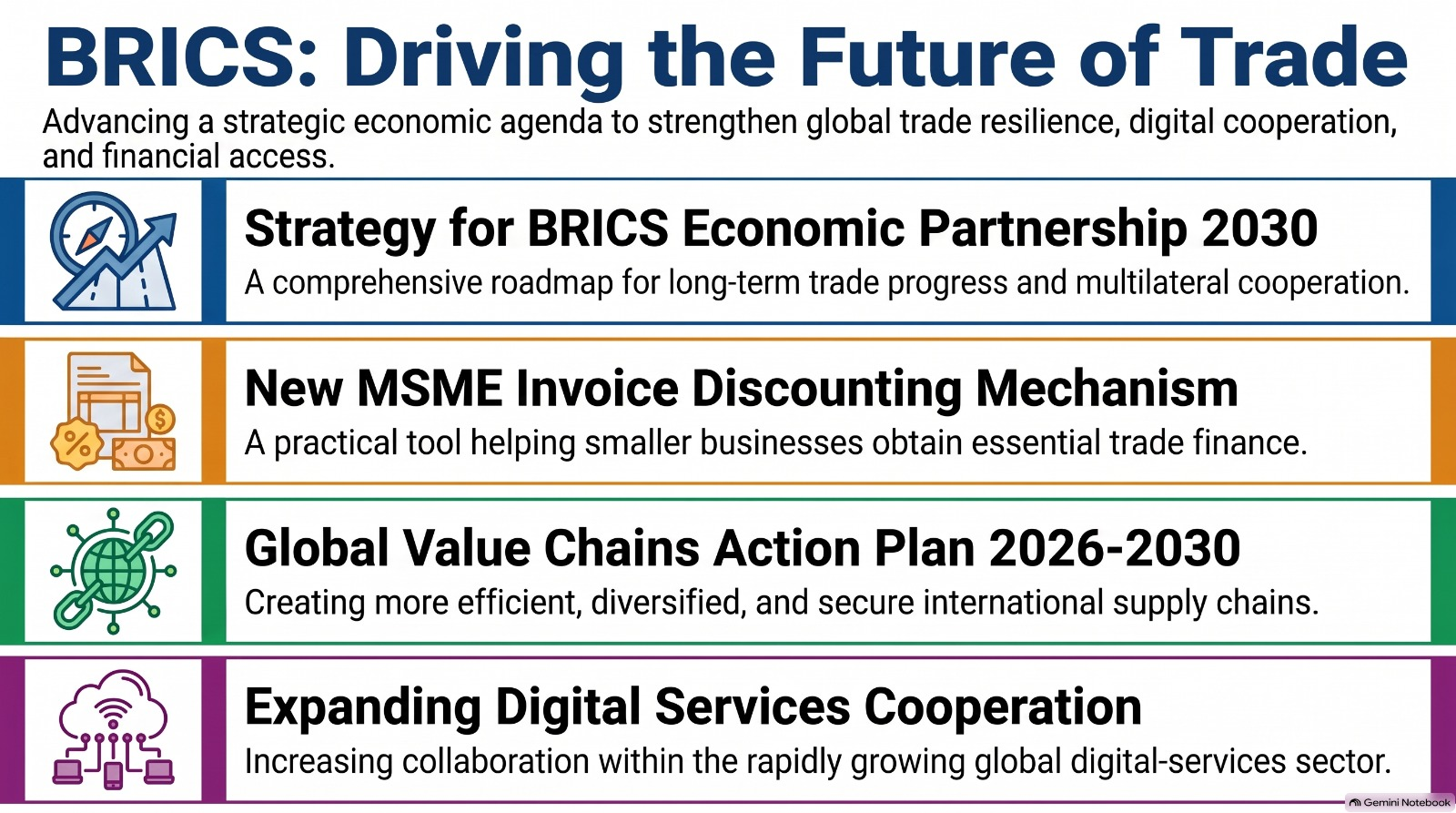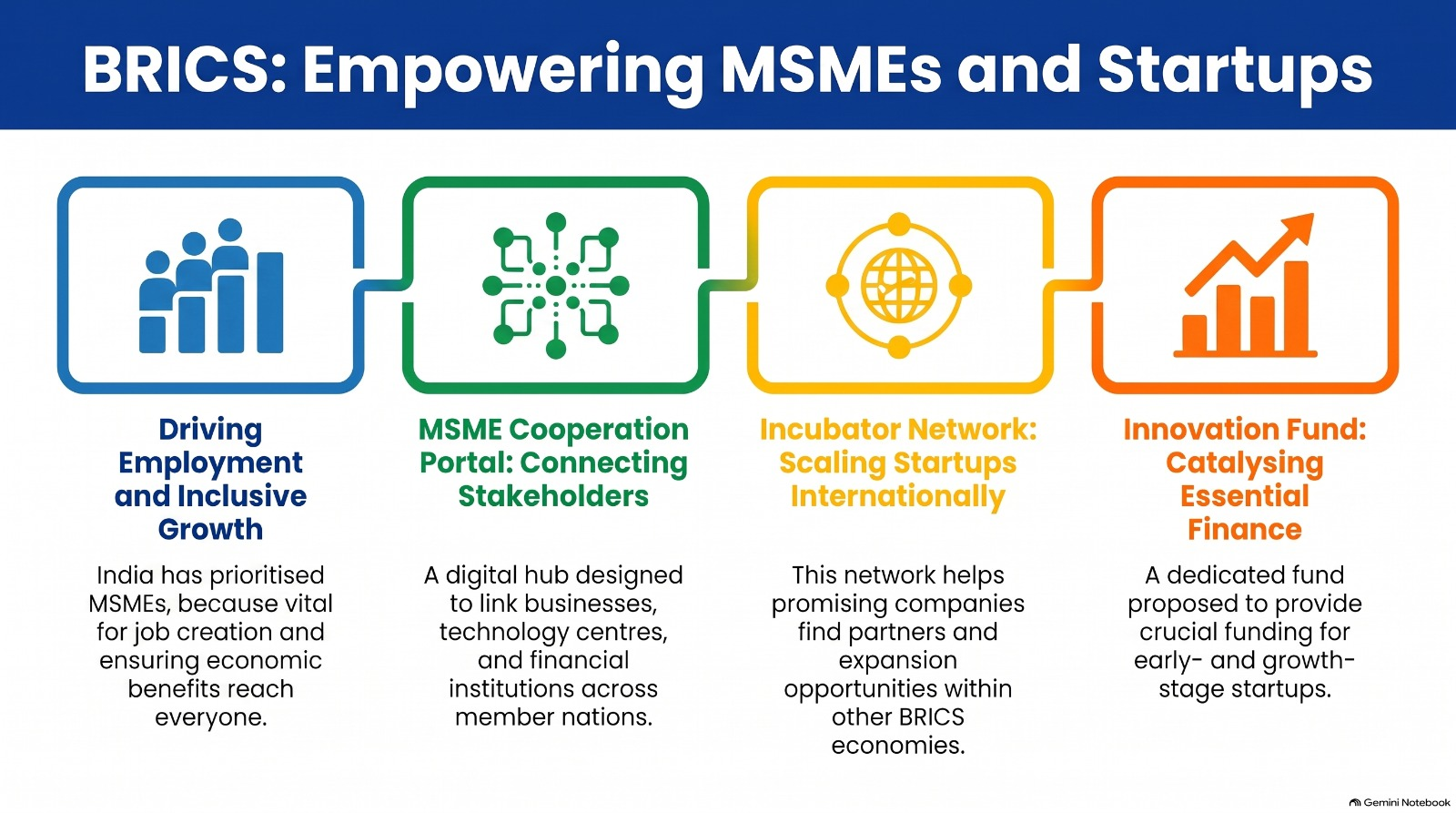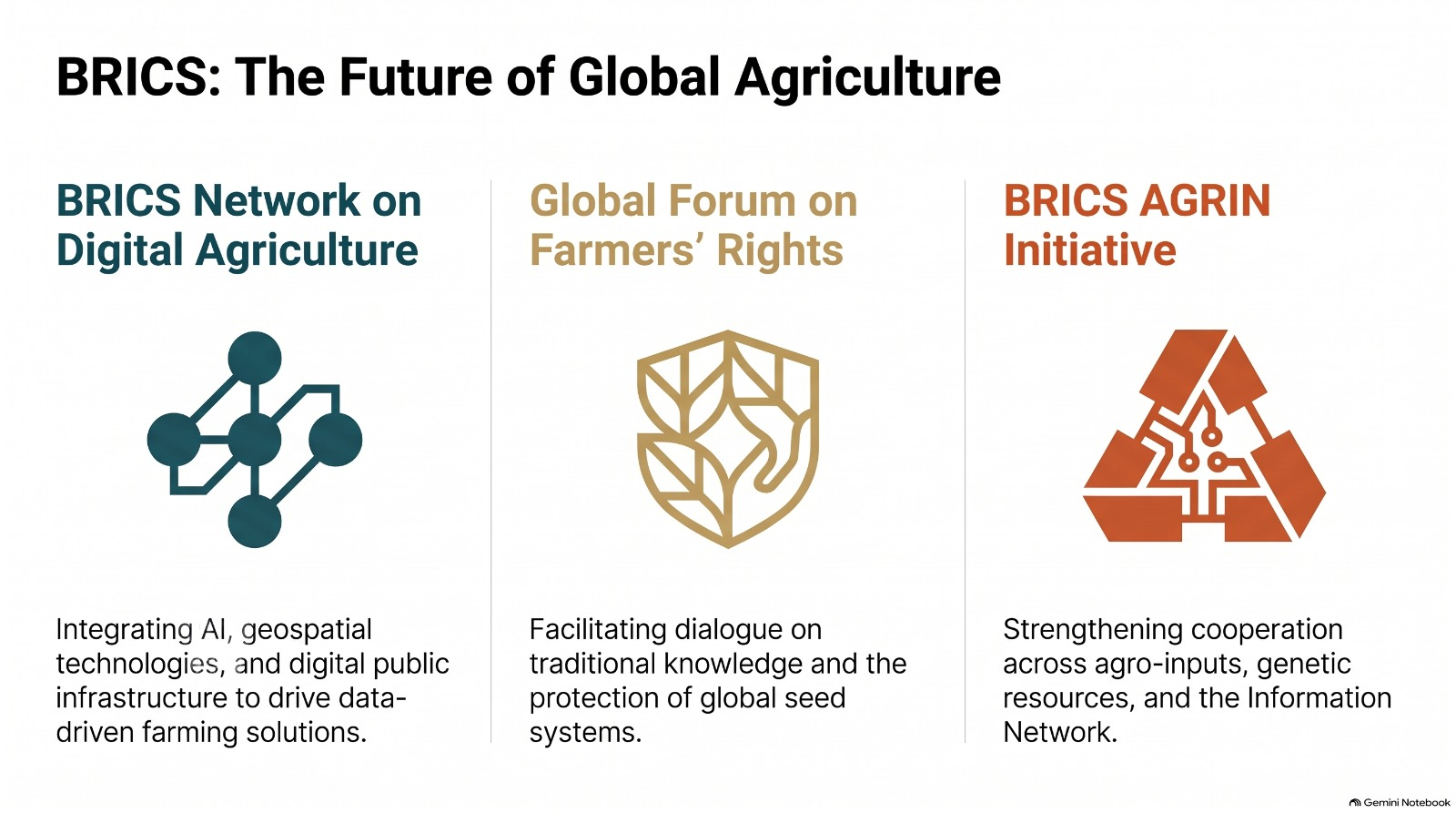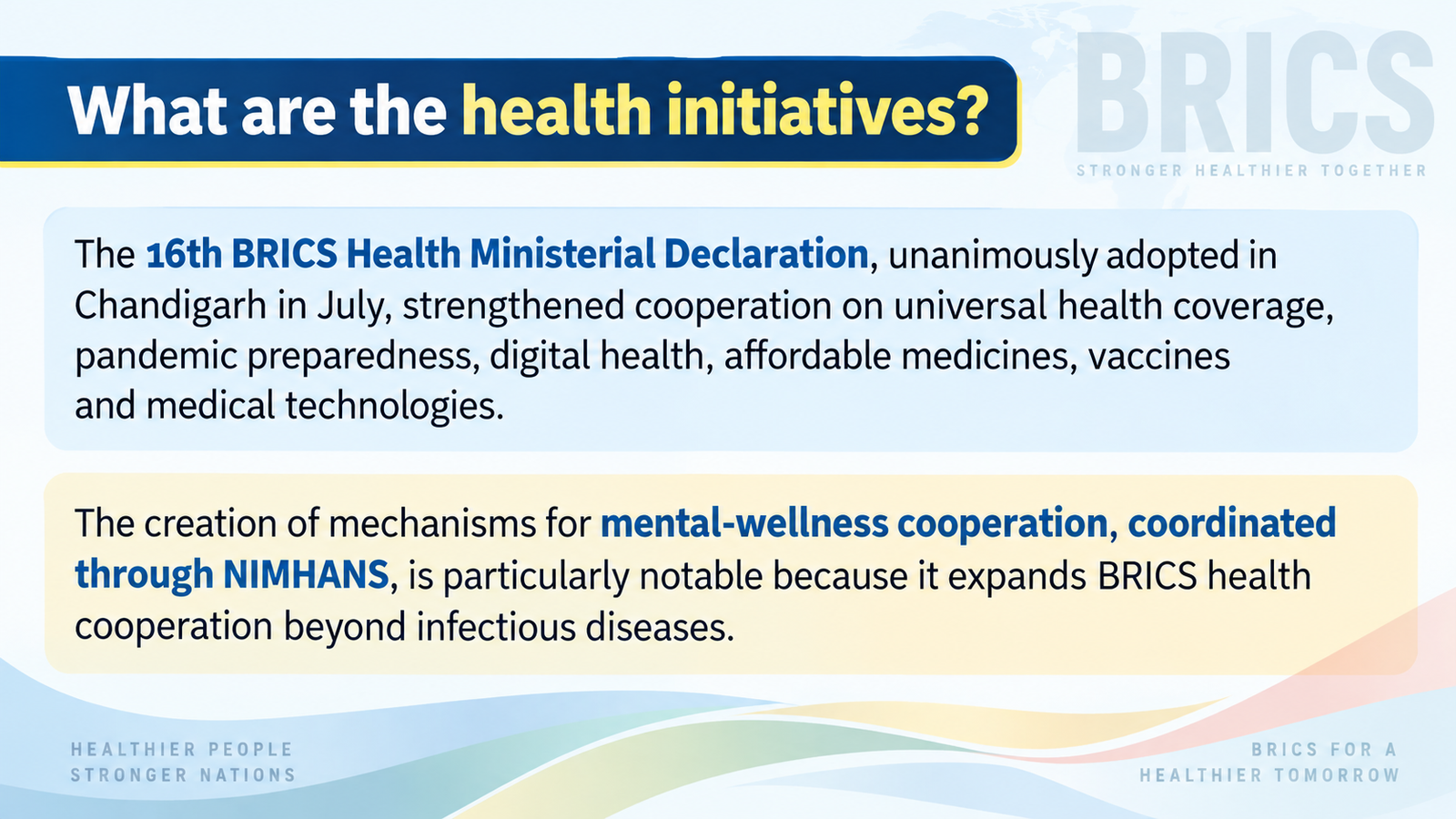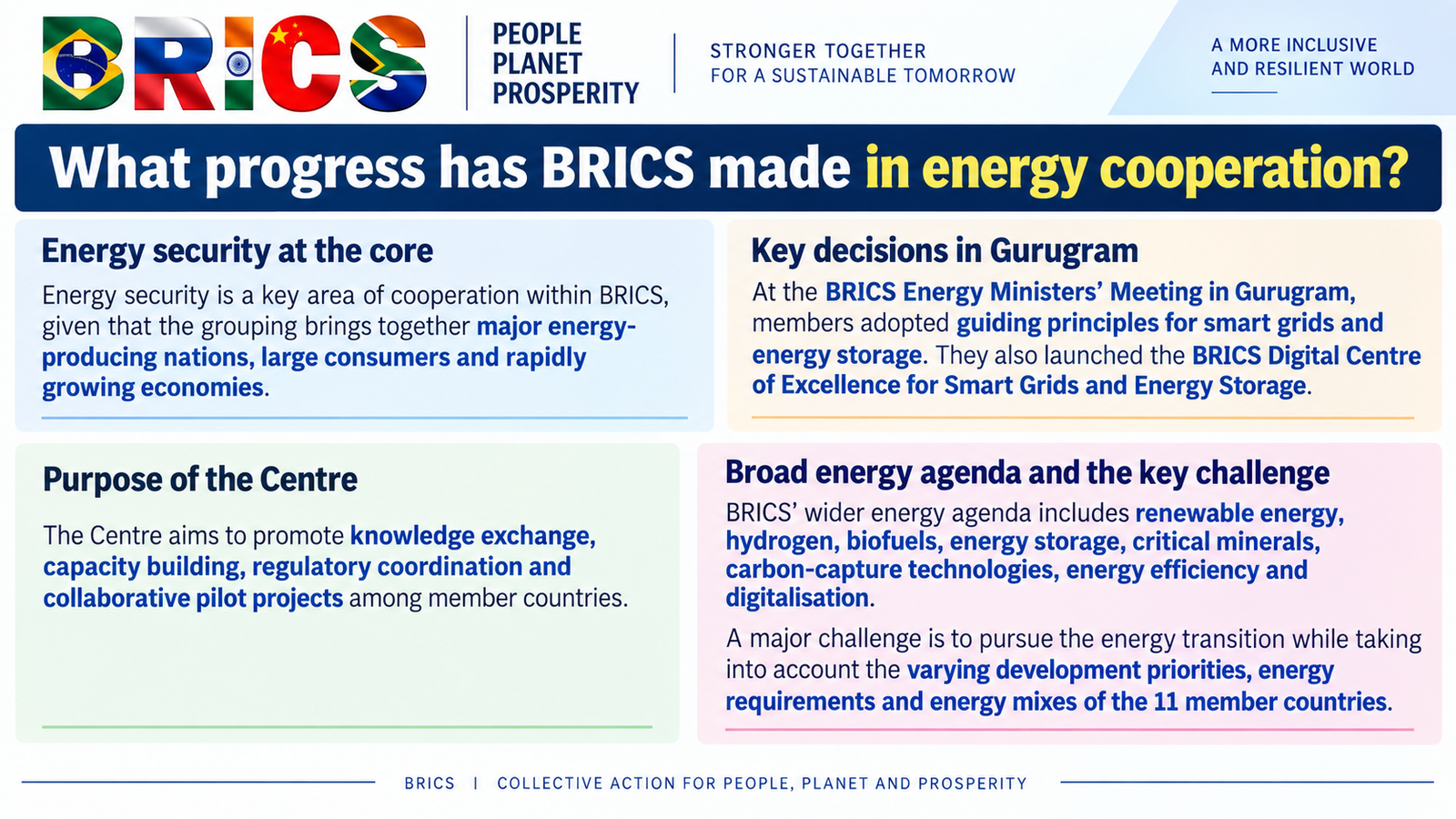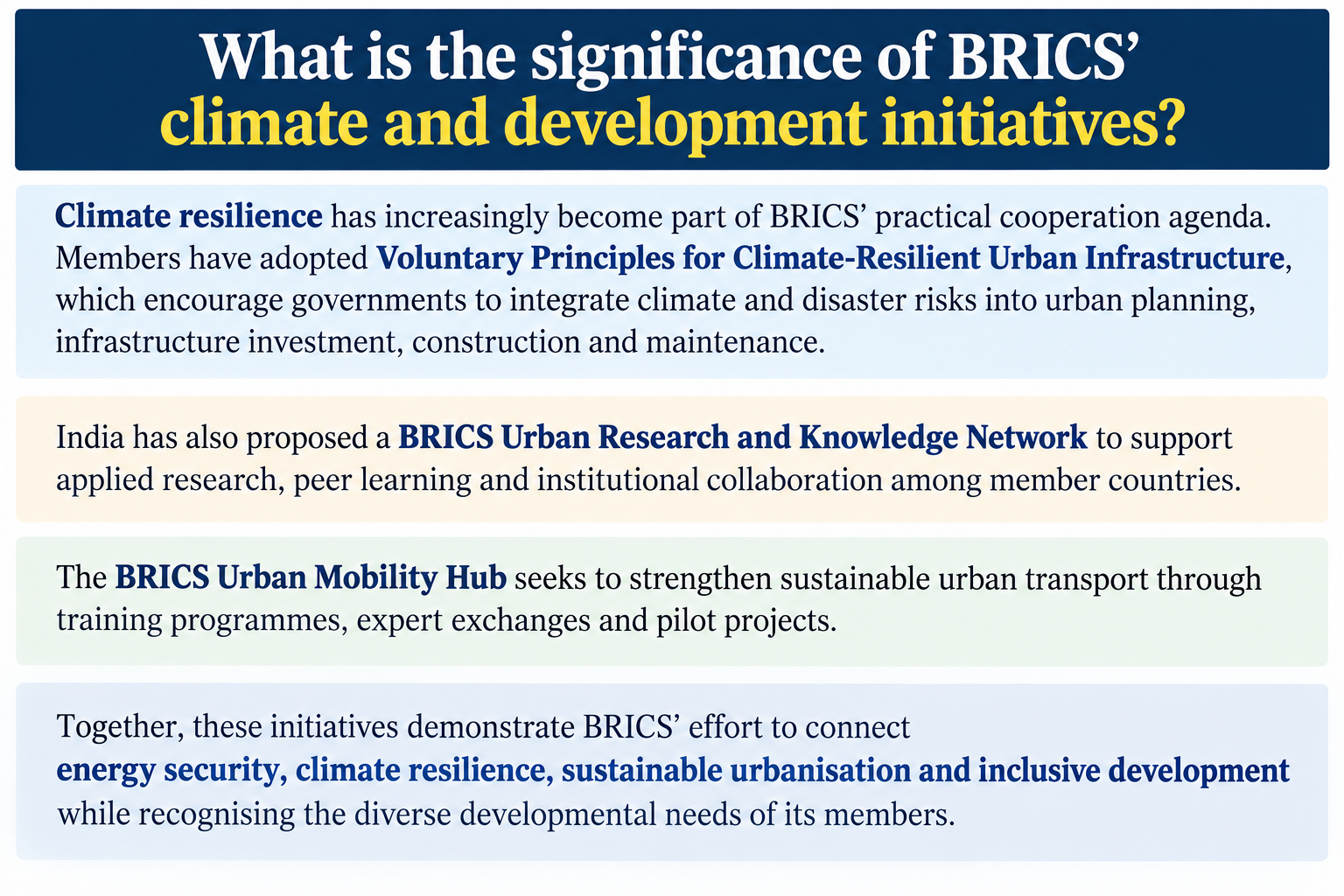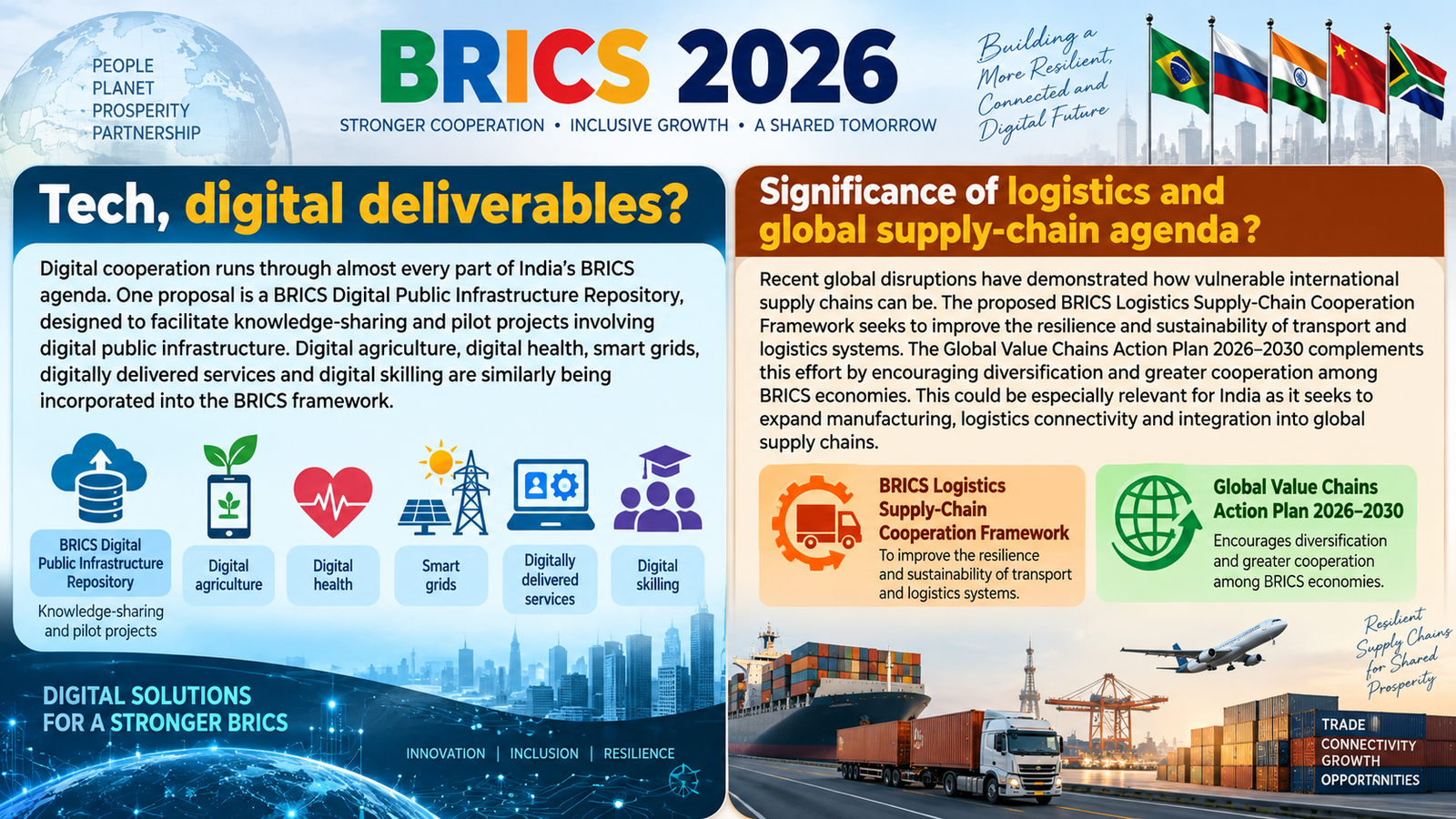
India’s 2026 BRICS chairship seeks practical cooperation across trade, agriculture, health, energy, climate, technology, MSMEs and startups, strengthening Global South collaboration and inclusive development.
Syllabus Areas:
GS II - International Relations | GS III - Economy
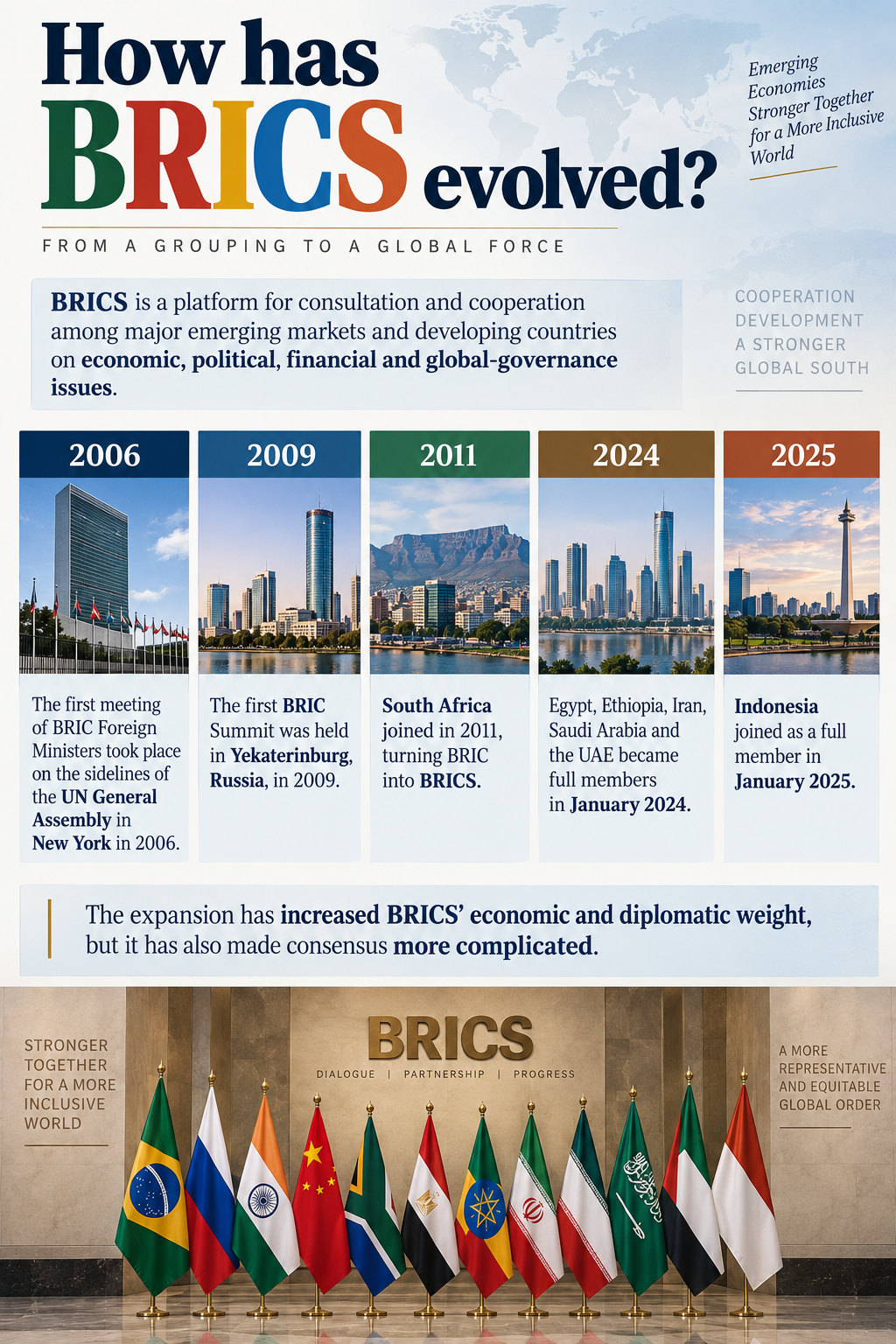
The 18th BRICS Summit, hosted by India in New Delhi on September 12–13, comes at a significant juncture for the grouping. As BRICS expands in membership and broadens its areas of cooperation, the summit assumes greater importance in shaping the role of emerging economies and developing countries in the evolving global order.
Also Read:
- BRICS, De-Dollarisation, Global Trade: Can BRICS Reshape the Global Economic Order?
- BRICS Bank - an alternative but in vain
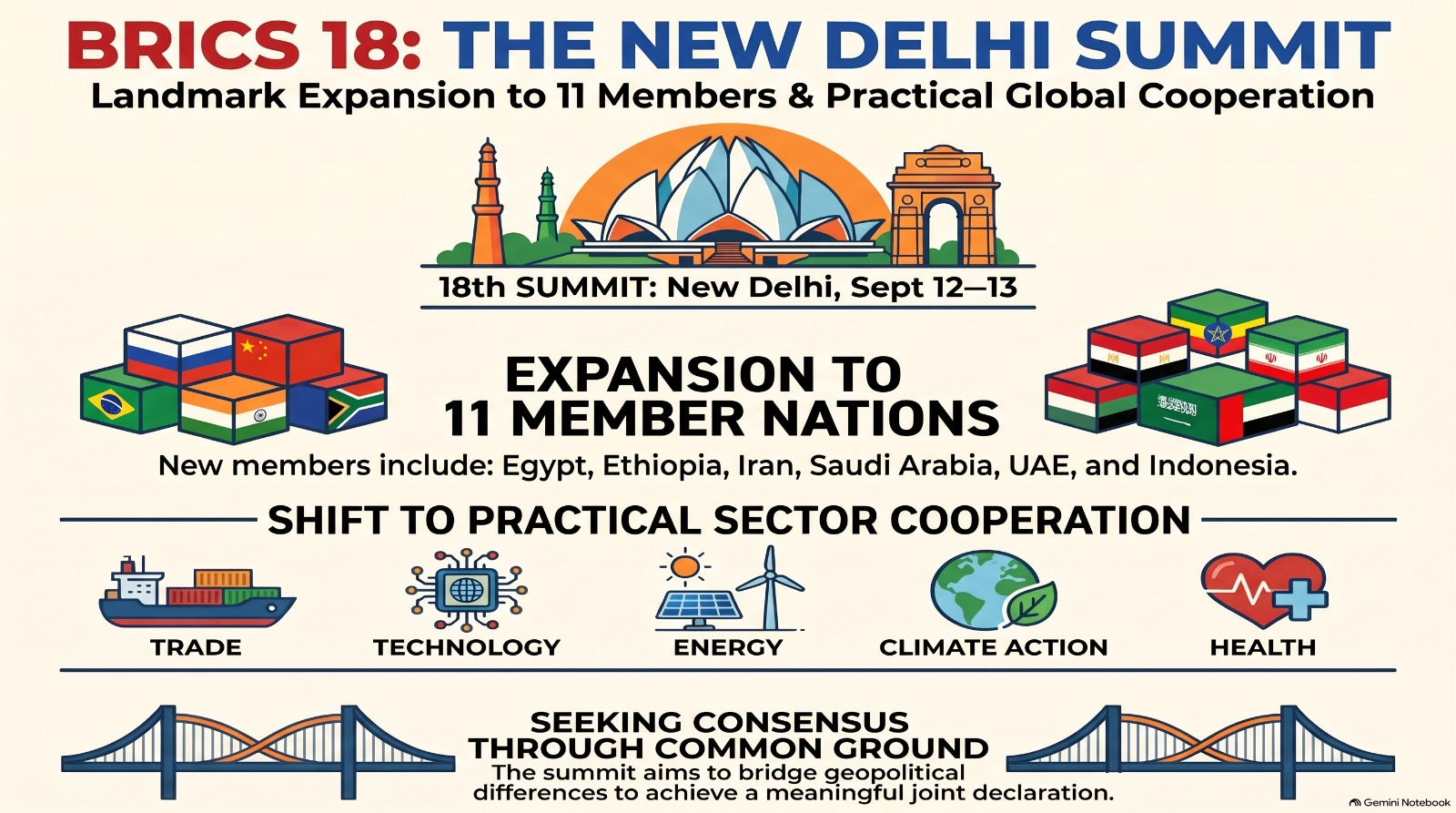
The crucial question, however, is whether BRICS can translate this wide-ranging agenda into a common political outcome. The challenge is particularly significant because geopolitical differences, including disagreements over the West Asia conflict, have already made consensus difficult at some ministerial meetings. India’s task as chair is consequently not to eliminate differences among members, but to identify sufficient common ground to achieve a credible and meaningful summit declaration.