PDMC promotes micro-irrigation, efficient water use, higher productivity, reduced agricultural inputs, improved farmer incomes, groundwater conservation, and sustainable, climate-resilient agriculture across India.
Syllabus Areas:
GS III - Economy
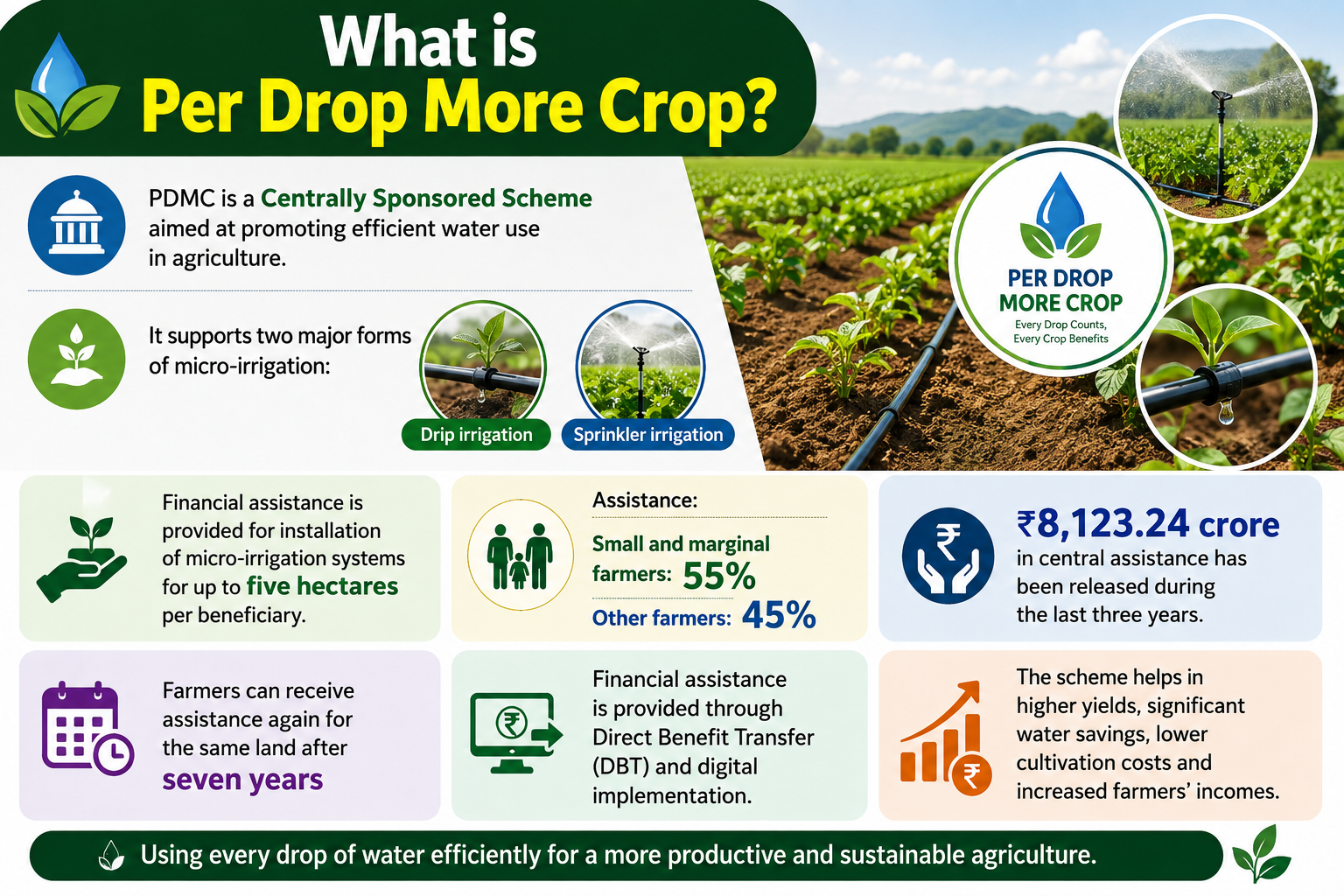
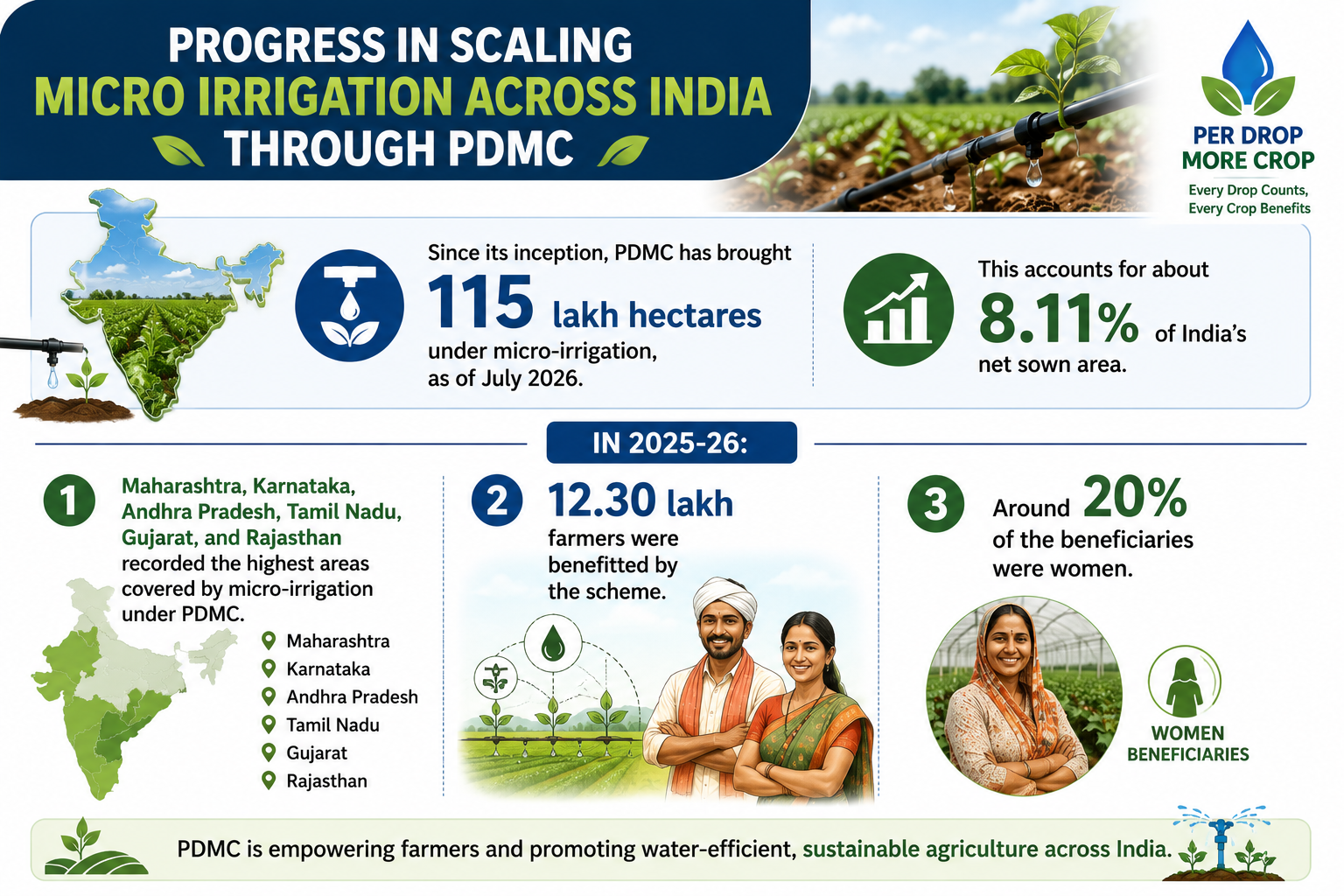
Per Drop More Crop (PDMC) promotes micro-irrigation to enhance water-use efficiency and agricultural productivity. As of July 2026, it covers 115 lakh hectares. DBT and digital implementation improve transparency, while micro-irrigation delivers water savings, higher yields, lower costs, and increased farmers’ incomes.
Need for Efficient Irrigation in India
-
More than 80% of India's available water resources are used for agricultural irrigation.
-
At the same time, only around 50% of the net sown area has irrigation facilities.
-
This makes improvement in water-use efficiency a major national priority.
-
Micro-irrigation addresses this challenge by delivering water directly to crops while minimising losses.
PDMC under PM-RKVY
-
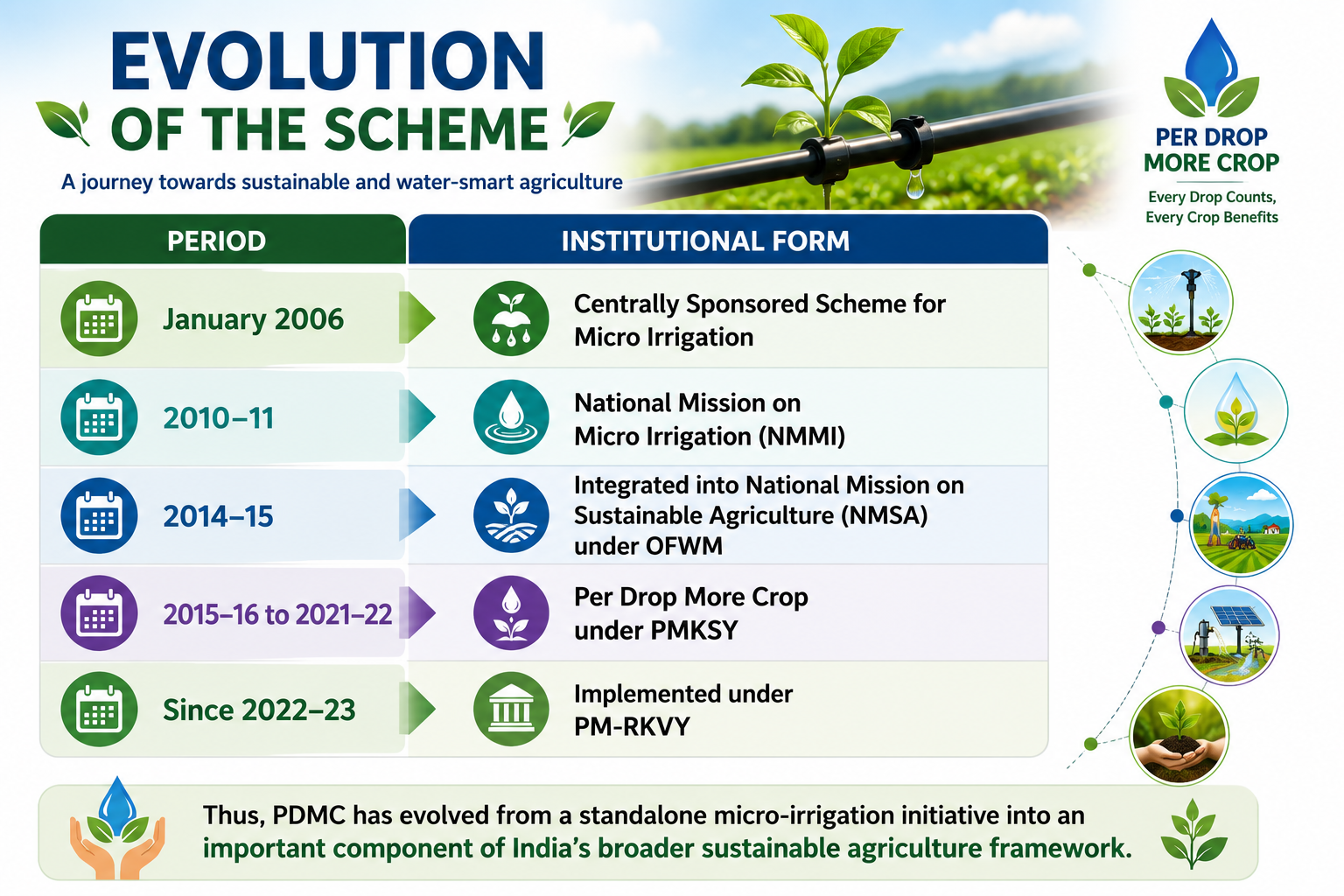
Rashtriya Krishi Vikas Yojana (RKVY) was launched in 2007–08 for holistic development of agriculture and allied sectors.
-
It was restructured as Pradhan Mantri Rashtriya Krishi Vikas Yojana (PM-RKVY) in October 2024.
-
PM-RKVY functions as an umbrella scheme merging nine schemes.
-
It covers areas such as:
-
Per Drop More Crop
-
Agricultural mechanisation
-
Soil health management
-
Crop diversification
-
Agri-startup accelerator fund
-
States have flexibility to reallocate funds between components according to their local agricultural requirements.
-
During 2025–26, ₹8,957.72 crore was released/sanctioned for PM-RKVY, including ₹3,226.36 crore for PDMC.
Benefits of Micro-Irrigation
-
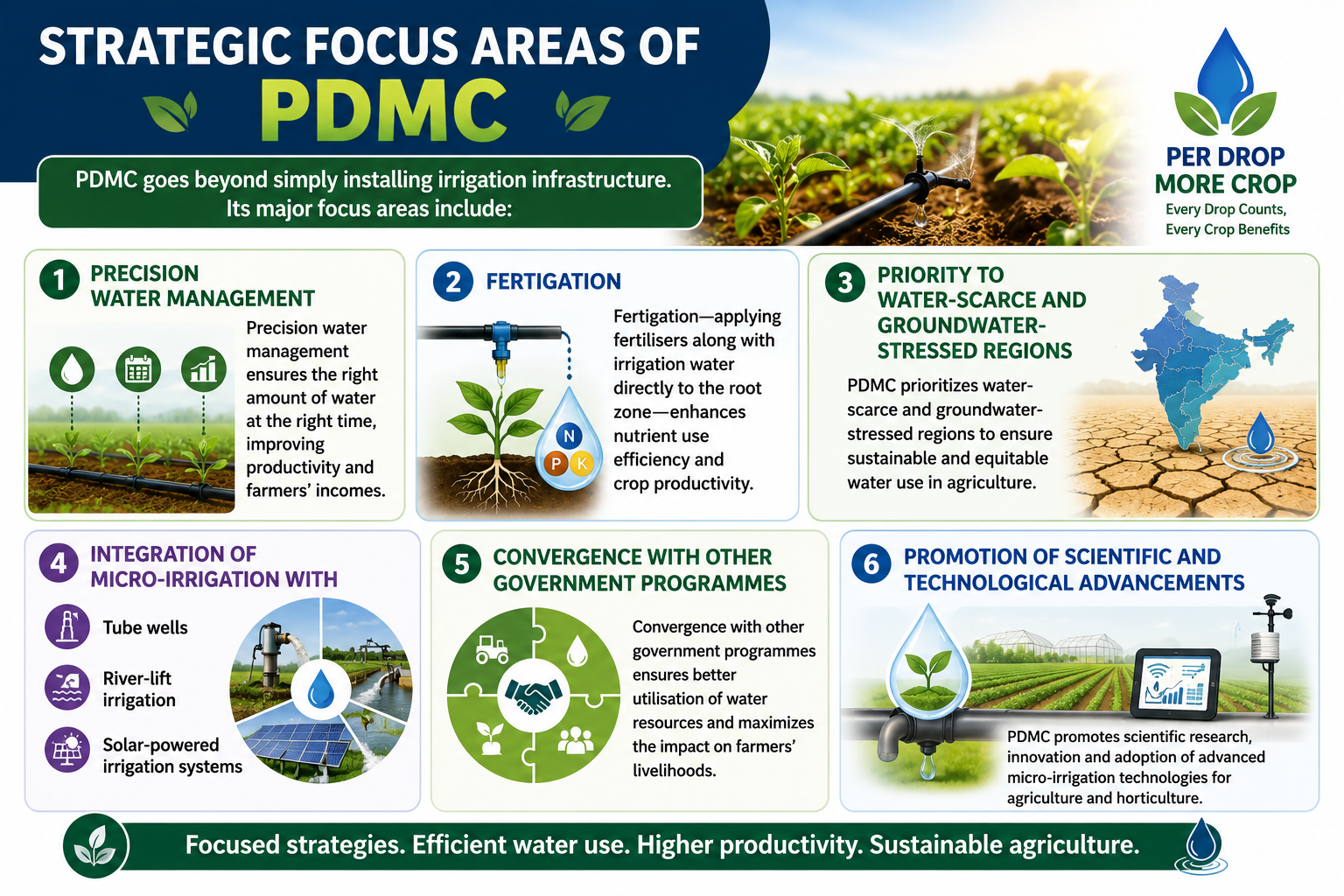
Micro-irrigation enables efficient use of water by delivering it directly to the plant root zone, reducing wastage and improving irrigation efficiency.
-
It lowers the use of water, energy, fertilizers, and labour while supporting better crop growth and higher productivity through the precise application of water and nutrients.
-
The technology also encourages the cultivation of horticultural crops, improves cropping intensity, and brings marginal lands under productive use.
-
By reducing input costs and enhancing farm returns, micro-irrigation contributes to sustainable agriculture, strengthens farmers' livelihoods, and promotes long-term food and nutritional security.
New Flexibility for Water Conservation
PDMC has introduced greater flexibility for states and UTs to undertake micro-level water storage and conservation activities.
These include:
-
Diggis — large water storage tanks/farm ponds.
-
Water harvesting systems.
-
Individual as well as community-level water conservation structures.
These interventions aim to ensure reliable and sustainable water availability for micro-irrigation.
Earlier, expenditure on such activities under the "Other Interventions" component was capped at:
-
20% of allocation for general States/UTs.
-
40% for North-Eastern States, Himalayan States and the UTs of Jammu & Kashmir and Ladakh.
The revised guidelines allow States/UTs to exceed these limits according to their local requirements
Also Read Types of Mico-Irrigation under PDMC