India’s reservoir storage shows regional gains despite deficient monsoon rainfall, highlighting water availability, irrigation needs, regional disparities, and the importance of sustainable reservoir management.
Syllabus Areas:
GS I - Geography
GS II - Governance
GS III - Environment
India’s reservoir storage is in focus amid a deficient monsoon, with Central and Western regions exceeding 80% capacity, while overall storage remains below last year’s level and the 10-year average.
Also Read: Jal Sanchay Jan Bhagidari (JSJB)
What is a Reservoir?
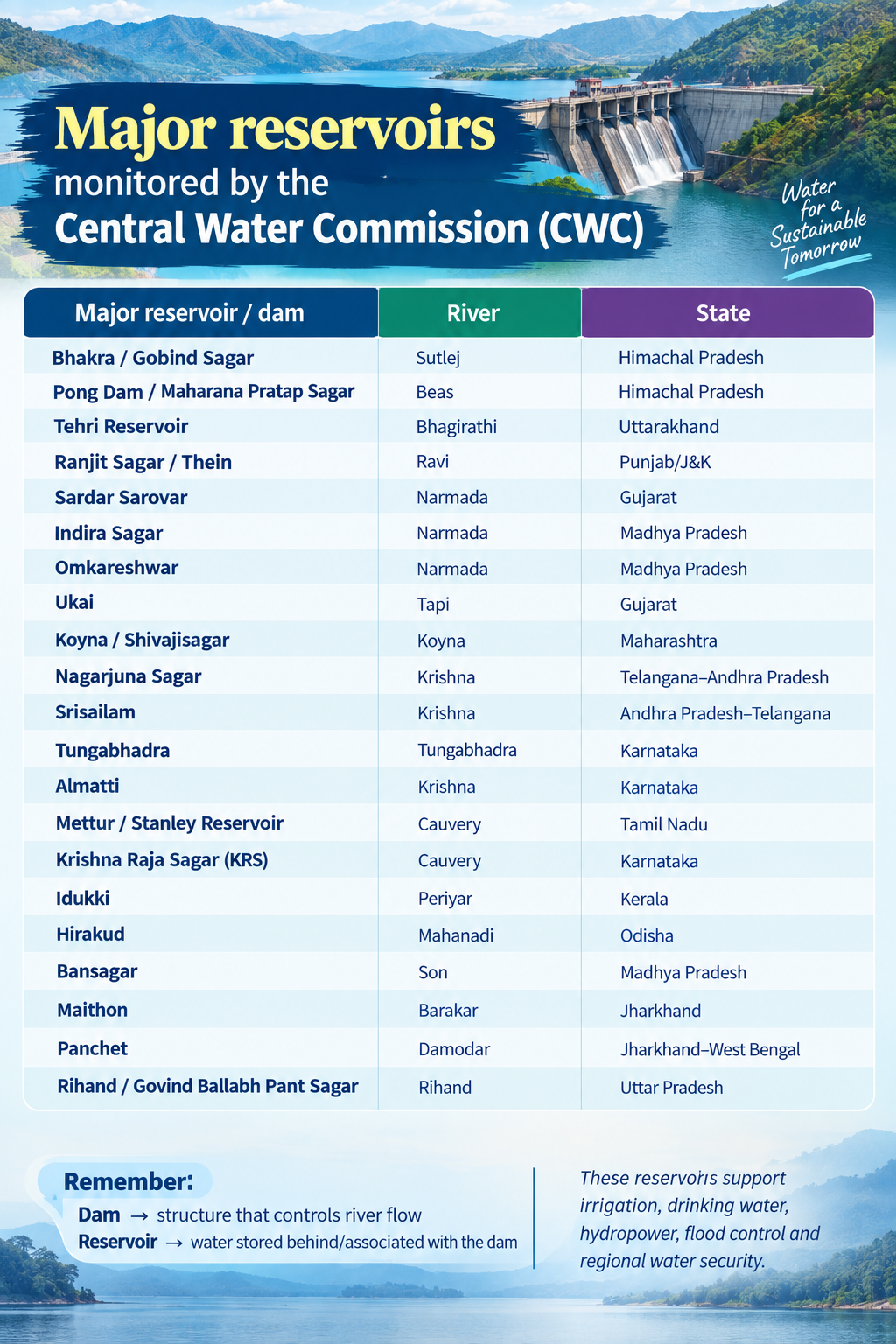
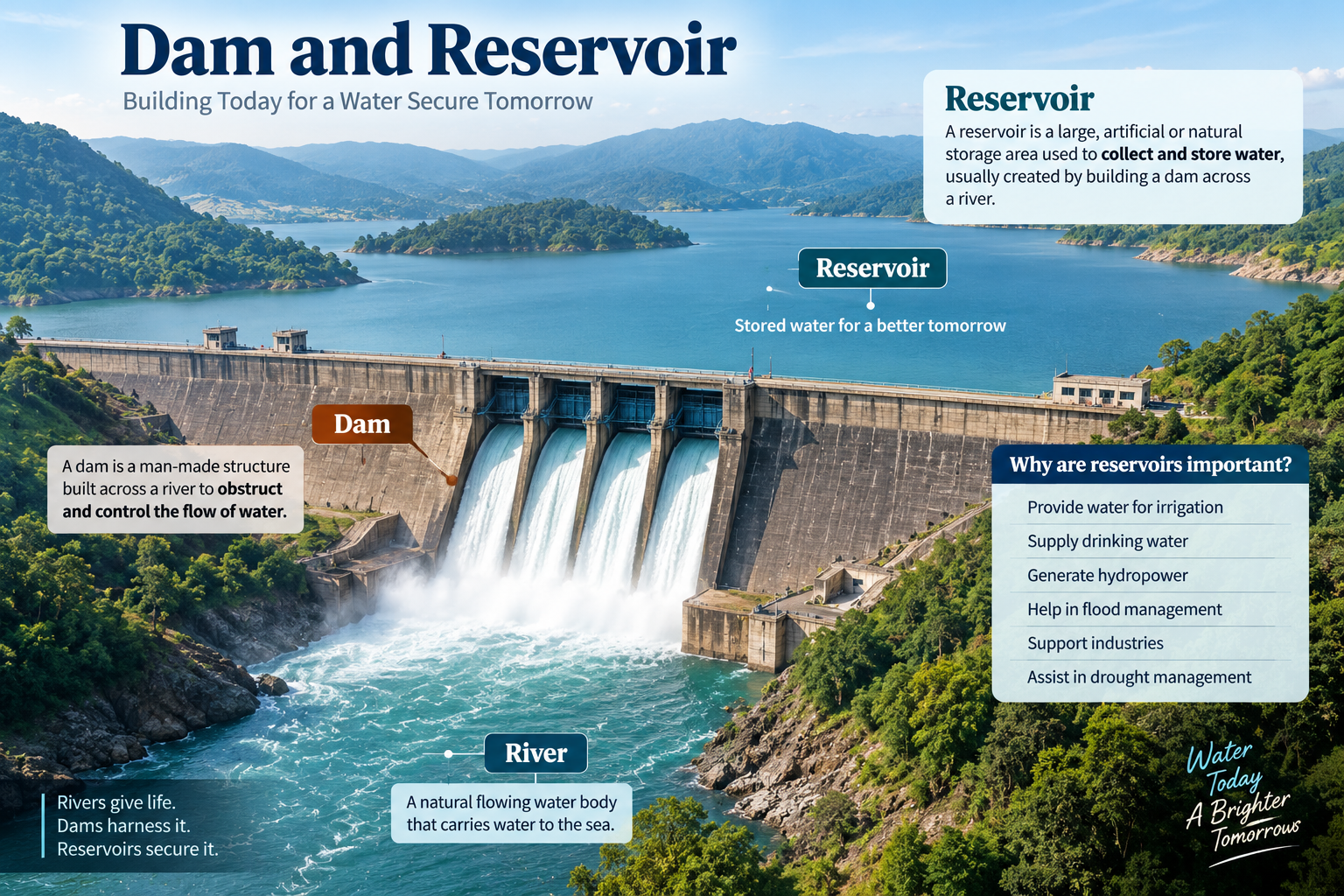
A reservoir is a large, artificial or natural storage area used to collect and store water, usually created by building a dam across a river.
-
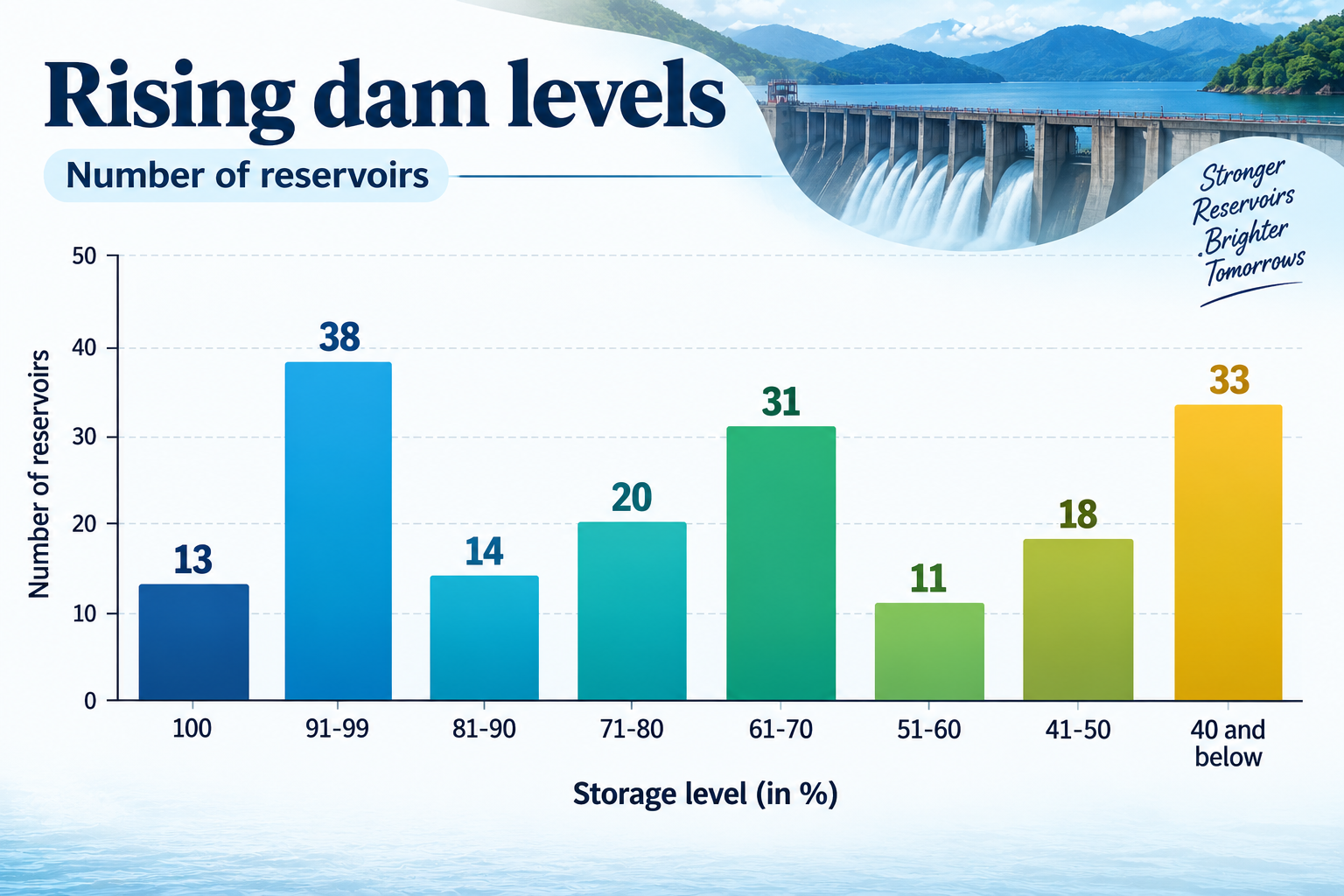
30%+ of 166 major reservoirs have storage above 80% of capacity.
-
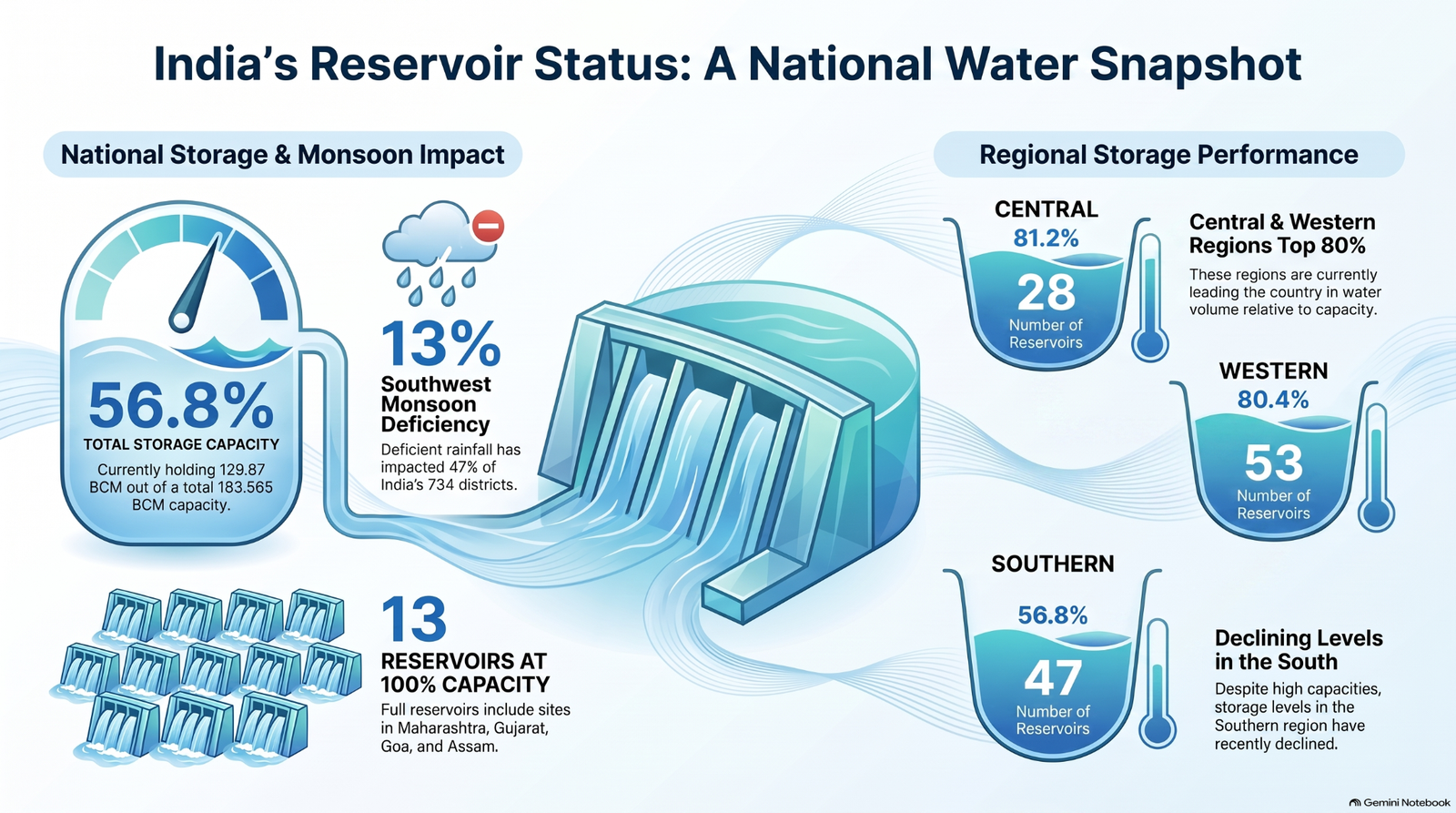
South-West monsoon was 13% deficient as of September 3.
-
47% of 734 districts received deficient rainfall.
-
13 reservoirs were full, including 5 in Maharashtra; 51 remained below 50% capacity.
-
Continued rainfall in the coming days may further improve reservoir storage.
-
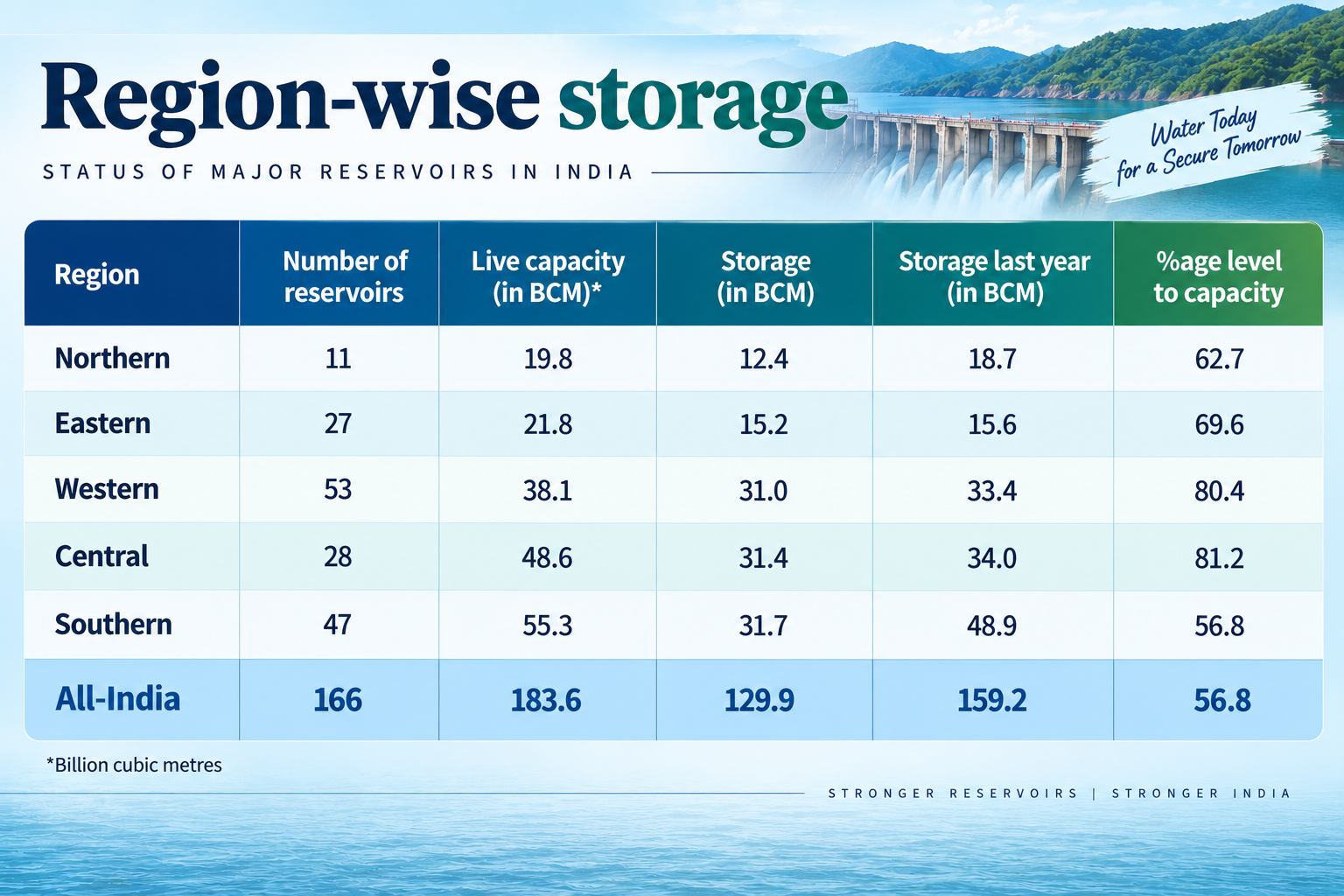
Central (81.2%) and Western (80.4%) regions recorded the highest storage levels.
-
Overall reservoir storage stood at 56.76%, or 129.87 BCM of 183.565 BCM capacity.
-
4 of 5 regions had storage above 60%, but Southern storage declined.
-
Overall storage remained below both last year’s level and the 10-year average.