Explore the three key sessions of India’s Quantum Biotechnology Conference, covering quantum biology, academic research, biosensor translation, opportunities, challenges, and future pathways.
Syllabus Areas:
GS III - Science & Technology | Biotechnology | Quantum Technology
The National Conference on Quantum Biotechnology brought together India’s quantum science and life-science communities to explore how quantum technologies can be translated into practical applications in diagnostics, biomedical imaging, drug discovery and precision medicine.
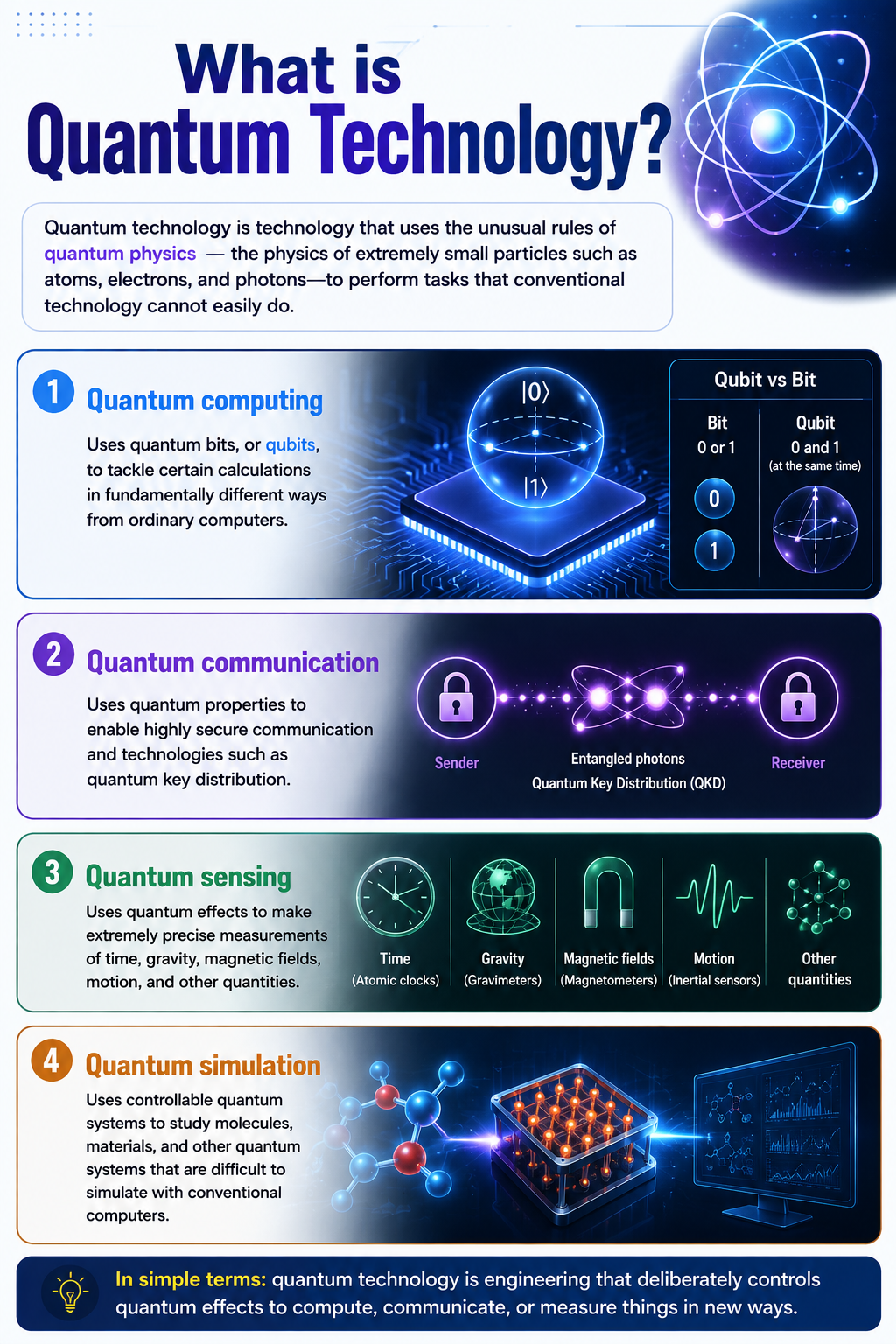
What is Quantum Biotechnology?
Quantum Biotechnology lies at the intersection of:
-
Quantum sensing
-
Quantum imaging
-
Quantum computing
-
Biotechnology and life sciences
It seeks to use the extraordinary measurement and computational capabilities of quantum technologies to address biological and medical questions that conventional instruments may not be able to answer.
Major Focus of the Conference
The conference focused on moving quantum biotechnology from lab research → industry → deployable healthcare technologies.
It emphasised an interdisciplinary ecosystem bringing together physicists, biologists, clinicians, researchers, industry, start-ups and students to translate scientific innovations into practical healthcare solutions.
Key Applications of Quantum Biotechnology
A. Diagnostics: Quantum-grade sensing can potentially enable highly precise biological measurements, improving the detection and understanding of diseases.
B. Biomedical Imaging: Quantum-enabled imaging technologies can offer new approaches to observing biological systems and processes.
C. Drug Discovery: Quantum technologies can contribute to understanding complex biological and molecular interactions, potentially supporting more efficient drug-discovery processes.
D. Precision Medicine: Quantum sensing and computing could support more precise understanding of biological characteristics, contributing to personalised healthcare approaches.
E. Biosensing: A major focus is the development of quantum biosensors capable of detecting biological phenomena with remarkable precision.
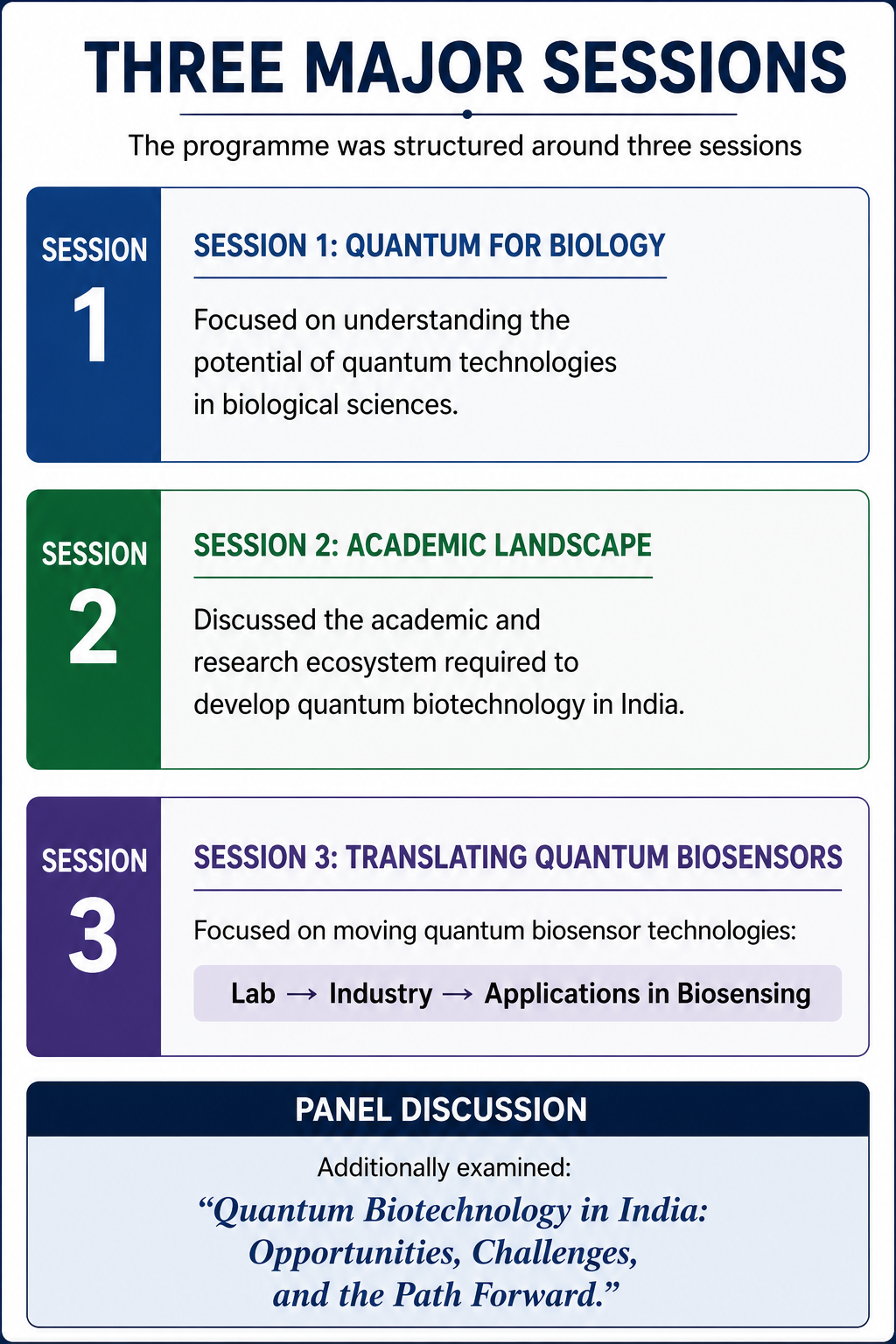
Major Challenges:
The conference stressed that technological progress cannot occur through isolated efforts.
Key challenges include:
1. Interdisciplinary coordination: Quantum science and life sciences need to work together rather than operate in separate silos.
2. Translation gap: A major challenge is converting promising laboratory demonstrations into deployable healthcare technologies.
3. Industry participation: Greater participation from industry is required to convert research into commercially viable technologies.
4. Start-up ecosystem: Start-ups need support to take emerging quantum-biotechnology solutions towards real-world applications.
5. Talent development: India requires researchers and professionals capable of working across quantum science, biology, medicine and engineering.
6. Manufacturing and testing capability: As technologies move towards clinical applications, India will need appropriate domestic manufacturing and testing capabilities.
Why is Quantum Biotechnology Important for India?
-
Healthcare: Can potentially improve the precision of diagnostics, imaging, biosensing and precision medicine.
-
Scientific Research: Opens new avenues for studying biological questions beyond the capabilities of conventional instrumentation.
-
Innovation: Creates opportunities for new technologies and start-ups at the intersection of quantum science and biotechnology.
-
Strategic Technology Capability: Strengthens India's ability to develop advanced technologies domestically.
-
Industry: Can create new opportunities in quantum sensing, biosensors, medical technology and biotechnology.
-
Atmanirbhar Bharat: Building domestic manufacturing and testing capabilities can reduce dependence on external technologies and strengthen India's high-tech ecosystem.
Significance for the National Quantum Mission
The conference reinforces an important shift in India's quantum strategy:
From fundamental quantum research → towards application-driven quantum technology.
The PIB release specifically highlights the objective of bringing quantum sensing, imaging, computing and biotechnology into a single platform, thereby positioning quantum-enabled life sciences as a priority area for India's research and healthcare innovation agenda.