
Explore jute sector of India, its historical evolution, farmer-focused policies, sustainable applications, technological innovations, market expansion, and growing role in green economic development.
Syllabus Areas:
GS III - Economy, Agriculture, Environment
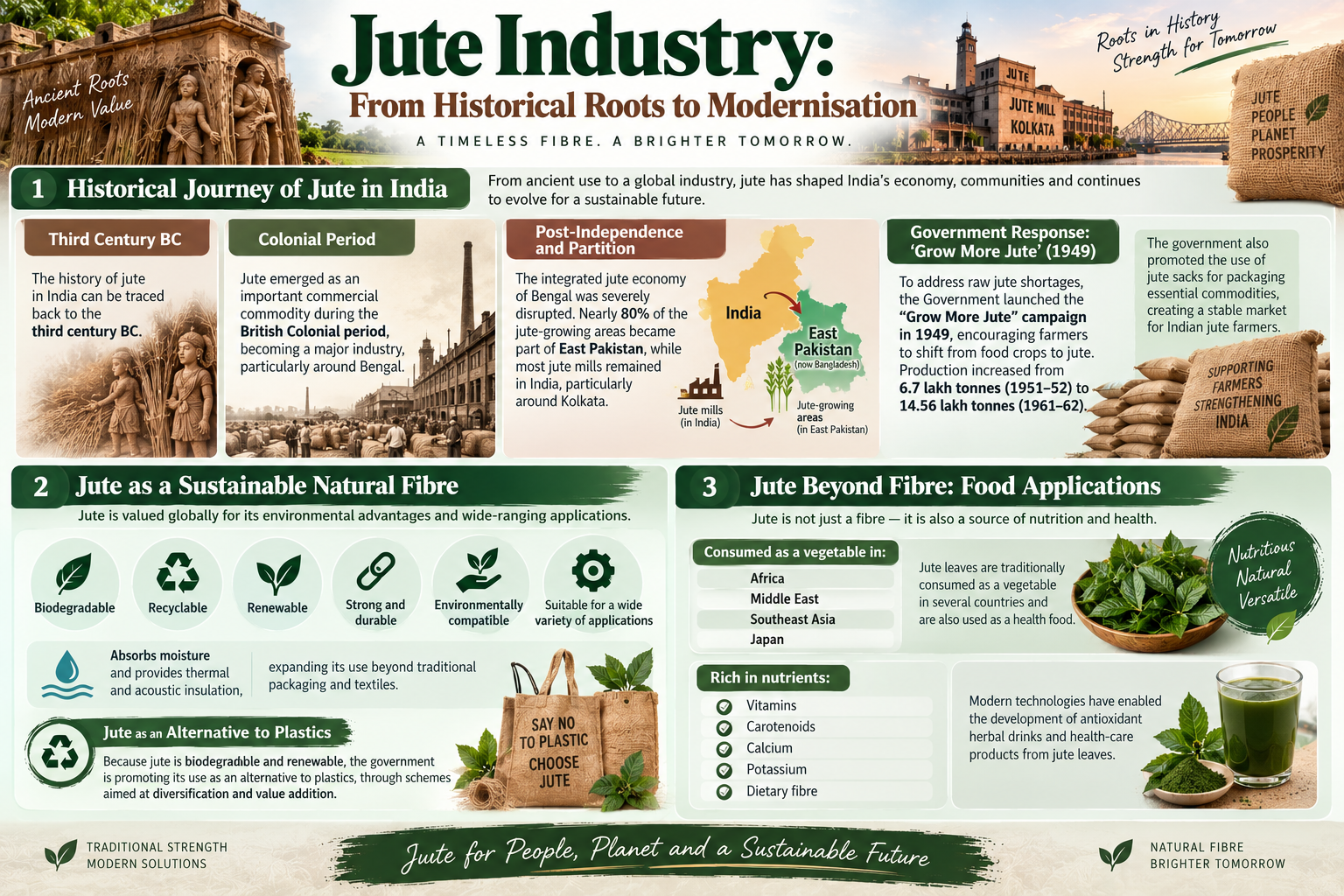
Jute, widely known as India’s “Golden Fibre,” is an important natural fibre with applications ranging from packaging and textiles to agriculture, construction and environmental management. India remains the world’s largest producer of raw jute, and the sector supports millions of farmers, workers and entrepreneurs. Recent government interventions focus on improving productivity, farmer incomes, value addition, diversification and sustainable applications of jute.
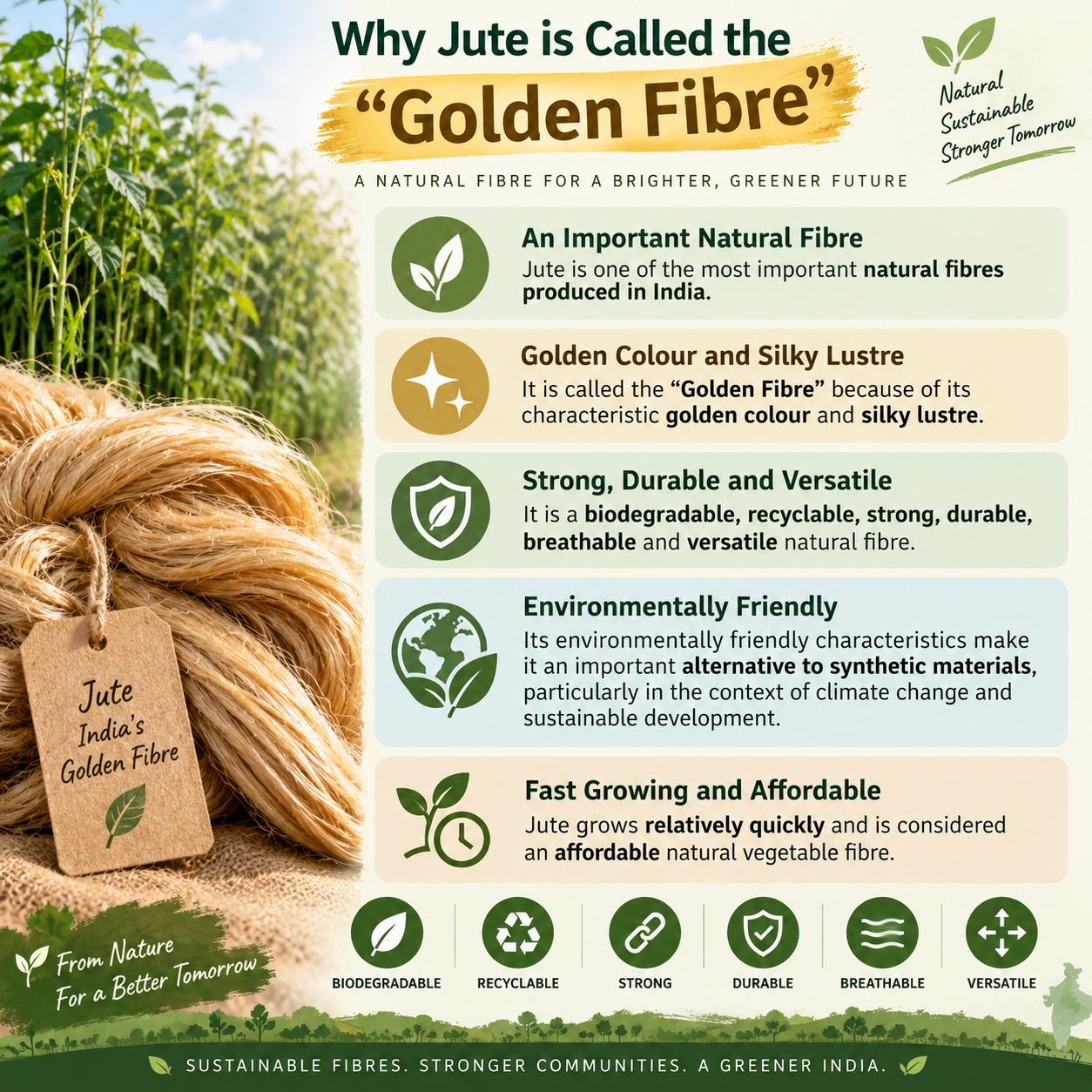
Major characteristics of jute
-
Completely biodegradable and recyclable
-
Strong and durable
-
Breathable
-
Highly versatile
-
Thermal and acoustic insulation properties
-
Good moisture absorption
-
Blends easily with other fibres and wool
-
Relatively inexpensive compared with many other natural fibres
Importance to rural livelihoods
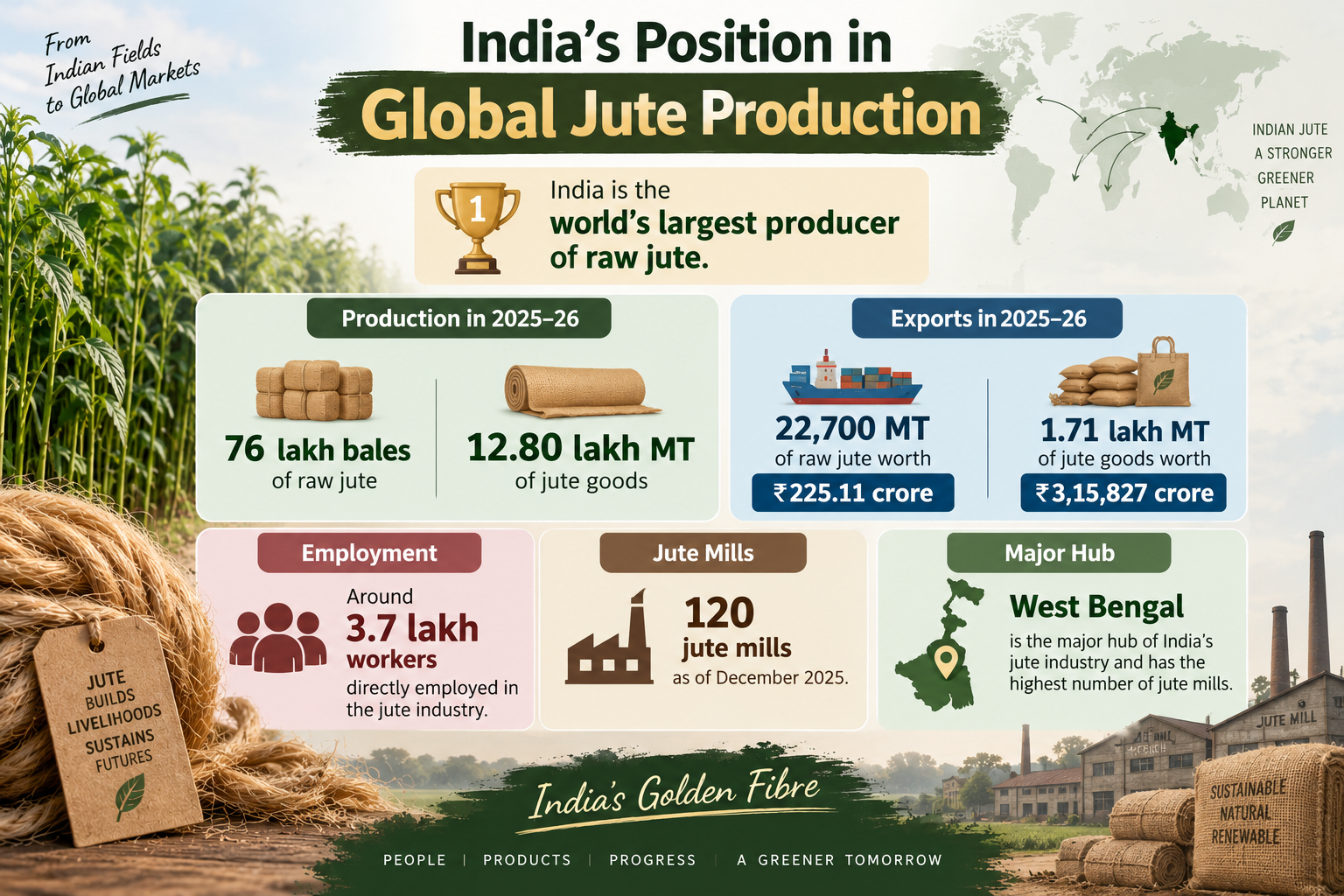
The industry provides direct employment to approximately 3.70 lakh workers and indirectly supports the livelihoods of around 40 lakh farmers and their families, particularly in eastern and northeastern India.
Major Jute-Producing Regions
Jute cultivation is concentrated mainly in regions with suitable agro-climatic conditions.
Major producing states
-
West Bengal
-
Bihar
-
Assam
-
Odisha
-
Andhra Pradesh
-
Jharkhand
West Bengal accounts for the largest share of raw jute cultivation in the country. The article notes that West Bengal alone has 89 of India’s 120 composite jute mills.
Jute Geotextiles: Jute for Sustainable Infrastructure
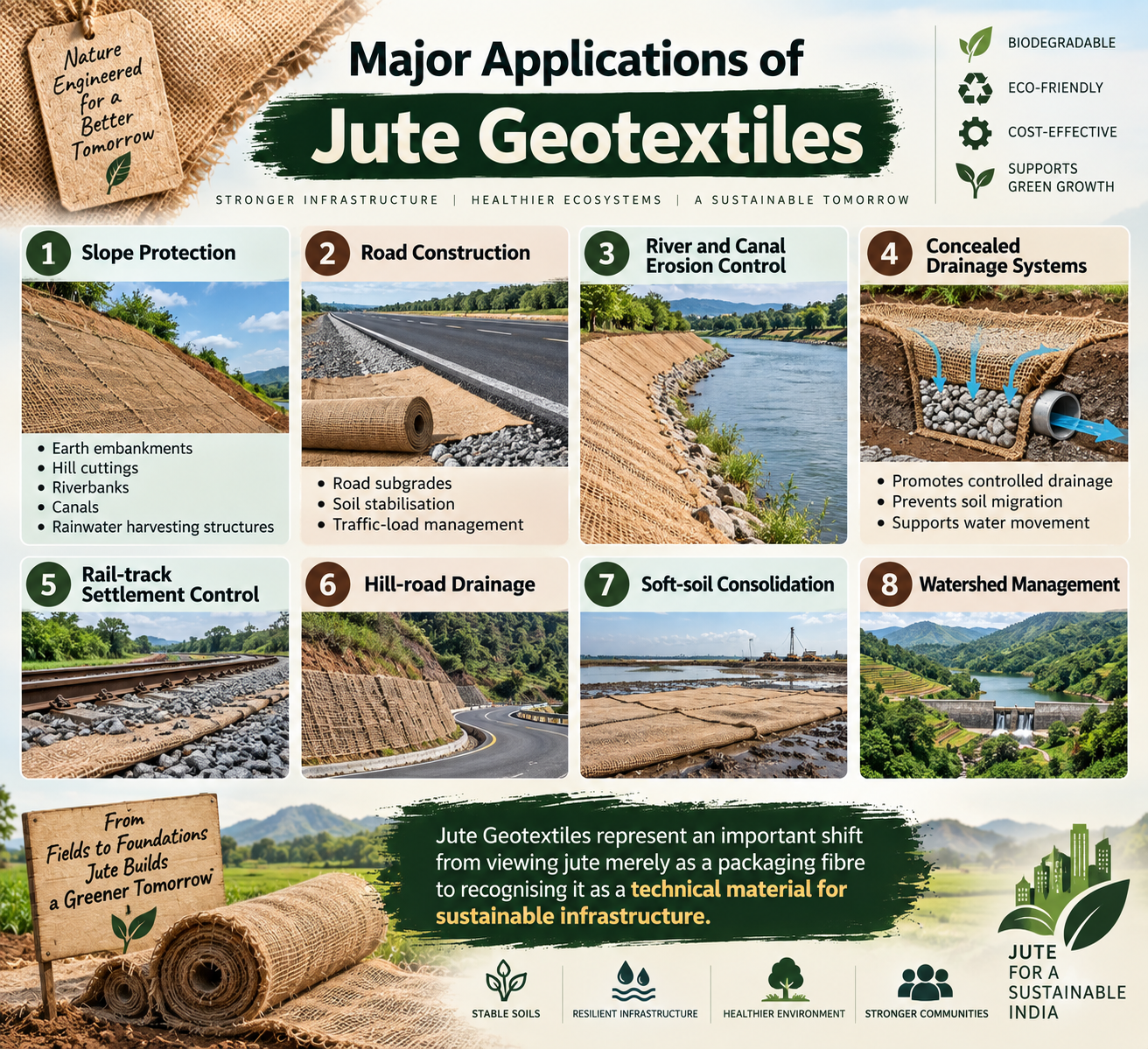
JGT is a versatile, diversified jute product belonging to the technical textiles category. It can be applied in many fields of civil engineering and environmental management.
Why Jute Geotextiles are important
Jute geotextiles are:
-
Fully biodegradable
-
Environmentally friendly
-
Economical
-
Technically effective
-
Suitable for soil stabilisation and erosion control
They help regulate the micro-environment, improve soil temperatures and support germination and early plant establishment.
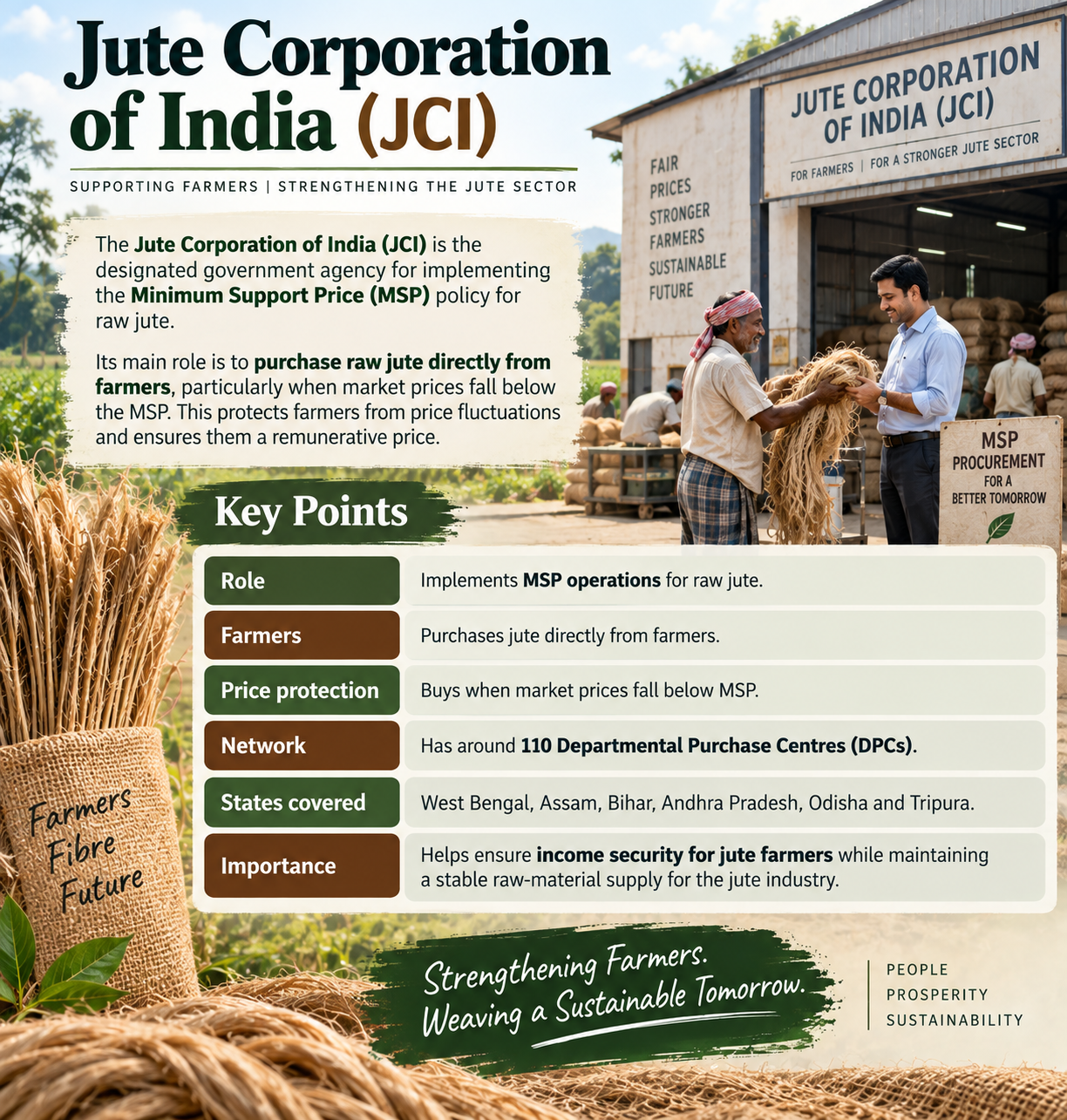
The government raised raw jute MSP to ₹5,925 per quintal in 2026–27, from ₹2,400 in 2014–15, a 147% increase, ensuring remunerative prices, reducing market risks, sustaining cultivation, livelihoods, and industry.
Jute Packaging Materials (Compulsory Use in Packing Commodities) Act:
The Jute Packaging Materials Act promotes jute demand by mandating jute packaging for 100% of foodgrains and 20% of sugar, creating a stable domestic market while supporting jute farmers, mills, employment, and the industry’s sustainability.
Jute Raw Material Bank (JRMB)
The Jute Raw Material Bank (JRMB) facilitates the supply of raw jute materials to the unorganised sector, small production units and manufacturers of diversified jute products. By providing materials at economical prices, it supports artisans, women SHGs and MSMEs while promoting product diversification and sustaining rural livelihoods.
Jute Mark India Logo
The Jute Mark India initiative promotes authenticity, quality assurance and sustainability across jute products. The logo certifies compliance with quality standards and verifies jute content in labelled products. It strengthens consumer confidence, improves brand recognition and establishes a structured quality framework for India’s jute industry.
Domestic Marketing and Jute Fairs
The government promotes domestic jute consumption through regional jute fairs, with 57 fairs organised during FY 2025–26 across major cities. These fairs provide producers and entrepreneurs opportunities to display products, interact with buyers, expand markets, promote diversified jute products and increase consumer awareness.
Overall Significance of the Jute Sector
-
Sustainable Growth: Promotes sustainable agriculture and environmental conservation through a biodegradable natural fibre.
-
Livelihoods: Supports farmers, rural communities and women SHGs.
-
Industrial Development: Strengthens MSMEs, technical textiles and diversified products.
-
Infrastructure: Expands jute applications in sustainable infrastructure.
-
Green Economy: Encourages jute as an alternative to plastics.
-
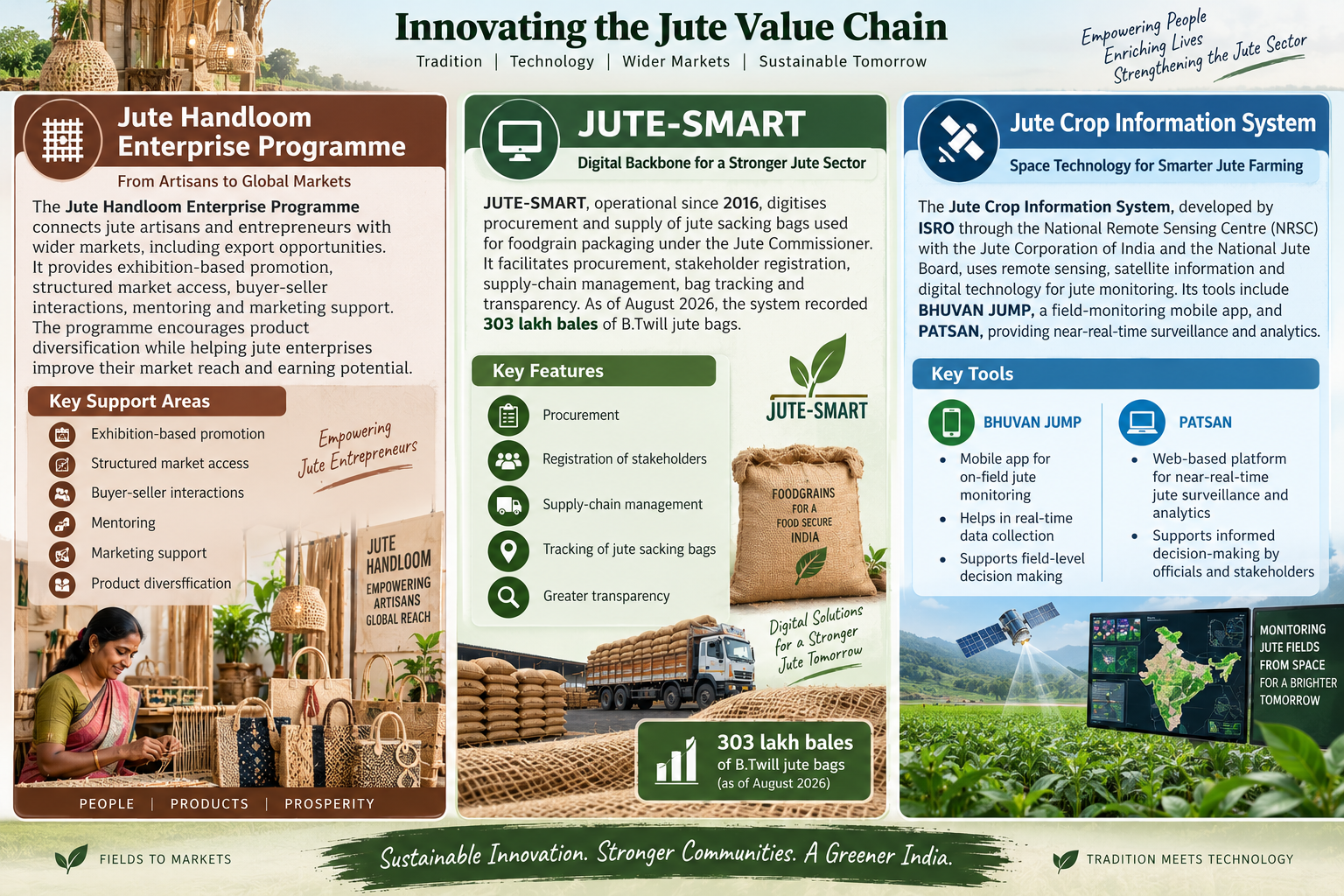
Technology: Integrates digital governance and remote sensing.
-
Global Markets: Promotes exports and market expansion through value addition.
-
Policy Approach: Combines farmer support, industrial development, innovation, sustainability and market development.
India's jute sector is evolving from a traditional fibre industry into a sustainable, diversified and technology-enabled ecosystem that simultaneously supports farmers, rural livelihoods, MSMEs, exports and environmental protection.