
Clean-air strategy of India combines monitoring, NCAP, digital tracking, sector-wise pollution control, green initiatives, and coordinated governance to achieve cleaner air and healthier communities.
Syllabus Areas:
GS III - Environment
Clean air is fundamental to human health, environmental sustainability and economic well-being. With rapid urbanisation and economic activity, air pollution has emerged as an important global environmental challenge.
The International Day of Clean Air for Blue Skies, observed annually on 7 September, highlights the need for stronger action against air pollution. The 2026 campaign focuses on increasing public awareness, facilitating action against air pollution and aligning global efforts with national priorities.
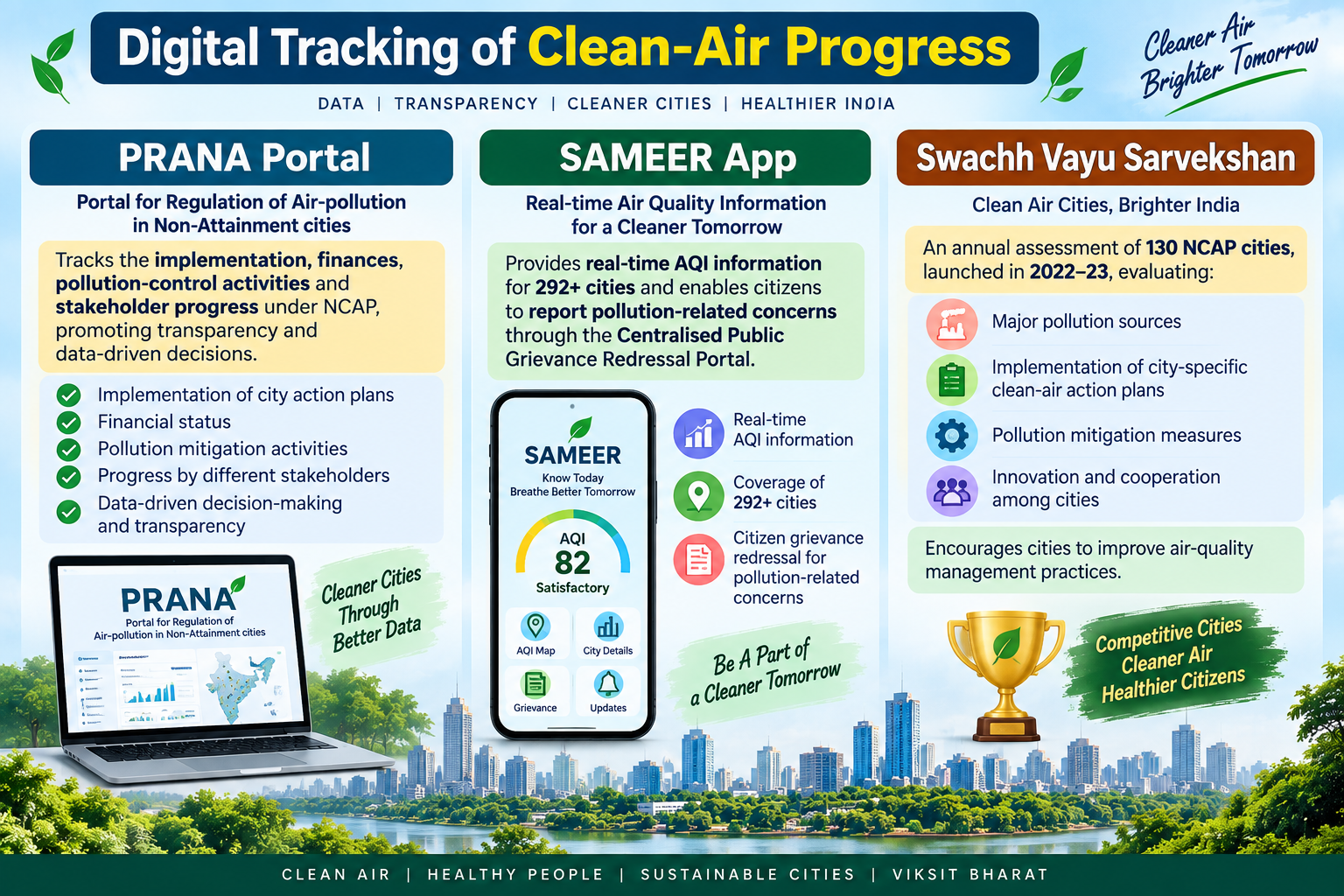
India has adopted a multi-sectoral and science-based approach involving air-quality monitoring, emission control, city-specific action plans, policy interventions and institutional strengthening.
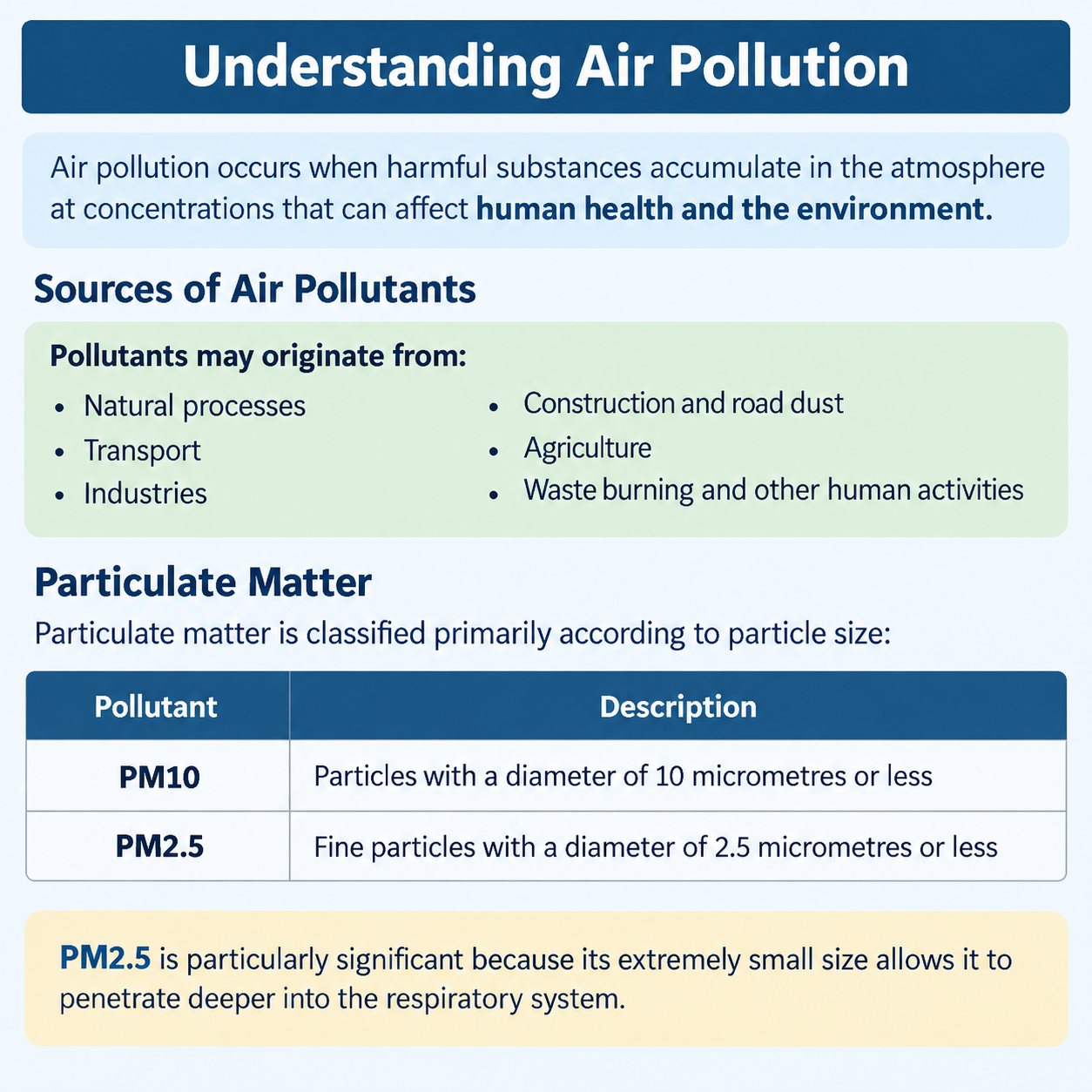
Controlling particulate pollution is therefore an important component of efforts towards cleaner air and healthier communities.
Real-Time Air Quality Monitoring
India uses multiple monitoring systems to track ambient air quality and pollution from industrial sources.
Continuous Ambient Air Quality Monitoring System (CAAQMS)
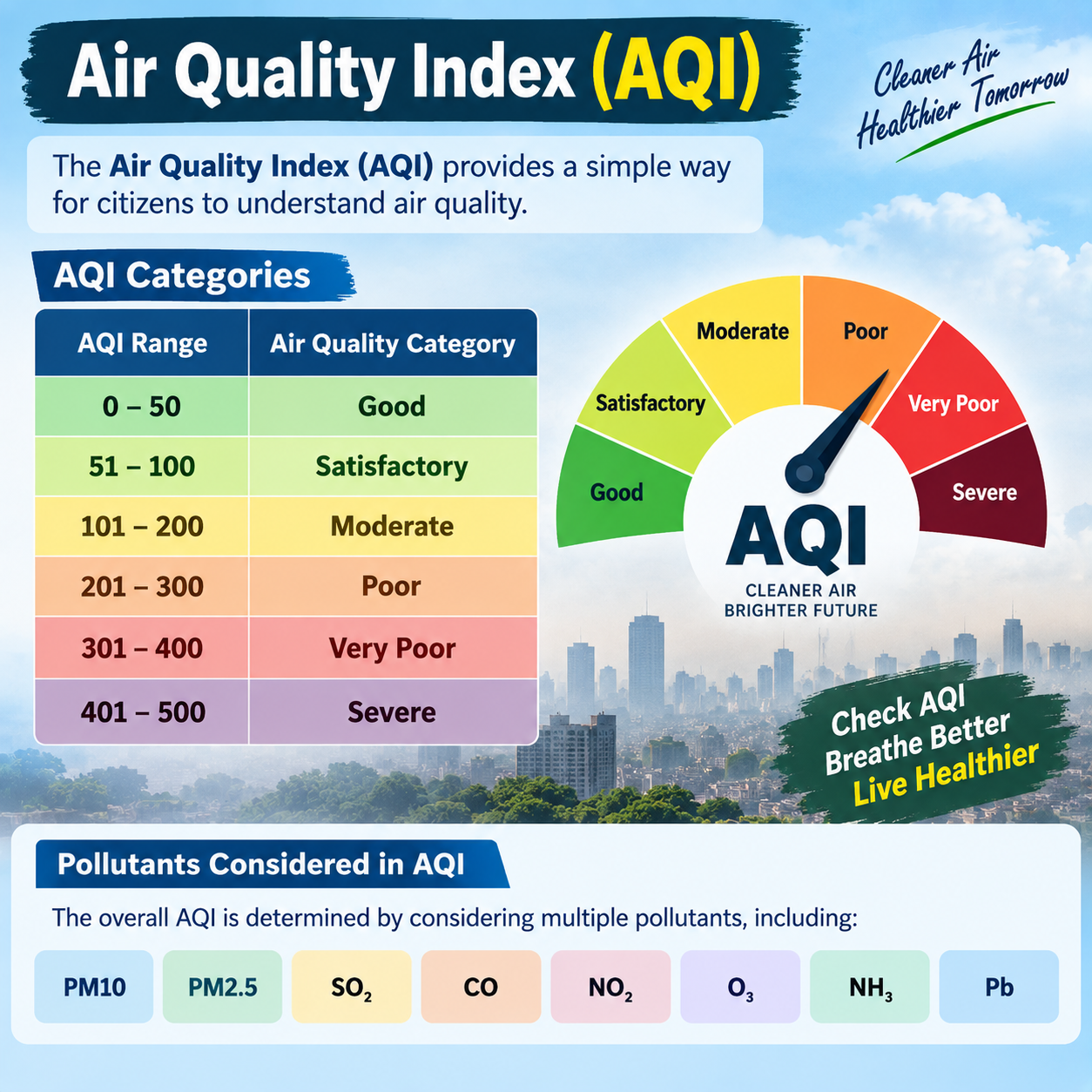
CAAQMS enables real-time monitoring of air quality and tracks pollutants including:
-
PM10
-
PM2.5
-
Sulphur Dioxide (SO₂)
-
Nitrogen Oxides (NOx)
-
Carbon Monoxide (CO)
-
Ozone (O₃)
It also monitors meteorological parameters such as:
-
Wind direction
-
Wind speed
-
Temperature
-
Humidity
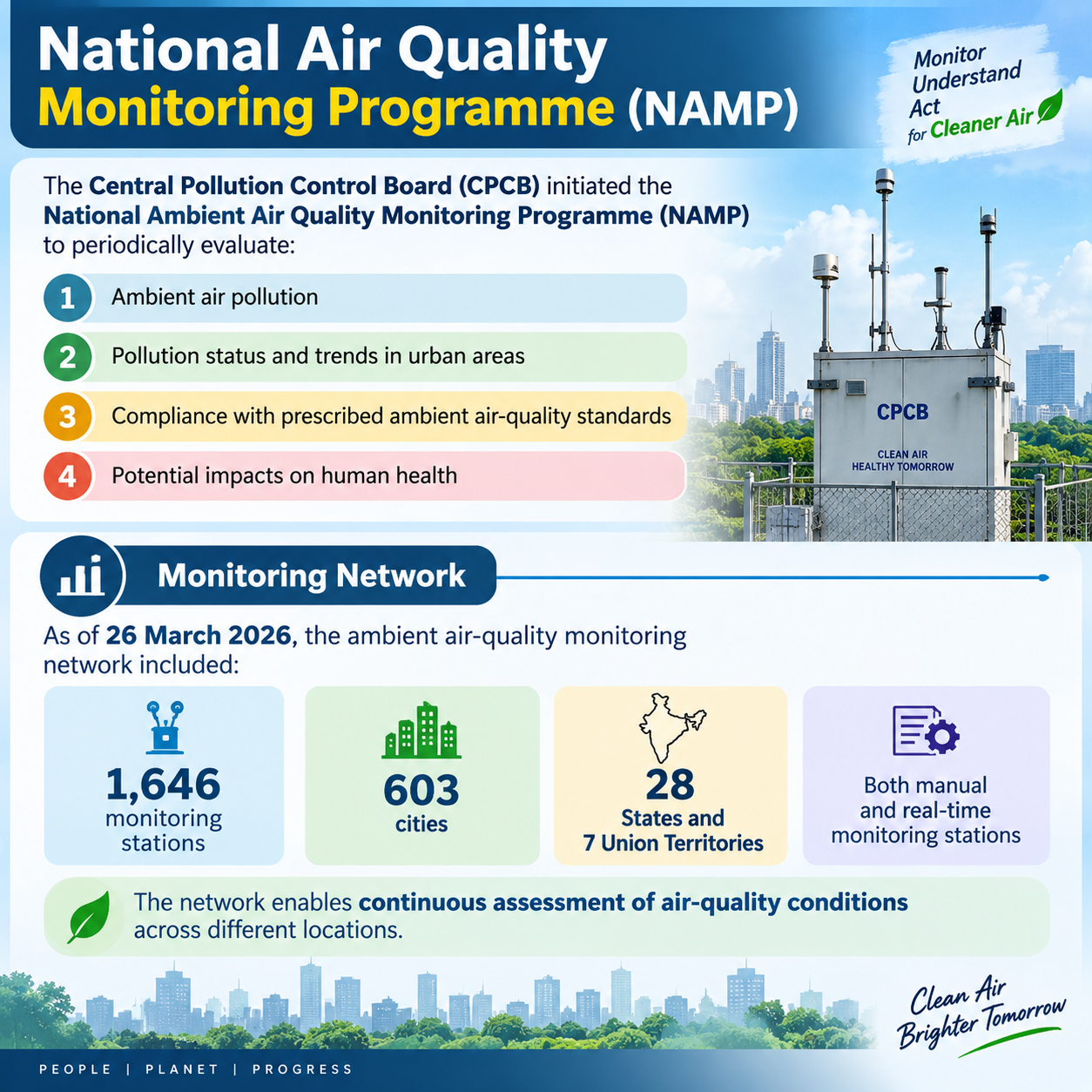
Ambient Air Quality Monitoring System (AAQMS)
-
AAQMS is a broader framework involving both manual and automated monitoring of air pollutants.
-
Manual monitoring involves collection of samples over specified periods, while automated systems provide continuous measurements.
Online Continuous Emission Monitoring System (OCEMS)
OCEMS monitors emissions directly from industrial sources.
-
It is particularly relevant for highly polluting industries and enables industries and regulators to monitor emissions continuously and transmit data to the CPCB.
-
This strengthens regulatory compliance and supports enforcement against industries exceeding prescribed standards
Sector-Wise Measures to Improve Air Quality
-
Vehicular Emissions: BS-VI norms, EV promotion, vehicle scrappage and expansion of electric/public transport.
-
Industrial Emissions: Stricter emission standards, particulate-matter norms and OCEMS for continuous monitoring.
-
Road Dust: Water sprinkling, mechanised road sweeping, covering construction materials and anti-smog measures.
-
Construction Activities: Dust-control measures and compliance monitoring at construction sites.
-
C&D Waste: Scientific collection, recycling, disposal and implementation of C&D Waste Management Rules.
-
Open Waste Burning: Stronger enforcement of waste-management rules and Extended Producer Responsibility (EPR).
-
Crop-Residue Burning: Biomass pelletisation, co-firing in power plants, residue-management machinery and alternative uses.
-
Green Cover: Green India Mission, CAMPA, Nagar Van Yojana and Aravalli Green Wall Initiative.
-
Institutions: CPCB, CAQM and SPCBs undertake monitoring, regulation, coordination and enforcement.
-
GRAP: AQI-based graded action plan in NCR to control pollution through restrictions on construction, vehicles, industries and dust.
India's approach to cleaner air is increasingly moving from awareness to measurement, monitoring, targeted intervention and institutional coordination. The combination of city-specific action plans, real-time monitoring, industrial regulation, cleaner mobility, dust and waste management, crop-residue management and ecological restoration represents a multi-dimensional strategy.
The long-term challenge is to translate these programmes into sustained improvements in ambient air quality, supported by scientific evidence, effective enforcement, local implementation and citizen participation.