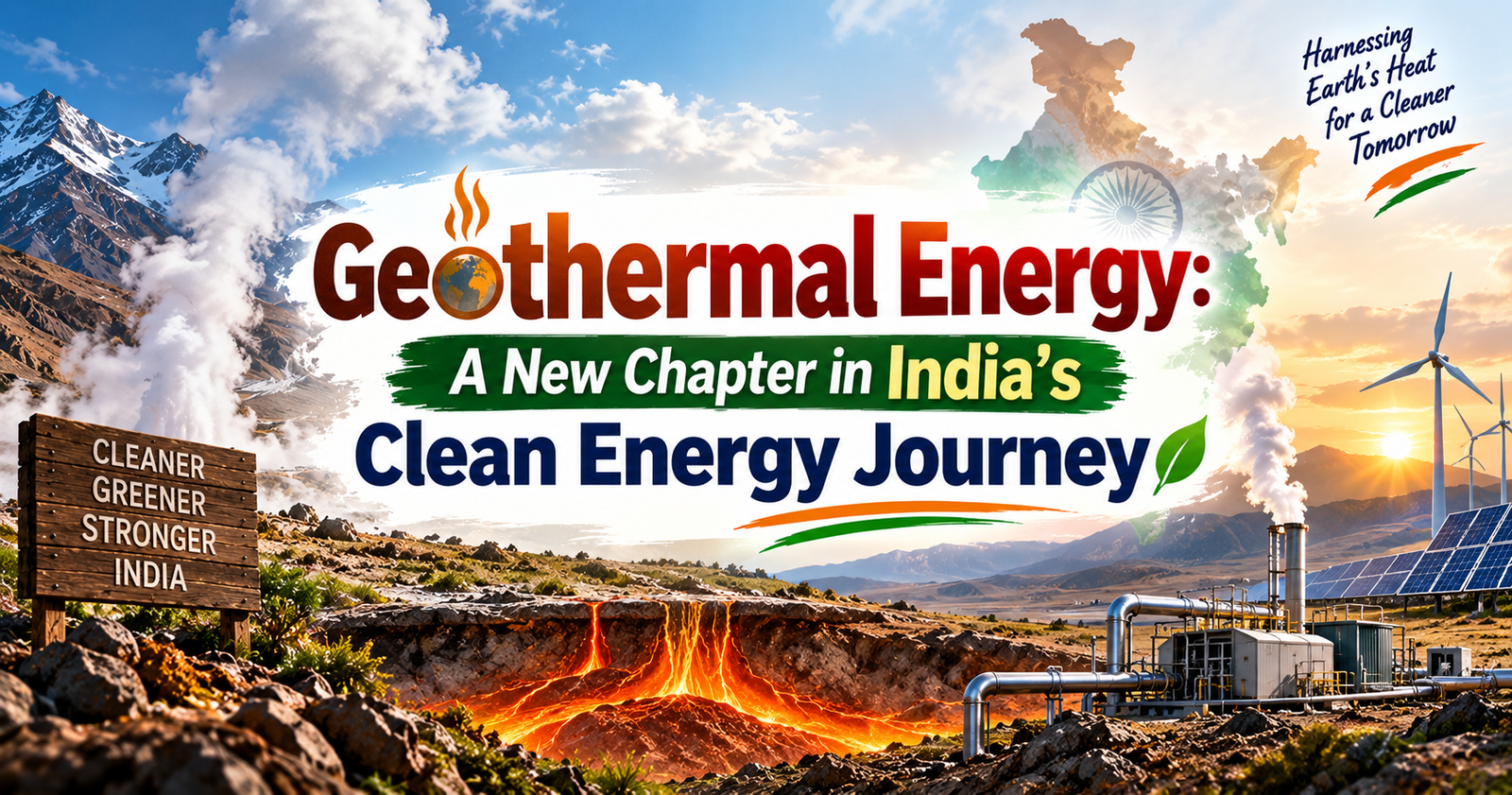
Explore geothermal potential of India, from Puga Valley’s first wells to national policy, global lessons, technological innovation, and pathways toward clean, secure energy and Net Zero 2070.
Syllabus Areas:
GS I - Geography
GS III - Economy
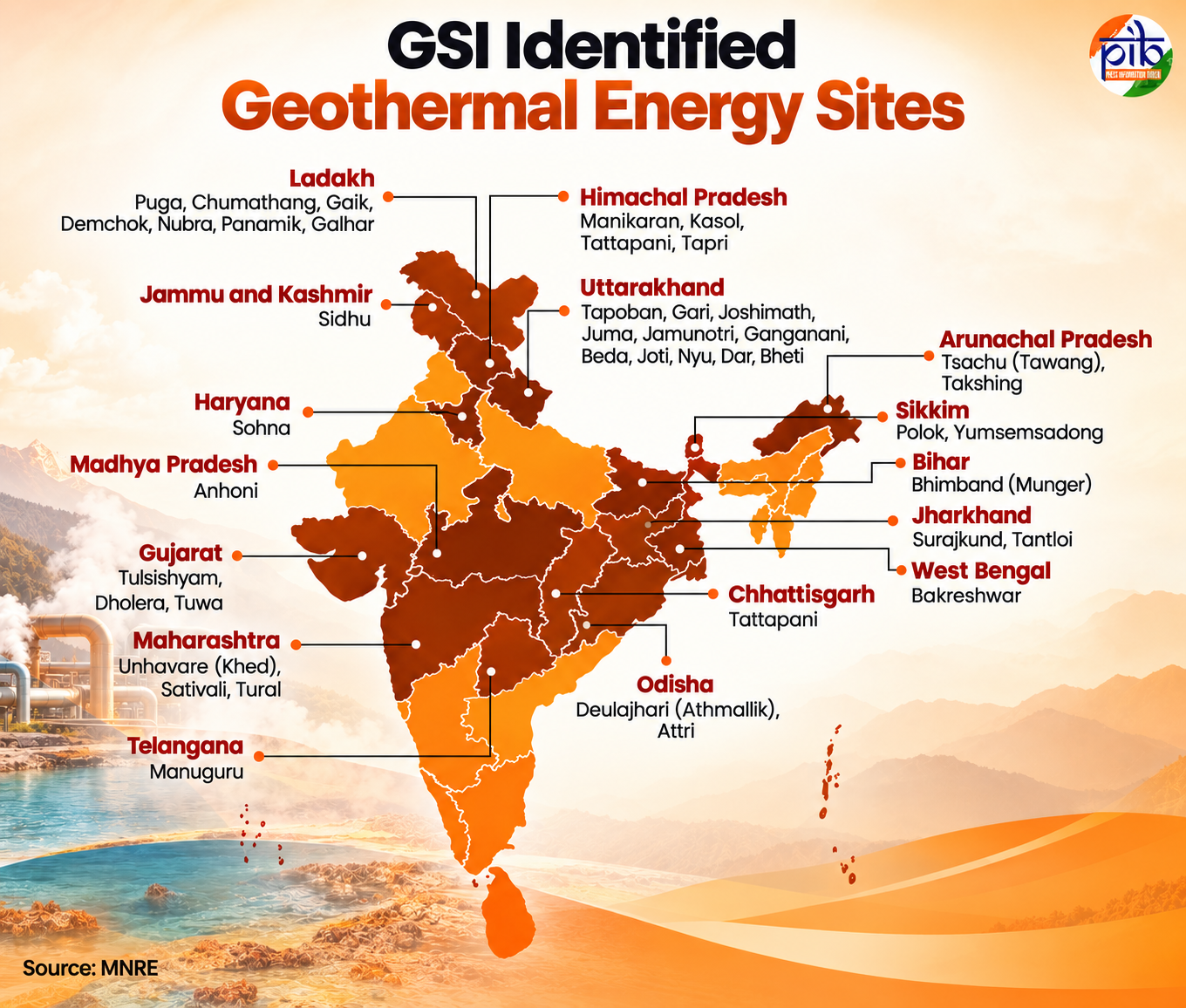
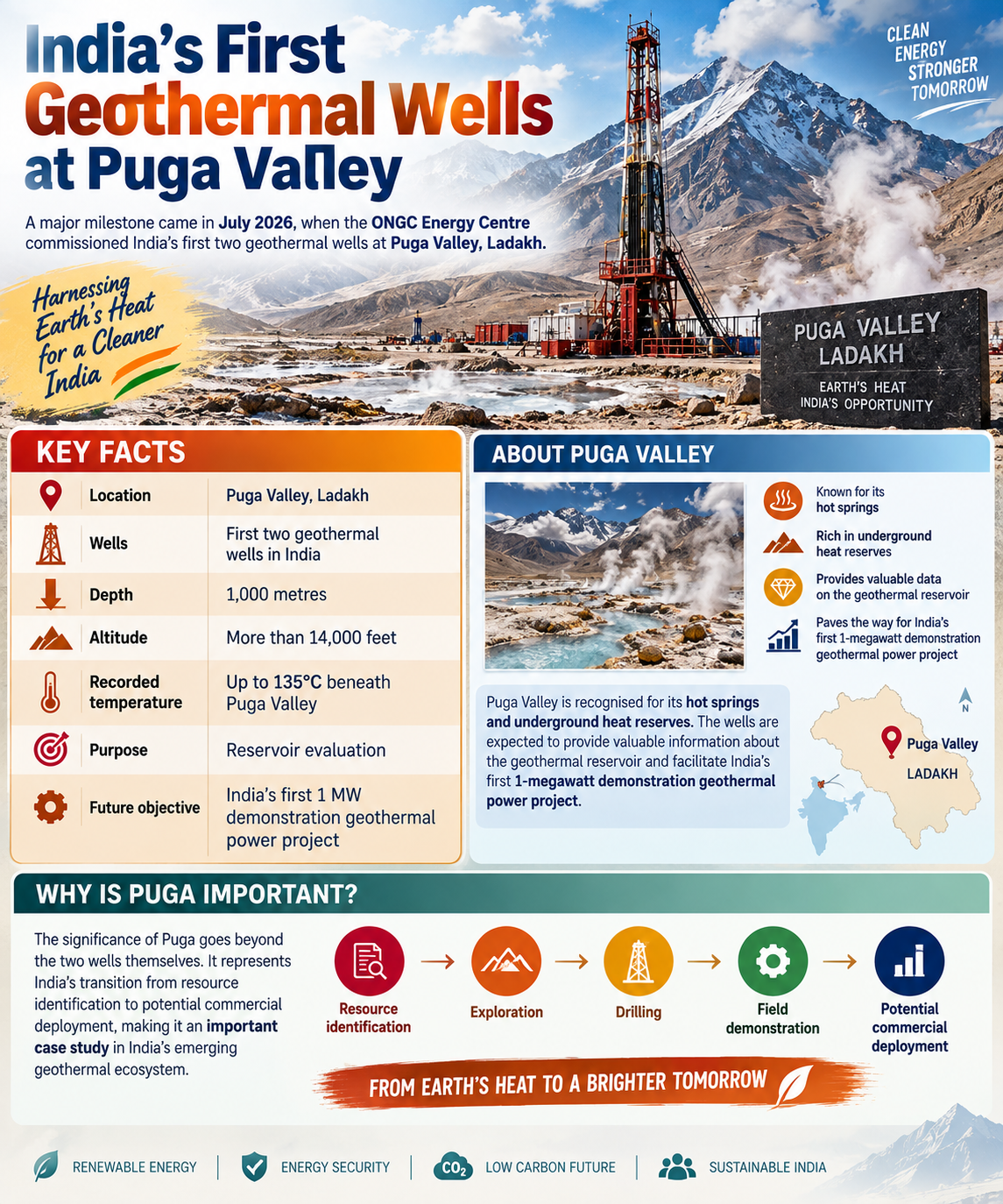
India is increasingly looking beyond conventional renewable sources such as solar and wind to build a reliable, low-carbon and diversified energy system. Geothermal energy—heat derived from the Earth’s interior—offers an important opportunity in this transition. The recent commissioning of India’s first two geothermal wells at Puga Valley in Ladakh marks a significant shift from geothermal resource assessment towards field-level demonstration.
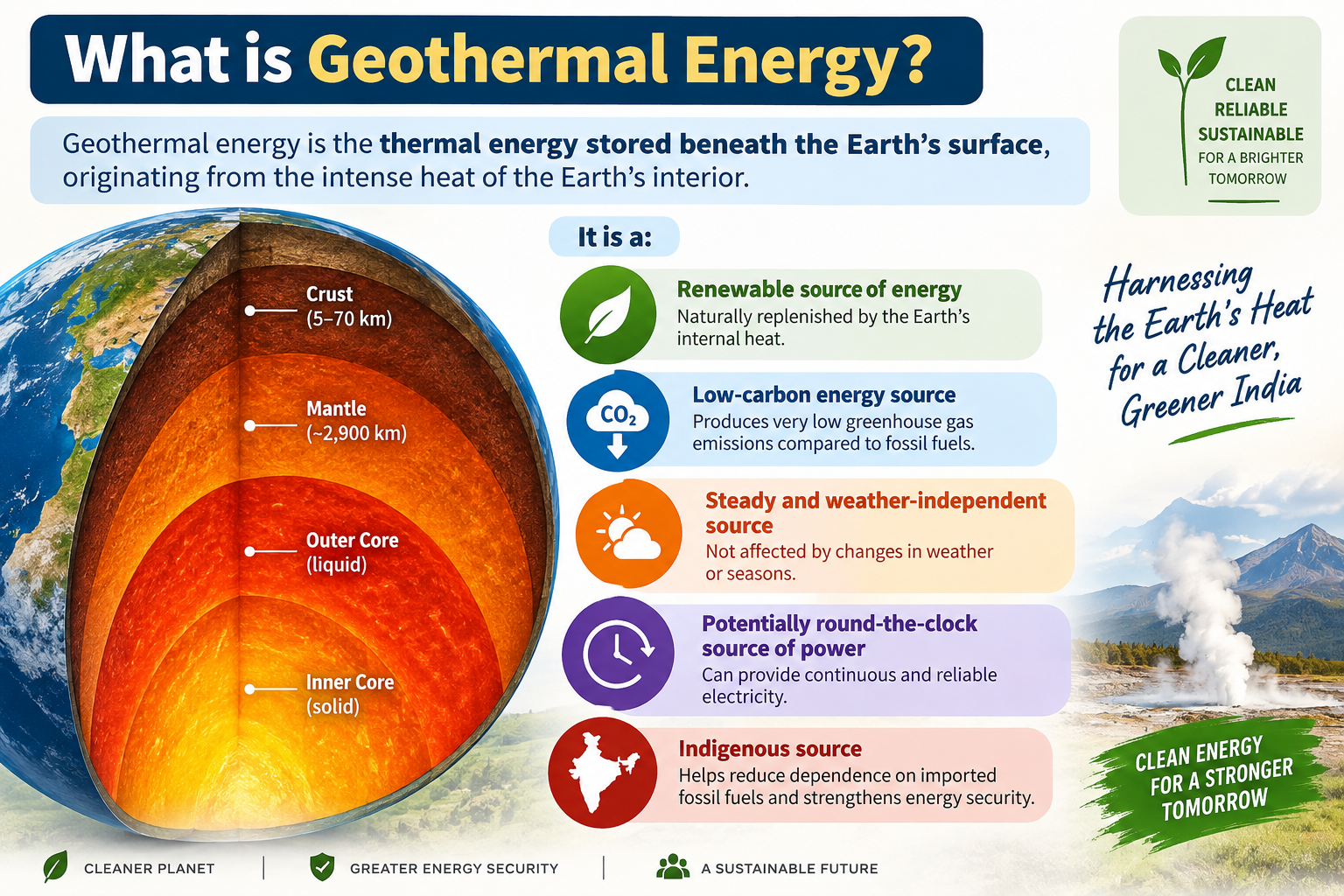
Unlike solar and wind energy, geothermal energy does not depend directly on sunlight or wind conditions. This gives it an important role in providing a more stable renewable-energy mix
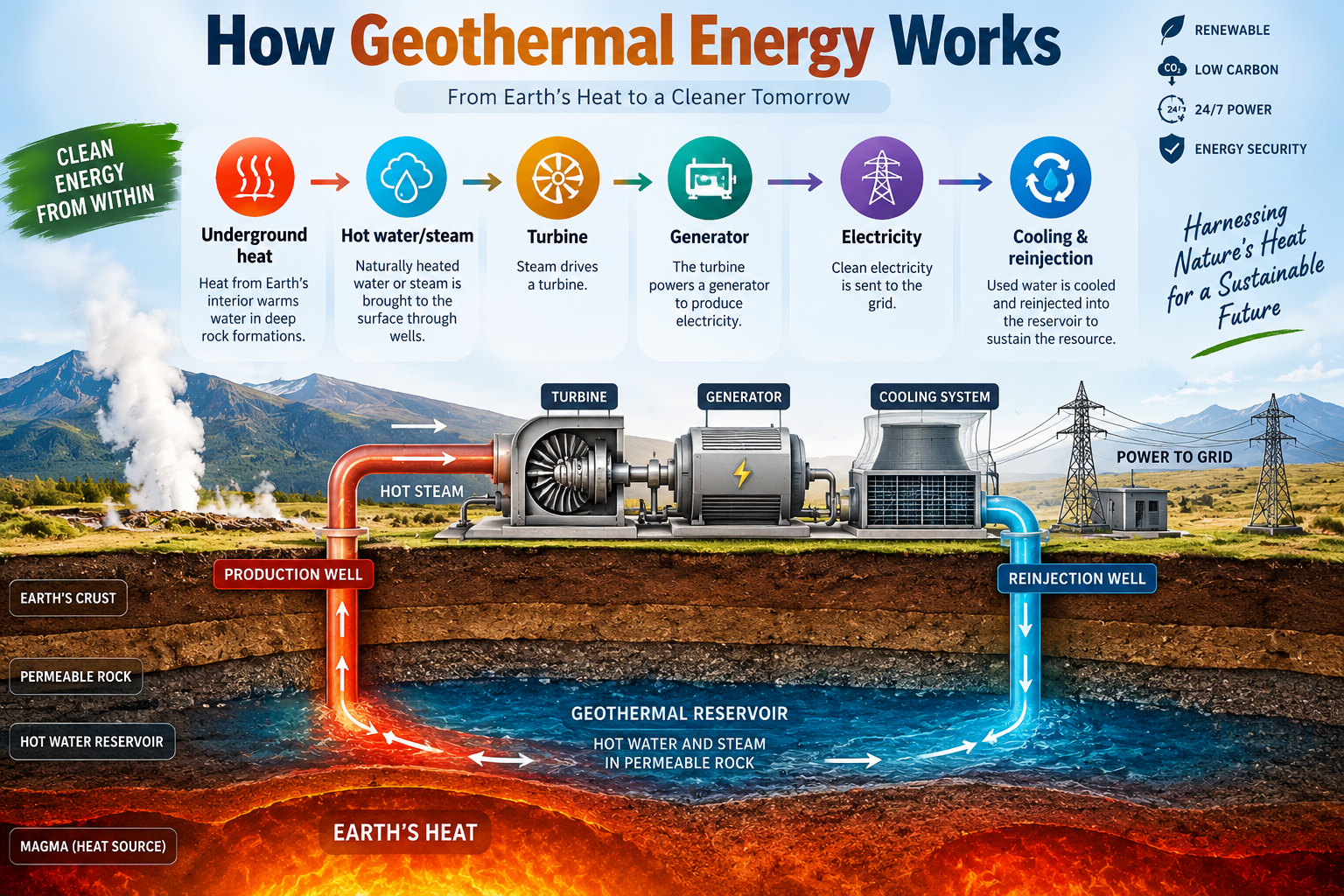
Deep wells bring naturally heated water or steam to the surface. The steam can drive a turbine connected to a generator. After electricity generation, the water can be condensed and reinjected into the geothermal reservoir, helping replenish the resource.
Why is the Earth Hot?
Earth’s interior contains enormous heat, which increases with depth.
-
Four layers: Crust → Mantle → Outer Core → Inner Core
-
Temperature: ~3,700°C at the mantle–core boundary; 5,000–6,000°C in the core.
-
Main sources of heat: Radioactive decay of uranium, thorium and potassium, plus residual heat from Earth’s formation.
-
This heat drives convection currents and, through geological faults and fractures, can bring hot fluids closer to the surface.
-
These processes create geothermal reservoirs of hot water and steam, which can be harnessed for energy.
Geothermal Energy: Electricity and Beyond
Geothermal energy is used for electricity generation by converting underground hot water and steam into power. It also provides direct heat for district heating, agriculture, aquaculture, space heating, cooling, and other thermal applications, making it a versatile renewable energy source.
Enhanced and Advanced Geothermal Systems
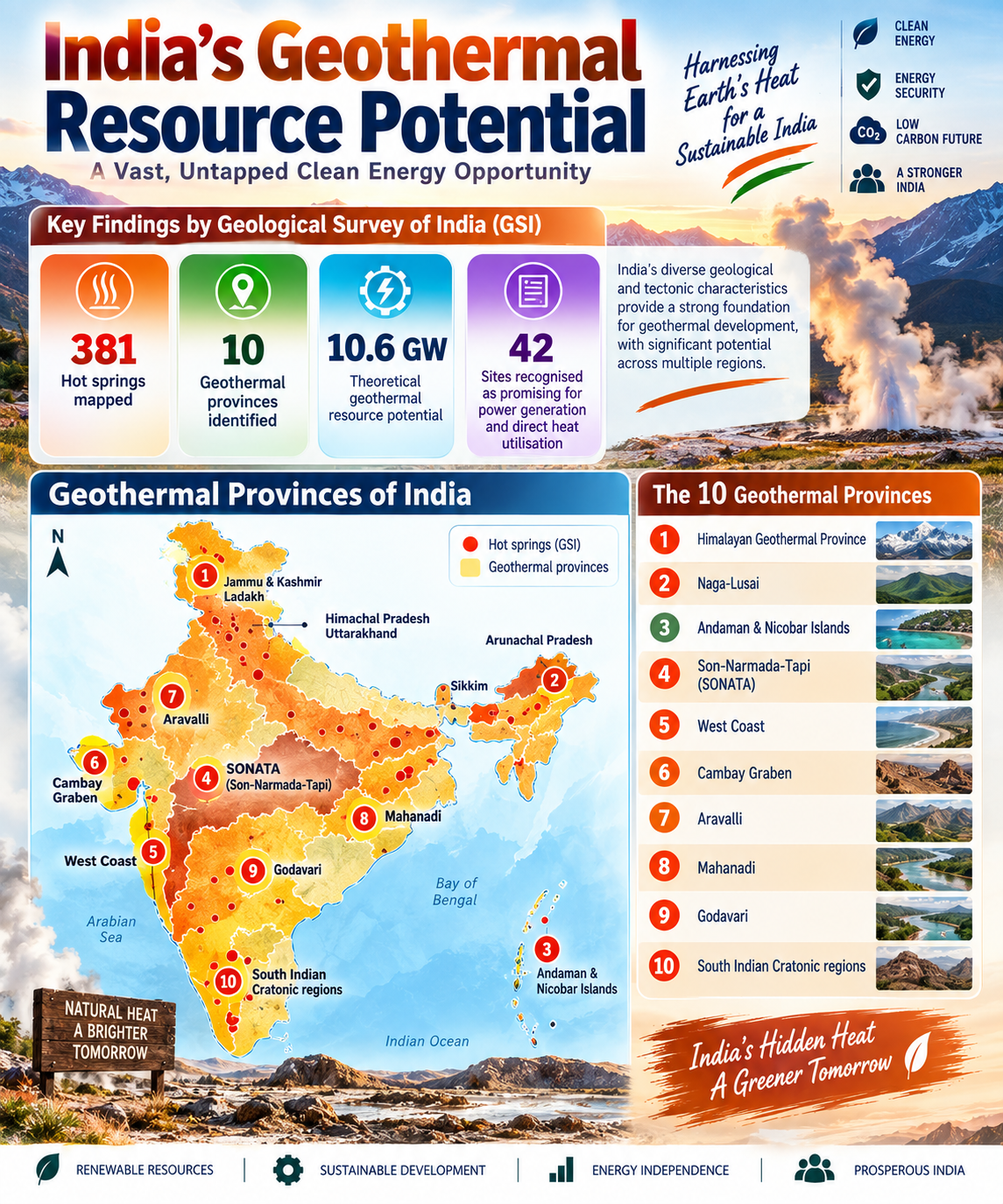
India's geothermal potential is not limited to naturally accessible geothermal reservoirs.
The article highlights emerging technologies such as:
1. Enhanced Geothermal Systems (EGS)
EGS can expand geothermal opportunities in areas where naturally occurring geothermal reservoirs may not be sufficiently productive.
2. Advanced Geothermal Systems (AGS)
AGS represents another technological pathway for accessing geothermal resources and broadening the geographical scope of geothermal development.
These technologies could become increasingly important because India's geothermal potential is substantial, but commercially viable resources are not necessarily available everywhere in easily exploitable form.
Repurposing Abandoned Oil & Gas Wells
-
Reuse inactive oil/gas wells for geothermal energy.
-
Feasibility depends on geology, technology and operations.
-
India can leverage existing drilling expertise, geological data, infrastructure and industry experience.
-
This can reduce resource wastage and accelerate geothermal development.
India’s Geothermal Demonstration Projects
India is moving from resource assessment → field demonstration → technology development.
-
Ankleshwar, Gujarat: Geothermal power pilot using unproductive oil & gas wells.
-
Gandhinagar, Gujarat: Solar + geothermal project; 70–80°C fluid and 50–90 kW power demonstrated.
-
Tawang, Arunachal Pradesh: Geothermal resource assessment at 5 sites.
-
Hyderabad, Telangana: Research on geothermal cooling/air-conditioning.
-
Shallow Geothermal: Borehole Heat Exchangers for heating and cooling
National Policy on Geothermal Energy, 2025 ????????
-
Notified in September 2025
-
Nodal Ministry: MNRE
-
Goal: Make geothermal energy a major renewable-energy pillar.
-
Focus: Exploration, R&D, drilling, reservoir management, GSHPs, direct use, abandoned-well reuse, pilot projects, data repository, Centres of Excellence, PPPs and skill development.
Geothermal Energy & Net Zero 2070
-
Supports energy security through diversification.
-
Complements solar and wind with relatively steady energy.
-
Helps advance low-carbon energy transition.
-
Supports India’s Net Zero 2070 goal.
International Cooperation
-
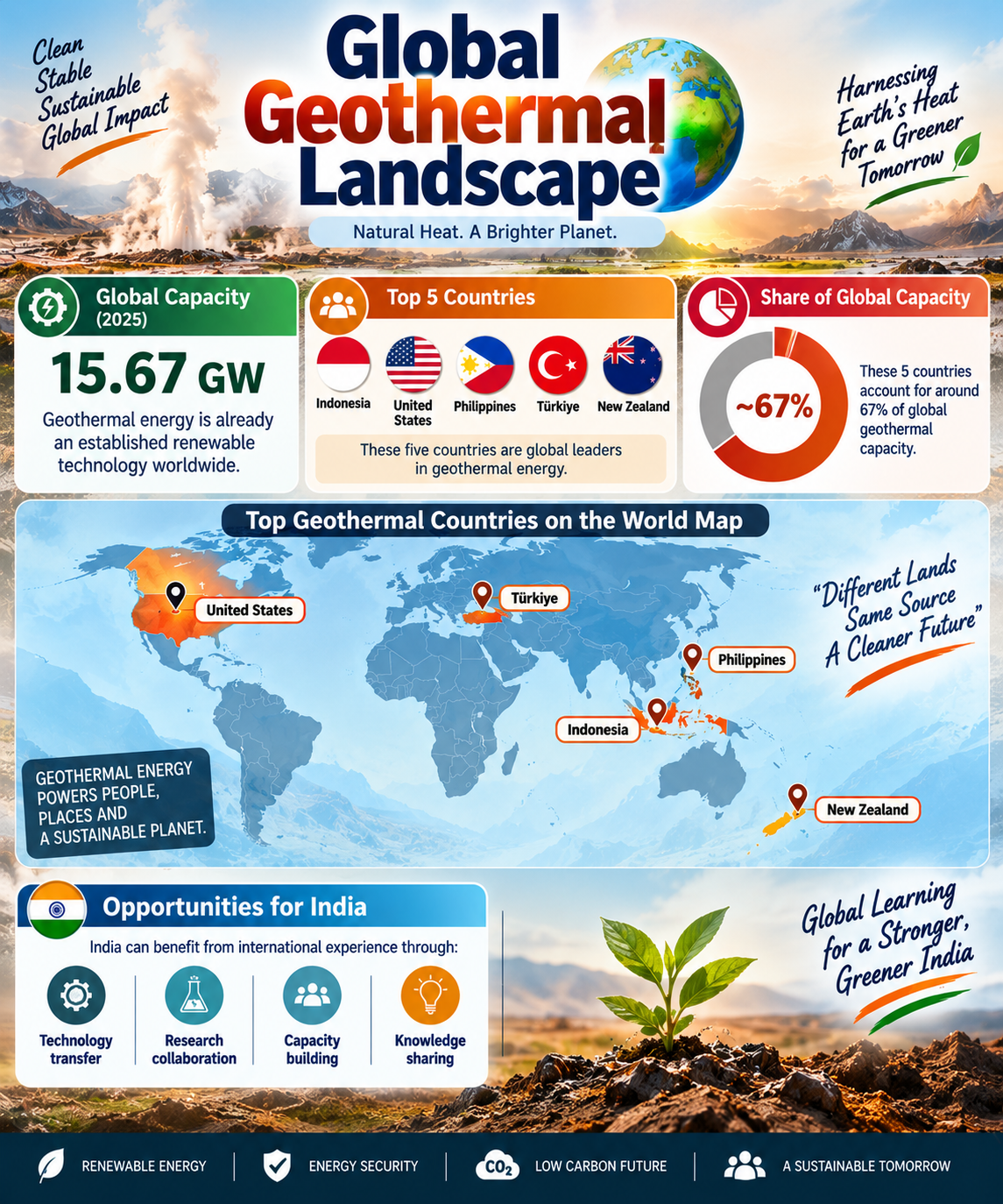
Australia & Iceland: Geothermal cooperation.
-
Saudi Arabia: Geothermal identified under bilateral engagement.
-
Benefits: Technology, expertise, research, best practices and capacity building.
RE-RTD Programme
The Renewable Energy Research and Technology Development Programme (RE-RTD) is another component supporting technological development.
-
Implemented by MNRE with research institutions and industry.
-
Focuses on indigenous, cost-effective renewable-energy technologies, including geothermal.
Key Advantages of Geothermal Energy
-
24/7 Availability – Provides steady energy with less dependence on weather.
-
Low Carbon – Cleaner alternative to fossil fuels.
-
Renewable – Can provide long-term energy when properly managed.
-
Multiple Uses – Electricity, heating, cooling, agriculture and aquaculture.
-
Energy Security – Indigenous resource that can reduce fossil-fuel dependence.
-
Supports Other Renewables – Complements variable sources like solar and wind.
Key Challenges
-
Geological uncertainty – Not every identified resource is commercially viable.
-
High exploration costs & risk – Deep drilling requires major investment.
-
Technology gaps – EGS/AGS may be needed for difficult resources.
-
Limited field experience – India is still developing technical expertise and data.
-
No commercial-scale power generation yet – Converting potential into economically viable projects remains the key challenge.
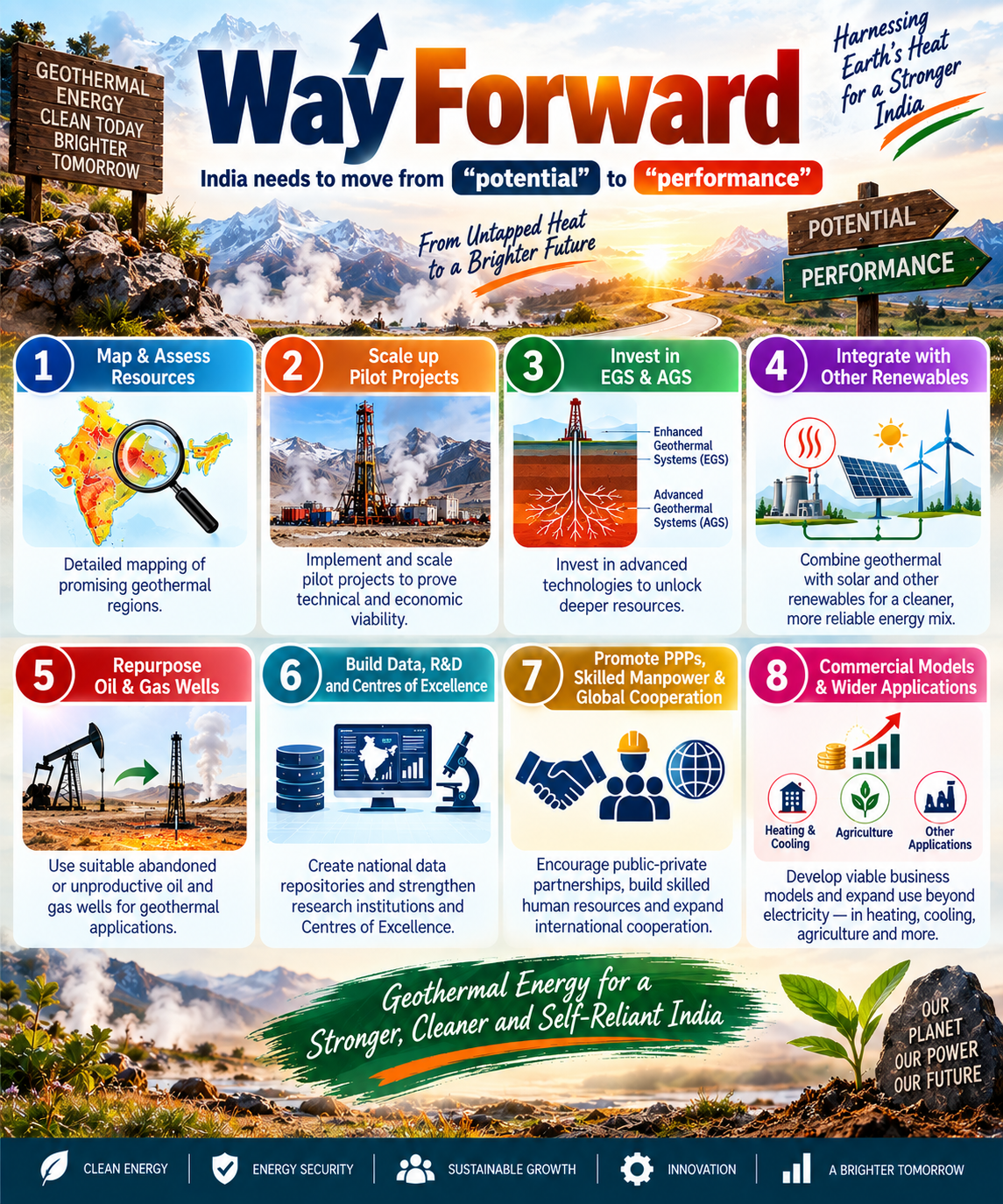
Geothermal energy should be treated as a strategic complement to India's solar, wind, hydro and other renewable resources, helping create a more diversified and resilient clean-energy system.