This article examines the conventional role of foreign finance in economic development by analysing the relationship between domestic savings, investment and capital flows.
Syllabus Areas:
GS Paper III – Indian Economy
GS Paper II – International Relations
The role of foreign finance in the economic development of developing countries is being reassessed in light of the experience of several emerging economies. The conventional assumption that developing countries need foreign capital to supplement domestic savings and finance higher investment is being questioned by trends in savings, investment and capital flows.
The experiences of countries such as China, Malaysia, Indonesia and Vietnam indicate that foreign capital has not always resulted in higher domestic investment. In several cases, domestic savings have exceeded domestic investment, turning these countries into net capital exporters despite their continuing development needs.
The Conventional Argument: Why Foreign Finance?
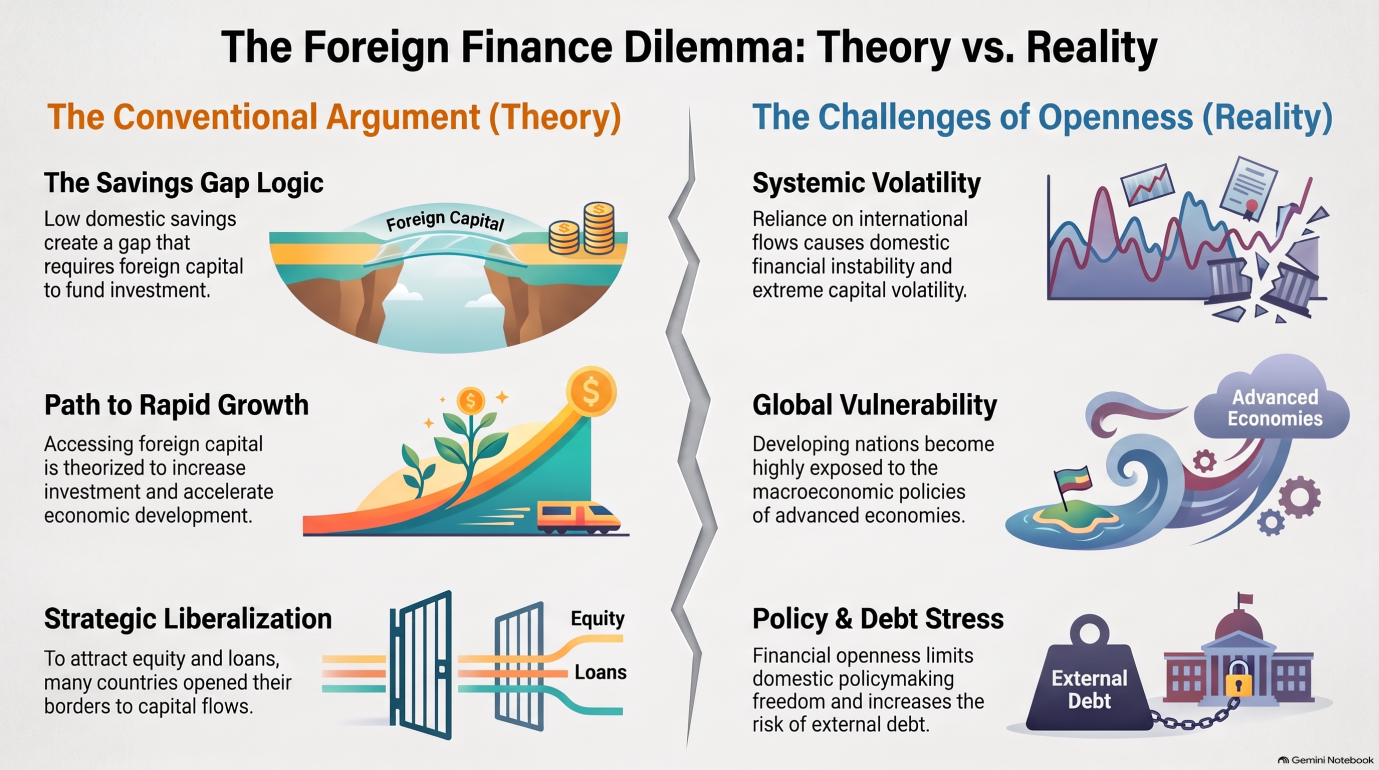
A persistent argument in development economics is that developing countries have insufficient domestic savings to finance the investment required for rapid economic growth.
According to this view:
Low domestic savings → Savings gap → Need for foreign capital → Higher investment → Faster economic growth
This reasoning encouraged developing countries, particularly from the 1990s onwards, to:
-
Liberalise their financial sectors.
-
Open their economies to cross-border capital flows.
-
Attract foreign investment in the form of equity and loans.
Financial liberalisation was widely promoted by policymakers and multilateral economic institutions as a means of accelerating development.
The Problems Associated with Greater Financial Openness
The experience of the past few decades has also highlighted several challenges associated with greater dependence on international financial flows.
Developing countries have faced:
-
Greater constraints on domestic economic policymaking.
-
Volatility in international capital flows.
-
Domestic financial instability.
-
Greater vulnerability to global economic shocks.
-
Exposure to macroeconomic policies of major advanced economies.
-
External debt stress in several countries.
This raises an important question:
Has foreign finance actually resulted in the transfer of financial resources from developed countries to developing countries in the manner originally expected?
Savings versus Investment: An Important Indicator
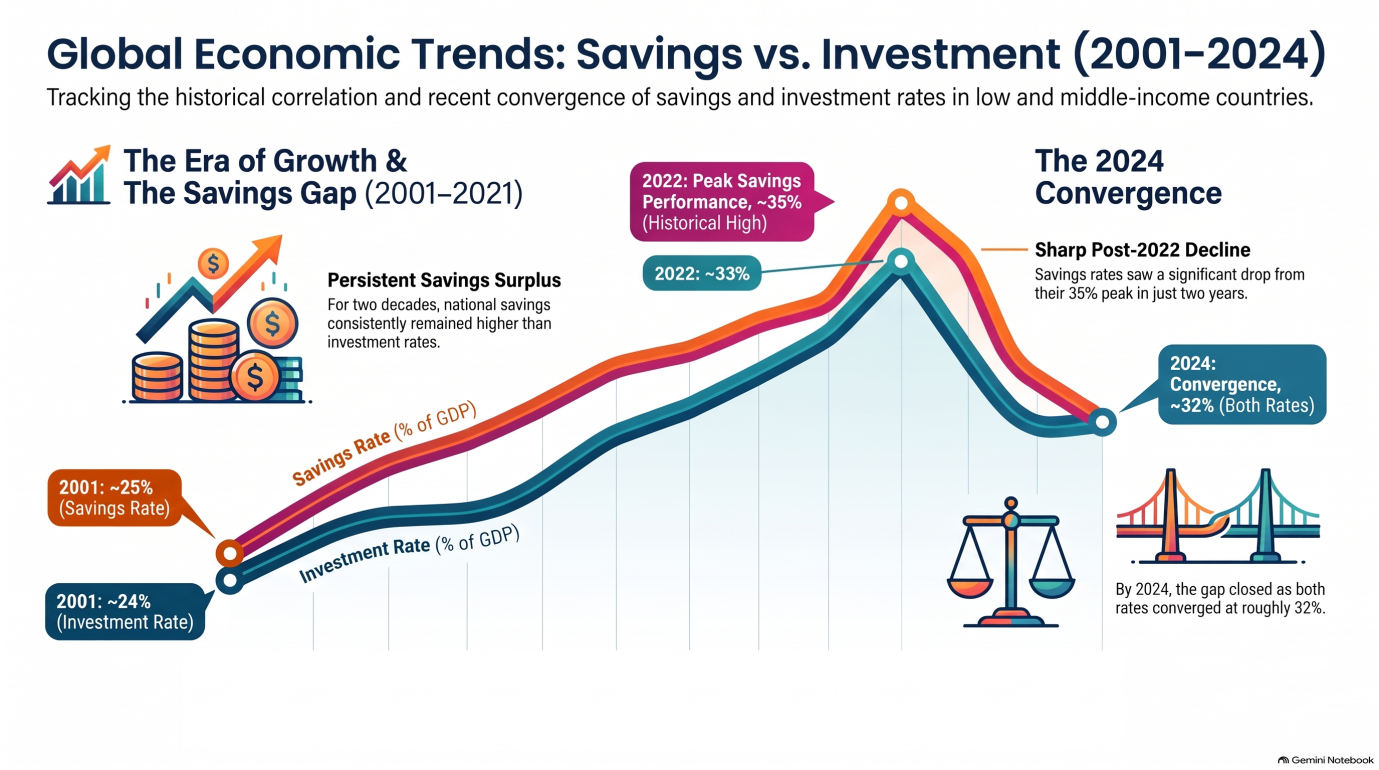
One way of examining the role of foreign finance is to compare a country's domestic savings rate with its domestic investment rate.
If foreign capital is substantially contributing to domestic investment, investment rates would generally be expected to exceed domestic savings rates.
However, data from 2001 onwards presents a more complex picture.
Across low- and middle-income countries as a group, domestic savings rates were often higher than domestic investment rates.
This suggests that, rather than receiving a net transfer of resources from abroad, developing countries as a group were, in effect, transferring financial resources abroad.
This is significant because these countries still require higher investment for development and to address challenges such as climate-related requirements.
China and the Aggregate Picture
The "China Skew"
China has a significant influence on the aggregate figures because of its large economic weight among developing countries.
Over the period discussed:
-
China's savings rate: 45.4% of GDP
-
China's investment rate: 40.6% of GDP
The consistently higher savings rate contributed to China's current-account surpluses and its position as a capital exporter.
Therefore, it is important to look beyond aggregate figures and examine individual groups of developing countries.
Lower-Middle-Income Countries
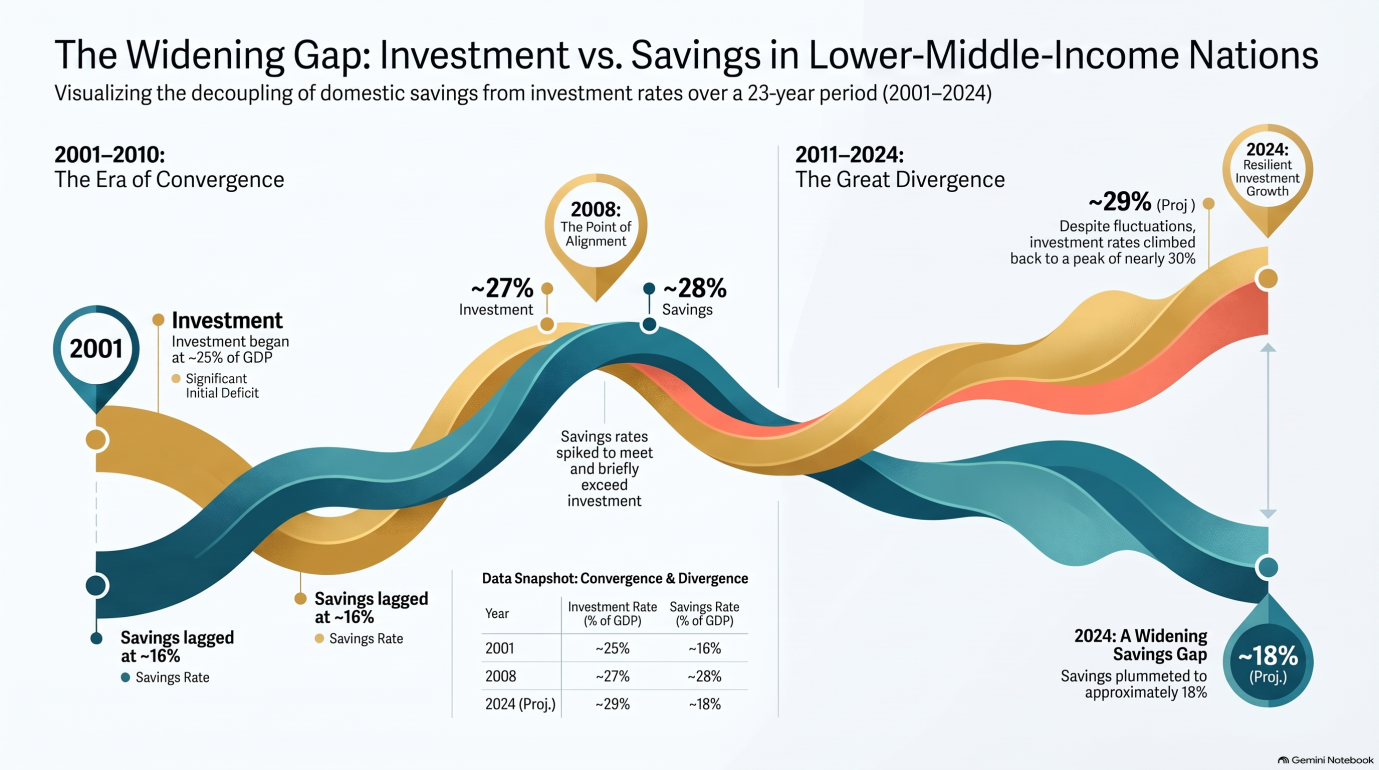
A separate examination of lower-middle-income countries, including India, presents a somewhat different trend.
Since 2001, the relationship between savings and investment has been mixed. In several years, savings rates were close to or slightly higher than investment rates.
However, after 2016, a clearer trend emerged in which domestic savings rates fell below domestic investment rates.
This indicates that external finance may have a greater role in supporting investment in these economies, although the broader experience does not establish foreign finance as the sole or necessarily dominant driver of development.
Country Experiences: Lessons from Asia
1. Malaysia
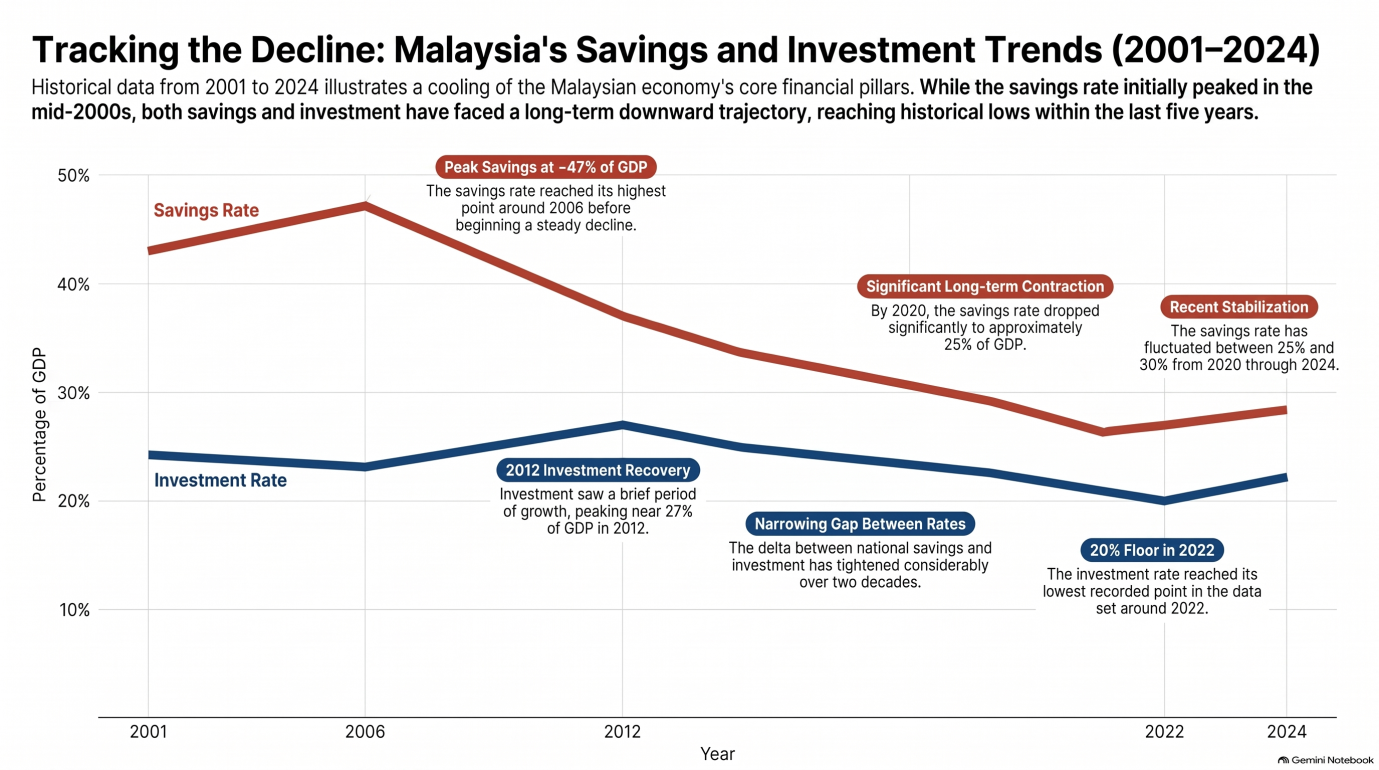
Malaysia recorded high levels of both savings and investment during the 1990s.
The Asian Financial Crisis of 1997–98 brought a sharp decline in investment. Although savings subsequently declined, they remained significantly higher than investment.
As a result, Malaysia remained a net capital exporter during the period discussed, despite its continuing need for investment.
2. Indonesia
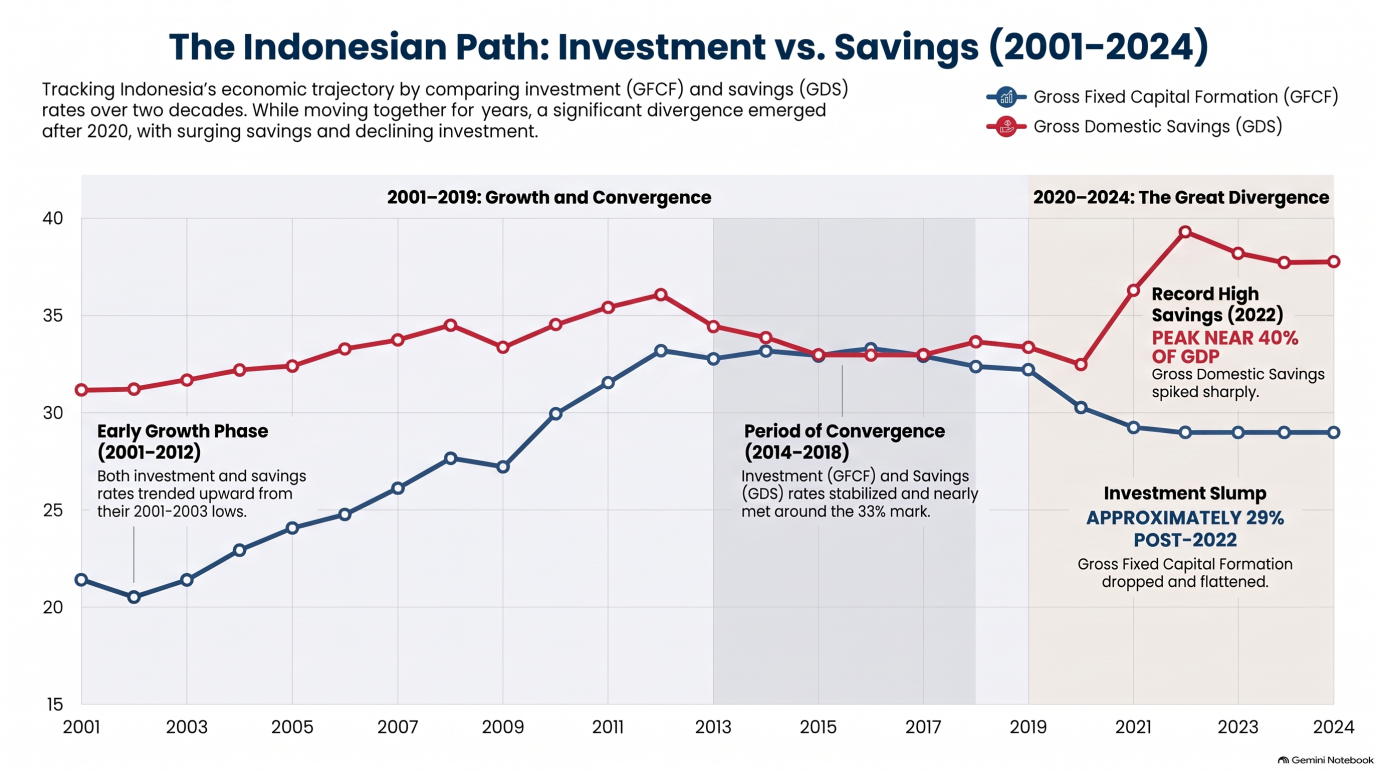
Indonesia also provides an important example.
For almost all of the period examined, its savings rate remained higher than its investment rate. Consequently, Indonesia emerged as a net capital exporter despite being a developing economy with continuing investment requirements.
3. Vietnam
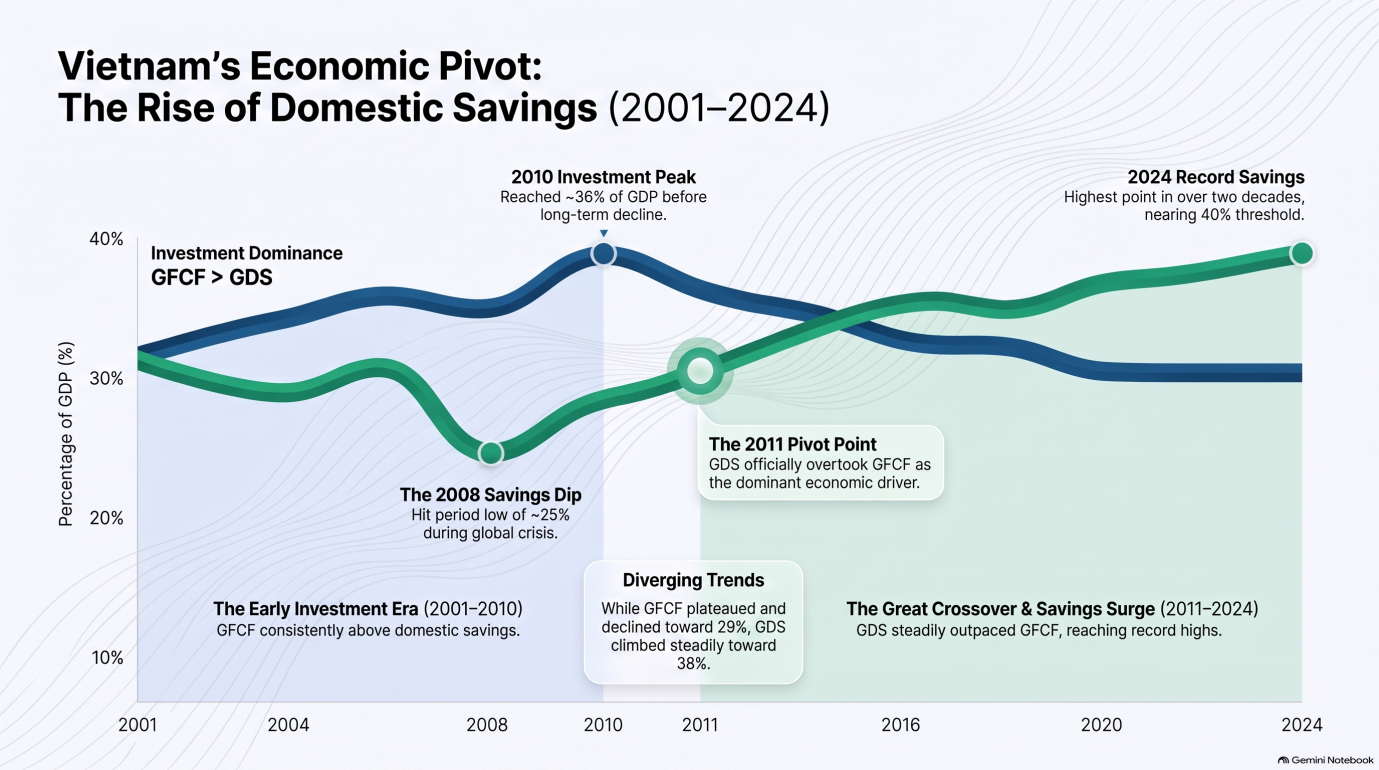
Vietnam presents another striking case.
The country became an export-oriented manufacturing powerhouse, with foreign investment playing an important role in its development.
However, Vietnam shifted towards becoming a capital exporter after 2011.
Since then, the gap between rising domestic savings and stagnant or declining investment rates has widened.
This experience suggests that attracting foreign investment does not necessarily imply continued dependence on foreign finance for domestic investment.
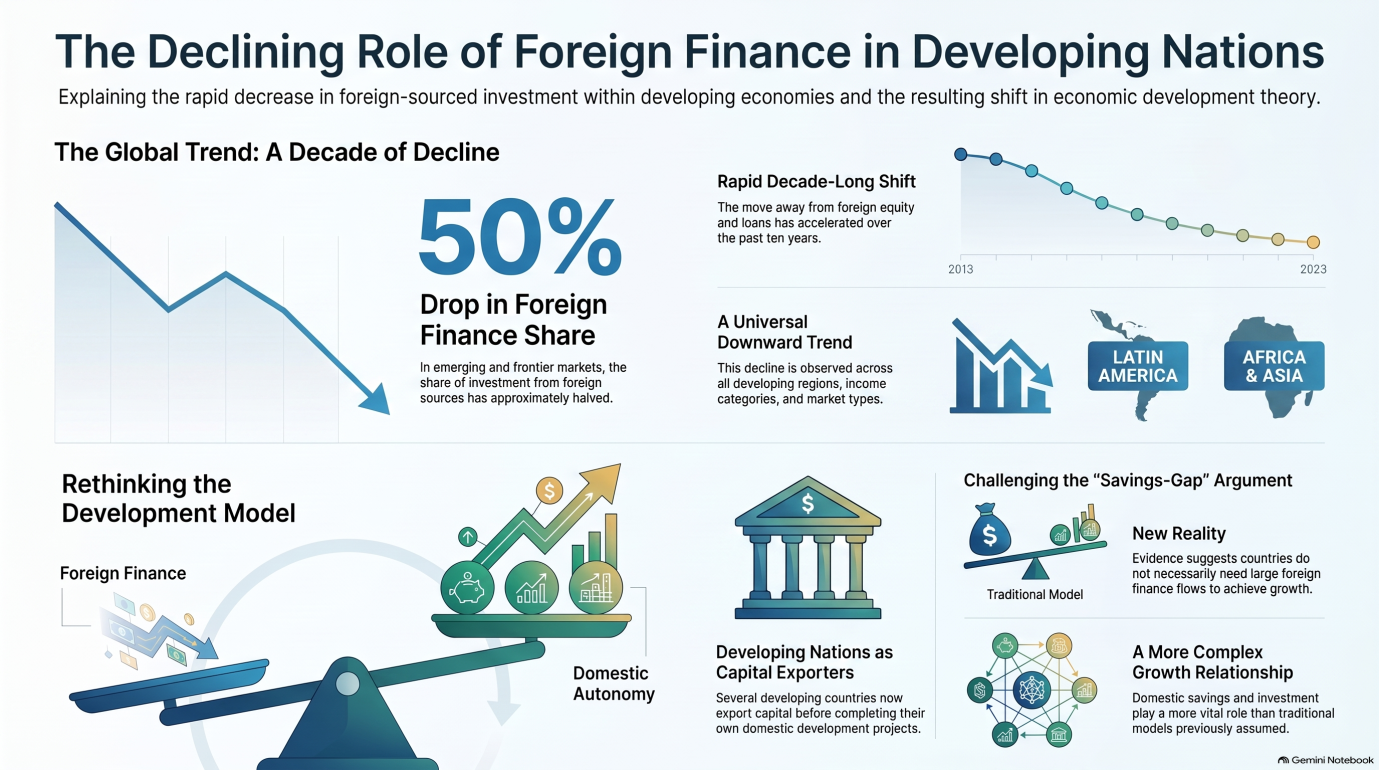
Declining Role of Foreign Finance in Domestic Investment
Another way to assess foreign finance is to examine the share of domestic investment financed through foreign sources, either through equity or loans.
The evidence discussed in the article points to a rapid decline in this share over the past decade.
This decline has been observed:
-
Across developing countries as a whole.
-
Across different income categories.
-
Across developing regions.
-
In both emerging and frontier markets.
For emerging and frontier markets, where the ratio was already relatively small, the share has approximately halved, reaching only a small proportion of domestic investment.
Rethinking the Role of Foreign Capital
The experiences discussed above challenge the assumption that developing countries necessarily need large amounts of foreign finance to achieve economic development.
Several countries that are still in the process of development have become capital exporters well before completing their development projects.
At the same time, the share of domestic investment financed through foreign finance has declined across many developing economies.
Therefore, the relationship between foreign finance, domestic savings, investment and economic growth is more complex than the traditional savings-gap argument suggests.