
Defence indigenisation drive of India promotes local manufacturing, strengthens domestic supply chains, reduces import dependence, expands private-sector participation, and aims to boost defence exports.
Syllabus Areas:
GS III - Economy | Science and Technology
India is steadily advancing towards defence self-reliance by promoting indigenous manufacturing, local procurement and private-sector participation. The latest Positive Indigenisation List, defence localization targets, and initiatives such as Srijan reflect efforts to reduce import dependence, strengthen domestic capabilities and expand defence exports.
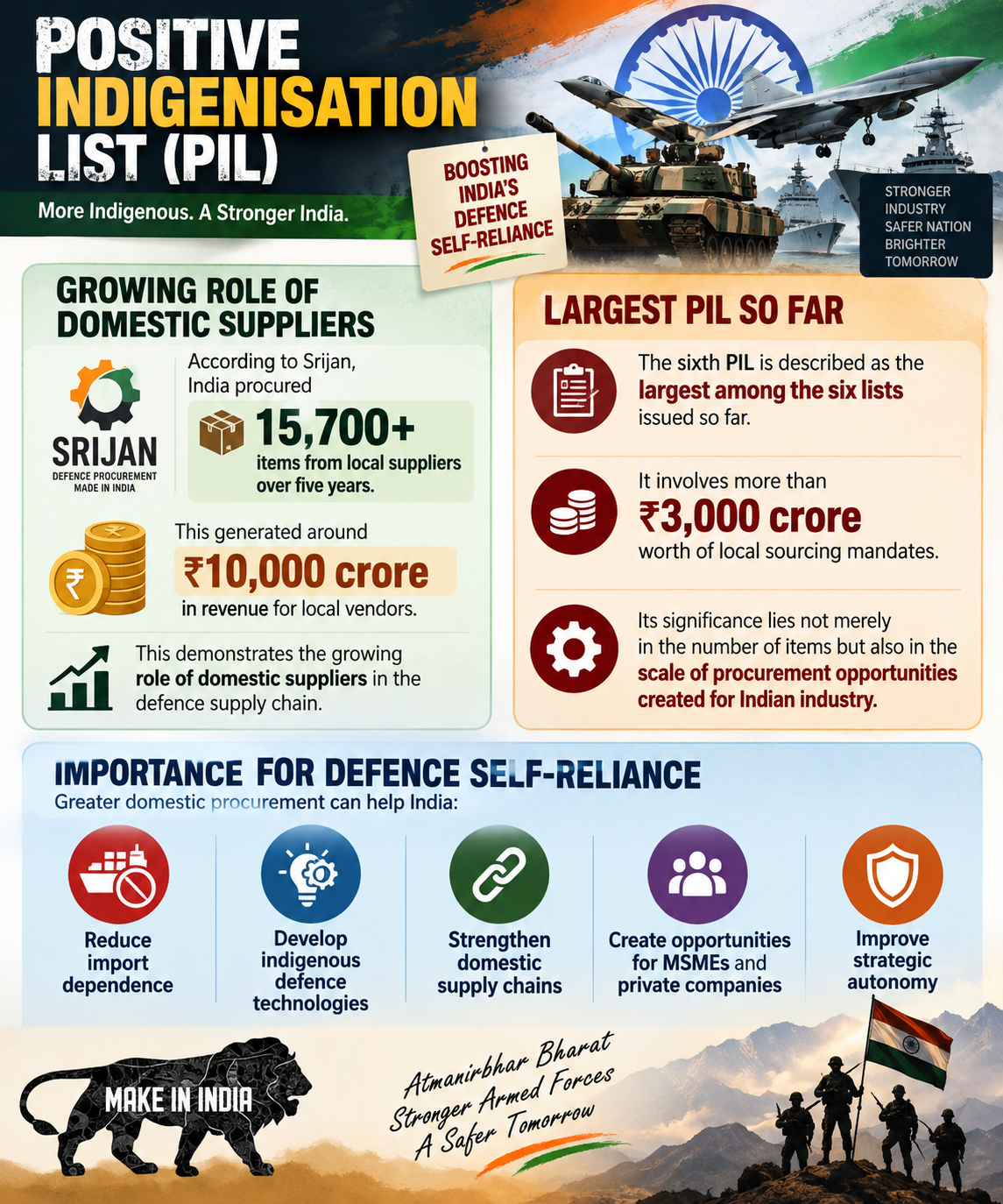
Recently, Tata Advanced Systems signed a deal to make the US’s Javelin anti-tank missiles locally, two weeks after the release of sixth Positive Indigenization List seeking to localize over 400 items worth over ₹3,000 crore.
Also Read: Defence Manufacturing Clusters
What is Positive Indigenisation List (PIL) and Its Significance?
-
The latest PIL is the sixth list issued by the Ministry of Defence (MoD).
-
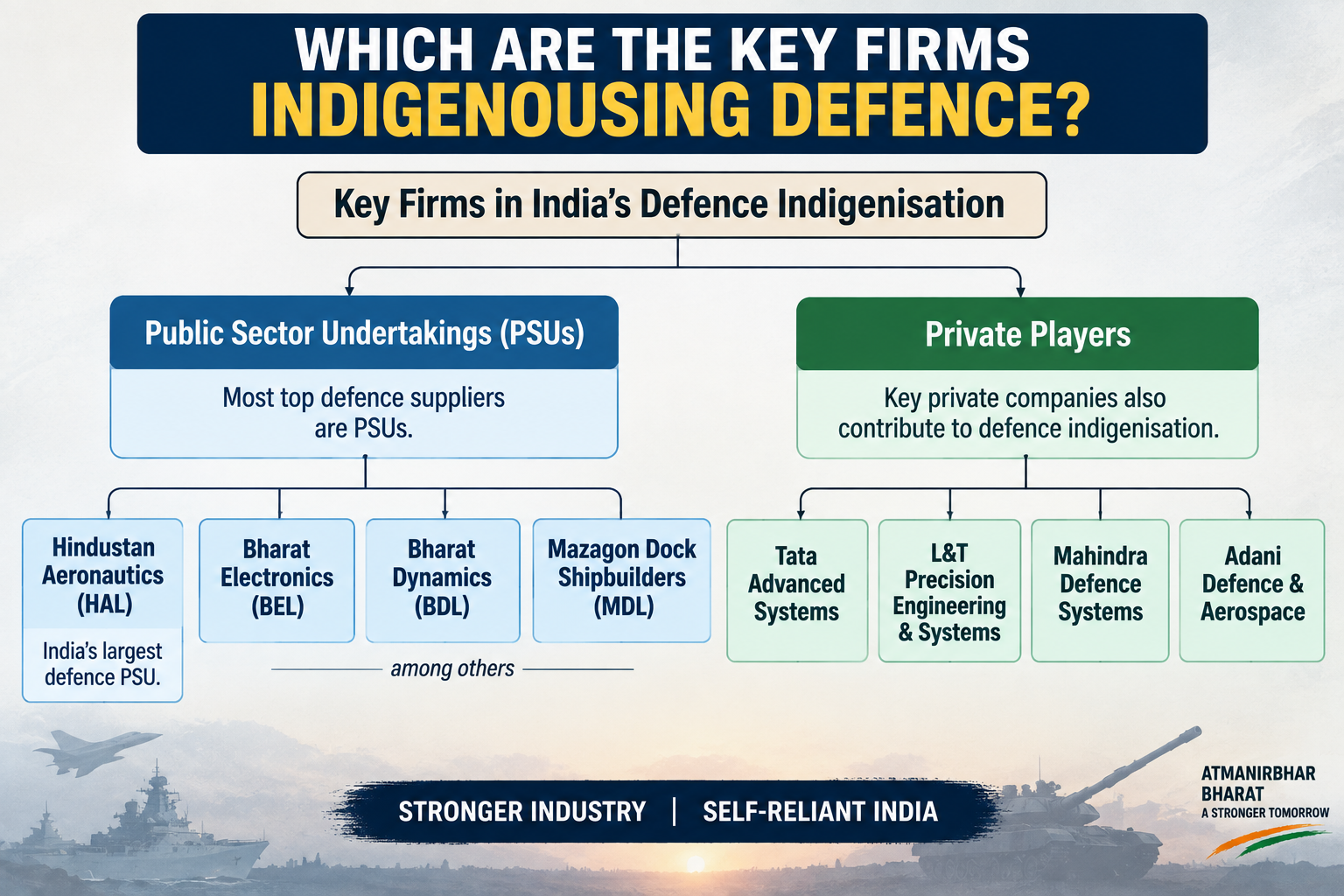
It identifies defence items that are to be increasingly sourced from Indian manufacturers. It covers both Defence PSUs and private defence companies.
-
The PIL is part of India’s broader effort to promote Atmanirbhar Bharat in defence.
-
It seeks to reduce dependence on imported defence equipment and components.
-
It also encourages Indian companies to develop domestic manufacturing capabilities.
Role of the Srijan Platform
-
The Srijan portal/platform is an initiative of the Department of Defence Production.
-
It provides information on defence items that can be indigenised, helping Indian industry identify opportunities for domestic production.
When can India start defence exports?
-
India is already exporting defence equipment to strategic markets worldwide.
-
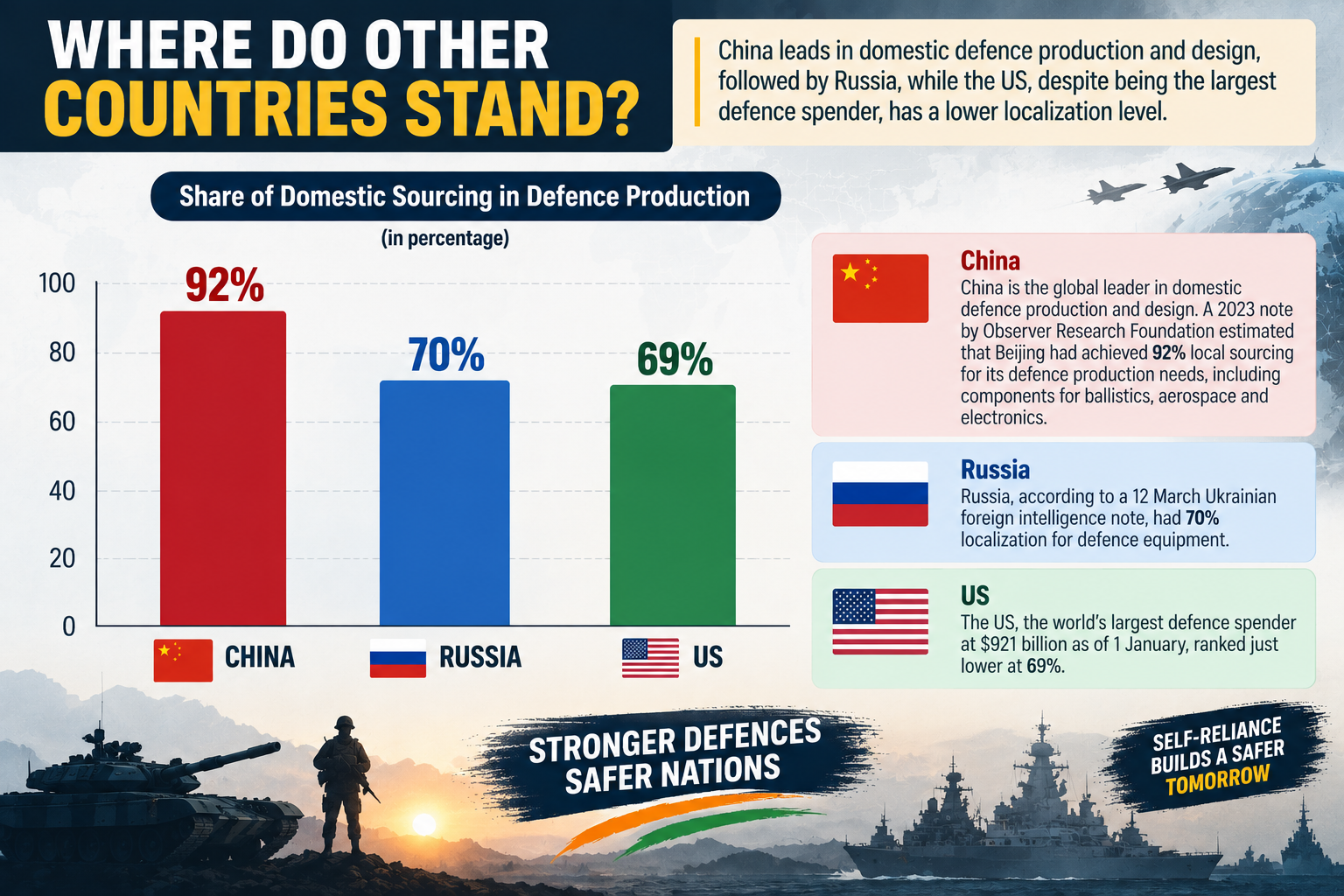
However, India’s defence exports are relatively small compared with major exporters such as the US, China and Russia.
-
India’s defence exports were estimated at ₹38,124 crore ($4.5 billion) in 2025–26.
-
In comparison, US aerospace and defence exports reached $172.7 billion in 2025.
-
India’s defence exports were therefore just over 2% of the US figure mentioned in the article.
-
To expand exports, India is focusing on:
-
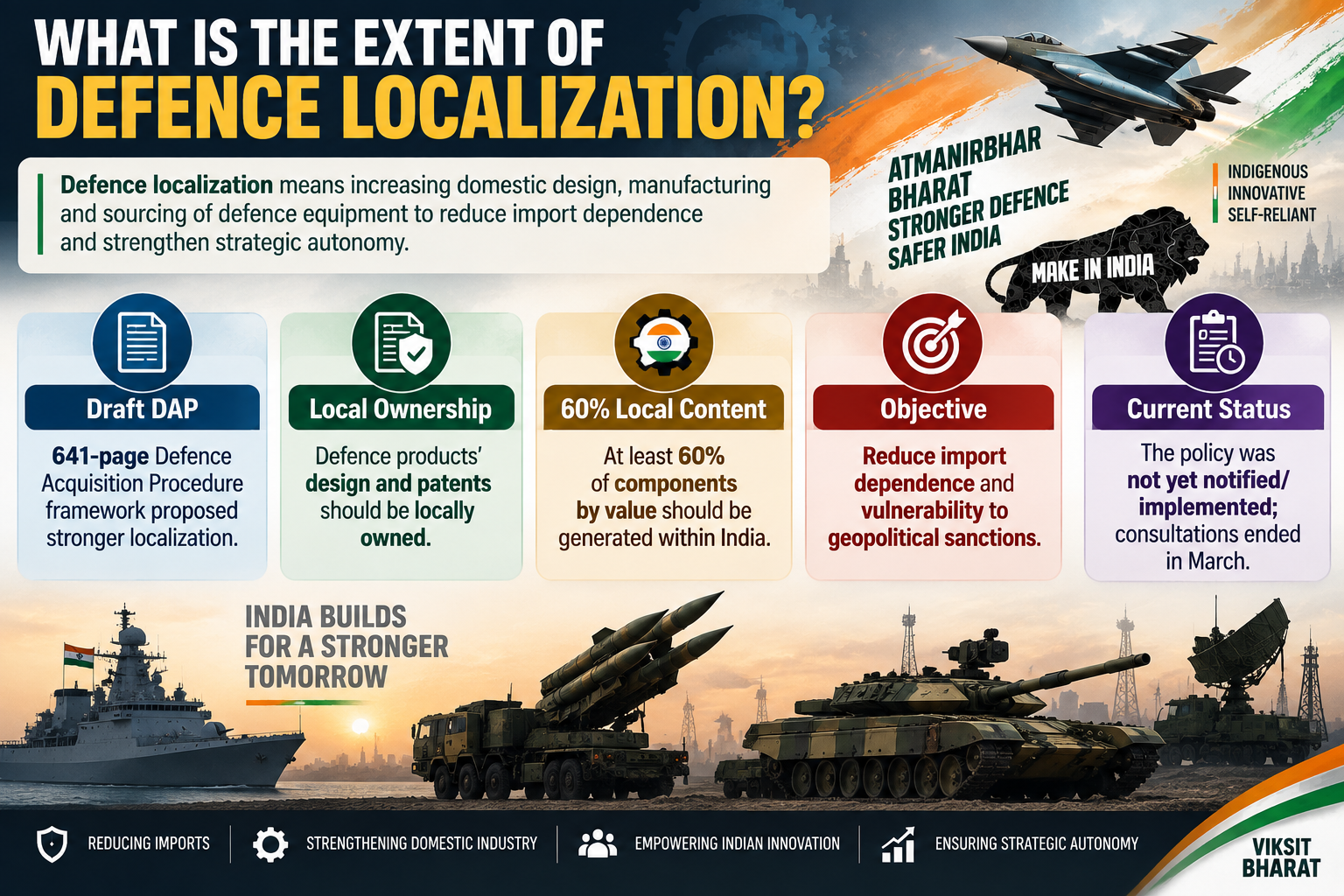
Defence localization
-
Indigenous manufacturing
-
Domestic component supply chains
-
Strategic partnerships with global companies
-
Tata’s international defence tie-ups are cited as an example of such partnerships.
-
The broader objective is to move from being primarily a defence importer to a competitive defence exporter.