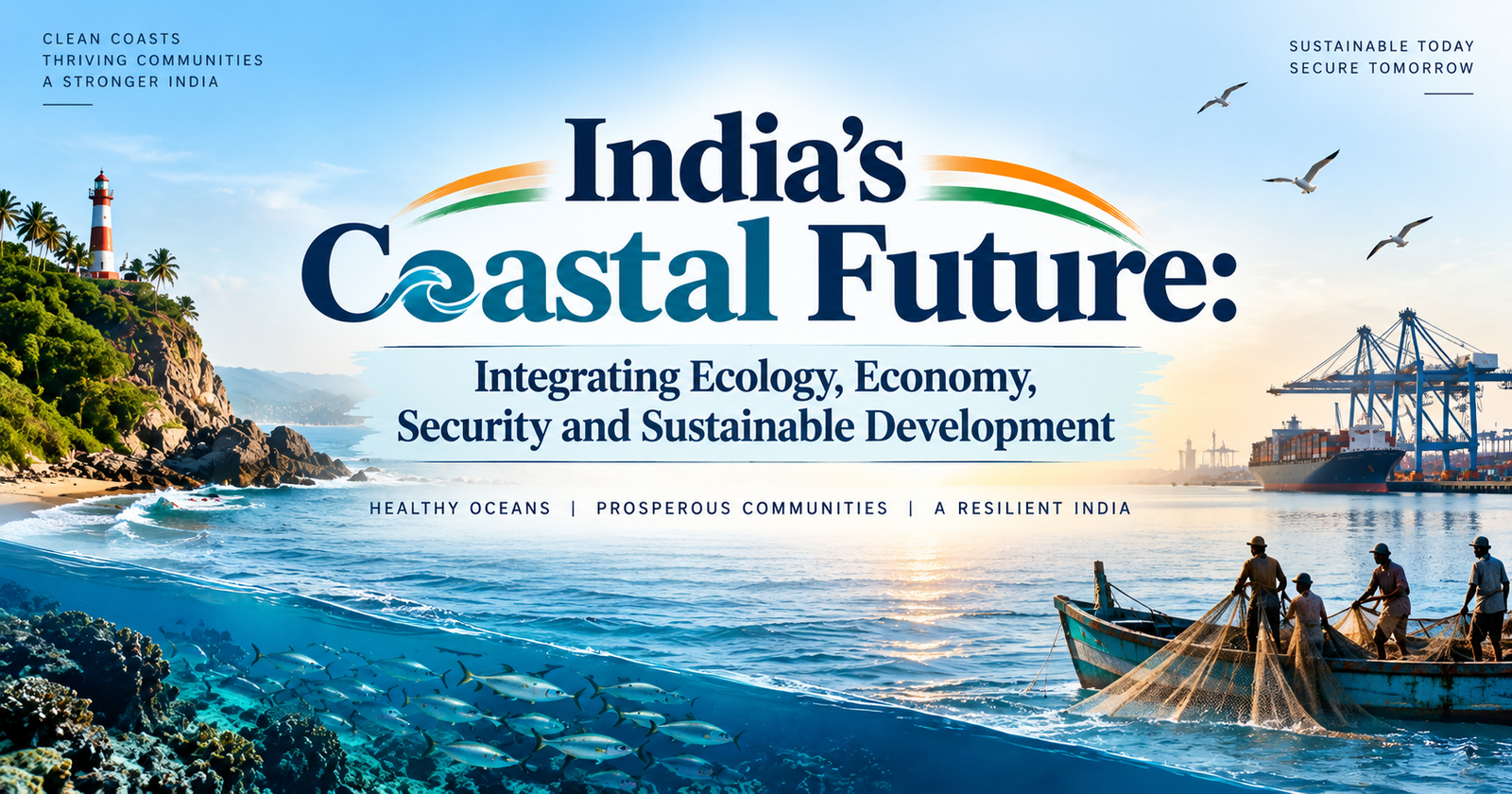
Coastal future of India depends on integrating the Blue Economy, deep-ocean exploration, coastal security, scientific planning, community participation and environmental sustainability for resilient coastal development.
Syllabus Areas:
GS III - Economy | Environment
India’s extensive coastline is not merely a geographical boundary but a critical space connecting ecology, economic development, national security, technology and human livelihoods. Speaking virtually at the National Conference on Coastal Ecology, Security and Sustainability (CCESS) 2026, Union Minister of State (Independent Charge) for Science & Technology and Earth Sciences, Dr. Jitendra Singh, emphasised the need for a holistic Coastal India approach.
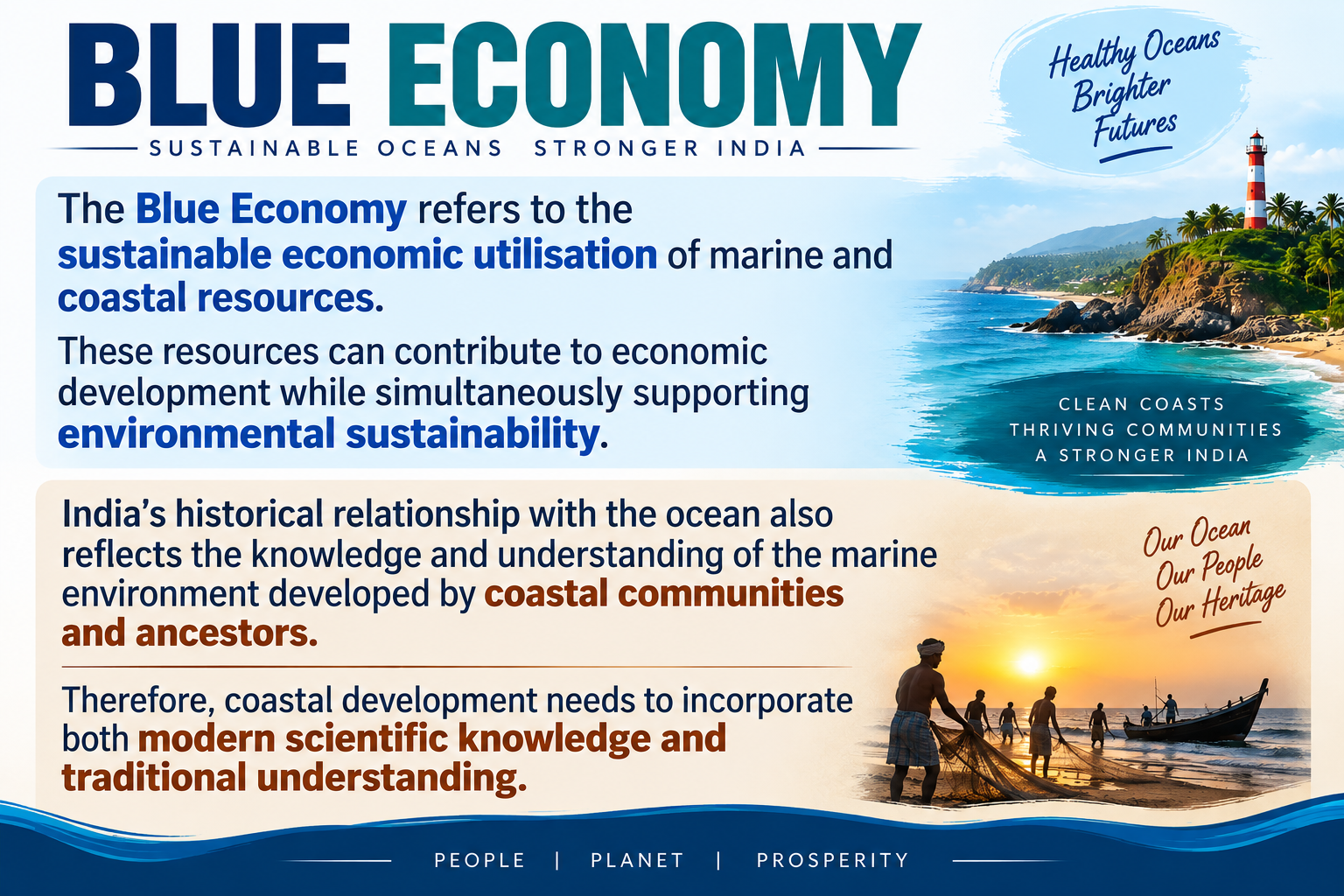
India’s Long Coastline and the Blue Economy
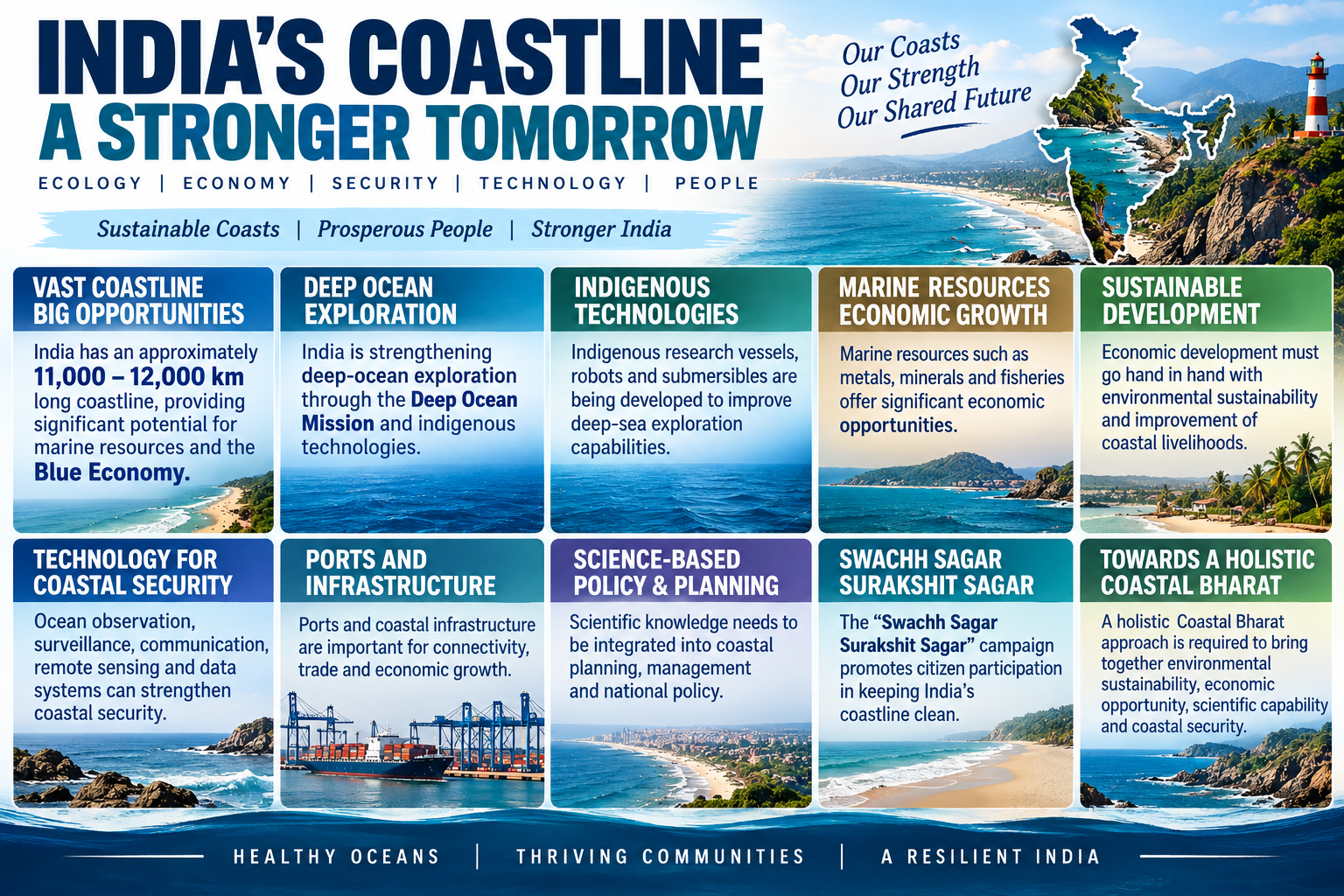
India possesses one of the world's longer coastlines, around 11,000–12,000 km. This extensive coastline and India's marine ecosystems provide considerable opportunities for developing the country's Blue Economy.
Deep Ocean Mission and Exploration of Marine Resources
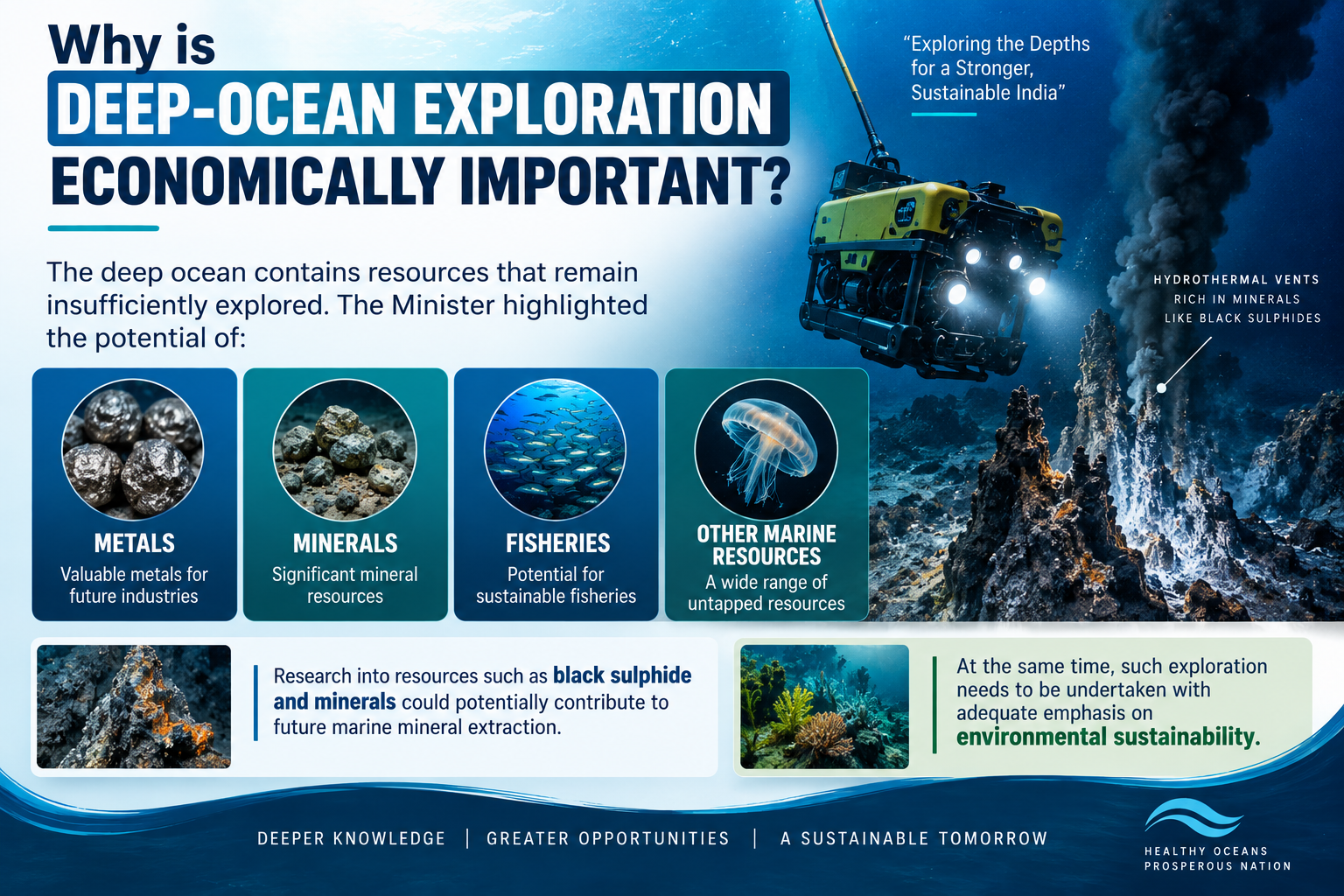
A major focus of the government's approach is the Deep Ocean Mission, through which India is working towards exploring the relatively unexplored resources of the deep ocean.
The initiative also seeks to strengthen indigenous technological capabilities for deep-ocean research and exploration.
-
The Ocean Research Vessel (ORV) Sagar Manthan was recently launched.
-
Robots and submersibles are being developed to explore greater ocean depths.
-
These technologies can expand India's ability to understand and utilise marine resources.
-
Deep-ocean exploration could open new possibilities for India's economic development.
Fisheries and Coastal Livelihoods
Coastal resources are not only sources of national economic growth; they are also directly connected with the livelihoods of coastal communities.
Therefore, expanding the economic potential of coastal resources should simultaneously focus on:
-
Improving coastal livelihoods
-
Protecting marine and coastal ecosystems
-
Increasing the economic potential of fisheries
-
Ensuring sustainable utilisation of resources
-
Recognising the knowledge and participation of coastal communities
This highlights the importance of a people-centric approach to coastal development, rather than viewing the coastline purely as an economic resource.
Technology and Coastal Security:
-
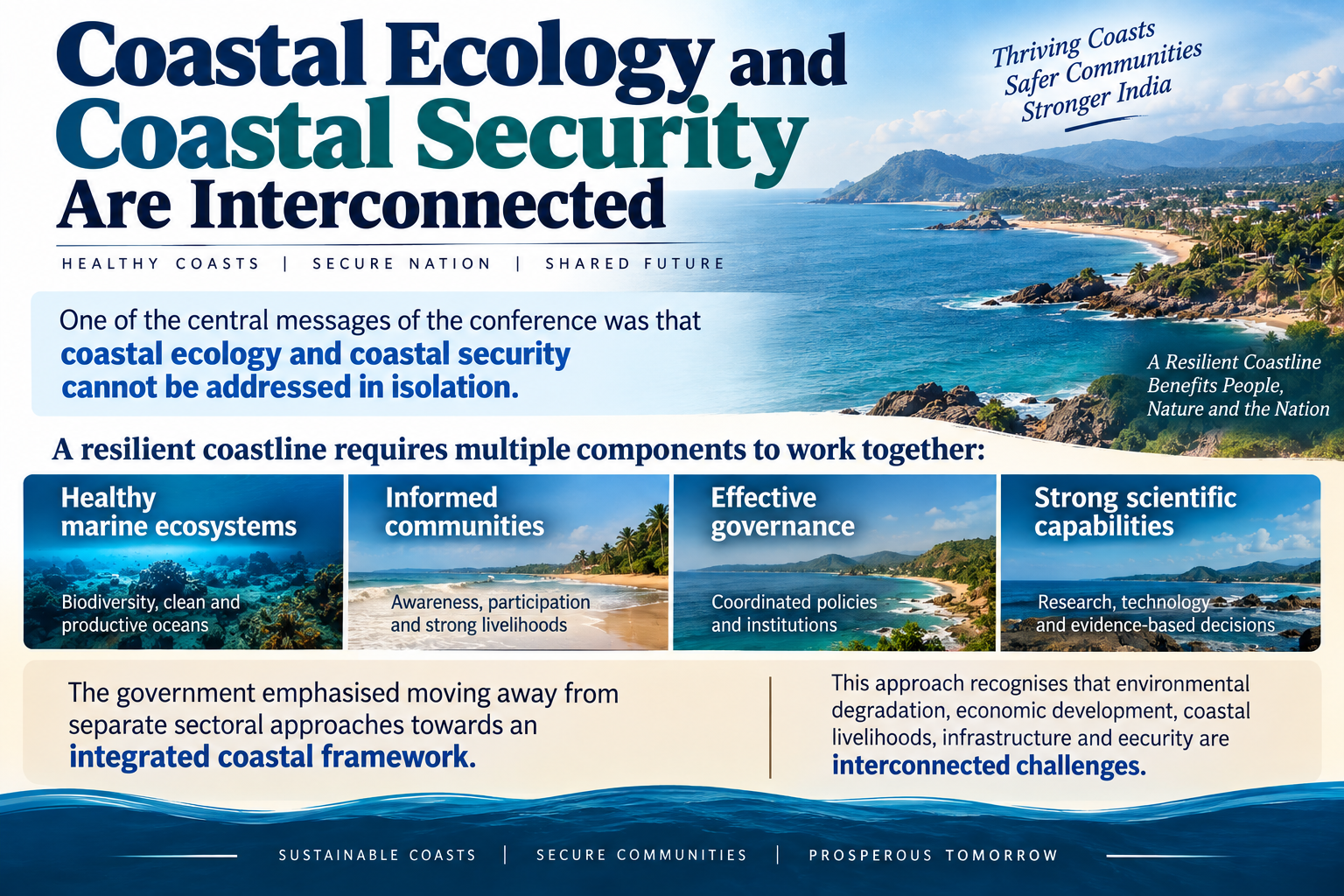
Technology is playing an increasingly important role in strengthening India’s coastal security.
-
Ocean observation, surveillance, communication systems, remote sensing, data and emerging technologies can improve understanding of the coastal and marine environment while enhancing preparedness and security.
-
Integrating these technological capabilities with scientific knowledge can therefore support both effective environmental management and national security.
Ports and Coastal Infrastructure:
-
India’s ports and coastal infrastructure are central to connectivity, trade and economic growth.
-
However, their sustainable development requires a sound scientific understanding of coastal and marine environments.
-
Infrastructure development along the coastline must therefore balance economic requirements with ecological sustainability, ensuring that development does not undermine the ecosystems and natural resources on which coastal communities and economies depend.
National Conference on Coastal Ecology, Security and Sustainability (CCESS) 2026
The National Conference on Coastal Ecology, Security and Sustainability (CCESS) 2026 was highlighted as an important platform for bringing together expertise from different fields.
Its multidisciplinary character includes stakeholders and experts from areas such as:
-
Earth sciences
-
Academia
-
Defence
-
Maritime institutions
-
Legal expertise
-
Industry
-
Coastal communities
Such multidisciplinary cooperation can help develop an integrated understanding of the challenges and opportunities associated with India's coastline.
Why This Development Matters
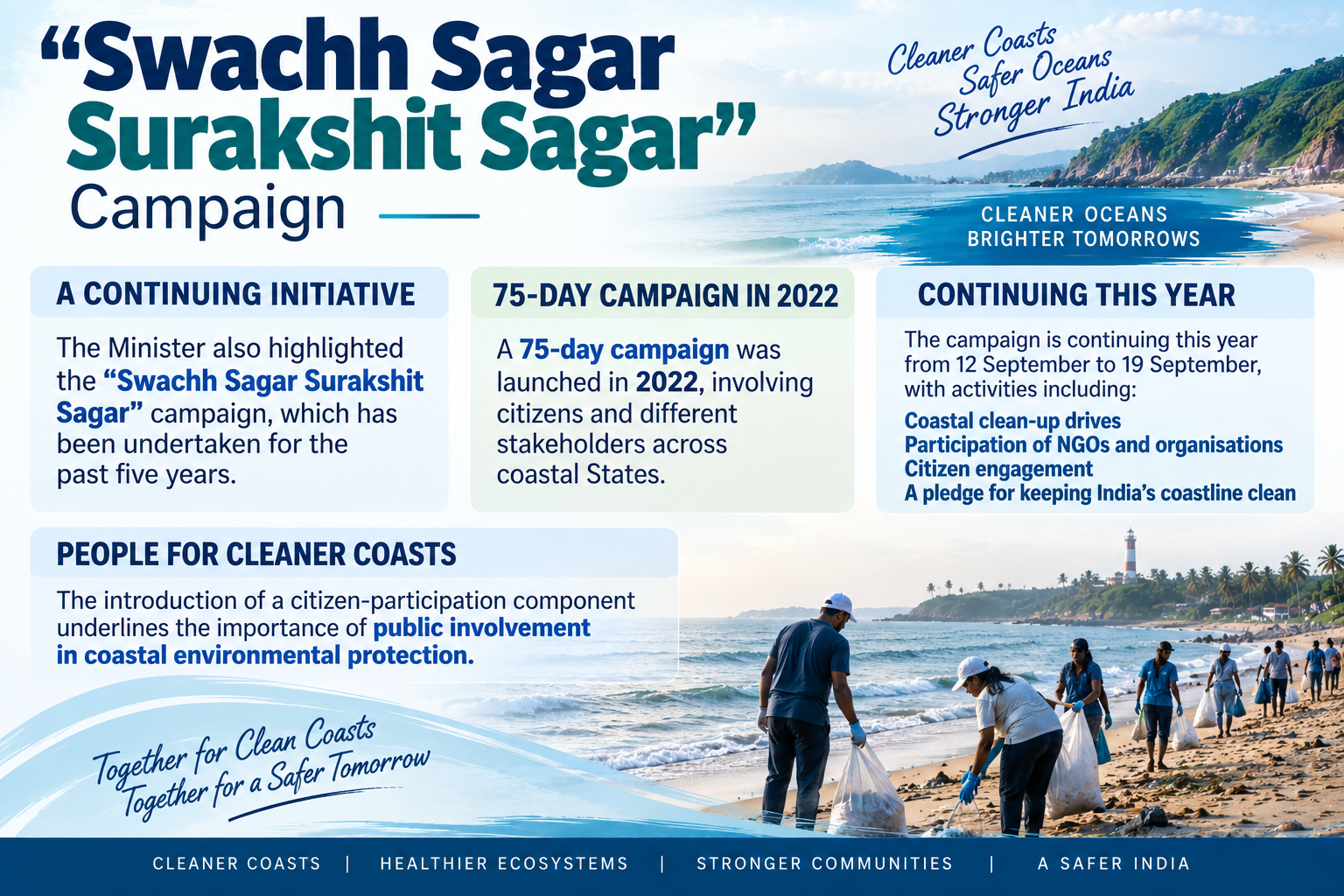
India's coastline represents a convergence of environmental, economic, strategic and social interests.
A fragmented approach can result in conflicts between development, conservation, security and livelihoods. An integrated approach, on the other hand, can help India:
-
Utilise marine resources sustainably
-
Strengthen coastal security
-
Improve coastal livelihoods
-
Develop the Blue Economy
-
Promote scientific research
-
Strengthen indigenous deep-ocean capabilities
-
Improve coastal infrastructure
-
Encourage citizen participation in conservation
India's coastline should be viewed as an integrated national asset where ecology, economy, security, technology and human development are closely interconnected.
The emphasis on the Deep Ocean Mission, indigenous technologies, scientific coastal planning, sustainable fisheries, coastal security, community participation and “Swachh Sagar Surakshit Sagar” reflects an effort to build a more comprehensive approach to India's maritime future.
The proposed Coastal Bharat approach seeks to bring these different dimensions together so that India's coastal resources can contribute to a secure, sustainable and prosperous future.