
India endorses the global 6G Call to Action, strengthening its telecommunications leadership through secure, resilient networks, international cooperation, indigenous technology, Bharat 6G Vision, cybersecurity, standards, Atmanirbhar Bharat and Viksit Bh
Syllabus Areas:
GS III - Science and Technology
India has endorsed the “Call to Action for 6G Leadership and Security”, joining a group of like-minded governments committed to building open, interoperable, secure and resilient next-generation telecommunications networks. The announcement was made on the sidelines of the G20 Innovation Ministerial in Chapel Hill, North Carolina, USA.
What is 6G?
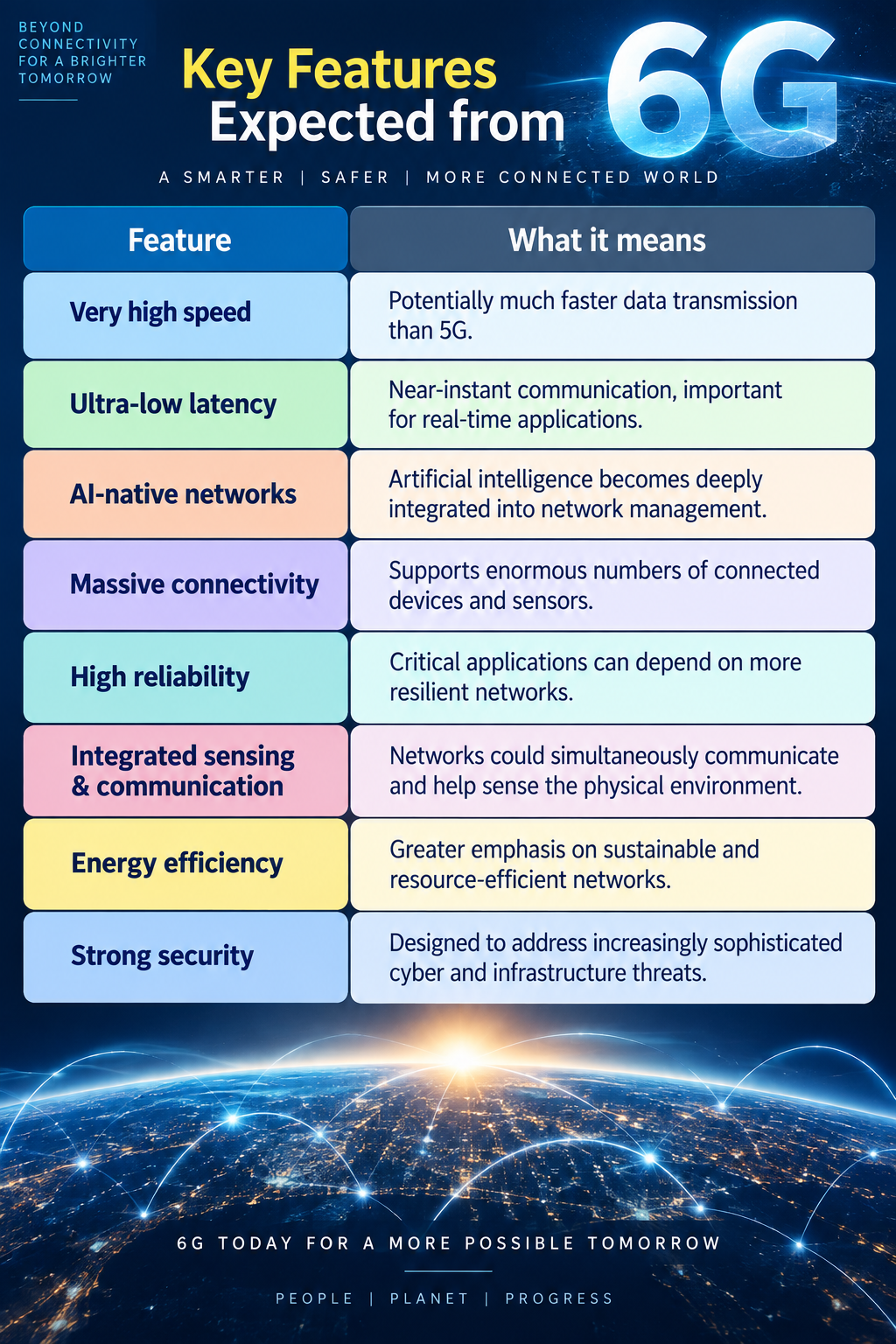
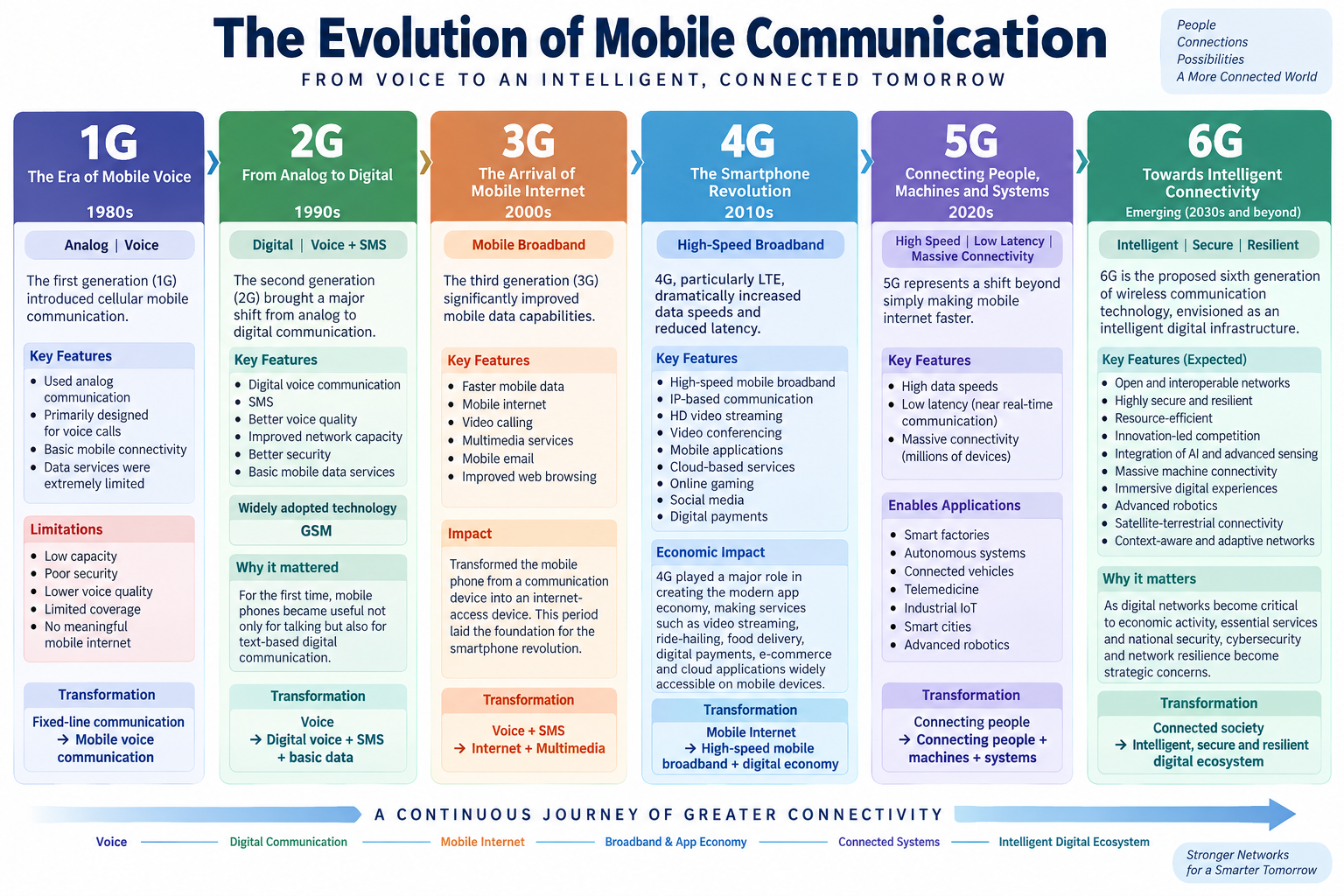
6G is the emerging sixth generation of wireless communication technology aimed at providing highly intelligent, ultra-fast, low-latency, secure, resilient and ubiquitous connectivity, enabling advanced digital, industrial and societal applications.
India’s ambition in global 6G standards
-
India aims to contribute 10% of global 6G standards and patents.
-
The initiative supports India's objective of moving from being primarily a technology adopter to a technology standard-setter.
-
It aligns with India's broader ambition of becoming a global leader in 6G technology
Areas identified for international cooperation
The initiative identifies several potential areas for cooperation:
-
6G research and development: Countries can coordinate and share information on 6G R&D.
-
Financing and deployment: Trade and development finance agencies can collaborate to support the deployment of secure and resilient 5G and 6G technologies in global markets.
-
Cybersecurity: Countries can assess technical and strategic cybersecurity risks associated with telecommunications-sector investments.
-
Supply-chain transparency: Greater transparency can be promoted regarding supply-chain developments and vulnerabilities.
-
Industrial, commercial, security and defence applications: The initiative seeks to realise the full potential of 5G systems for industrial, commercial, security and defence applications while developing the next generation of networks.
-
Global standards: Governments can work with industry to shape global 6G standards, including strong security standards, through relevant standards-development organisations.
Participation does not restrict national autonomy
An important aspect of the Call to Action is that participation:
-
Does not bind or limit any participating government's authority.
-
Does not restrict a country's independent positioning in industry-driven standards bodies.
-
Allows each country to determine its next steps according to its:
-
National priorities
-
Available resources
-
Capabilities.
The initiative also cautions against duplicating technical work already underway through industry-led standardisation.
Strategic significance for India
India's endorsement has significance beyond telecommunications technology.
It can potentially strengthen India's position in:
-
Global technology governance
-
6G standards development
-
Telecommunications cybersecurity
-
Technology supply chains
-
Intellectual property and patents
-
Digital infrastructure
-
Strategic technology cooperation
-
Innovation and research
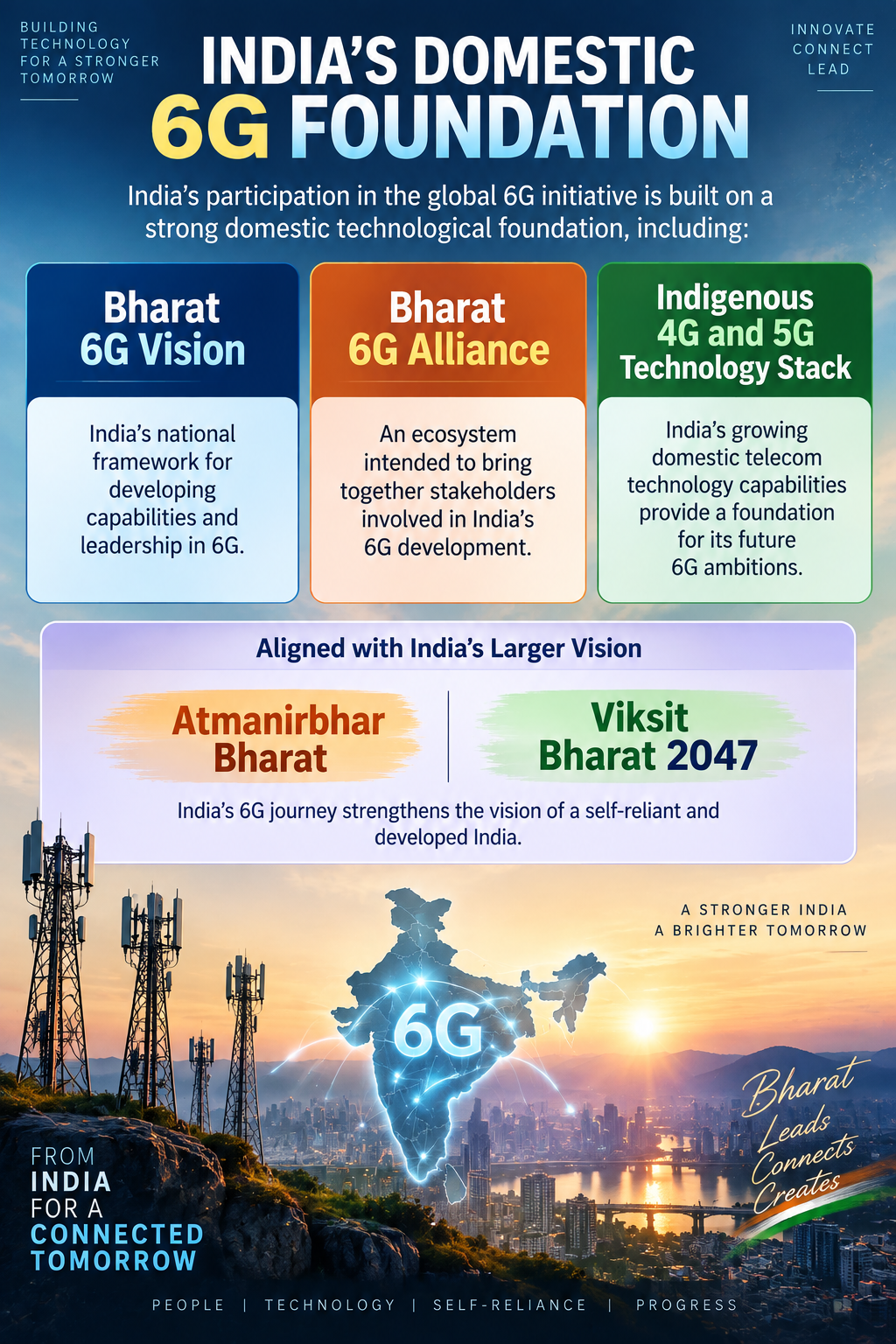
The broader objective is to ensure that India participates not merely as a consumer of future technologies but increasingly as a creator, innovator and standard-setter.
India’s endorsement of the Call to Action for 6G Leadership and Security strengthens its role in shaping global telecommunications. The initiative promotes open, interoperable, secure, resilient and sustainable networks, complementing Bharat 6G Vision, indigenous capabilities, Atmanirbhar Bharat and Viksit Bharat 2047.