Decoding the Question number 4 of UPSC Mains Essay 2026. Structure, Examples, etc were discussed in this page.
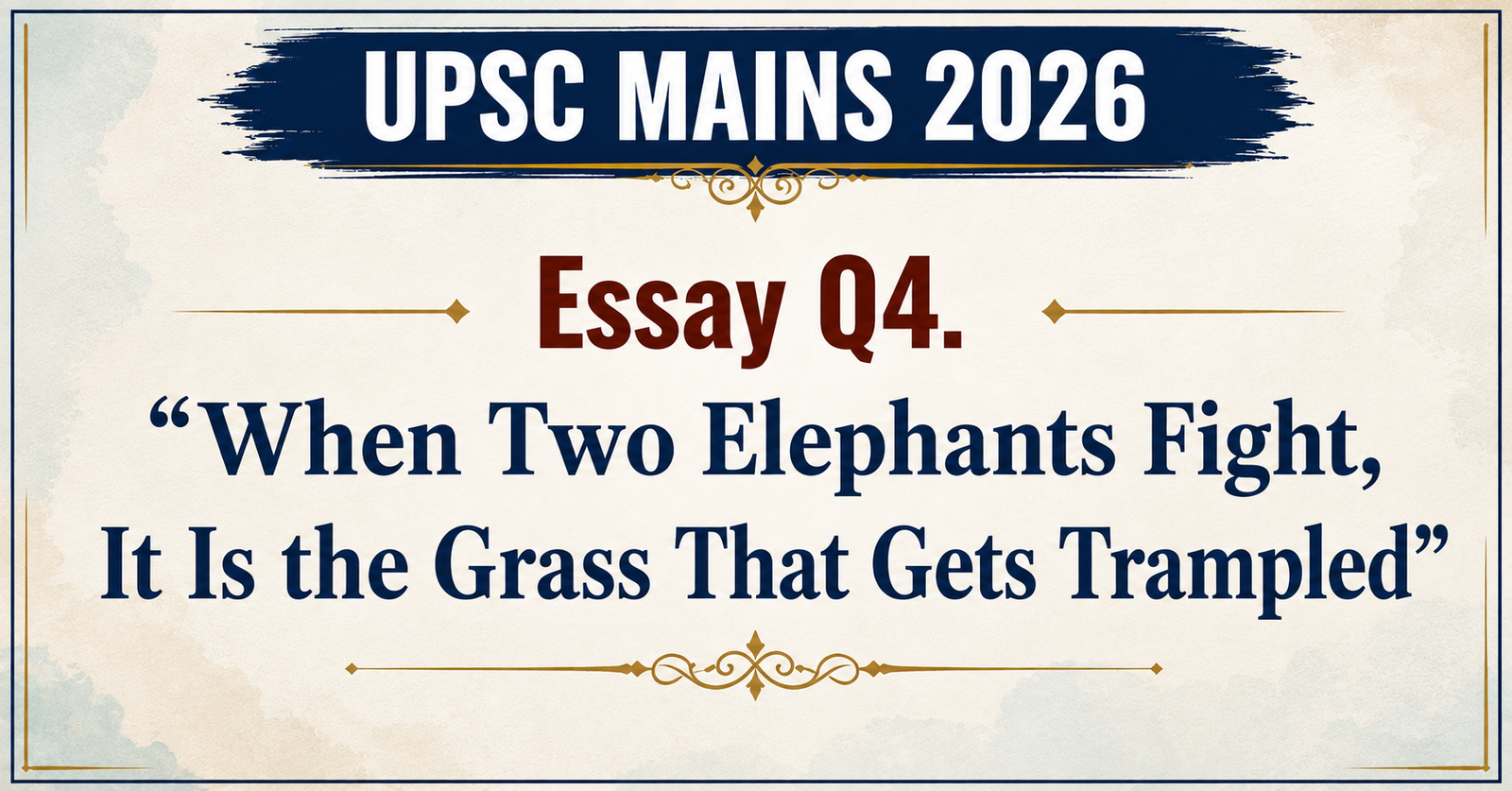
4. “When Two Elephants Fight, It Is the Grass That Gets Trampled”
Central Idea
Great-power rivalry → Conflict → Vulnerable actors bear disproportionate costs
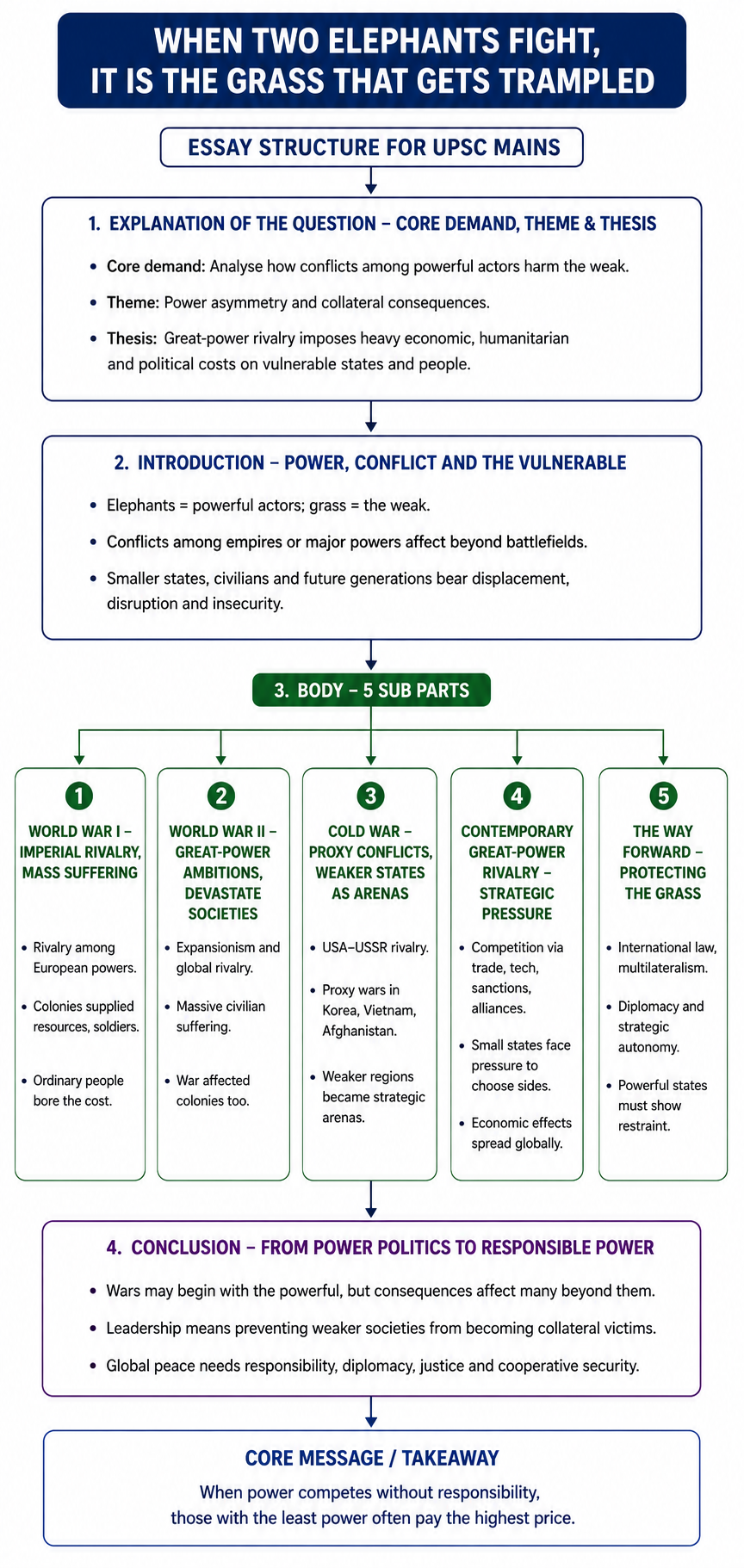
1. Explanation of the Question — Core Demand, Theme & Thesis
(50 words)
The proverb examines how conflicts among powerful actors disproportionately harm the weak. Its core demand is to analyse power asymmetry and collateral consequences. The theme extends from individuals to geopolitics. The thesis is that great-power rivalry, wars and strategic competition often impose their gravest economic, humanitarian and political costs on vulnerable states and populations.
(50 పదాలు)
ఈ సామెత శక్తివంతుల మధ్య సంఘర్షణల వల్ల బలహీనులు ఎక్కువగా నష్టపోతారని సూచిస్తుంది. అధికార అసమానత, సంఘర్షణల పరోక్ష పరిణామాలను విశ్లేషించడం ప్రధాన డిమాండ్. వ్యక్తుల నుంచి అంతర్జాతీయ రాజకీయాల వరకు ఇది వర్తిస్తుంది. మహాశక్తుల పోటీ, యుద్ధాలు, వ్యూహాత్మక ఘర్షణలలో ప్రత్యక్ష భాగస్వాములు కాని చిన్న దేశాలు, సామాన్య ప్రజలు కూడా తీవ్రమైన ఆర్థిక, మానవతా, రాజకీయ మూల్యం చెల్లిస్తారనేది ప్రధాన సిద్ధాంతం.
ESSAY STRUCTURE
I. Introduction — Power, Conflict and the Vulnerable
(50 words)
In the proverb, elephants symbolise powerful actors, while grass represents those lacking comparable power. International history repeatedly demonstrates this asymmetry. When empires, superpowers or military alliances compete, consequences travel beyond battlefields. Smaller states, civilians and future generations frequently inherit displacement, economic disruption and insecurity created by decisions over which they possess little influence.
(50 పదాలు)
ఈ సామెతలో ఏనుగులు శక్తివంతమైన దేశాలు లేదా శక్తులను సూచిస్తే, గడ్డి బలహీన దేశాలు, సామాన్య ప్రజలను సూచిస్తుంది. సామ్రాజ్యాలు, మహాశక్తులు, సైనిక కూటములు పరస్పరం పోటీపడినప్పుడు పరిణామాలు యుద్ధభూమికే పరిమితం కావు. నిర్ణయాలపై తక్కువ ప్రభావం కలిగిన చిన్న దేశాలు, పౌరులు, భవిష్యత్ తరాలు నిర్వాసితత్వం, ఆర్థిక సంక్షోభం, అస్థిరతను భరించాల్సి వస్తుంది.
II. BODY — 5 SUB-PARTS
1. World War I — Imperial Rivalry, Mass Suffering
(50 words)
World War I illustrates how rivalry among European powers expanded into a catastrophe affecting millions far beyond ruling establishments. Colonial territories supplied soldiers and resources despite having little influence over European strategic disputes. The war demonstrates the proverb vividly: competition among powerful empires transformed ordinary soldiers, civilians and colonised societies into unwilling bearers of geopolitical ambition.
(50 పదాలు)
మొదటి ప్రపంచ యుద్ధం యూరోపియన్ మహాశక్తుల పోటీ ఎలా విస్తృత మానవ విషాదంగా మారిందో చూపిస్తుంది. యూరోపియన్ వ్యూహాత్మక వివాదాలపై ప్రభావం లేకపోయినా వలస దేశాలు సైనికులు, వనరులను సమకూర్చాల్సి వచ్చింది. శక్తివంతమైన సామ్రాజ్యాల ఆకాంక్షలకు సామాన్య సైనికులు, పౌరులు, వలస సమాజాలు మూల్యం చెల్లించడం ఈ సామెత భావాన్ని ప్రతిబింబిస్తుంది.
Link: Imperialism → Alliance Politics → War → Colonial Burden
2. World War II — When Great-Power Ambitions Devastate Societies
(50 words)
World War II magnified this phenomenon. Expansionism and competing geopolitical ambitions devastated societies across Europe and Asia. Civilians faced enormous suffering, displacement and destruction. Colonial regions also experienced wartime mobilisation and shortages. The lesson is clear: when powerful states pursue dominance through unrestricted conflict, vulnerable populations often bear consequences far exceeding their role in causing it.
(50 పదాలు)
రెండవ ప్రపంచ యుద్ధం ఈ భావనను మరింత స్పష్టంగా చూపించింది. విస్తరణవాదం, భౌగోళిక ఆధిపత్య పోటీ యూరప్, ఆసియాలో సమాజాలను విధ్వంసం చేశాయి. పౌరులు భారీ ప్రాణనష్టం, నిర్వాసితత్వం, విధ్వంసాన్ని ఎదుర్కొన్నారు. వలస ప్రాంతాలు కూడా యుద్ధ సమీకరణ, కొరతల ప్రభావాన్ని అనుభవించాయి. శక్తివంతమైన దేశాల ఆధిపత్య పోరాటంలో సంఘర్షణకు కారణం కాని ప్రజలే అత్యధిక మూల్యం చెల్లించారు.
Link: Expansionism → Total War → Civilian Suffering → New World Order
3. Cold War — Superpowers Fight, Third Countries Become Arenas
(50 words)
The Cold War offers perhaps the strongest geopolitical interpretation of the proverb. The United States and Soviet Union avoided direct large-scale war but competed through proxy conflicts, alliances and ideological influence. Korea, Vietnam and Afghanistan became major theatres. Superpower rivalry consequently transformed weaker regions into strategic arenas, leaving societies divided, destabilised and economically burdened.
(50 పదాలు)
ప్రచ్ఛన్న యుద్ధం ఈ సామెతకు అత్యంత స్పష్టమైన భౌగోళిక రాజకీయ ఉదాహరణ. అమెరికా, సోవియట్ యూనియన్ ప్రత్యక్ష భారీ యుద్ధాన్ని నివారించినప్పటికీ ప్రాక్సీ యుద్ధాలు, కూటములు, సిద్ధాంతపరమైన పోటీ ద్వారా ఘర్షణ కొనసాగించాయి. కొరియా, వియత్నాం, అఫ్గానిస్తాన్ ప్రధాన రంగాలయ్యాయి. మహాశక్తుల పోటీ బలహీన ప్రాంతాలను వ్యూహాత్మక యుద్ధభూములుగా మార్చి దీర్ఘకాలిక అస్థిరతకు దారితీసింది.
Link: USA ↔ USSR → Proxy Wars → Developing Countries Bear the Cost
4. Contemporary Great-Power Rivalry — Small States Face Strategic Pressure
(50 words)
Today, great-power competition extends through trade, technology, supply chains, sanctions and strategic alliances. Smaller countries may face pressure to choose sides despite preferring autonomy. Economic disruptions can spread globally through energy and food markets. Thus, modern elephants need not physically fight; their strategic competition alone can trample the economic and diplomatic space of weaker actors.
(50 పదాలు)
నేటి మహాశక్తుల పోటీ యుద్ధానికి మాత్రమే పరిమితం కాదు; వాణిజ్యం, సాంకేతికత, సరఫరా గొలుసులు, ఆంక్షలు, వ్యూహాత్మక కూటముల ద్వారా కొనసాగుతోంది. చిన్న దేశాలు స్వతంత్ర వైఖరిని కోరుకున్నప్పటికీ పక్షాన్ని ఎంచుకోవాలనే ఒత్తిడిని ఎదుర్కొనవచ్చు. ఇంధన, ఆహార మార్కెట్ల ద్వారా ఆర్థిక ప్రభావాలు ప్రపంచవ్యాప్తంగా వ్యాపిస్తాయి. ఆధునిక ఏనుగులు ప్రత్యక్షంగా పోరాడకపోయినా వాటి పోటీ బలహీన దేశాల వ్యూహాత్మక స్వేచ్ఛను పరిమితం చేయగలదు.
Link: Great-Power Competition → Strategic Pressure → Reduced Autonomy
5. The Way Forward — Protecting the Grass
(50 words)
The proverb should not imply that weaker actors are permanently helpless. International law, multilateral institutions, diplomacy and strategic autonomy can reduce power asymmetries. India’s emphasis on dialogue and an independent foreign-policy space illustrates the value of preserving choices. A stable world requires powerful states to replace zero-sum rivalry with cooperation, restraint and responsible leadership.
(50 పదాలు)
ఈ సామెత బలహీన దేశాలు ఎప్పటికీ నిస్సహాయులనే భావనను ఇవ్వకూడదు. అంతర్జాతీయ చట్టం, బహుపాక్షిక సంస్థలు, దౌత్యం, వ్యూహాత్మక స్వయంప్రతిపత్తి అధికార అసమానతలను తగ్గించగలవు. స్వతంత్ర విదేశాంగ నిర్ణయాలకు భారత్ ఇచ్చే ప్రాధాన్యం ఎంపికల స్వేచ్ఛ విలువను తెలియజేస్తుంది. స్థిరమైన ప్రపంచానికి మహాశక్తులు జీరో-సమ్ పోటీకి బదులుగా సహకారం, సంయమనం, బాధ్యతాయుత నాయకత్వాన్ని అనుసరించాలి.
Link: Multilateralism + International Law + Diplomacy + Strategic Autonomy
III. Conclusion — From Power Politics to Responsible Power
(50 words)
History shows that wars may begin with powerful actors, but their consequences rarely respect borders or hierarchies. The true measure of international leadership is therefore not the capacity to dominate rivals but the ability to prevent weaker societies from becoming collateral victims. Global peace requires power restrained by responsibility, diplomacy, justice and cooperative security.
(50 పదాలు)
యుద్ధాలు శక్తివంతుల నిర్ణయాలతో ప్రారంభమైనప్పటికీ వాటి పరిణామాలు సరిహద్దులు, అధికార స్థాయిలను గౌరవించవని చరిత్ర చెబుతోంది. ప్రత్యర్థులను ఓడించే సామర్థ్యం కంటే బలహీన సమాజాలు పరోక్ష బాధితులుగా మారకుండా నిరోధించడమే నిజమైన అంతర్జాతీయ నాయకత్వం. ప్రపంచ శాంతికి అధికారంతో పాటు బాధ్యత, దౌత్యం, న్యాయం, సహకార భద్రత అవసరం.
Core Thesis Flow
Great-Power Rivalry
↓
Competition for Power & Influence
↓
War / Proxy War / Sanctions / Strategic Pressure
↓
Smaller States & Civilians Bear the Costs
↓
Humanitarian + Economic + Political Consequences
↓
Need for Diplomacy, Multilateralism & Responsible Power
One-line takeaway
When power competes without responsibility, those with the least power often pay the highest price.
UPSC Mains 2026
Paper I – Essay - Download the Question Paper - Click Here For Detailed Analysis
Paper II – General Studies I - Download the Question Paper - Click Here For Detailed Analysis
Paper III – General Studies II - Download the Question Paper - Click Here For Detailed Analysis
Paper IV – General Studies III - Download the Question Paper - Click Here For Detailed Analysis
Paper V – General Studies IV - Download the Question Paper - Click Here For Detailed Analysis
Paper VI – Optional Subject Paper I - Download the Question Paper - Click Here For Detailed Analysis
Paper VII – Optional Subject Paper II - Download the Question Paper - Click Here For Detailed Analysis