Explore how regenerative agriculture restores soil health, conserves water, enhances biodiversity, builds climate resilience, improves farmer livelihoods, and supports sustainable agricultural development through government initiatives.
Syllabus Areas:
GS III - Economy (Agriculture)
India’s agricultural sector has achieved sustained growth, but long-term agricultural productivity increasingly depends on healthy soils, efficient resource use and resilient ecosystems. Regenerative agriculture is emerging as an approach to restore soil vitality, enhance biodiversity and strengthen the ability of farms to withstand climate-related stresses.
1. What is Regenerative Agriculture?
Regenerative agriculture is a holistic farming approach focused on restoring soil health, enhancing biodiversity and improving the long-term resilience and productivity of agricultural systems.
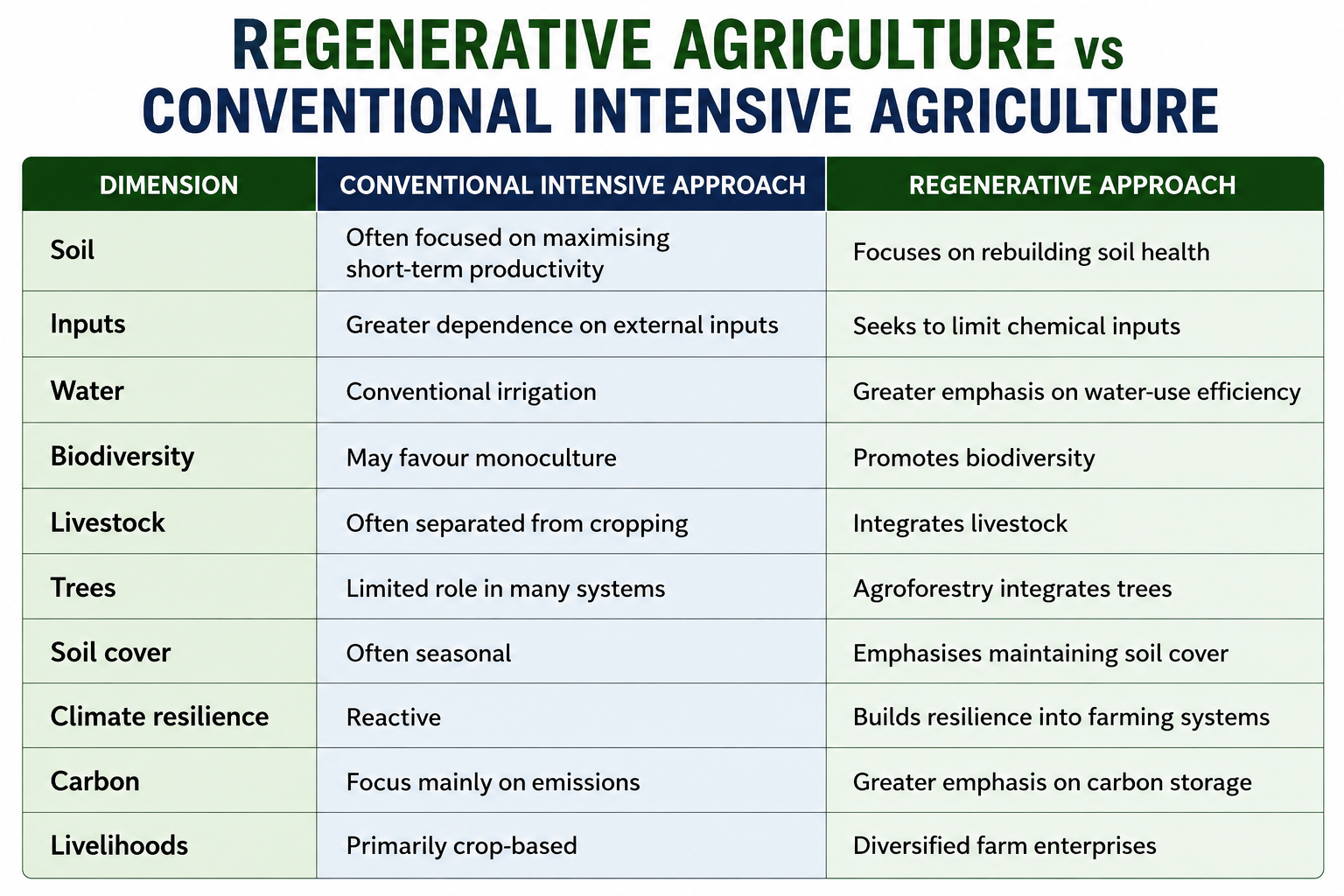
Unlike conventional sustainability approaches that may primarily seek to reduce environmental damage or maintain existing conditions, regenerative agriculture seeks to actively rebuild and improve the natural foundations of farming.
Why Does India Need Regenerative Agriculture?
1. Soil Degradation
Intensive cultivation and excessive chemical use are degrading soil quality and fertility.
This increases dependence on external inputs and threatens long-term farm productivity.
2. Rising Input Requirements
Farmers increasingly require more fertilisers, pesticides and irrigation to maintain earlier yield levels.
This raises cultivation costs and can reduce the economic sustainability of farming.
3. Climate Variability
Heatwaves, dry spells, excess rainfall and unpredictable monsoons can disrupt agricultural production.
Regenerative practices can strengthen farm resilience against these climate-related stresses.
4. Vulnerability of Small & Marginal Farmers
Declining soil health can lead to higher costs, uncertain yields and greater vulnerability to climate shocks.
Regenerative agriculture seeks to address both ecological degradation and agricultural productivity challenges.
Major Regenerative Agriculture Practices in India
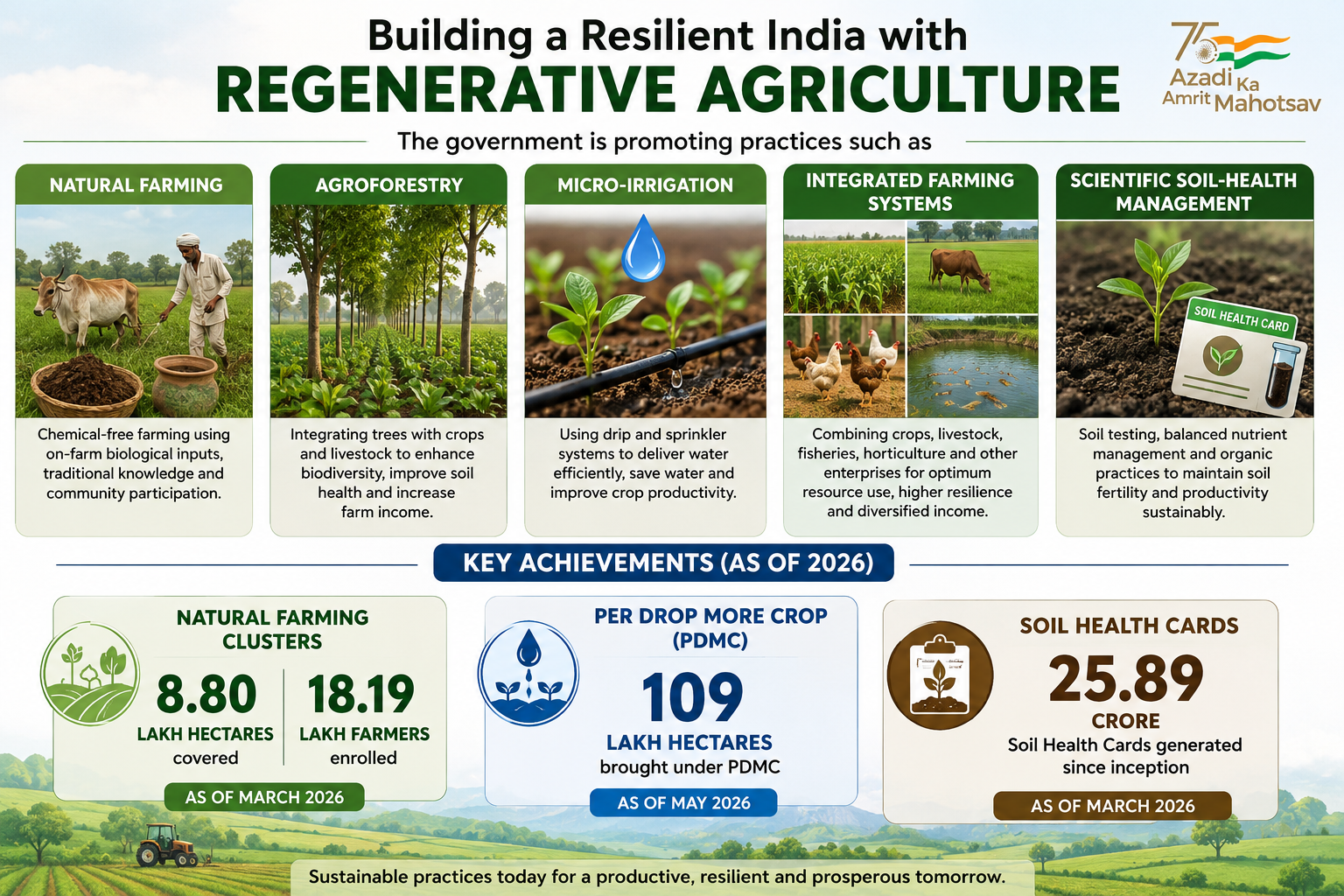
1. Micro-Irrigation
Drip, sprinkler and fogger systems deliver water directly to crops, reducing wastage and improving water-use efficiency.
Benefits: Water conservation, higher productivity, drought resilience and lower irrigation costs.
2. Farm Mechanisation
Use of agricultural machinery and equipment improves precision and enables timely farm operations.
Benefits: Reduces wastage of water, fuel and fertilisers, improves productivity and lowers the environmental impact of farming.
3. Nitrogen Fertiliser Management
Efficient nitrogen management reduces nitrous oxide emissions while improving crop productivity.
It includes proper fertiliser selection, timing and dosage, deep placement, leaf-colour charts, cyanobacteria and legume intercropping.
Significance: Better nitrogen-use efficiency → higher productivity + lower fertiliser use + reduced environmental losses.
4. Integrated Farming Systems (IFS)
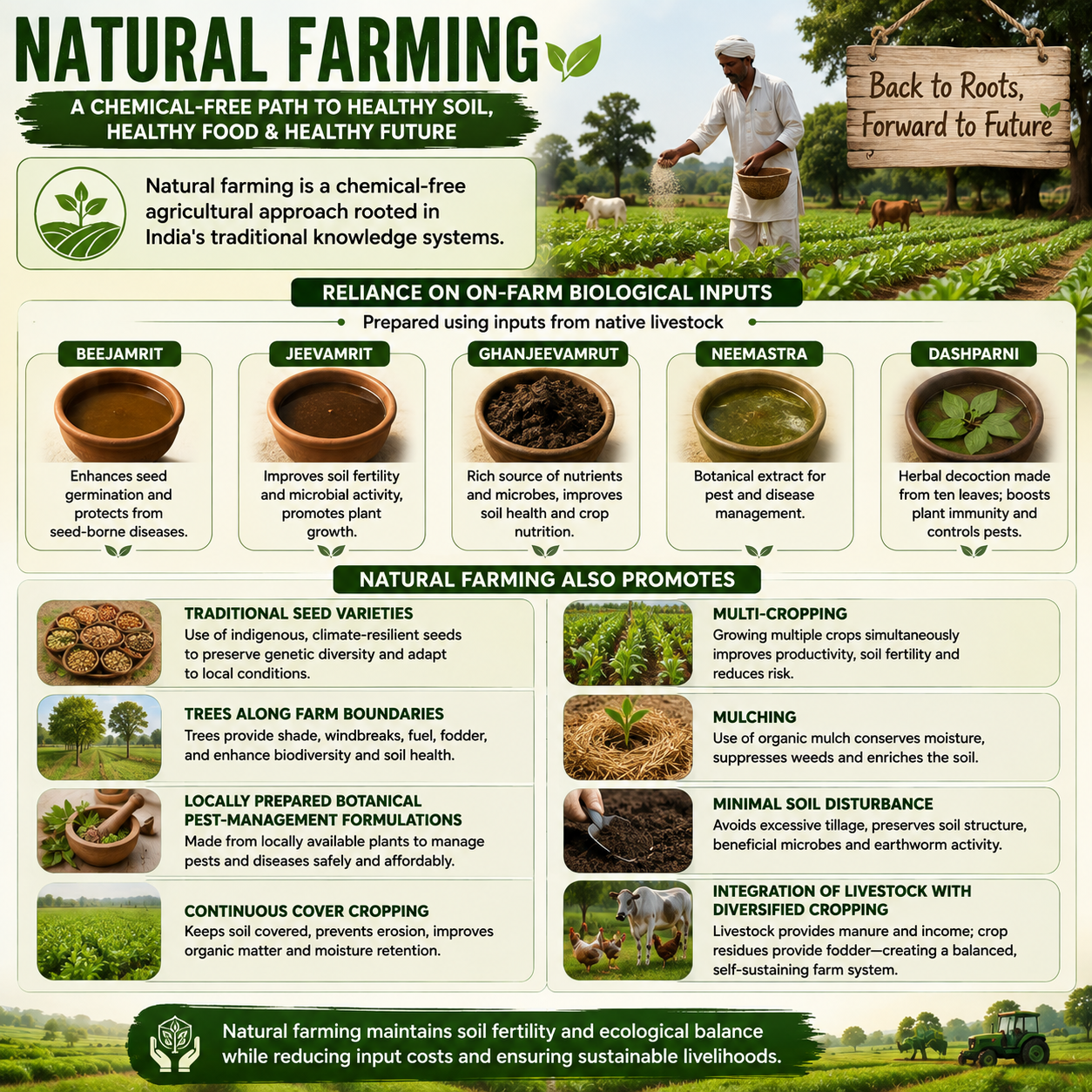
IFS combines crops, livestock, fisheries, horticulture, agroforestry and apiculture within a single farming system.
It uses intercropping, crop rotation, multi-cropping and mixed farming to maximise resource use.
Benefits: Reduces crop-failure risk, diversifies farm income, improves resilience to floods and droughts, and creates additional livelihood opportunities.
5. Agroforestry
Agroforestry combines perennial trees with fruit and plantation crops to create sustainable and diversified farming systems.
It improves soil moisture, carbon storage and farm income, rejuvenates degraded land and strengthens resilience, especially in rainfed regions.
6. Climate-Resilient Agriculture
CRA uses balanced nutrient management, efficient water use, pest management, soil-moisture conservation and better land practices.
It also promotes seed & fodder systems, community nurseries, water-sharing groups and collective marketing to withstand climate shocks.
Benefits of Regenerative Agriculture:
1. Environmental Benefits
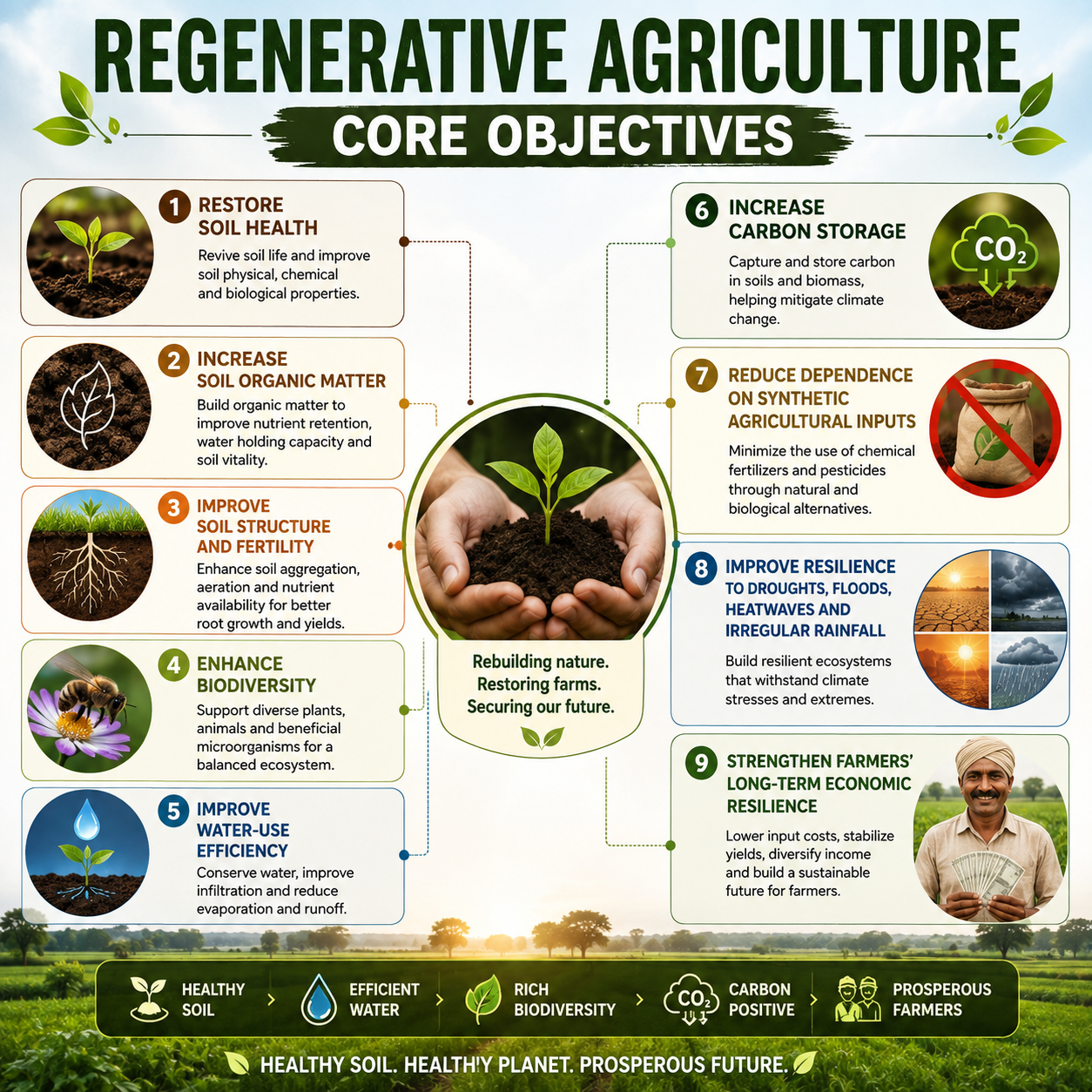
Regenerative agriculture restores soil health, biodiversity and water efficiency, while increasing carbon storage and reducing erosion and pollution.
It supports pollinators, beneficial insects and soil microorganisms, strengthening overall ecosystem resilience.
2. Economic & Social Benefits
Healthier soils can reduce dependence on fertilisers, pesticides and excessive irrigation, lowering costs and improving farm incomes.
It also creates opportunities in farming, advisory services, technology and ecological management, while improving resilience to climate and market shocks.
3. Link with SDG 13
Regenerative agriculture directly supports SDG 13 – Climate Action, particularly Target 13.1 on climate resilience and adaptive capacity.
It contributes to both climate adaptation and mitigation through healthier soils, carbon storage and resilient farming systems.
India's agricultural future cannot depend only on increasing production; it must also restore the ecological foundations on which production depends.
Regenerative agriculture provides an integrated pathway by connecting:
Healthy Soil → Efficient Water Use → Biodiversity → Carbon Storage → Climate Resilience → Lower Input Dependence → Better Farm Incomes
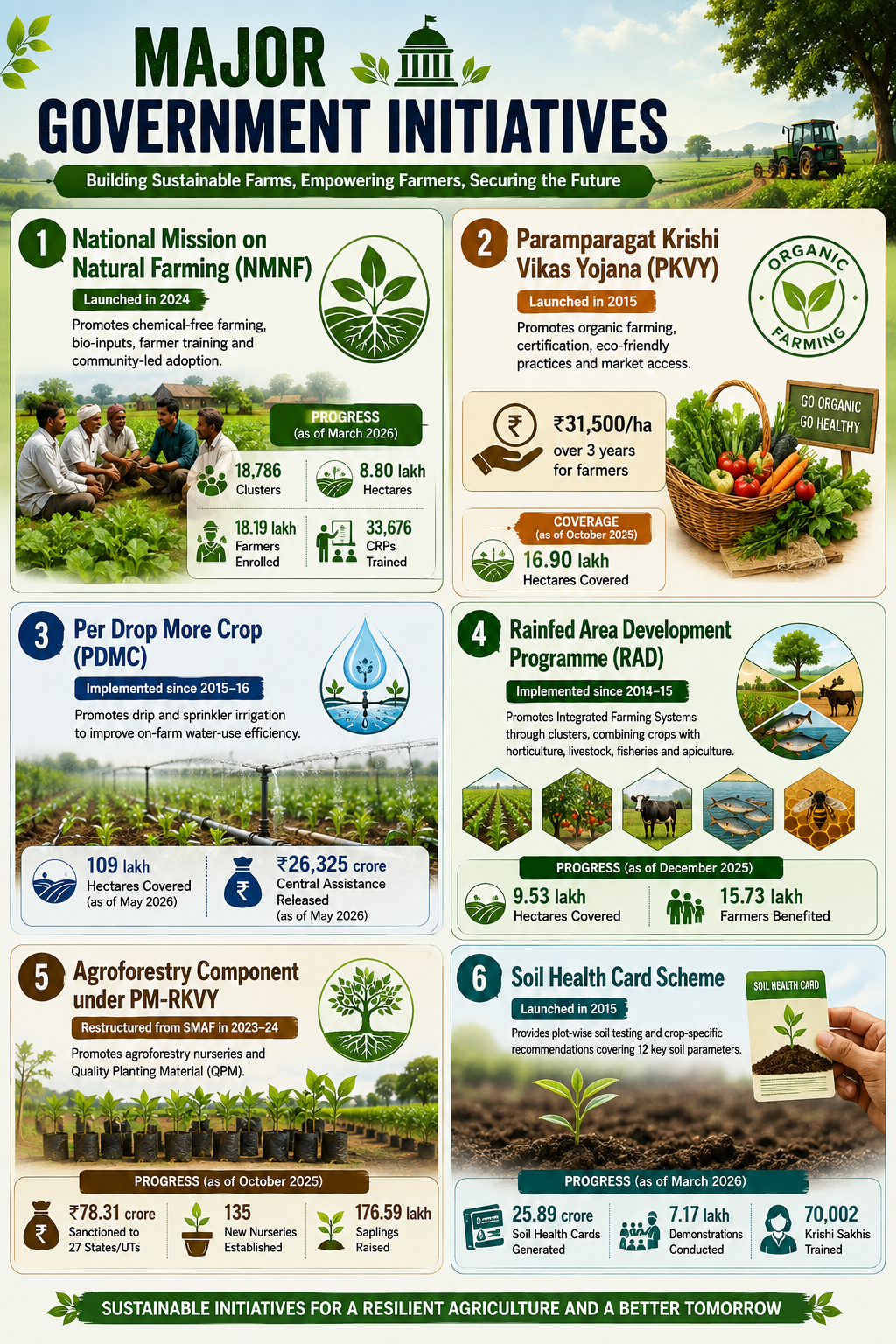
Government initiatives such as NMNF, PKVY, PDMC, RAD, the Agroforestry Component under PM-RKVY and the Soil Health Card Scheme collectively support this transition.