PMJVM strengthens India’s tribal forest economy through MFP procurement, MSP, VDVKs, value addition, market access, entrepreneurship, sustainable livelihoods, and women’s empowerment.
Syllabus Areas:
GS II - Governance
GS III - Economy
Unlocking India’s Tribal Forest Economy
The Pradhan Mantri Janjatiya Vikas Mission (PMJVM) is a Government of India initiative aimed at improving the livelihoods and economic empowerment of tribal communities by strengthening the value chain of Minor Forest Produce (MFP). The mission seeks to move tribal communities from being raw-produce collectors to community-owned entrepreneurs involved in processing, value addition and marketing.
Why is PMJVM Important?
-
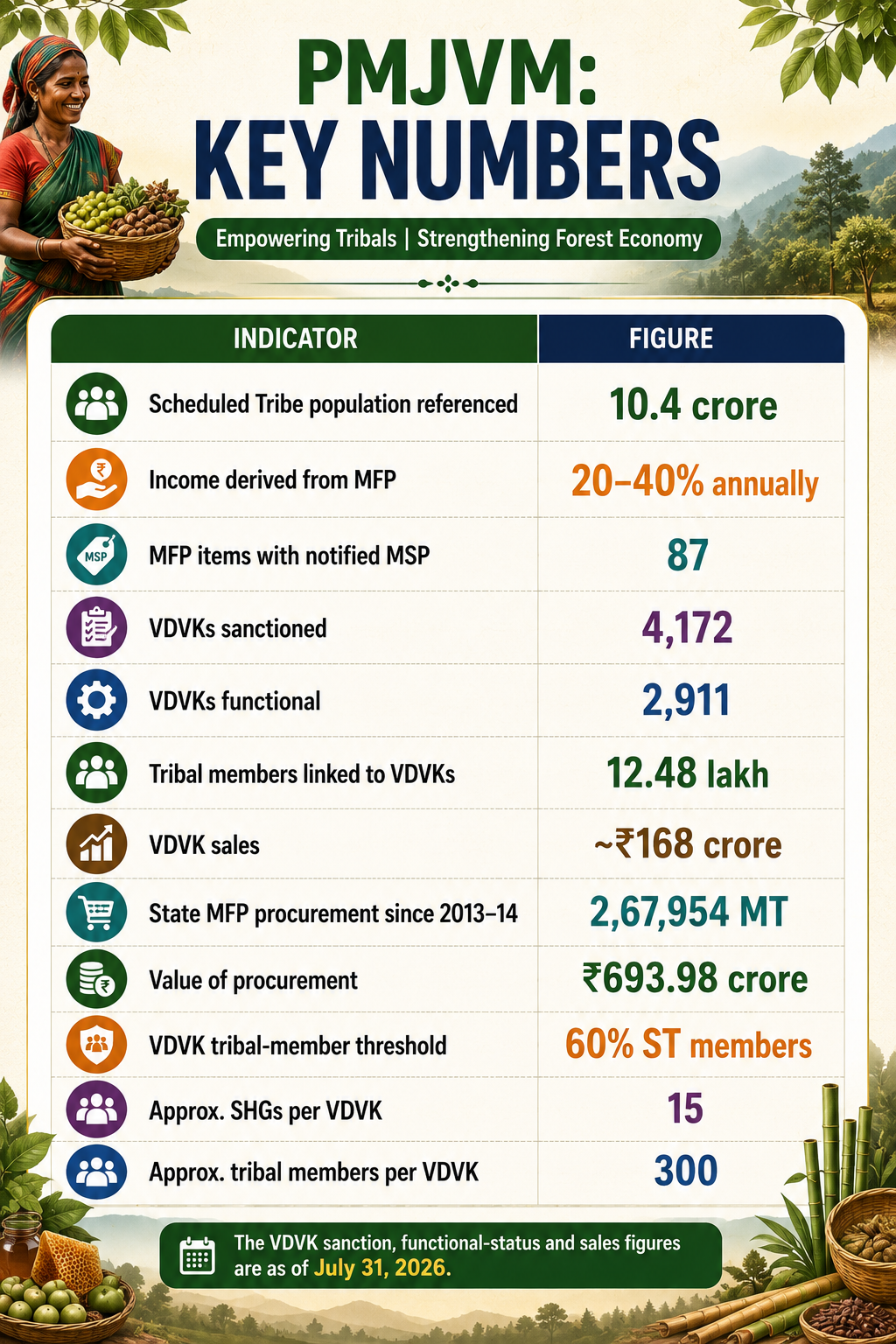
India has around 10.4 crore Scheduled Tribes.
-
Many tribal households derive around 20–40% of their annual income from Minor Forest Produce (MFP).
-
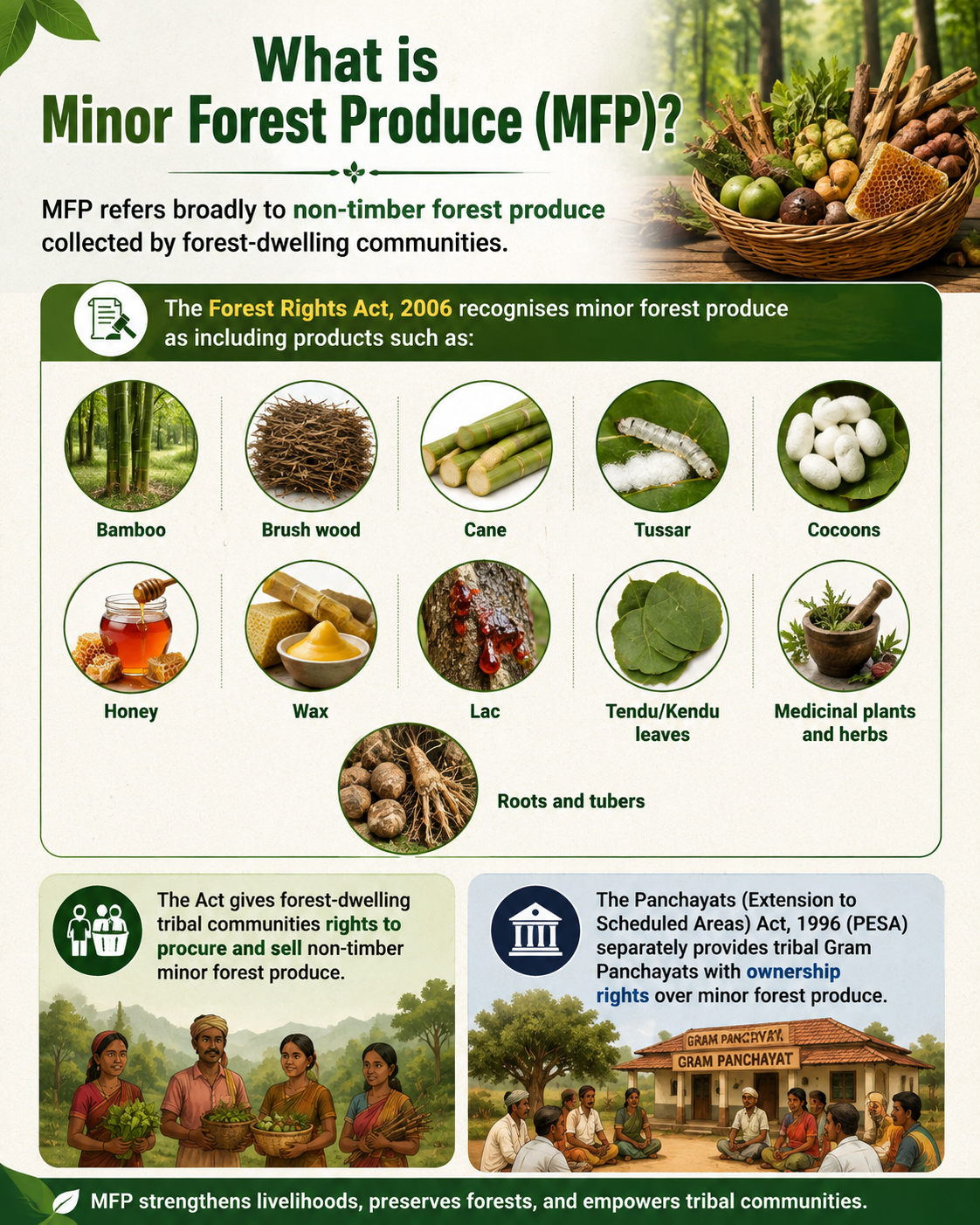
Important MFPs include honey, tendu leaves, mahua flowers, tamarind, lac, bamboo and wild herbs.
-
Traditionally, tribal gatherers often sold these products to intermediaries at low prices, receiving only a fraction of their actual market value.
-
PMJVM attempts to address this by improving technology, processing, value addition, market access and price realisation.
Role of TRIFED
The Tribal Cooperative Marketing Development Federation of India (TRIFED) is responsible for marketing and development of tribal products.
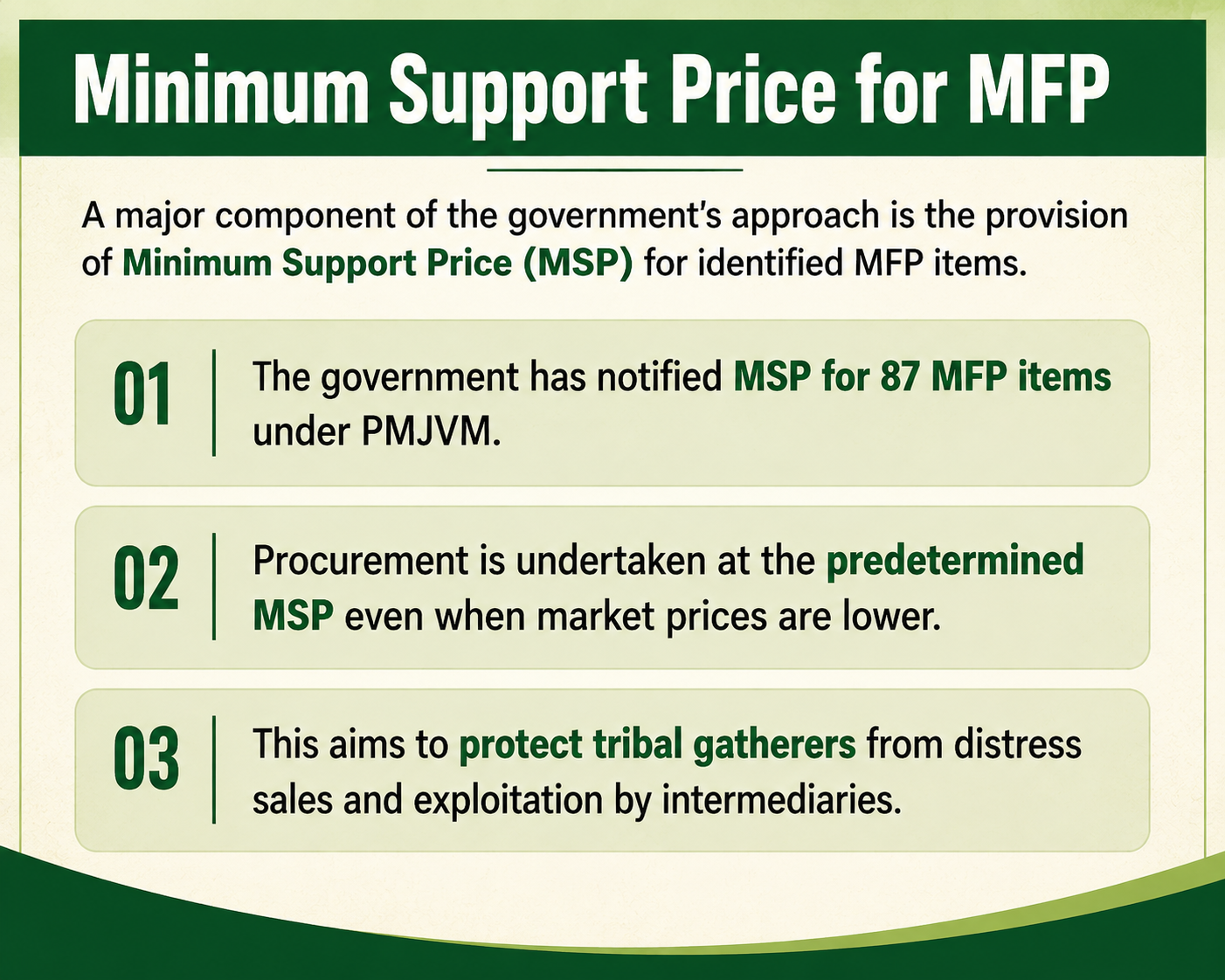
TRIFED purchases MFP at predetermined MSP through a network of state-level implementing agencies, including tribal development cooperatives and forest development corporations.
Since 2013–14, state governments have procured 2,67,954 metric tonnes of MFP worth ₹693.98 crore under the scheme.
Marketing & Market Linkages
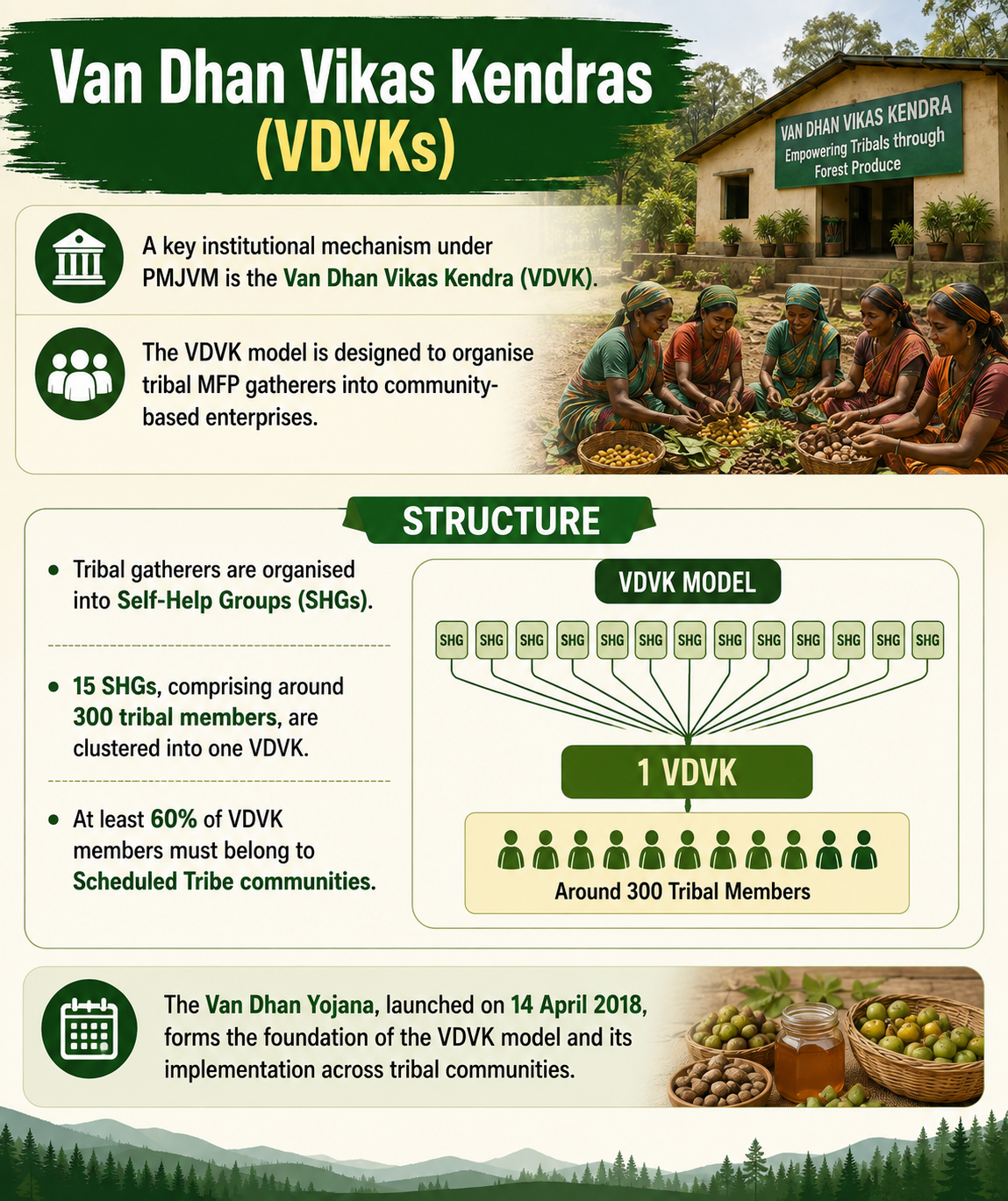
VDVKs function not merely as processing centres but also as market-linkage centres.
Important interventions include:
-
Establishing VDVKs around local Haat Bazaars, which serve as important MFP procurement points.
-
Modernising tribal haats with permanent structures, storage, drinking water, shade and weighing facilities.
-
Partnerships with private entities and non-profits for value addition and marketing.
-
Providing market intelligence, including daily prices and e-commerce opportunities.
-
Branding and promotion of tribal products through festivals, exhibitions and artisan melas.
-
Geo-tagging of VDVKs and other scheme assets.
-
Supporting Geographical Indications (GI) for tribal products.
-
Building and upgrading IT and e-commerce platforms.
-
Providing research and development support.
The document notes that there are over 5,000 haats in tribal areas, highlighting the importance of local markets in the tribal forest economy.
Support Provided to Tribal Communities
-
Skill Development: Training in scientific harvesting, sustainable collection, processing, value addition, packaging and enterprise development.
-
Infrastructure Support: VDVKs receive infrastructure support at beneficiary homes, government buildings or Gram Panchayat buildings.
-
Processing Equipment: Support for cutting, sieving, decortication, drying and packaging equipment based on locally available MFPs.
-
Working Capital: Financial linkages with banks, financial institutions and NSTFDC facilitate working capital for tribal enterprises.
-
Storage & Transportation: VDVKs receive storage and transportation facilities on a rental basis, strengthening the movement of processed MFPs to markets.
PMJVM and Tribal Women Empowerment
-
One of the important outcomes highlighted in the backgrounder is women's economic empowerment.
-
The document notes that much of the collection and sale of MFP is carried out by women, making VDVKs an important instrument for strengthening their financial independence.
-
Case Study: Nyigamane, Ho Yorbe, Medumhadgum VDVK
-
The VDVK in Leparda district of Arunachal Pradesh was established in October 2021 with 300 women SHG members and farmers.
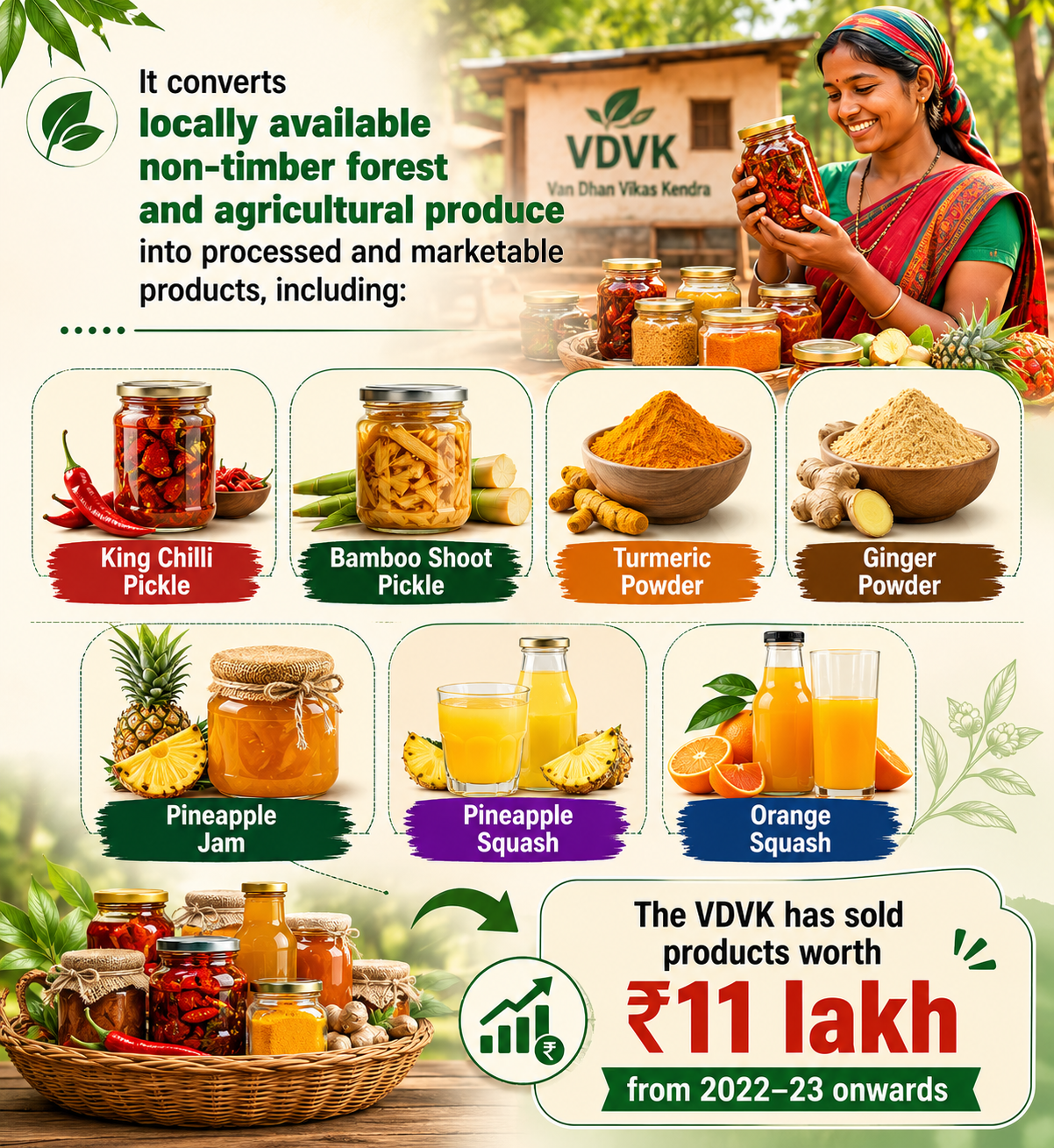
This model has helped participating women move beyond dependence on seasonal agricultural income and become stakeholders in the brand and enterprise itself.
PMJVM: From Welfare to Empowerment
The backgrounder presents the evolution of tribal forest-economy interventions as a shift towards economic empowerment:
-
PESA, 1996: Gram Panchayats receive governance and ownership rights over minor forest produce.
-
Forest Rights Act, 2006: Forest-dwelling communities gain legally recognised rights to collect, use and sell MFP.
-
MSP for MFP: Addresses distress sales and market failures.
-
Van Dhan Yojana, 2018: Introduces collective processing, value addition and marketing through VDVKs.
-
PMJVM, 2021–22: Integrates these interventions with broader institutional and livelihood support.
Significance for Tribal Development
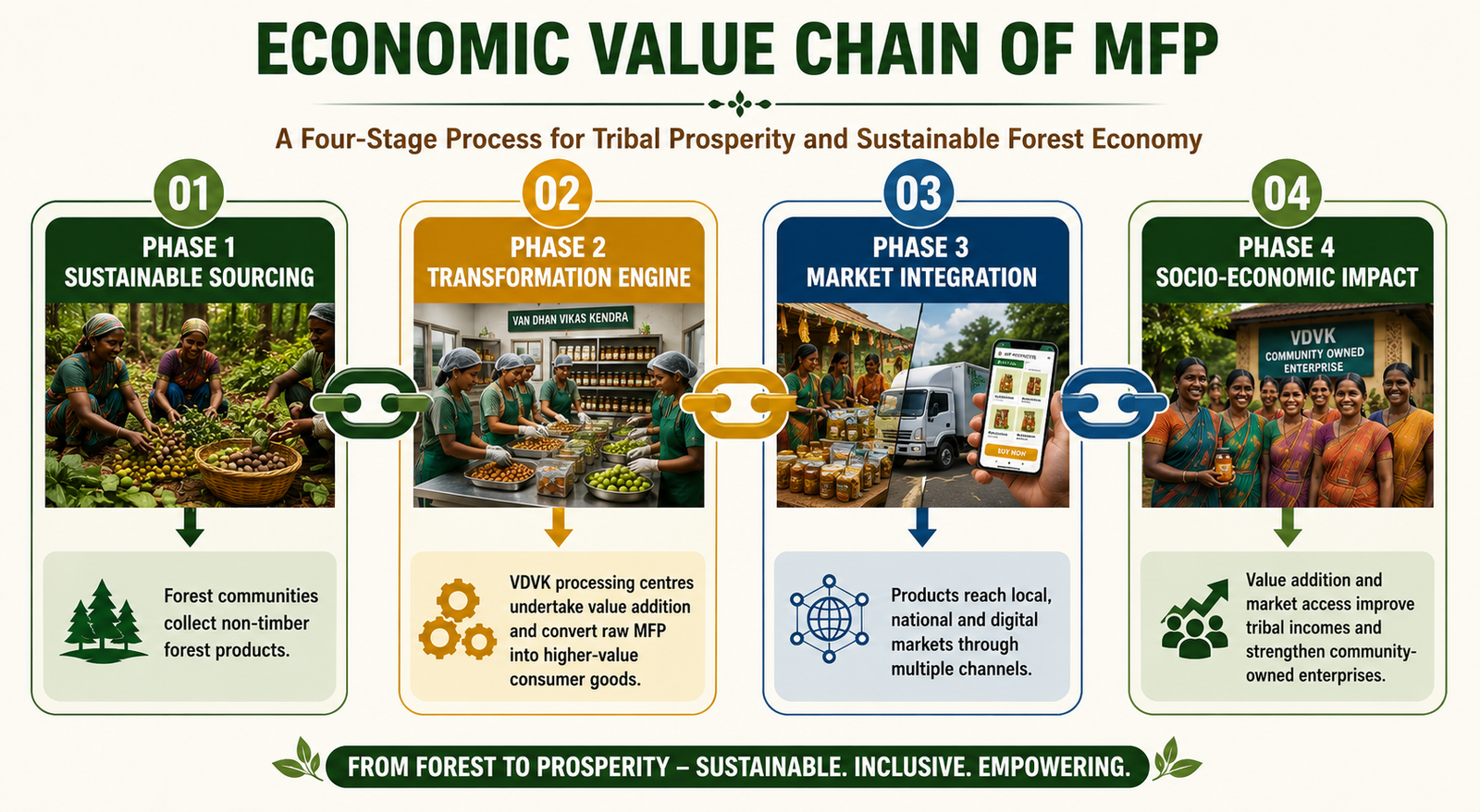
PMJVM represents a shift from merely supporting the collection of forest produce towards creating an integrated tribal enterprise ecosystem.
Its approach combines:
Forest resources → Community ownership → SHGs → Processing → Value addition → Branding → Market access → Higher incomes
This can help:
-
Reduce dependence on intermediaries.
-
Improve price realisation for tribal producers.
-
Create local employment.
-
Promote sustainable harvesting.
-
Encourage community-owned enterprises.
-
Strengthen tribal women's economic participation.
-
Connect remote tribal producers with national and digital markets.
-
Promote locally sourced and forest-based products.
The overall objective is to develop a sustainable forest economy that balances community ownership with market competitiveness.